Summary: After tasting hundreds of brands of Cantabrian anchovies for over 30 years at Mercat del Ninot, we have created this comparative guide based on professional tasting criteria. We compare premium artisanal anchovies, Santoña canneries, and supermarket brands by size, oil type, curing time, price per fillet, and flavor. If you are looking for the best Cantabrian anchovies in 2026, here is the information you need to choose wisely.
What makes a Cantabrian anchovy "good" (tasting criteria)
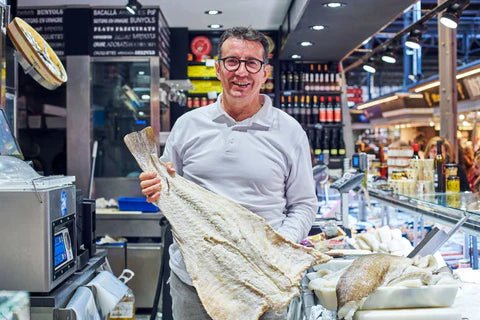
Not all Cantabrian anchovies are created equal. Not by a long shot. At Bacalalo, we have been selecting anchovies for our customers at Mercat del Ninot since 1990, and in all that time we have learned that the quality of an anchovy is measured by five very specific criteria. These are the same criteria used by professional tasters in Santoña's canned food competitions.
1. Fillet size
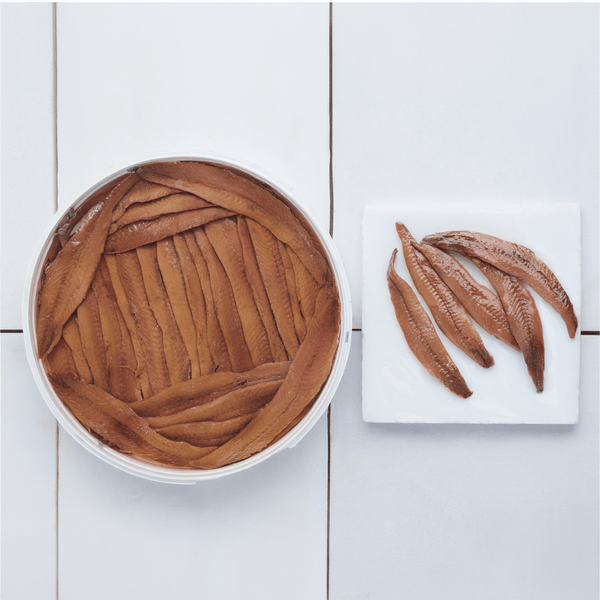
Size matters. A size 00 (double zero) anchovy fillet measures between 8 and 10 cm and comes from the largest anchovies caught during the fishing season. The larger the size, the more flesh, more texture, and a deeper, more complex flavor. Size is the first thing that differentiates a premium anchovy from a standard one.
- 00 (double zero): 8-10 cm fillets. The largest and most prized. Hand-selected.
- 0 (single zero): 6-8 cm fillets. High-end with excellent value for money.
- 1 and 2: medium and small fillets. Ideal for cooking, pâtés, and daily use.
- Menu or unclassified: mix of sizes. The most economical format.
2. Type of oil
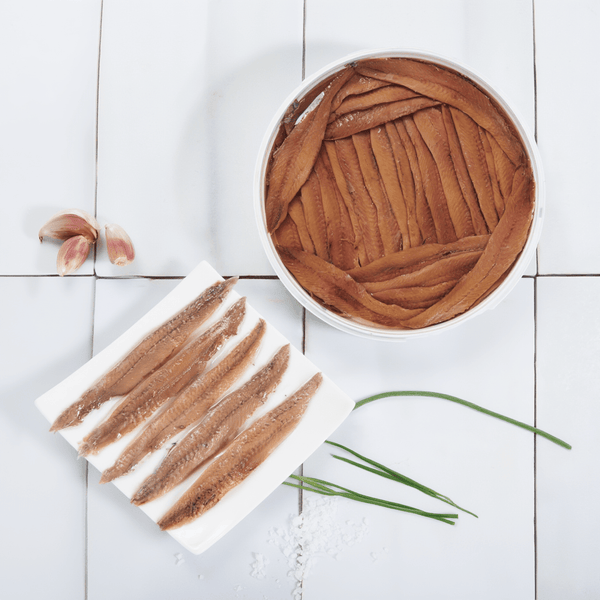
Oil is the medium in which the anchovy lives once it is packaged. A good extra virgin olive oil preserves and enhances the flavor of the fillet. Sunflower oil, used by most supermarket brands, is neutral: it neither contributes nor spoils, but it also doesn't add anything. The difference is noticeable with the first bite.
3. Curing time
This is where artisanal canneries separate from industrial ones. An anchovy cured for 10-12 months in salt develops complex umami flavors, a melting texture, and a coppery pink color. An anchovy cured for only 4-6 months is milder, less complex, and often saltier. The large Santoña canneries cure their premium ranges for 10 to 18 months.
4. True origin of the anchovy
Legally, you can label an anchovy made with anchovies from Morocco, Argentina, or Chile as "produced in Santoña." It's legal, but it's not the same. True Cantabrian anchovy comes from Engraulis encrasicolus caught in the Cantabrian Sea during the spring fishing season (April-June). The cold waters of the Cantabrian Sea and the plankton diet give it a fat and flavor profile that no other origin can match.
5. Filleting process
The best canneries fillet by hand. Each anchovy is deboned, peeled, and placed in the can piece by piece. This is the work of "sobadoras" (female processors), women with decades of experience who can tell by touch if a fillet is properly cured. Industrial filleting is faster but leaves more bones, more skin, and less uniform fillets.
When Bacalalo evaluates a new batch of anchovies, we score each of these five criteria. Only those that exceed our threshold in all of them make it to our shelves and our online store.
The best canneries in Cantabria (Santoña, Laredo, Colindres)
The Cantabrian coast concentrates the best anchovy canneries in the world. This is not an exaggeration: the tradition began with Italian immigrants (Sicilians and Neapolitans) who arrived in Santoña at the end of the 19th century and taught the salting techniques. Today there are more than 40 active canneries in the area.
Santoña: the anchovy capital
Santoña (Cantabria) is the epicenter. The oldest canneries and those that produce the largest fillets are concentrated here. The big Santoña brands cure the anchovy in salt for 10-18 months and fillet entirely by hand. Their 00 anchovies are served in the best restaurants in Spain.
The problem: the name "Santoña" sells so well that there are brands that process imported anchovies in Santoña. This is not illegal, but it dilutes the overall quality. That's why it's advisable to look for canneries that specify "Cantabrian anchovy caught in season" on their label.
Laredo and Colindres
A few kilometers from Santoña, Laredo and Colindres have canneries that work with the same anchovies and the same tradition. Some of the best anchovies we have tasted come from small workshops in these towns that will never reach a supermarket shelf. They produce limited quantities, select fillet by fillet, and sell directly to specialized stores like ours.
Basque Country: its own tradition
Getaria, Bermeo, Ondarroa, and Mundaka have their own anchovy tradition. Basque anchovies usually have a longer curing time and a more pronounced saltiness. For those looking for an intense, robust-flavored anchovy, Basque canneries are an excellent option.
L'Escala (Catalonia)
On the Costa Brava, L'Escala has been producing anchovies for more than 100 years using techniques similar to those of Santoña (also of Italian influence). L'Escala anchovies have their own denomination and a slightly different flavor profile: more delicate, less salty, with floral nuances. An alternative worth discovering.
Comparative table: artisanal vs. supermarket anchovies
This is the comparison you're looking for. We have pitted three categories of Cantabrian anchovies against each other using the five professional tasting criteria. The data is real, based on the batches we evaluated at Bacalalo during the 2025-2026 season.
| Criterion | Bacalalo "00" Premium | Artisanal Cannery from Santoña | Supermarket Brand |
|---|---|---|---|
| Size | 00 (8-10 cm). Hand-selected, whole fillets without breaks | 00 or 0 (6-10 cm). Hand-selected, quality varies by brand | 1-2 or unclassified (4-7 cm). Small fillets, often broken |
| Type of oil | Extra virgin olive oil | Olive oil (virgin or extra virgin depending on brand) | Refined sunflower oil or blend of vegetable oils |
| Curing | 10-12 months minimum in salt | 8-12 months in salt | 4-6 months (accelerated process) |
| Anchovy origin | 100% Cantabrian, spring season | Cantabrian (check label, some mix origins) | Argentina, Morocco or Chile, cured in Spain |
| Price per fillet | €1.07-€1.25 (depending on format) | €0.80-€1.50 (depending on size and brand) | €0.20-€0.40 |
| Flavor (tasting) | Intense, buttery, deep umami. Melts in the mouth without being pasty. Zero bitterness | Good to excellent. Varies greatly between brands. The best are equal to premium | Salty, one-dimensional. Rubbery or fibrous texture. Often with a metallic aftertaste |
| Filleting | 100% manual. No bones or residual skin | Manual in good brands, semi-automatic in others | Industrial. Bones and skin residue common |
| Ideal for | Eating plain, toast, dinner, gourmet gift | Tapa, appetizer, versatile use | Cooking, sauces, pizza, pâté |
The conclusion from the table is clear: supermarket anchovies and artisanal ones do not compete in the same league. The price per fillet of a premium anchovy is 3-5 times higher, but the difference in flavor, texture, and experience is abysmal. It's like comparing acorn-fed Iberian ham with packaged deli meat: same animal, completely different product.
That said, supermarket anchovies have their place. For cooking an anchovy sauce, making a homemade anchovy pâté, or putting on a pizza, you don't need a premium 00 fillet. But for eating on toast with good oil, or serving as an appetizer at a special dinner, the difference justifies every cent.
Bacalalo Related Products


Recommended Products

Cantabrian Anchovies in Olive Oil - 50g...
€3.95

Assortment "Cantabrian Deluxe"
€67.00

Artisanal Cantabrian Anchovy Gilda Hand-Made...
€9.90

Northern White Tuna Belly in Olive Oil - 190 g...
€16.95
Refrigerated shipping 24-48h throughout the Peninsula
How we taste anchovies at Bacalalo (selection process)
Every time a cannery offers us a new batch, we follow a tasting process that we have refined over more than three decades. It's not enough for us to just taste one can: we ask for samples from different batches to verify consistency.
Step 1: visual inspection
We open the can or jar and evaluate it before tasting anything. Are the fillets whole and well-placed? Is the color a uniform coppery pink? Is the oil clean and transparent? An anchovy with broken fillets, grayish color, or cloudy oil doesn't pass this stage.
Step 2: aroma
A good anchovy smells of cured sea: briny, with umami notes and a buttery background. If it smells strongly of fish, rancid, or metallic, there's a curing or preservation problem. The aroma anticipates 80% of what we will find on the palate.
Step 3: texture
We carefully pick up a fillet (if it breaks when lifted, bad sign). We place it on the tongue. The ideal texture is firm at first and melting after a few seconds. It gently dissolves, without being pasty or rubbery. A fibrous texture indicates insufficient curing; a pasty texture indicates over-curing or poor raw material.
Step 4: flavor
The flavor of a premium anchovy has layers. First, salt (present but not aggressive). Then, the deep umami of the curing. Next, buttery nuances, almost of nuts. And finally, a clean aftertaste that invites repetition. If the flavor is flat, only salty, or has a bitter or metallic finish, it doesn't pass our filter.
Step 5: consistency across batches
This is what separates a reliable cannery from an inconsistent one. We taste samples from 3-4 different batches. If the quality varies greatly from one batch to another, we cannot guarantee the experience to our customers. The canneries we work with maintain a consistent standard season after season.
This process may seem excessive, but it's exactly what allows us to offer anchovies like our "00" Premium anchovies with the confidence that every can will live up to expectations. Our customers at Mercat del Ninot demand that level, and online customers deserve the same.
Best anchovies according to budget (from €3.95)
Not everyone is looking for (or needs) the most expensive anchovy. Here are our real recommendations based on what you want to spend.
Tight budget: less than €10
If you want to try real Cantabrian anchovies without breaking the bank, the entry-level format is the 45-fillet Menu Anchovy at €26.95. Yes, it's over €10 per can, but at €0.60 per fillet, it's one of the most economical options for authentic Cantabrian anchovy. The fillets are of different sizes (menu format), but the flavor and curing are those of a serious artisanal cannery.
For small quantities, our 50g jars in extra virgin olive oil start at €3.95 and are perfect for toast or to try the product without commitment.
Value for money: €15-€40
This is where we recommend investing if you regularly consume anchovies. Our "0" Gourmet Selection Anchovies (35 fillets) at €38.90 offer large size, long curing, and a flavor that competes with anchovies twice their price. At €1.11 per fillet, it's our best recommendation for regular use in tapas and appetizers.
No Limit: The Premium Experience
Our "00" Premium Anchovies are our most exclusive selection. Double-zero caliber fillets, the largest from each fishing season, cured for a minimum of 10-12 months and hand-filleted. Available in a 20-fillet format (€24.90, ideal for a special dinner) and a 70-fillet format (€74.90, for families or regular consumption). The large format comes out to €1.07 per fillet: a significant saving if you already know you like them.
A note on supermarket anchovies: yes, you can find cans for €2-3 in any large supermarket. But as we've seen in the comparison table, you get what you pay for. If you've never tried an artisanal Cantabrian anchovy, we assure you that the first time you do, you'll understand why two distinct worlds exist.
Where to buy quality Cantabrian anchovies
The purchase channel influences the quality you will receive. Buying from a specialized store is not the same as buying from a generic marketplace. These are the channels we recommend, ordered from most to least reliable.
1. Specialty seafood stores
This is our field, so we are biased, but for good reason. A specialized store like Bacalalo selects directly from the cannery, knows each batch, stores under optimal conditions, and can advise you on which format suits what you are looking for. We have been in the Mercat del Ninot in Barcelona since 1990 and we select anchovies just as we select cod: fillet by fillet, season after season.
In our anchovy section you will find the entire range: from entry-level to premium selection. Delivery in 24-48 hours throughout mainland Spain.
2. Directly from the cannery
Some canneries in Santoña, Laredo, and the Basque Country sell directly online. The advantage is the price (no intermediaries) and the freshness of the product. The drawback: small canneries don't always have efficient shipping logistics, and you can't compare brands in the same order.
3. Gourmet stores and markets
Traditional markets like Mercat del Ninot, La Boquería, or the Ribera market in Bilbao often have stalls with quality anchovies. The advantage: you can see the product, ask the seller, and sometimes taste before you buy.
4. Supermarkets (with nuances)
Some premium supermarkets (El Corte Inglés Gourmet, Club del Gourmet) carry acceptable quality anchovies. Conventional supermarket private labels tend to be anchovies of mixed origin with short curing times. They work for cooking, but not for the full gastronomic experience.
To delve deeper into formats, prices, and how to choose online without making a mistake, we have a complete guide to buying Cantabrian anchovies online where we break down each product with real data.
Frequently Asked Questions
What are the best Cantabrian anchovies in 2026?
The best Cantabrian anchovies in 2026 are those of size 00 (double zero), cured for a minimum of 10-12 months in salt, with 100% Cantabrian anchovy caught in season and packed in extra virgin olive oil. At Bacalalo, our "00" Premium anchovies meet all these criteria: 8-10 cm fillets, long curing, manual filleting, and extra virgin olive oil. The artisanal canneries of Santoña, Laredo, and Colindres are the global benchmark for cured anchovies.
What brand of anchovies does Revilla give away?
Miguel Ángel Revilla, president of Cantabria, is famous for giving away cans of Santoña anchovies at every public appearance. He usually gives local Santoña cannery anchovies as a gesture to promote his community's flagship product. He doesn't always give the same brand: he rotates among several canneries in the area. The relevant point is not the specific brand, but that Revilla has been the best ambassador for Cantabrian anchovies nationwide, making millions of Spaniards associate Cantabria with quality anchovies.
Are Cantabrian anchovies good?
Authentic Cantabrian anchovies — Engraulis encrasicolus anchovies caught in the Cantabrian Sea and cured in salt for months — are considered the best in the world for salting. The cold waters of the Cantabrian Sea, rich in plankton, produce anchovies with an optimal fat profile: enough to provide a melting texture and intense flavor, without being cloying. The tradition of artisanal production of over 100 years in Santoña completes the result. The key is to distinguish real Cantabrian anchovies from those that are simply "made" in the area with imported anchovies.
Who manufactures Mercadona's anchovies?
The anchovies sold by Mercadona under its Hacendado brand are manufactured by different rotating suppliers. Historically, they have worked with canneries in Santoña and northern Spain, although the anchovy used can be from different origins (Cantabrian, Morocco, Argentina). The size is usually small (1-2 or unclassified), the oil is sunflower oil, and the curing is short (4-6 months). These are functional anchovies for cooking, but the gastronomic experience is far from an artisanal 00-caliber anchovy with long curing.
How much do good Cantabrian anchovies cost?
A quality artisanal Cantabrian anchovy costs between €0.80 and €1.50 per fillet, depending on the size and brand. At Bacalalo, the range goes from €0.60/fillet in the 45-fillet Menu format to €1.25/fillet in the "00" Premium anchovies (20 fillets). The large 70-fillet "00" format comes out to €1.07/fillet. Supermarket anchovies cost €0.20-€0.40/fillet, but the quality difference is proportional to the price difference.
How are Cantabrian anchovies stored once opened?
Opened anchovies in oil last 5-7 days in the refrigerator, always covered with olive oil. If the can doesn't close well, transfer the fillets to an airtight container (a glass jar works perfectly). Glass jars have the advantage of sealing hermetically and last up to 10 days. Professional tip: never throw away the leftover oil. That oil has absorbed all the anchovy flavor and is perfect for dressing salads, toasts, or pasta.
What is the difference between 00, 0, and menu anchovies?
The classification indicates the size of the fillet. 00 (double zero) anchovies are the largest fillets: 8-10 cm, from the largest anchovies. 0 (single zero) anchovies are large fillets of 6-8 cm, with an excellent quality-price ratio. Menu anchovies are fillets of varied sizes, unclassified, more economical but with the same flavor and curing. For eating alone or on toast, we recommend 00 or 0. For cooking or daily use, the menu format performs just as well.
Is it worth paying more for artisanal anchovies?
It depends on the use. For cooking (sauces, pâtés, pizza), supermarket anchovies are sufficient. But for eating as an appetizer, on toast, or as the star of a meal, the difference is huge. An artisanal Cantabrian anchovy has a melting texture, a flavor with layers of umami, and a clean aftertaste that an industrial anchovy cannot replicate. It's the difference between acorn-fed Iberian ham and cold cuts: same concept, completely different experience. If you've never tried a premium anchovy, we encourage you to start with a can of "00" Premium to understand what we're talking about.
🛒 Products mentioned in this article
⭐ 4.9/5 · Cold shipping 24-48h · Since 1990 at Mercat del Ninot
Conclusions
Choosing the best Cantabrian anchovies is a matter of knowing what to look for. After more than 30 years tasting, selecting, and selling anchovies at Mercat del Ninot, we summarize it in five criteria: fillet size, type of oil, curing time, actual origin of the anchovy, and filleting process. An anchovy that scores high on all five axes will give you a memorable gastronomic experience.
- For the best possible experience: Bacalalo's "00" Premium anchovies — double zero size, long curing, extra virgin olive oil, hand-filleted. From €1.07/fillet in large format.
- For daily quality: "0" Gourmet Selection anchovies at €1.11/fillet. Our best-selling product for a reason.
- For a tight budget: the 45-fillet Menu Anchovy at €0.60/fillet. Same artisanal flavor, without the exclusivity of the large size.
- For cooking: any anchovy will do, but if you use a good one, you'll notice the difference even in an anchovy recipe.
If you want to delve deeper, we have specific guides on the best anchovies from Santoña, the origin and types of Cantabrian anchovies, how to buy anchovies online without making a mistake, and how to make homemade anchovies in salt.
At Bacalalo, we have been selecting the best from the Cantabrian Sea since 1990. If you have any doubts about which anchovy to choose, email us or call us at . We are in the Mercat del Ninot in Barcelona and online at bacalalo.com.
Discover more