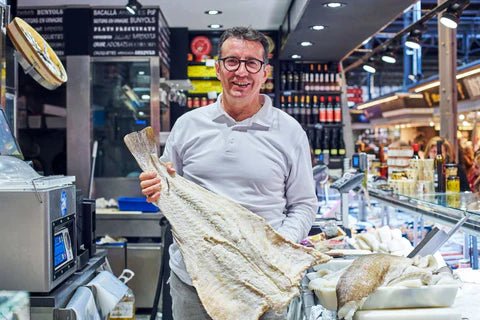


Summary: The Atlantic cod (Gadus morhua) is the true cod, the fish that has fed Europe for centuries and the protagonist of the great cod culinary tradition in Spain, Portugal, Norway, and Iceland. It is a cold-water fish (2-10 °C) that lives in the North Atlantic, can reach 1.5 meters in length and weigh up to 40 kg, although commercial pieces typically weigh around 2-8 kg.
Table of Contents
- What is cod: the Gadus morhua species
- Main cod species in the world
- Types of cod by geographical origin
- Types of cod by preservation method
- The 5 cod cuts and their culinary uses
- How to distinguish quality cod
- Cod vs other white fish
- Guide to buying cod: what to look for
- Nutritional value of cod
- Frequently asked questions
- Conclusions
When we talk about types of cod, most people think there is only one fish called "cod" sold in different formats. The reality is more complex: there are several species of cod, different geographical origins that affect quality, different preservation methods, and multiple cuts with specific culinary uses. Understanding these differences is key to choosing the right cod for each recipe and not overpaying for a piece that doesn't meet your needs.
In this comprehensive guide, we explain everything you need to know to become a cod expert: from the biology of the species to tips for identifying quality at the point of sale. With over 30 years at Mercat del Ninot, at Bacalalo we have seen and worked with all types of cod that exist.
What is cod: the Gadus morhua species
The Atlantic cod (Gadus morhua) is the true cod, the fish that has fed Europe for centuries and the protagonist of the great cod culinary tradition in Spain, Portugal, Norway, and Iceland. It is a cold-water fish (2-10 °C) that lives in the North Atlantic, can reach 1.5 meters in length and weigh up to 40 kg, although commercial pieces typically weigh around 2-8 kg.
Its flesh is white, firm, with few bones and a very low fat content (0.7 g per 100 g), making it one of the leanest white fish available. What makes Gadus morhua special is its preservation capacity: the flesh responds exceptionally well to salting, creating that flaky, firm texture that defines traditional cod.
Main cod species in the world
Atlantic Cod (Gadus morhua) — The authentic one
It is the benchmark species and the most gastronomically valued. It is caught in Iceland, Norway, the Faroe Islands, and Newfoundland. Its flesh is white, with large, well-defined flakes, and a delicate but distinctive flavor. This is the cod we use at Bacalalo for all our desalted products.
Pacific Cod (Gadus macrocephalus)
Inhabits the North Pacific, from Alaska to Japan. It is smaller than the Atlantic cod (up to 1 meter) and its flesh is slightly softer with less defined flakes. It is widely used in the surimi industry and in frozen products. Its price is lower than that of Atlantic cod, making it an economical alternative, but the culinary experience is not comparable.
Greenland Cod (Gadus ogac)
A smaller species that lives in very cold Arctic waters. It is smaller than the previous ones and is rarely commercialized outside local markets. It has decent flesh but lacks the flaky texture of Gadus morhua.
Polar Cod or Arctic Cod (Boreogadus saida)
The smallest of the cods (rarely exceeding 30 cm). It lives in near-freezing waters under the Arctic ice. It is not commercially sold as table cod, but it is a key component of the Arctic food chain.
Pollock and other fish sold as "cod"
It is important to know that pollock (Pollachius pollachius), haddock (Melanogrammus aeglefinus), and blue whiting (Micromesistius poutassou) are NOT cod, although they are sometimes sold under confusing names. They are fish of the same family (Gadidae) but different species, with less firm flesh and a different taste. Always look for the designation Gadus morhua on the label.
Types of cod by geographical origin
Within Gadus morhua, the origin of the catch greatly influences quality. The waters where cod lives determine its diet, size, and the firmness of its flesh:
Icelandic Cod — The premium choice
Considered the best in the world by many experts. Icelandic waters, cold (2-6 °C), clean, and nutrient-rich, produce cod with white, firm flesh and large, well-defined flakes. Iceland has exemplary fisheries management with strict quotas, guaranteeing the sustainability of the resource. This is the origin we use at Bacalalo.
Norwegian Cod — The classic
Norway is the world's largest exporter of cod. Its cod, especially skrei (seasonal cod that migrates to the Lofoten Islands to spawn between January and April), is extraordinary: lean, firm, and with a clean flavor. Skrei is sold fresh, never salted, and has a controlled designation of quality.
Faroese Cod
Cold waters and strong Atlantic currents produce muscular cod with very firm flesh. It is an excellent option, less known than Icelandic or Norwegian cod, often with a very competitive price-quality ratio.
Newfoundland and Canadian Cod
Historically one of the most important fishing grounds in the world, until overfishing led to the collapse of the stock in 1992 and a fishing moratorium. Today, the population is slowly recovering, but catches are very limited. When found, it is good quality cod.
Related Products from Bacalalo


Types of cod by preservation method
Salted cod (salt-cured)
The most traditional preservation method, practiced since the 15th century. Cod is opened, cleaned, and covered with coarse salt for weeks. The salt dehydrates the flesh and eliminates bacteria, allowing it to be preserved for months without refrigeration. Before cooking, it requires a desalting process of 24-72 hours, depending on thickness.
Desalted cod (ready to cook)
This is salted cod that has undergone a controlled desalting process, usually in chambers with water at a constant temperature. It maintains the flaky, firm texture of salted cod but is perfectly salted, ready for cooking. It is the most practical option and the one we offer in all our Bacalalo products.
Fresh cod
Freshly caught cod, without any preservation process. It has softer, more delicate flesh than salted/desalted cod, with a milder flavor. It is excellent grilled or steamed but does not have the characteristic flaky texture of traditional salt-cured cod. Norwegian skrei is the quintessential fresh cod.
Frozen cod
Cod that is frozen at sea immediately after capture, maintaining very high quality. It is a valid option for everyday use, although freezing can slightly affect the texture. If you opt for frozen, always thaw it in the refrigerator (12-24 hours) and never refreeze it.
Dried cod (cecial)
Dried outdoors without salt, a traditional method in Norway (where it is called tørrfisk or stockfish). The cod loses up to 80% of its water weight and can be preserved for years. Rehydration requires several days of soaking. It is the oldest way to preserve cod and remains popular in Italy and Africa.
The 5 cod cuts and their culinary uses
Each part of the cod has different characteristics and is better suited to certain preparations. These are the 5 main cuts:
- Loin: the thickest and most prized part. Ideal for baking, pil-pil, à la Vizcaína, grilled. It remains juicy and flakes perfectly.
- Penca: piece with a central bone, more economical than the loin but with excellent flavor. Perfect for stews, à la llauna, and baked.
- Tail: the thinnest part with more bones. Ideal for croquettes, fritters, and brandade.
- Cocochas (cheeks): the "cheeks" of the cod, one of the most prized parts. They are small, gelatinous, and prepared pil-pil style, in green sauce, or battered.
- Flakes and trimmings: small pieces resulting from cutting. Perfect for esqueixada, salads, fillings, and fritters. The most economical option.
How to distinguish quality cod
These are the indicators we use at the Mercat del Ninot to evaluate cod quality:
- Color: the flesh should be white or slightly ivory. A yellowish tone indicates oxidation or poor preservation. Dark spots are normal and do not affect flavor.
- Smell: it should smell of clean sea, not ammonia or spoiled fish. If it has a strong odor, discard it.
- Texture: when pressed with a finger, the flesh should be firm and return to its position. If it remains sunken, it has lost freshness.
- Flakes: in salted/desalted cod, look for large, well-defined flakes that separate easily. Small or disintegrating flakes indicate lower quality cod or aggressive desalting.
- Origin: look for Iceland, Norway, or the Faroe Islands. Be wary of generic labels like "North Atlantic" without specifying a country.
- Species: ensure it is Gadus morhua (Atlantic cod). Other species have lower prices and qualities.
Cod vs other white fish
Cod competes in the market with other white fish. These are the key differences:
- Cod vs hake: hake is softer and flakes more easily. Cod has a firmer, flakier texture. Nutritionally they are similar, although cod has slightly more protein.
- Cod vs monkfish: monkfish has denser, "meatier" flesh, with a more neutral flavor. Cod has more nuances and a more delicate texture.
- Cod vs sea bass: sea bass is fattier and has a finer flavor. Cod is more versatile in cooking and much more economical.
- Cod vs pollock: pollock is from the same family but has grayish, less firm flesh and a less defined flavor. It is significantly cheaper.
Guide to buying cod: what to look for on the label
When buying cod, these are the details you should check:
- Species: Gadus morhua (Atlantic cod). This is mandatory on the label.
- Catch area: FAO 27 (Northeast Atlantic: Iceland, Norway, Faroe Islands) or FAO 21 (Northwest Atlantic: Newfoundland). Avoid FAO 61 (Pacific) if seeking premium quality.
- Catch method: longline and hook are the most sustainable methods. Trawling causes more environmental damage.
- Weight and thickness: for roasting or pil-pil, look for pieces weighing 200+ g and 3+ cm thick.
- Visual appearance: white flesh, no yellow spots, with defined flakes.
At Bacalalo, all our cod is Gadus morhua from Iceland, hand-cut and desalted in our workshop at the Mercat del Ninot.
Nutritional value of cod
Cod is one of the most nutritionally complete foods, especially for those seeking quality protein with low fat:
- Calories: 74-108 kcal per 100 g (depending on preparation)
- Proteins: 17-20 g per 100 g — complete protein with all essential amino acids
- Fats: 0.7 g per 100 g — one of the leanest fish
- Omega-3 (EPA/DHA): 0.2-0.3 g per 100 g — lower than oily fish but significant
- Selenium: 33 µg per 100 g — 60% of the RDI, one of the richest foods in this antioxidant
- Vitamin B12: 1.2 µg per 100 g — essential for the nervous system
- Vitamin D: 1 µg per 100 g — contributes to calcium absorption
- Phosphorus: 203 mg per 100 g — important for bones and teeth
- Iodine: 110 µg per 100 g — essential for the thyroid
Conclusions
- What is cod: the Gadus morhua species: Atlantic cod (Gadus morhua) is the true cod, the fish that has fed Europe for centuries and the protagonist of the great cod culinary tradition in Spain, Portugal, Norway, and Iceland.
- Main cod species in the world: It is the benchmark species and the most gastronomically valued.
- Types of cod by geographical origin: Within Gadus morhua, the origin of the catch greatly influences quality.
- Types of cod by preservation method: The most traditional preservation method, practiced since the 15th century.
- The 5 cod cuts and their culinary uses: Each part of the cod has different characteristics and is better suited to certain preparations.
Frequently asked questions about types of cod
What is the best type of cod?
Icelandic Gadus morhua is considered the best by most experts and chefs. Its cold, clean waters produce cod with white, firm flesh and large, well-defined flakes.
Is desalted cod the same as fresh cod?
No. The salting and subsequent desalting process changes the protein structure of the cod, giving it a flaky, firmer, and more concentrated texture than fresh cod. They are two different products, both excellent but for different uses.
What is the difference between cod and pollock?
They are different species from the same family (Gadidae). Cod (Gadus morhua) has whiter, firmer flesh with a better flavor. Pollock (Pollachius pollachius) is grayer, softer, and has a lower price. Always check the species on the label.
How do I know if the cod I buy is of good quality?
Look for: white flesh (not yellowish), large and defined flakes, a clean sea smell, firm texture to the touch, and Icelandic or Norwegian origin. Be wary of excessively low prices: they usually indicate inferior species or origins.
Does cod have anisakis?
Cod can contain anisakis, like any marine fish. However, the traditional salting process (more than 4 weeks in salt) and freezing at -20 °C for 5 days eliminate the parasite. Bacalalo's desalted cod undergoes both processes, making it completely safe.
How many calories does cod have?
Cod has between 74-108 kcal per 100 g, with only 0.7 g of fat and 17-20 g of protein. It is one of the leanest fish available, ideal for weight control diets and high protein content.
Is cod good for diets?
Yes, cod is one of the best fish for weight control diets: very low in fat (0.7 g/100 g), high in protein (18 g/100 g), and rich in selenium, iodine, and vitamin B12. It is satiating and versatile in cooking.
Discover our entire selection of premium desalted Icelandic cod at Bacalalo, directly from the Mercat del Ninot in Barcelona.