Abstract: Anchovies are one of the most delicate and valuable gourmet products. Cantabrian Anchovies Gourmet Selection can cost 30, 40, or even more than 50 euros per tin, depending on the quality and size of the fillet. Wasting product due to poor preservation is a waste of money and, above all, a waste of months of artisanal work....
Anchovy preservation: why it matters so much
Anchovies are one of the most delicate and valuable gourmet products. Cantabrian Anchovies Gourmet Selection can cost 30, 40, or even more than 50 euros per tin, depending on the quality and size of the fillet. Wasting product due to poor preservation is a waste of money and, above all, a waste of months of artisanal work.
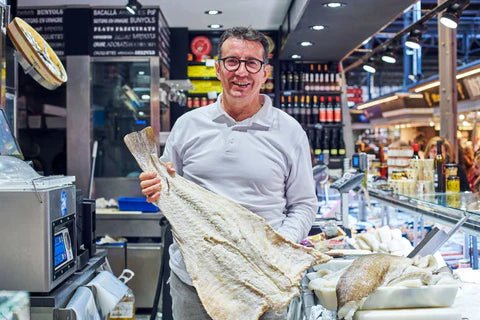
At Mercat del Ninot in Barcelona, where we have been selling the best anchovies on the market for more than 30 years, one of the questions we receive most often is precisely this: how to properly preserve anchovies. And the answer depends on the format: in oil, in salt, or once the tin or jar has been opened.
In this guide, we cover all three scenarios in detail, provide professional tips that we use in our shop, and clarify the most common questions about shelf life and food safety.
Storing anchovies in oil (unopened)
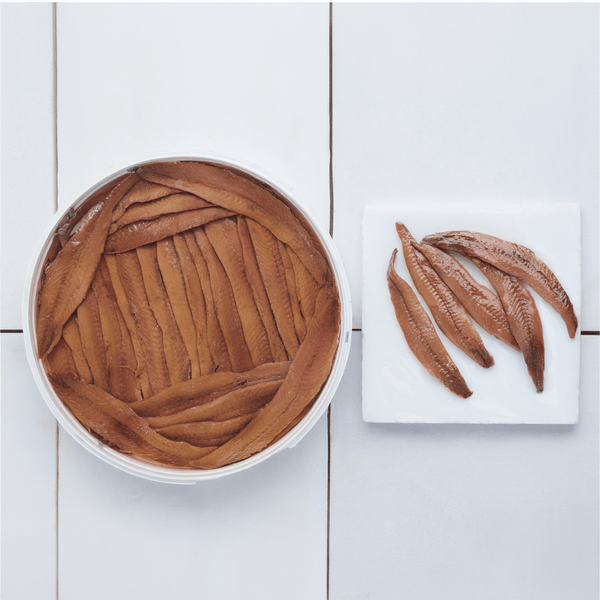
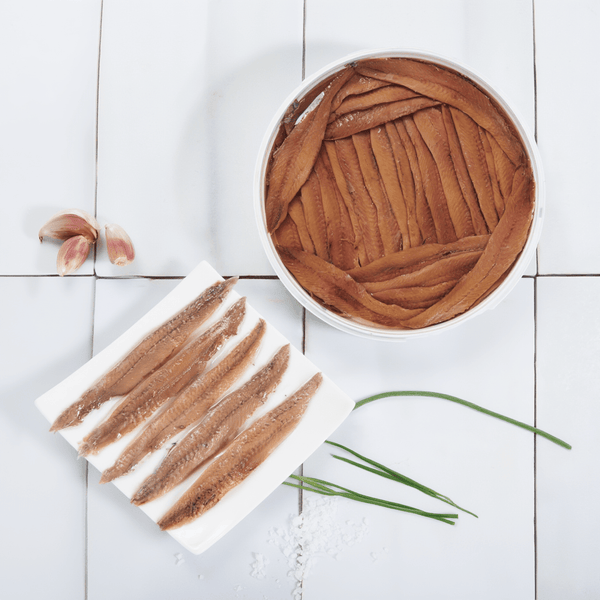
Anchovies in olive oil are the most common and easiest format to preserve. They come already filleted, cured, and submerged in oil inside a tin or glass jar.
Basic rules
- Temperature: between 5 and 15 °C. The refrigerator is perfect, but a cool cupboard also works if it does not exceed 18 °C. Excessive heat accelerates oil oxidation and deteriorates texture.
- Position: always horizontal or with the lid facing up. Avoid leaving the tin inverted or at an angle for a long time.
- Light: away from direct light, especially if in a glass jar. Light degrades olive oil.
- Actual shelf life: the date on the packaging is indicative. Well-preserved anchovies in oil can last 2-3 years without problem. In fact, many experts believe that anchovies improve during the first 12-18 months, gaining smoothness and allowing the fish flavors to blend with the oil.
Fridge or pantry?
There's a debate about this. Our experience-based recommendation:
- If you're going to consume them within 6 months: a cool pantry (maximum 15-18 °C).
- If you're going to store them longer: refrigerator. Cold slows down any deterioration process.
- If it's hot at home (summer in Barcelona, for example): always the refrigerator. With 30 °C outside, even the pantry can be too warm.
Storing anchovies in salt
Salted anchovies are whole anchovies (with bones) preserved in layers of coarse salt in a container, usually a large glass jar or a cylindrical tin. It is the most traditional format and the one that best preserves the original flavor of the fish.
If you are interested in the cleaning and preparation process, we have a complete guide on salted anchovies: how to buy, clean, and prepare them.
Storing an unopened jar
- Duration: salted anchovies can last for years. Salt is the most effective preservative there is. Some jars are opened after 2-3 years and the product is perfect.
- Temperature: cool, between 8 and 15 °C. The refrigerator is ideal.
- Brine matters: if the jar has liquid (brine), make sure the anchovies are completely covered. If the level drops, add coarse salt on top.
Storing an opened jar
- Don't take out all the anchovies at once. Take what you need with a clean fork and reseal.
- Maintain the salt layer: any remaining anchovies should remain covered in salt. If the surface is exposed to air, add a layer of coarse salt.
- Always refrigerate: once opened, the jar must go into the refrigerator.
- Duration once opened: if you maintain the salt covering, up to 6 months without problem. If the salt level drops or the anchovies are exposed, consume them within 2-3 weeks.
Related Bacalalo Products

Storing opened anchovies (in oil)
This is the critical point where most people make mistakes. You've opened the tin of premium double zero anchovies, served a few, and now half a tin remains. What to do:
The correct method
- Never leave anchovies in an opened tin. The oxidized tin in contact with air and oil creates metallic flavors. This is the most common mistake.
- Transfer to a glass container: a small jar with a screw-on lid is perfect. Glass does not interact with the oil or the fish.
- Cover completely with olive oil: the anchovies must be 100% submerged. If the original oil is not enough, add extra virgin olive oil until covered. The oil acts as a barrier against air and prevents oxidation.
- Seal tightly and refrigerate: airtight lid and into the refrigerator between 2 and 4 °C.
- Consume within 7-10 days: once opened and properly transferred, anchovies maintain their quality for approximately one week. Beyond that, the texture begins to deteriorate.
Professional tips with olive oil
These are the tricks we use in our Mercat del Ninot store:
- Use the same type of oil: if the anchovies come in extra virgin olive oil, refill with the same type. Mixing with sunflower oil or other types changes the flavor.
- Add a garlic clove: a peeled and lightly crushed garlic clove in the jar with the leftover anchovies adds an extra touch of flavor and has natural antibacterial properties.
- A few drops of Sherry vinegar: if you like anchovies with a more acidic touch, a teaspoon of Sherry vinegar in the covering oil creates a spectacular mini-marinade.
- Save the leftover oil: the oil from the anchovies is liquid gold. Use it to dress salads, make toast, or cook pasta. It has all the umami of cured fish.
Common mistakes in anchovy preservation
After serving thousands of customers, these are the most common mistakes we see:
- Leaving the tin open in the refrigerator: the most serious mistake. The tin oxidizes, the oil absorbs odors from other foods, and the flavor degrades within 24-48 hours.
- Storing in plastic: plastic containers absorb the smell of fish and can transfer flavors to the product. Always use glass.
- Not covering with oil: anchovies exposed to air dry out, darken, and develop a bitter taste. Covering with oil is mandatory.
- Freezing anchovies in oil: technically possible, but the texture changes significantly. The fillets become soft and lose their characteristic firmness. We do not recommend it.
- Using wet or dirty utensils: always remove anchovies with a clean, dry fork. Moisture or food residues can accelerate spoilage.
Real shelf life of anchovies: what the label doesn't tell you
The expiration dates on canned goods are conservative due to regulations. The reality of anchovy shelf life:
| Format | Unopened | Opened (well-preserved) |
|---|---|---|
| Anchovies in oil (tin) | 2-4 years | 7-10 days in glass with oil |
| Anchovies in oil (glass jar) | 1-2 years | 7-10 days covered with oil |
| Salted anchovies | 3-5 years | 3-6 months with salt |
Anchovies past their best-before date (not to be confused with expiration date) are not dangerous, but they may lose texture and develop a stronger flavor. If they smell good and have a good color when opened, they are perfectly edible. If you're looking for an exceptional quality intermediate format, our Cantabrian anchovy fillets are perfect to always have on hand in the pantry.
Signs that anchovies have deteriorated
- Strong ammonia or rancid odor (normal odor is of sea and salt)
- Dark gray or green color (should be pinkish-brown)
- Pasty or viscous texture
- Oil has bubbles or foam
- Intensely bitter taste
If you see any of these signs, do not consume the product.
Preservation for hospitality and professional use
If you buy anchovies in large format for a restaurant or catering, the rules are the same but with nuances:
- Large tins (1 kg or more): once opened, divide into portions in smaller glass jars. It's more practical, and each portion is exposed to air only when it's going to be used.
- FIFO rotation: first in, first out. Mark each jar with the opening date.
- Constant temperature: avoid taking anchovies out of the refrigerator and putting them back in repeatedly. Temperature changes accelerate spoilage.
Frequently Asked Questions
Can anchovies be frozen?
Salted anchovies can be frozen without much loss of quality. We do not recommend freezing anchovies in oil: the texture changes, and the fillets lose firmness.
Why are my anchovies darker than when I bought them?
Natural oxidation darkens the color slightly over time. It is normal and does not affect safety or significantly the flavor. If they are very dark (grey-green), it may indicate deterioration.
Can the oil from anchovies be reused?
Yes, and you should. The oil is packed with umami flavor. Use it to dress salads, make bruschetta, cook pasta, or as a base for vinaigrette. It's a luxury ingredient.
Do anchovies in vinegar keep as well as those in oil?
No. Anchovies in vinegar (boquerones) are a fresh product and should be consumed within 2-3 days maximum, always refrigerated. They do not have the same shelf life as those cured in oil or salt.
How long does it take for a salted anchovy to be ready?
The salted anchovies we sell are already cured and ready to be cleaned and consumed. The curing process has been done for months beforehand. You just need to clean them, debone them, and rinse them.
Does the type of olive oil matter for preserving anchovies?
Yes. Extra virgin olive oil has more antioxidants that better protect anchovies. Never use sunflower oil or refined vegetable oils; they degrade faster and alter the flavor.
🛒 Products mentioned in this article
⭐ 4.9/5 · Cold shipping 24-48h · Since 1990 at Mercat del Ninot
Discover our premium selection
Seafood products carefully selected since 1990 at Mercat del Ninot, Barcelona. Refrigerated shipping in 24-48h.
Conclusion
From Mercat del Ninot in Barcelona, we have been selecting the best seafood products for over 35 years. If this guide has been useful, explore our catalog at bacalalo.com and receive the same quality at home that we have been selling in the market since 1990.
Related guides
- Canned fish: how to choose the best
- Gourmet tins for gifting
- Easy appetizers with canned goods and smoked products
- Seafood paella: traditional step-by-step recipe
Discover more