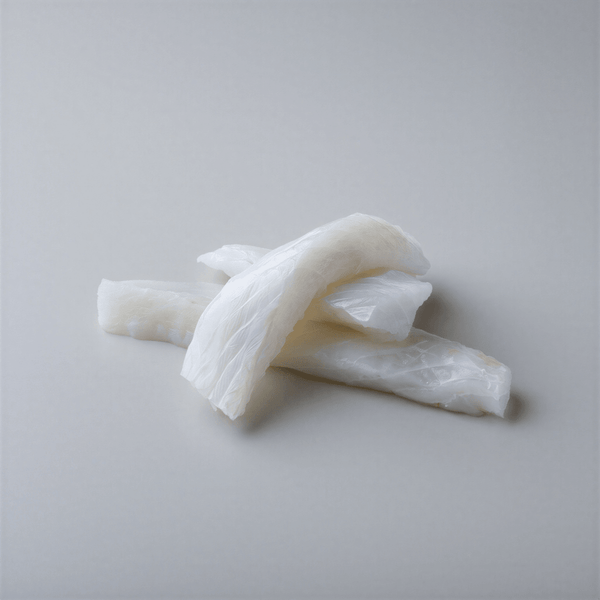
Summary: Portugal is the largest per capita consumer of cod in the world and has over 1,000 cod recipes, but it does not catch cod; it imports it. "Portuguese cod" is actually Norwegian, Icelandic, or other imported cod, processed and cured in Portugal. In this guide, we analyze the relationship between Portuguese culinary tradition and the quality of Icelandic origin, and why the best way to honor Portuguese recipes is to start with the best possible cod.
Content
- The Great Paradox of Portuguese Cod
- Portugal Doesn't Catch Cod (or Barely Does)
- Where Does the Cod Consumed in Portugal Come From?
- Comparison Table: Portuguese Processing vs. Icelandic Origin
- The Portuguese Art of Salting
- Quality of Origin vs. Quality of Processing
- Portuguese Recipes with Icelandic Cod
- How to Choose Cod for Portuguese Recipes
- Tradition or Quality of Origin? Both
- Frequently Asked Questions
The Great Paradox of Portuguese Cod
Portugal is, without a doubt, the land of cod. The Portuguese consume over 70,000 tons of cod per year, equivalent to about 7 kg per capita, the highest figure in the world. Bacalhau is the national dish, the Christmas ingredient, the basis of over 1,000 documented recipes. They say there's a cod recipe for every day of the year, with plenty left over.
But here's the paradox: Portugal does not catch cod. Or, to be more precise, it catches such small quantities that they are irrelevant compared to its consumption. Gadus morhua does not live in Portuguese waters: it is a cold-water fish of the North Atlantic, inhabiting areas between Norway, Iceland, Greenland, Canada, and Russia.
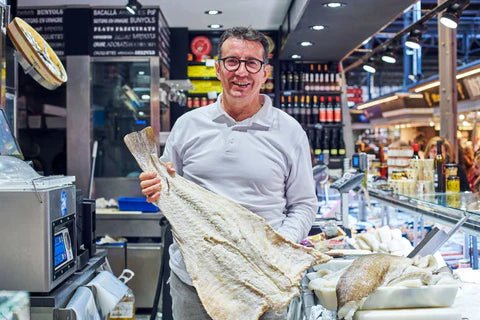
So, what exactly is "Portuguese cod"? It is cod from other origins, mainly Norwegian and Icelandic, which Portugal imports, processes, and transforms with its own tradition of salting and curing. It is a product of craftsmanship and culture, not of geographical origin.
Portugal Doesn't Catch Cod (or Barely Does)
Historically, Portugal was indeed a great cod fishing power. Since the 15th century, Portuguese fishermen crossed the Atlantic to the Grand Banks of Newfoundland and Greenland to catch cod. The famous "Fiel Amigo", the Portuguese cod fleet, operated for centuries and was one of Europe's most epic maritime adventures.
If you're interested in trying other cuts, you can browse our whole cod catalog online: loins, supremes, flakes, belly, cheeks, smoked, and brandade.
But the overfishing of the Grand Banks in the 20th century led to the collapse of cod stocks in 1992, when Canada declared a total moratorium. Portugal lost its historical fishing grounds, and its cod fleet drastically reduced.
Today, Portuguese cod fishing is largely symbolic. Some vessels still fish in the waters of Svalbard (Norwegian archipelago) and the NAFO area (Northwest Atlantic), but catches represent a minimal fraction of national consumption. The bulk of cod consumed in Portugal comes from Norway and Iceland through imports.
According to industry data, Norway and Iceland jointly supply over 85% of the salted cod consumed in Portugal. The rest comes from Russia, the Faroe Islands, and, in small quantities, from Portugal's own fleet.
Where Does the Cod Consumed in Portugal Come From?
The commercial flow of cod to Portugal works as follows:
- Fishing: Cod is caught in the waters of Norway, Iceland, or other North Atlantic countries.
- Initial processing: In some cases, cod is partially salted and dried at the source (Norway or Iceland).
- Import: Portugal imports whole salted cod or large pieces.
- Final processing: Portuguese companies complete the curing, cut, classify, and package the product.
- Sale: The cod is sold in the Portuguese market (and re-exported to Spain, Brazil, Angola, and other Portuguese-speaking markets) as "bacalhau."
When you buy "Portuguese cod" in a store, you are buying a product that was fished in Iceland or Norway and processed in Portugal. European labeling requires indicating the catch area, but it's not always easy to find on the packaging.
Related Bacalalo Products


Recommended Products

Natural Cod Liver Foie Gras - 120g | Smoked C...
3,90 €

CHATKA Wild King Crab 60% Legs 40% Shredded | ...
95,00 €

Smoked Cod Carpaccio Artisan Cut | 1 Tray Pack
15,90 €

Dry Cod Cheeks (1 tray) - 500g
19,95 €
Refrigerated shipping 24-48h throughout the Iberian Peninsula
Comparison Table: Portuguese Processing vs. Icelandic Origin
| Aspect | "Portuguese" Cod (imported + processed) | Icelandic Cod (direct origin) |
|---|---|---|
| Fish origin | Norway, Iceland, Russia or others | Iceland (Icelandic waters) |
| Species | Gadus morhua (majority) | Gadus morhua |
| Processing | Salted in Portugal (or salted at source + reprocessed) | Salted in Iceland or at destination |
| Curing tradition | Centuries of experience, multiple specific cuts | Centuries-old tradition, oriented to the Iberian market |
| Origin traceability | Variable (sometimes opaque) | Complete (ship → consumer) |
| Raw material quality | Depends on the imported origin | Guaranteed (cold waters, slow growth) |
| Price in Spain | Variable (€€ to €€€) | €€ to €€€ (depending on cut) |
| Size classification | Crescido, especial, graúdo, corrente | By weight and cut (loin, center, tail, flakes) |
| Best for | Classic Portuguese recipes | Any salted cod recipe |
The Portuguese Art of Salting
Having said all that, it would be unfair not to acknowledge the value of the Portuguese tradition of cod processing. Portugal has been perfecting the art of salting, curing, and classifying cod for centuries, and that has enormous merit.
The Portuguese classify cod by size with a precision that has no equivalent in other countries:
- Jumbo / Especial: pieces over 4 kg. The most sought-after.
- Crescido: pieces from 2.5 to 4 kg. Excellent value for money.
- Graúdo: pieces from 1.5 to 2.5 kg. The most versatile.
- Corrente: pieces from 0.5 to 1.5 kg. For shredded recipes.
Furthermore, Portuguese cuts have their own nomenclature (lombo, posta, rabo, abas, línguas) that reflects a deep knowledge of how to use each part of the fish for each type of recipe.
Portuguese cod companies such as Pascoal, Riberalves, or Lugrade are European leaders in salted cod processing, with modern facilities that combine artisanal tradition with state-of-the-art technology.
The problem is not the Portuguese tradition or technique. The problem is that great processing cannot compensate for mediocre raw material.
Quality of Origin vs. Quality of Processing
Here's the key point of this entire comparison: in cod, as in any gastronomic product, the final quality is the result of the quality of the origin multiplied by the quality of the processing.
You can have the best master salter in Portugal, but if the raw material is cod from temperate waters, with fast growth and soft flesh, the result will never be optimal. Salting can concentrate flavors and improve textures, but it cannot create what is not in the fish from the beginning.
That's why the best Portuguese cod companies already select Icelandic cod as their premium raw material. They know that cold-water cod from Iceland, with its slow growth, dense flesh, and high gelatin content, produces the best result after salting.
The ideal equation is clear:
- Icelandic raw material (cold waters, dense flesh, concentrated flavor)
- + careful processing (traditional salting, slow curing)
- = exceptionally high-quality salted cod
You don't need the processing to be Portuguese for it to be good. Iceland has been processing salted cod specifically for the Iberian market for generations and does so with very high standards. What you do need is for the origin to be from cold waters.
Portuguese Recipes with Icelandic Cod
Great Portuguese recipes not only work with Icelandic cod: they work better. Let's see why in the most important ones.
Bacalhau à Brás
The classic Lisbon dish of shredded cod with straw potatoes, egg, and olives. The key is cod that shreds into defined fibers, not a paste. The dense flesh of Icelandic cod flakes with that perfect fibrous texture, giving each bite presence. With soft-fleshed cod, the result is more pasty.
Bacalhau com Natas
Gratinated cod with cream and potatoes. Here, the cod competes with the richness of the cream. If the flesh is bland, it disappears under the creaminess. Icelandic cod, with its more concentrated flavor, maintains its personality even under the cream and cheese topping.
Bacalhau à Gomes de Sá
Baked cod with potatoes, onion, hard-boiled egg, and olives. A dish where the cod is in large, visible pieces. The firmness of Icelandic cod withstands baking without falling apart, maintaining defined and juicy flakes.
Bacalhau à Lagareiro
Roasted cod with abundant olive oil and "punched" potatoes. It's the most direct recipe: a piece of cod baked and drizzled with oil. There's no sauce here to hide anything. The quality of the cod is the dish itself. Icelandic cod shines because it has its own flavor and firm texture.
Pastéis de Bacalhau
The famous Portuguese cod fritters. The dough contains shredded cod, potato, and egg. The fiber of Icelandic cod gives structure to the fritter, and the concentrated flavor is perceptible even if the piece is small. With lower quality cod, the fritter tastes more of potato than fish.
How to Choose Cod for Portuguese Recipes
If you want to do justice to Portuguese recipes, pay attention to these criteria:
- Look at the origin, not the processing. Cod processed in Portugal but of unknown origin is not necessarily better than cod from Iceland processed in Iceland. Look for "origin: Iceland" or "caught in: Northeast Atlantic (Iceland)" on the label.
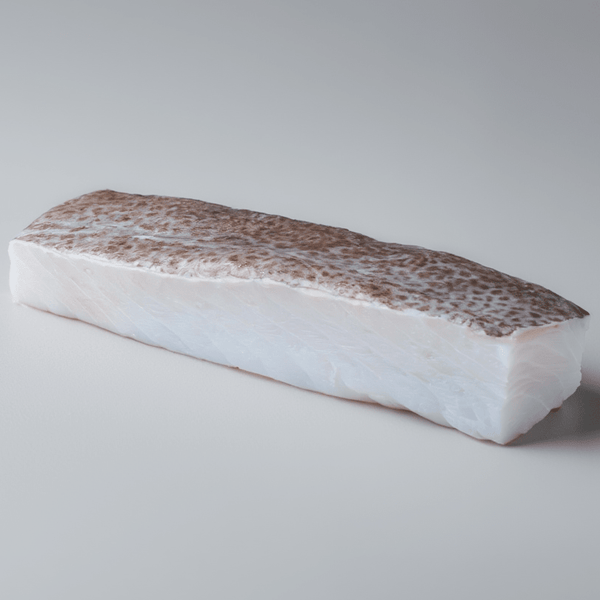
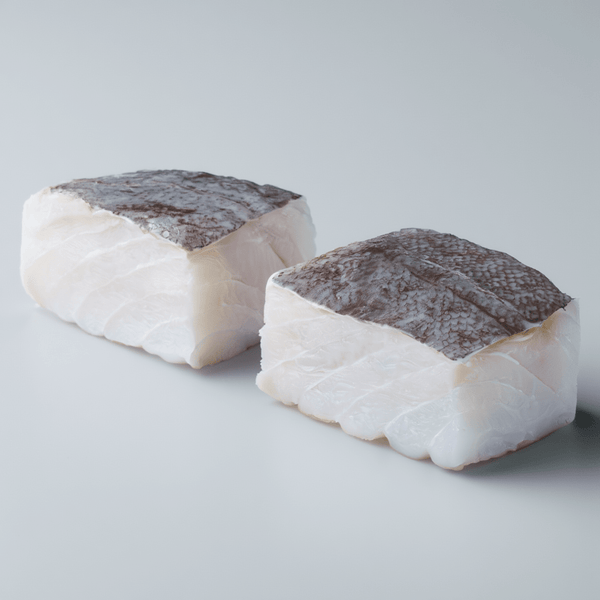
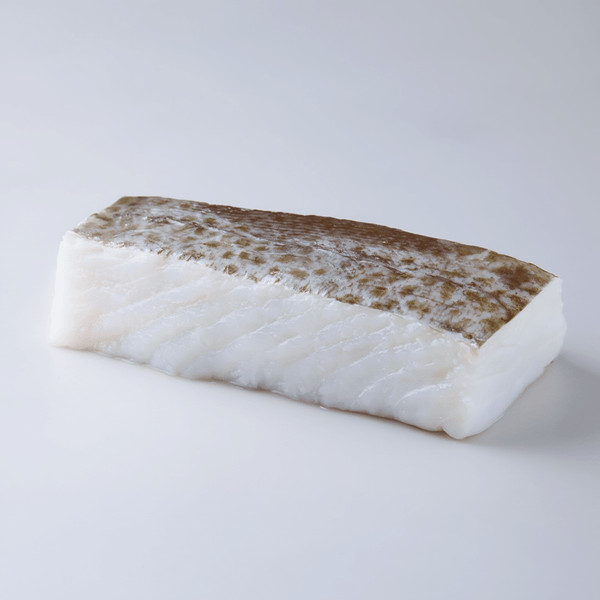
- Choose the right cut. For Bacalhau à Brás, you need loins or centers that shred well. For Bacalhau à Lagareiro, a thick, firm loin. For pastéis, cod flakes are perfect and more economical.
- Natural salt, not industrial. The best salted cod is cured with coarse salt for weeks. Be wary of cod that looks excessively white or wet: it may be a quick industrial cure.
- Desalt it well. Correct desalting (24-48h in cold water, changing the water every 8h) is as important as the quality of the cod. Excellent cod poorly desalted is a ruined experience.
Tradition or quality of origin? Both.
The conclusion of this comparison is not that Portuguese cod is bad or that Portuguese tradition is worthless. Quite the opposite: Portuguese cod culinary tradition is one of the richest in the world and deserves all respect.
What we do say is that "Portuguese cod" is not an indicator of the fish's quality, because Portugal does not fish cod. It is an indicator of processing tradition, which is valuable but incomplete.
The best way to honor Portuguese recipes is to use the best possible raw material. And the best raw material for salted cod is, consistently, that which comes from the cold waters of Iceland:
- Denser and firmer flesh due to slow growth in cold waters.
- More concentrated flavor that withstands any preparation.
- Natural gelatin that enriches the texture of dishes.
- Traceable origin and certified sustainability.
Don't choose between tradition and quality of origin. Choose both: the masterful recipes of Portuguese cuisine made with premium quality Icelandic cod. That is the way to the best possible dish.
🛒 Products mentioned in this article
⭐ 4.9/5 · Cold shipping 24-48h · Since 1990 at Mercat del Ninot
Frequently asked questions
Does Portugal fish its own cod?
In very small quantities. The Portuguese cod fleet was historically significant, but after the collapse of Newfoundland (1992), it drastically reduced. Today, more than 85% of cod consumed in Portugal is imported, mainly from Norway and Iceland.
Is cod labeled "Portuguese" from Portugal?
Normally not. "Portuguese cod" usually means cod processed in Portugal, not caught in Portuguese waters (Gadus morhua does not inhabit Portuguese waters). Legislation requires indicating the catch area, but sometimes this information is displayed in an inconspicuous way. Look for "catch area" or "origin" on the label.
Is cod processed in Portugal or Iceland better?
Both can be excellent. What matters most is not where it's processed but where the fish comes from. Icelandic cod processed in Iceland with high standards is as good as or better than Icelandic cod reprocessed in Portugal. The key is the origin of the fish, not the country of packaging.
Can I use Icelandic cod for Bacalhau à Brás?
Absolutely. In fact, the best Portuguese cod companies already use Icelandic cod as a premium raw material for their products. The dense flesh of Icelandic cod flakes perfectly for à Brás, and its concentrated flavor is noticeable even when mixed with potato and egg.
How many cod recipes does Portugal have?
It is said that over 1,000, one for every day of the year and then some. The most famous are Bacalhau à Brás, Bacalhau com Natas, Bacalhau à Gomes de Sá, Bacalhau à Lagareiro, Pastéis de Bacalhau, and Bacalhau Espiritual. All of them benefit from cod of Icelandic origin for its firm texture and intense flavor.
Related guides
- Gilded Cod: Portuguese recipe "à la dorada"
- Bacalhau à Brás: original Portuguese recipe
- Bacalhau com natas: oven-baked recipe
- Where to buy quality salted cod online
- How to desalt cod: step-by-step guide
Icelandic cod for your favorite Portuguese recipes
At Bacalalo, we offer salted and desalted cod from Iceland: loins, centers, flakes, and special cuts perfect for Bacalhau à Brás, com Natas, à Lagareiro, and all classic recipes. Traceable origin and shipping throughout Spain.
Discover more
Discover our premium selection
Seafood products carefully selected since 1990 at Mercat del Ninot, Barcelona. Refrigerated shipping 24-48h.