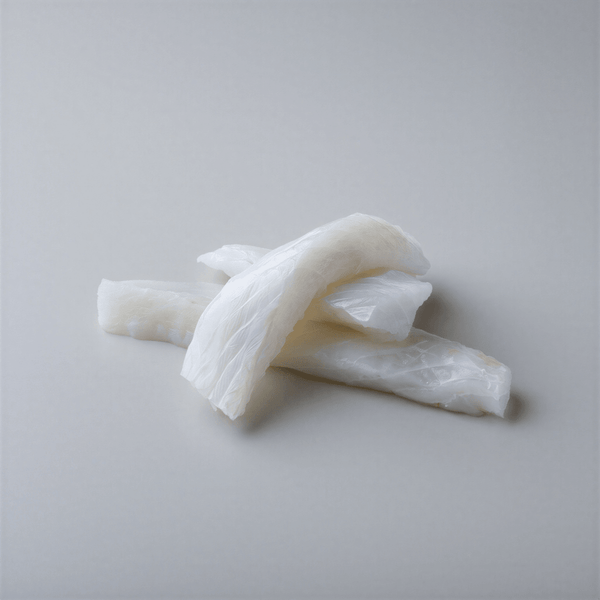
Summary: Buying quality salted cod requires knowing where to look, what to ask for, and how to distinguish a premium product from a mediocre one. In this guide, we explain the types of stores where you can find it, how to identify top-quality cod by its appearance and origin, the actual prices per cut, and the advantages of buying online versus in a physical store.
Contents
- Types of stores to buy salted cod
- How to identify quality cod
- Table of prices per cut of salted cod
- Online vs. physical store: pros and cons
- Common mistakes when buying salted cod
- Salted vs. desalted cod
- Storing salted cod at home
- Cod origins: Iceland, Norway, and beyond
- Which cut to choose for each recipe
- Buying salted cod online securely
- Salted cod in Spanish cuisine
- Frequently asked questions
Types of stores to buy salted cod
Not all salted cod retail outlets offer the same level of product or advice. Knowing the available channels and what to expect from each is the first step to making the right purchase.
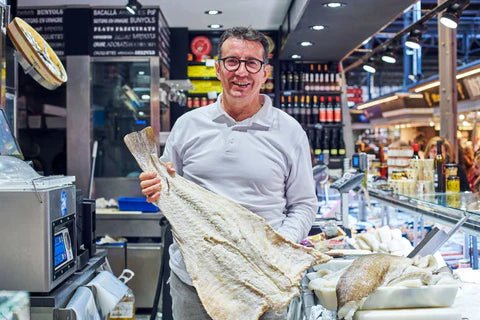
Bacallanerías are specialized stores exclusively dedicated to cod and salted fish, a commercial tradition with centuries of history in Spain, particularly rooted in the Basque Country, Catalonia, and Portugal. The shopkeeper in a bacallanería knows every piece on the counter: its origin, thickness, curing point, and the ideal recipe for each cut. This channel offers the highest guarantee of quality and advice. The problem is that few remain: the modernization of trade has drastically reduced their number.
Food markets are the next best option. Stalls specializing in salted fish and cod in markets such as Mercat del Ninot, La Boquería, Mercado de la Ribera, or San Miguel usually work with specialized suppliers and maintain product rotation that ensures freshness. Additionally, direct contact with the seller allows for custom cuts.
Neighborhood fishmongers may carry salted cod, but the quality and variety depend heavily on their supplier. Some offer excellent products; others sell generic cod without the necessary rotation. In supermarkets, salted cod is usually available pre-packaged or at the counter, but the selection is limited, staff rarely know the product in depth, and pieces may have been exposed for a long time.
Specialized online shopping has revolutionized access to quality salted cod. Stores like Bacalalo combine the expertise of a traditional bacallanería (over 30 years at Mercat del Ninot) with the convenience of home delivery, offering cod cut to order, vacuum-packed, and with full traceability.
How to identify quality cod
Distinguishing premium salted cod from mediocre cod is possible if you know what to look for. These are the quality indicators used by industry professionals.
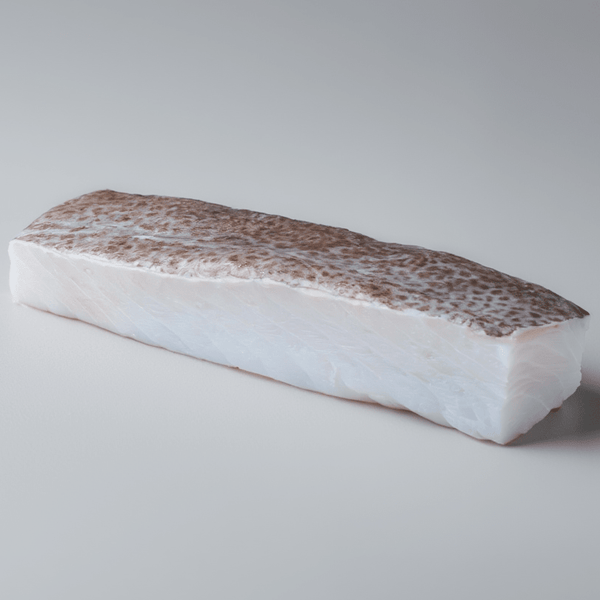
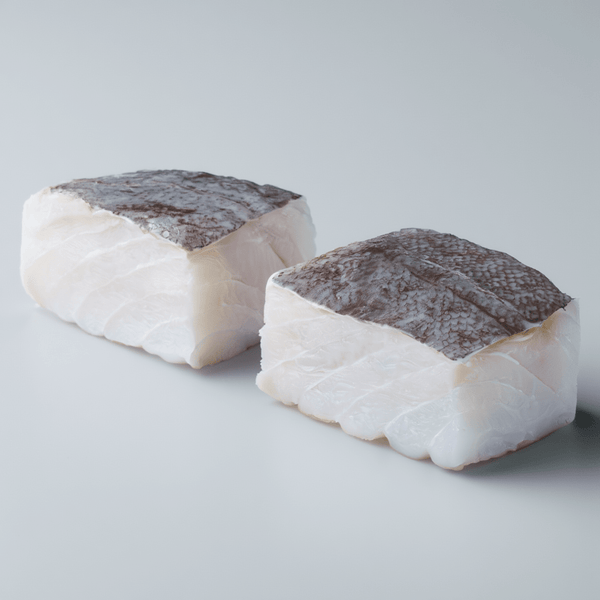
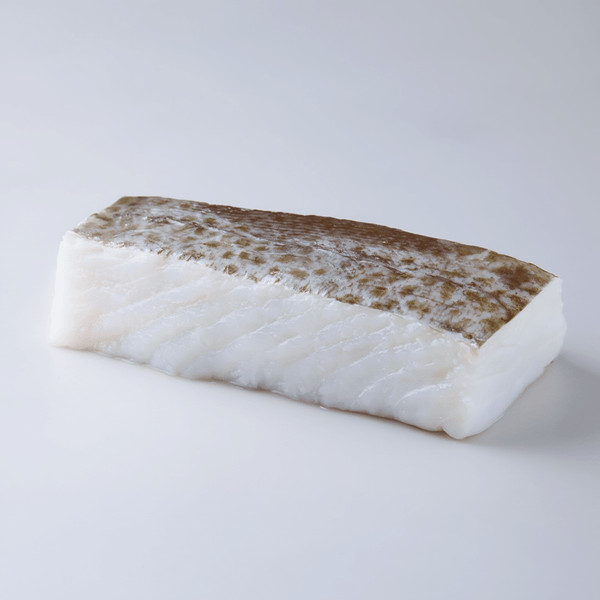
Color is the first visual indicator. Quality cod has a creamy white to ivory tone, clean and uniform. Yellowish hues indicate fat oxidation, usually due to poor preservation or a product that has been stored for too long. Pinkish or reddish spots may indicate the presence of halophilic bacteria, which are not dangerous but do suggest an uncontrolled salting process.
The thickness of the piece is a direct indicator of the original fish's quality. Loins thicker than 3 centimeters come from large, mature cod that have developed more gelatin between their muscle fibers. This gelatin is what gives cod its silky, unctuous texture when cooked. Thin, dry cod will never achieve the same quality in the mouth, no matter how you prepare it.
Origin matters greatly. North Atlantic cod (Gadus morhua) from Iceland, Norway, and the Faroe Islands is considered the best in the world. The smell of well-cured cod is mild, like clean sea, without strong or ammoniacal notes. And the texture to the touch should be firm but flexible, never stiff like cardboard (excessively dry) or soft and sticky (poor curing or excessive moisture).
Table of prices per cut of salted cod
The price of salted cod varies significantly depending on the cut, origin, and quality of the piece. This table reflects the average prices in the Spanish market for proven quality cod.
| Cut | Average price (€/kg) | Ideal use |
|---|---|---|
| Extra premium loins (+4 cm) | 28-45 €/kg | Pil pil, confit, mousseline, dishes where cod is the absolute star |
| Loins (2-4 cm) | 18-30 €/kg | Oven-baked, grilled, vizcaína, ajoarriero, the most versatile option |
| Steaks (with bone) | 12-20 €/kg | Stew, casseroles, cod with chickpeas, stews where the bone adds flavor |
| Cheeks | 35-60 €/kg | Pil pil de cocochas, green sauce, the most gelatinous and valued piece |
| Flakes / shredded | 15-25 €/kg | Croquettes, brandade, fritters, scrambled eggs, omelets |
| Whole dried cod | 10-18 €/kg | Any recipe (requires complete desalting and cutting at home) |
| Kokotxas (fresh cheeks) | 40-70 €/kg | Pil pil, battered, green sauce |
A key fact that many consumers are unaware of: salted cod loses between 20 and 30% of its weight during desalting. This means that one kilo of salted cod at 20 euros becomes about 700-800 grams of cod ready for cooking, which increases the real cost per kilo of consumable product. Already desalted cod may seem more expensive per kilo, but when comparing the final product on the plate, the difference is considerably reduced.
Related Products from Bacalalo


Recommended Products

Natural Cod Foie Gras - 120g | Smoked Cod L...
3,90 €

CHATKA Wild King Crab 60% Legs 40% Shredded | L...
95,00 €

Smoked Cod Carpaccio Artisanal Cut | 1 Tray Pack
15,90 €

Dried Cod Cheeks (1 tray) - 500g
19,95 €
Refrigerated delivery 24-48h throughout the Peninsula
Online vs. physical store: pros and cons
The decision between buying salted cod in a physical store or online depends on several factors. This comparison will help you decide based on your priorities.
| Aspect | Physical store (bacallanería / market) | Specialized online store |
|---|---|---|
| See and touch the product | Yes, you can examine each piece | No, you rely on the supplier's selection |
| Advice | Direct, immediate, personalized | Via chat, phone, or detailed product sheets |
| Variety of cuts | Depends on daily stock | Full catalog always available |
| Freshness | Variable, depends on rotation | Cut and vacuum-packed at the time of order |
| Traceability | Variable, some suppliers offer it | Complete: origin, date, batch |
| Convenience | Requires travel and specific hours | Home delivery in 24-48 hours |
| Price | Variable, possibility to negotiate | Fixed prices, sometimes with promotions |
| Desalting service | Some bacallanerías offer it | Available with professional temperature and time control |
At Bacalalo, we combine the best of both worlds: the experience of over 30 years from the bacallanería in Mercat del Ninot in Barcelona with the convenience of online shopping. Each piece is cut and vacuum-packed at the time of order, ensuring that it arrives at your door with the same freshness as if you bought it at the counter.
Common mistakes when buying salted cod
Buying salted cod seems simple, but there are common mistakes that can ruin the final result of the dish, no matter how good the recipe is.
The most common mistake is to buy solely based on price. Cheap cod is often from inferior species like ling or pollack, which are marketed as "cod" but lack the gelatin, flavor, and texture of authentic Gadus morhua. It can also be small, dry pieces, tails, or trimmings that do not yield the same culinary results.
Another frequent mistake is not asking about the origin. The label "Atlantic cod" covers a huge range of qualities. Cod from Iceland cured with sea salt is not the same as cod from less cold waters with an industrial salting process. A good seller always knows and communicates the exact origin of their product.
Confusing salted cod with fresh cod is another mistake made by beginners. They are completely different products that require different preparations. Salted cod needs a prior desalting process of 24 to 48 hours; cooking it without desalting makes it inedible. Fresh cod is cooked directly like any other fish.
Buying dried-out cod by not paying attention to its state of preservation is a costly mistake. If cod has been exposed to air for weeks on a counter without proper humidity and temperature, it will have lost water and its texture will be fibrous and irrecoverable, no matter how correctly you desalt it afterward.
Salted vs. desalted cod
The decision between buying salted cod (to desalt at home) or already desalted cod (ready to cook) depends on your available time and the recipe you plan to prepare.
Desalting cod at home requires 24 to 48 hours of immersion in cold water, changing the water approximately every 8 hours. The water temperature should be kept low (ideally in the refrigerator) to prevent the fish from deteriorating during the process. The thickness of the piece determines the exact time: a thick 4-centimeter loin needs more time than a thin steak.
Professionally desalted cod offers several advantages: temperature and time control is exact, the salt level is consistent, and you save yourself the 24-48 hour planning before cooking. It is especially recommended for recipes like bacalao al pil pil or confit, where inadequate desalting can ruin the dish.
Undesalted cod has its own advantages: a longer shelf life (months if properly stored), the ability to cut portions to your size, and a generally lower price per kilo. It is the preferred option for cooks who prepare cod regularly and have integrated the desalting process into their routine. If you are just starting, consult our guide on how to desalt cod correctly.
Storing salted cod at home
Proper storage of salted cod is simple but requires attention to some basic principles. Dry salted cod, without desalting, should be stored in a cool, dry, and dark place, wrapped in butcher paper or in a container that allows some breathability. Under these conditions, its shelf life is several months.
If the cod comes vacuum-packed, as is the case when purchased online, preservation is even simpler: keep the sealed package in the refrigerator until it's time to desalt. The vacuum prevents oxidation and moisture loss, keeping the product in optimal condition for weeks.
Already desalted cod has a much shorter shelf life, similar to any fresh fish: 3 to 4 days in the refrigerator. If you are not going to consume it within that period, freezing is a good option: wrap it well in cling film and then in an airtight bag, and it will keep in the freezer for 2 to 3 months with no noticeable loss of quality. For recipes with desalted cod, it is always preferable to thaw slowly in the refrigerator overnight.
Cod origins: Iceland, Norway and beyond
The geographical origin of cod largely determines its quality. The cold waters of the North Atlantic produce the best specimens of Gadus morhua, the authentic cod species. Iceland and Norway are the two most prestigious origins, followed by the Faroe Islands and certain areas of Canada.
Icelandic cod is renowned for being fattier and more gelatinous, qualities that make it ideal for preparations like pil pil, where the fish's natural gelatin emulsifies with oil to create the sauce. The Icelandic waters, among the cleanest on the planet, provide a clean and pure flavor profile. Norwegian cod is slightly firmer and more structured, excellent for baking and grilling.
It is important to differentiate Gadus morhua (Atlantic cod) from Gadus macrocephalus (Pacific cod), which is sold at lower prices but lacks the same gelatinous texture and depth of flavor. Some species such as ling, pollock, or blue whiting are occasionally sold as "cod" at very low prices, but these are different fish with inferior culinary results.
Which cut to choose for each recipe
Choosing the right cut for each recipe makes the difference between a memorable dish and an uninspired one. The extra premium loin, with its thickness exceeding 4 centimeters, is essential for bacalao al pil pil: the thickness guarantees the abundant gelatin that emulsifies with oil and garlic to create the sauce. It is also the ideal piece for low-temperature confits and mousselines.
Medium-thick loins (2 to 4 centimeters) are the most versatile part of the cod. They work well baked, grilled, a la Vizcaína, or al ajoarriero. This is the cut we recommend for those looking for an all-purpose piece to prepare multiple recipes with a single type of product.
Steaks with bone are the traditional cut for stews and chickpea dishes, where the bone adds flavor and body to the broth. Cocochas, the most gelatinous part of the fish, are indispensable for pil pil de cocochas and green sauce. And cod flakes are the most practical option for croquettes, brandada, and fritters, as they are already flaked and boneless.
Buy salted cod online with guarantee
The purchase of salted cod online has grown significantly in recent years, driven by the improvement of refrigerated shipping services and the difficulty of finding specialized cod shops outside large cities. To buy with confidence, check these points before placing your order.
The supplier must clearly indicate the origin of the cod (species, catch area), offer vacuum packaging that preserves quality during transport, and use a shipping service that guarantees the cold chain if the product is desalted. Product photos must be real and representative, not generic.
At Bacalalo, we offer salted cod from Iceland with full traceability: we know which boat each piece comes from. The cutting is done at the time of order, it is vacuum-packed and shipped under controlled temperature conditions. It's the same quality we serve every day at our stall in Mercat del Ninot in Barcelona, with the convenience of receiving it at home in 24 to 48 hours.
Salted cod in Spanish cuisine
Salted cod holds a privileged place in Spanish gastronomy, with a repertoire of recipes covering all autonomous communities. From Basque pil pil to Catalan brandada, including cod a la vizcaína, Navarrese ajoarriero, Andalusian soldaditos de Pavía, and Castilian cod with tomato, it is an ingredient that has marked peninsular cuisine for centuries.
Its presence in Spanish cuisine has deep historical roots. For centuries, salted cod was the main source of fish protein in the interior of the peninsula, where fresh fish was unavailable. Salt allowed it to be preserved for months and transported by mule to the most remote villages from the coast. This practical necessity generated an extraordinarily rich and diverse culinary repertoire.
Today, salted cod has transcended its humble origins to become a high-end culinary product. The country's most renowned chefs work with it using modern techniques (low-temperature confits, vacuum cooking, foams, and mousselines) without losing sight of the essence of the product. For both classic and contemporary recipes, the quality of the raw material remains the determining factor.
Frequently asked questions
Does salted cod expire?
Dry salted cod has a very long shelf life, several months, if stored in a cool, dry, dark place. Salt acts as a natural preservative that inhibits bacterial growth. However, over time it loses moisture and can oxidize, turning yellowish and losing quality. Desalted cod, on the other hand, has a shelf life of 3 to 4 days in the refrigerator, similar to any fresh fish.
How much salted cod to buy per person?
For undesserted salted cod, estimate between 200 and 250 grams per person, as the product loses 20-30% of its weight during desalting. If you buy already desalted cod, 180 to 200 grams per person is enough as a main course. For preparations where cod is shredded (croquettes, brandada, fritters), 100 to 150 grams of flakes per person will give you a generous portion.
Is it better to buy salted or desalted cod?
It depends on your situation. Salted cod is cheaper per kilo, has a longer shelf life, and allows you to cut portions to your size. Desalted cod saves you 24-48 hours of preparation and ensures a consistent salt point, which is especially important for delicate recipes like pil pil. If you cook cod regularly, salted is more practical. If you cook it occasionally, desalted makes the process much easier.
Is Icelandic cod better than Norwegian cod?
Both origins produce top-quality cod. Icelandic cod is reputed to be slightly fattier and more gelatinous, qualities that make it ideal for pil pil and confit. Norwegian cod tends to be somewhat firmer and more structured, excellent for baking and grilling. The difference is subtle, and both are in the premium quality category. What is truly important is that it is Gadus morhua from the North Atlantic, regardless of whether it comes from Iceland or Norway.
Can you buy quality salted cod in the supermarket?
Some supermarkets with a large fish section offer acceptable salted cod, but the turnover is usually lower than in a specialty cod shop or store, and the staff rarely has in-depth product knowledge. For recipes where cod is the main ingredient (pil pil, confit), where the quality of the raw material is greatly noticed, we recommend buying from a specialist who guarantees origin, thickness, and freshness.
How do I know if salted cod is bad?
Signs of bad salted cod are: intense yellowish color or pink spots, strong ammonia or rancid odor, sticky or excessively soft texture, and presence of wet salt crystals or discolored areas. Good quality cod has a uniform creamy white color, a mild sea smell, a firm but flexible texture, and a homogeneous salt layer. If in doubt, do not buy it.
How long does it take to desalt cod?
The desalting time depends on the thickness of the piece. Thin slices or flakes need between 12 and 24 hours. Medium-thick loins (2-3 cm) require about 24-36 hours. Extra premium loins over 4 cm can take up to 48 hours. Desalting is done in cold water, preferably in the refrigerator, changing the water every 8 hours. The water temperature must be kept low to prevent the fish from deteriorating during the process.
Can salted cod be frozen?
Undesalted salted cod does not need freezing, as salt preserves it for months. However, if you have already desalted cod that you will not consume within 3-4 days, freezing is perfectly valid: wrap it well in cling film, place it in an airtight bag, and freeze it. It will keep for 2 to 3 months with no noticeable loss of quality. Always thaw it slowly in the refrigerator, never at room temperature or in the microwave.
What is the difference between cod, ling, and pollock?
Authentic cod is Gadus morhua, a North Atlantic fish with white flesh, gelatinous texture, and delicate flavor. Ling (Molva molva) and pollock (Pollachius pollachius) are different species sometimes sold as "cod" at lower prices. They have a less nuanced flavor, a more fibrous texture, and lack the natural gelatin that makes Gadus morhua unique. Whenever possible, check that the label indicates the exact species.
Is extra premium loin worth it for pil pil?
For pil pil, extra premium loin is not a luxury but a technical necessity. The thickness greater than 4 centimeters ensures that the piece contains the necessary amount of gelatin so that, when confited in oil with garlic, the emulsion that constitutes the pil pil sauce is formed. With a thin loin, the gelatin is insufficient, and the sauce does not bind correctly. It is one of the few recipes where the quality difference of the product directly translates into the technical success or failure of the dish.
How does online salted cod shipping work?
Online salted cod shipping is generally done in vacuum-packed containers inside insulated boxes. Undesalted salted cod does not require a strict cold chain, as salt preserves it, but vacuum packaging protects the product from oxidation and moisture loss during transport. Desalted cod does require refrigerated transport with cold gel. Usual delivery times are 24 to 48 hours in mainland Spain.
What is the best cut of cod for croquettes?
For cod croquettes, the most practical and efficient option is cod flakes or shredded cod, which already comes boneless and ready to incorporate into the béchamel. If you prefer a more intense flavor, you can buy loins or steaks, desalt them, and shred them yourself: the result is slightly superior in texture. Estimate about 100-150 grams of shredded cod per person for a generous serving of croquettes.
Related Guides
- How to desalt cod quickly and well at home
- Bacalao al pil pil: Basque recipe step by step
- 15 recipes with desalted cod: quick and easy ideas
- Cod kokotxas al pil pil: what they are and how to prepare them
- Cod with chickpeas: stew and traditional recipe
Discover our premium salted cod from Iceland and desalted cod ready to cook at Bacalalo. More than 30 years of experience in the Mercat del Ninot in Barcelona, now with shipping throughout Spain.
Products you might be interested in