Summary: Cod with mousseline sauce is one of the great dishes of Basque haute cuisine: a loin confited in oil at low temperature, topped with an airy sauce of clarified butter, egg yolks, lemon, and whipped cream. In this complete guide, you will find the step-by-step recipe, Arzak's influence on its popularization, the difference between mousseline, hollandaise, and beurre blanc, pairing and presentation suggestions, and everything you need to replicate a restaurant-quality dish in your kitchen.
Contents
- What is mousseline sauce
- The influence of Arzak and Basque cuisine
- Mousseline vs hollandaise vs beurre blanc
- Ingredients for 4 servings
- Preparation of confited cod
- Mousseline sauce step by step
- Classic recipe vs modern version
- What fish pair with mousseline
- Wine pairing
- Presentation and plating
- Mousseline variations
- Frequently asked questions
What is mousseline sauce
Mousseline sauce is a derivative of hollandaise sauce that incorporates whipped cream at the end of its preparation. The name comes from the French mousseline, which evokes the texture of mousseline fabric: light, delicate, almost transparent. On the palate, mousseline is airier and softer than hollandaise, with a richness that envelops without overpowering.
Its basic composition is simple: egg yolks emulsified with clarified butter, lemon juice, and a pinch of cayenne, to which semi-whipped cream is incorporated with gentle, folding motions. The cream adds volume and lightness, transforming a dense sauce into a silky foam that melts over the hot cod.
Mousseline belongs to the family of great emulsified sauces in French cuisine, categorized as such by Escoffier in his Guide Culinaire. However, its greatest modern heyday occurred in the kitchens of the Basque Country, where chefs like Arzak adopted it as a natural companion to confited cod. Pil pil is the native emulsion; mousseline is the French emulsion that Basques made their own.
The influence of Arzak and Basque cuisine
Juan Mari Arzak popularized cod with mousseline sauce in the 1970s, during the movement known as the New Basque Cuisine. Arzak and his contemporaries sought to elevate traditional Basque ingredients with French haute cuisine techniques. Cod, an omnipresent staple in Northern Spanish gastronomy, found in mousseline a companion that dressed it up without masking its flavor.
What Arzak did was respect the nature of the cod — its flaky texture, its salty undertones, its gelatin — and simply accompany it with a sauce that enhanced those qualities instead of competing with them. Confit in oil at a low temperature, which preserves the fish's juiciness, became the ideal cooking method for this pairing.
Today, cod dishes with mousseline or its variations appear on the menus of restaurants like Mugaritz, Martin Berasategui, Nerua, and Akelarre. The dish has transcended Basque cuisine to become a benchmark for haute cuisine cod throughout Spain. And the good news is that the technique, while requiring attention, is within reach of any home cook with good ingredients.
Mousseline vs hollandaise vs beurre blanc
All three are butter-based emulsified sauces, but their differences in composition and texture determine which dishes they pair best with. Understanding the differences will help you choose the correct sauce for each cod preparation.
| Characteristic | Mousseline | Hollandaise | Beurre blanc |
|---|---|---|---|
| Base | Yolks + butter + whipped cream | Yolks + butter | Wine reduction + butter (no yolks) |
| Texture | Airy, frothy, light | Dense, creamy, unctuous | Silky, fluid, shiny |
| Acidity | Mild (lemon attenuated by cream) | Pronounced (direct lemon) | Marked (white wine + vinegar) |
| Difficulty | Medium-high | Medium | Medium |
| Can be reheated | No | Carefully, in a double boiler | No |
| Best with cod | Confit, steamed | Pan-fried, baked | Steamed, poached |
For the confited cod we prepare in this recipe, mousseline is the optimal choice. Its lightness complements the natural richness of the confited fish without creating an excessively fatty dish. Hollandaise, although delicious, can be too dense when combined with the confit oil. Beurre blanc is an excellent alternative if you prefer a more pronounced acidity.
Related Cod Products


Recommended Products

Natural Cod Foie Gras - 120g | Smoked Icelandic C...
3,90 €

CHATKA Wild King Crab 60% Legs 40% Shredded | L...
95,00 €

Smoked Cod Carpaccio Artisanal Cut | 1 Tray Pack
15,90 €

Dried Cod Cheeks (1 tray) - 500g
19,95 €
Refrigerated shipping 24-48h to all of mainland Spain
Ingredients for 4 servings
For the confited cod
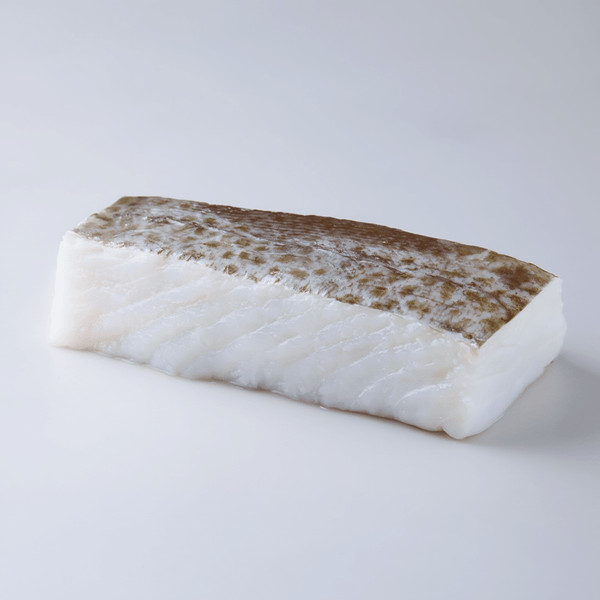
- 4 thick desalted cod loins (180-200g each, with skin)
- 250 ml of mild extra virgin olive oil (Arbequina or similar)
- 2 whole garlic cloves, crushed with a knife
- 1 sprig of fresh thyme
- 1 bay leaf
For the mousseline sauce
- 3 egg yolks at room temperature
- 150g warm clarified butter (not hot)
- Juice of half a lemon, freshly squeezed
- 100 ml of very cold whipping cream (min. 35% fat)
- 1 tablespoon cold water
- Fine salt, freshly ground white pepper, cayenne pepper
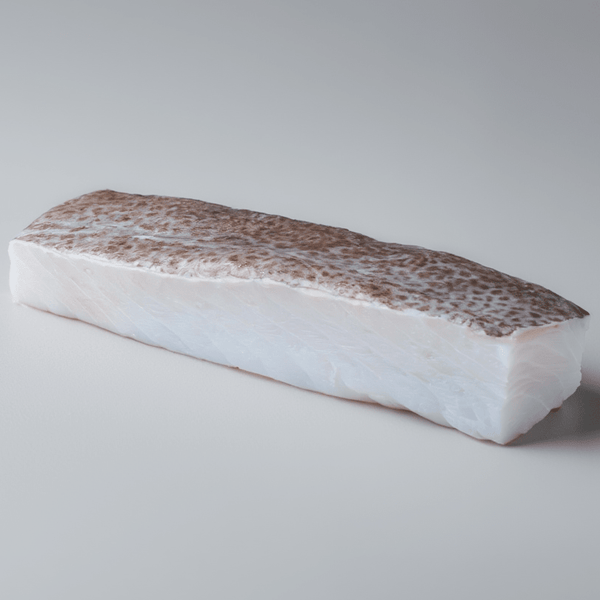
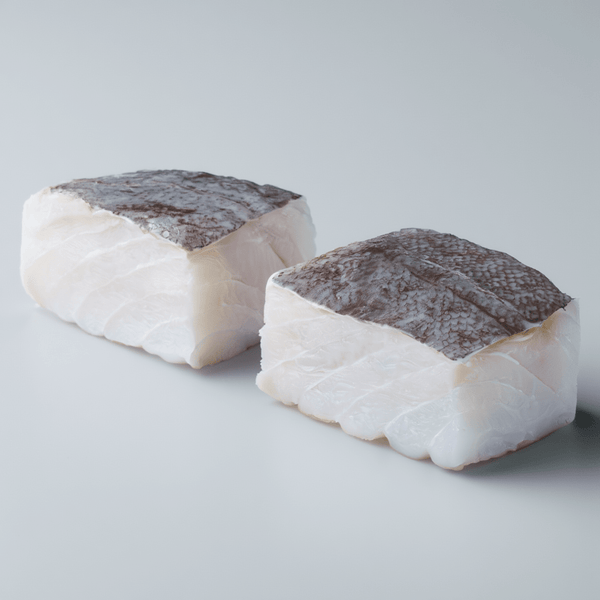
The quality of the cod determines the final result. For a dish of this caliber, use extra premium loins from Iceland: the thickness of the loin allows for juicy confit, and the texture remains firm when plated. Thin loins fall apart easily and do not withstand the manipulation required for assembly.
Preparation of confited cod
Confit is a slow cooking process in oil at a low temperature that transforms cod into a silky, juicy, and tender piece. It is not frying: the oil should never smoke, bubble, or exceed 65°C. Patience is the only technique you need.
- Dry the loins with paper towels: surface moisture causes splattering and hinders even cooking. Dry them thoroughly on both sides.
- Heat the aromatic oil: In a wide pan or earthenware pot, pour the oil with the crushed garlic, thyme, and bay leaf. Heat over minimum heat for 5 minutes. The oil should be lukewarm to the touch, between 55 and 65°C. If you have a kitchen thermometer, use it; it makes a difference.
- Place the loins skin side up: Arrange the loins in a single layer without overlapping, with the skin facing up and the flesh in contact with the oil. If the oil does not cover them at least halfway, add a little more.
- Confit for 12-15 minutes: without touching the loins, without moving the pan. You will see how they begin to release a whitish gelatin: this is a sign that the cooking is progressing correctly. If the oil starts to bubble, remove the pan from the heat for 30 seconds.
- Carefully turn over: With a wide spatula, flip each loin so the skin is down. Cook for 4-5 more minutes.
- Remove and keep warm: Transfer the loins to a preheated plate and cover with aluminum foil. They will stay in perfect condition for 10-15 minutes while you prepare the sauce.
If you are not skilled at desalting cod, opt for already desalted cod. Excess salt in the loin would ruin the delicacy of the dish.
Mousseline sauce step by step
Mousseline sauce requires attention and temperature control, but it is not difficult if you follow each step. The fundamental trick: everything must be lukewarm, never hot. Excessive heat will curdle the yolks and break the emulsion.
- Whip the cream: With very cold cream (directly from the fridge) and cold whisk, beat until soft peaks form. Do not whip it completely: you are looking for semi-whipped cream that will easily incorporate. Reserve it in the fridge.
- Prepare the bain-marie: Place a saucepan with 3-4 cm of water to boil and put a metal bowl on top that does not touch the water. Lower the heat so that the water produces steam but does not boil vigorously. The bowl should be warm, not scalding.
- Emulsify the yolks: In the bowl over the bain-marie, combine the 3 egg yolks with the tablespoon of cold water and the lemon juice. Whisk continuously and vigorously for 3-4 minutes. The yolks should triple in volume, become frothy, and turn a pale yellow color. The finger test: if you dip your finger, it should feel warm but never hot.
- Remove from bain-marie: This step is important. Take the bowl off the heat before adding the butter. The residual heat from the bowl is sufficient.
- Incorporate the clarified butter: Start with a few drops, whisking constantly. When you see the emulsion form (the mixture thickens and shines), pour in a thin, steady stream, continuing to whisk. The sauce should reach a consistency similar to a light mayonnaise.
- Season: fine salt, freshly ground white pepper, and a minimal pinch of cayenne pepper. The cayenne should not be noticeable as spicy, only as a background warmth that balances the richness of the butter.
- Incorporate the cream: Using a spatula, fold in the semi-whipped cream with gentle, upward motions. Do not whisk: folding motions preserve the air trapped in the cream. The sauce should be airy, shiny, and light.
Mousseline sauce is served immediately. It cannot be reheated or kept for long. Prepare it just before plating, with the cod already confited and the garnishes ready.
Classic recipe vs modern version
The classic recipe for cod with mousseline sauce, as it was cooked in Basque restaurants in the 70s and 80s, presented the confited loin on a bed of potato and the mousseline sauce spooned over it. It was a straightforward dish, generous with sauce, without too many aesthetic complications.
The modern version, influenced by signature cuisine trends, has evolved in several directions. Current chefs tend to reduce the amount of sauce and apply it strategically: a streak, a side dot, a quenelle. The garnish has diversified: potato foams, vegetable textures, squid ink emulsions, crispy cod skin.
For home cooking, the classic version is more practical and satisfying: a good loin, generous sauce, and a simple garnish. The modern version looks spectacular in photographs but requires technical elements (siphons, dehydrators, gelling agents) that unnecessarily complicate home preparation. Master the classic first; creativity will come later.
| Aspect | Classic version | Modern version |
|---|---|---|
| Sauce | Generous, covering the cod | Minimal, as a decorative accent |
| Garnish | Boiled potato or puree, spinach | Foams, textures, crispy elements |
| Plating | Center of the plate, abundant | Asymmetrical, minimalist |
| Difficulty | Medium | High (additional techniques) |
| Total time | 45-60 minutes | 90-120 minutes |
| Ideal for | Special dinner at home | Signature cuisine, competitions |
Which fish pair well with mousseline?
Although cod is the most iconic pairing, mousseline works with other firm-textured, delicately flavored fish and seafood. The key is that the fish should not overpower the sauce: the mousseline accompanies, it doesn't compete.
- Hake: its white, soft flesh is a perfect canvas for mousseline. Being more delicate than cod, it requires less confit time (8-10 minutes).
- Monkfish: the firmness of monkfish holds up very well to confiting and the sauce. It is the option for those seeking a meatier texture.
- Turbot: the king of flatfish. Its natural gelatin harmonizes with mousseline exceptionally well. Expensive, but superb results.
- Prawns: briefly confited (3-4 minutes) and bathed in mousseline make a luxurious appetizer.
- White asparagus: outside the world of fish, white asparagus with mousseline is a classic of French cuisine that works as an appetizer or side dish.
Cod has an advantage over all of them: its salty background and natural gelatin create a unique contrast with the sweetness and lightness of the mousseline. It's the combination Basque chefs chose for a reason, and it's hard to improve upon.
Wine pairing
Cod with mousseline is a rich, buttery dish with a subtle lemon acidity. It needs a wine that complements that richness without overpowering it and provides freshness to cleanse the palate between bites.
- Txakoli: the natural choice if you respect the Basque origin of the dish. Its vibrant acidity and citrus notes cut through the richness of the mousseline like no other wine. Serve very chilled (6-8 C).
- Albariño Rías Baixas: more body than Txakoli, with notes of white peach and flowers that complement the delicacy of the sauce. A versatile and easy-to-find option.
- Chablis (Burgundy): the quintessential French pairing for butter-based sauces. Its minerality and acidity balance the richness of the dish with elegance.
- Godello del Bierzo: a wine with character, minerality, and a hint of richness that pairs well with mousseline. Less known but excellent.
- Champagne Brut: for a special occasion, a brut champagne elevates cod with mousseline to a celebratory dish. The bubbles cleanse, the acidity balances, the occasion justifies it.
Avoid red wines, full-bodied rosés, or overly fruity or oaky whites. Mousseline needs freshness and acidity in its glass companion.
Presentation and plating
The plating of cod with mousseline should convey elegance and simplicity. It's not a dish to overload with elements: the spotlight is shared by the cod and the sauce.
- Choose a large white plate: the white background enhances the color of the cod and the sauce. Deep plates or bowls work well because they contain the sauce without it spreading.
- Place the garnish first: a bed of smooth mashed potatoes, sautéed spinach with pine nuts, or fresh peas with mint. Centered, not occupying more than a third of the plate.
- Place the loin on the garnish: with the skin facing up if it is golden and intact, or with the most presentable side visible. The loin should be seen whole, without flaking.
- Nappe with the mousseline: pour the sauce around the cod and partially over it, allowing part of the skin or surface of the fish to remain visible. The sauce should flow but not flood.
- Final touch: a few sprigs of chervil, finely chopped chives, or a few Maldon salt flakes on the skin. A drizzle of green extra virgin olive oil adds color and aroma.
Mousseline oxidizes and loses its airy texture in minutes. Plate and serve immediately. Do not leave the dish waiting under hot lights or cover it with a cloche.
Mousseline variations
Once you've mastered classic mousseline, you can experiment with variations that add different nuances without losing the essence of the sauce:
Saffron mousseline: infuse 6-8 saffron threads in one tablespoon of hot water for 10 minutes. Add the infusion to the egg yolks before emulsifying. The result is a golden sauce with a floral and slightly bitter taste that pairs extraordinarily well with cod.
Smoked paprika mousseline: replace the cayenne pepper with half a teaspoon of sweet smoked paprika. The smokiness of the paprika dialogues with the salty background of the cod and provides an attractive orange color. This is the most Spanish version of the mousseline.
Cava mousseline: replace the lemon juice with a cava reduction (100 ml reduced to 2 tablespoons). The acidity of cava is more subtle and vinous than lemon, and it gives the dish a festive touch.
Herb mousseline: add a tablespoon of finely chopped parsley, chervil, and tarragon to the finished sauce. The herbs add freshness, color, and aromatic complexity. This variant connects best with the green sauce universe.
Frequently Asked Questions
What is the difference between mousseline and hollandaise sauce?
Hollandaise sauce consists of egg yolks emulsified with clarified butter and lemon juice. Mousseline is a hollandaise to which whipped cream is incorporated at the end, which gives it a more airy, light, and voluminous texture. On the palate, hollandaise is dense and unctuous, while mousseline is perceived as a delicate foam that melts on contact with hot cod.
Can my mousseline sauce curdle?
Yes, mousseline can curdle if the butter is too hot when added, if you incorporate it too quickly, or if the egg yolks overheat in the bain-marie. If it curdles, remove the bowl from the heat immediately, add a tablespoon of ice water, and whisk vigorously. In most cases, the emulsion will recover. If it doesn't work, start with a fresh egg yolk in a clean bowl and gradually pour the curdled sauce over it.
Can I use frozen cod for this dish?
For a haute cuisine dish like cod with mousseline, desalinated salted cod offers a far superior result to frozen cod. Salted cod has more flavor, better texture, and more natural gelatin, which are precisely the qualities that make this dish work. Frozen cod tends to release water during confiting, diluting the oil and producing a softer, less defined texture.
Is it difficult to make at home?
The real difficulty lies in the mousseline sauce, which requires controlling the temperature of the bain-marie and the speed of incorporating the butter. Confit cod is very simple: you just need patience and a thermometer. If you master homemade mayonnaise, mousseline is a natural step. The key is not to rush and to keep everything warm, never hot.
Can anything be prepared in advance?
Confit cod can be prepared up to 30 minutes in advance and kept covered on a warm plate. The cream can be whipped in advance and refrigerated. However, the egg yolk and butter emulsion and the final incorporation of the cream must be done just before serving. The finished mousseline cannot be waited for, reheated, or stored.
What is clarified butter and how is it made?
Clarified butter is butter from which milk solids and water have been removed, leaving only pure fat. To make it, melt butter over very low heat without stirring, remove the white foam from the surface with a spoon, and carefully pour the liquid golden fat, leaving the white residue at the bottom of the saucepan. Clarified butter does not burn as easily as regular butter and produces more stable emulsions.
Can I substitute butter with olive oil?
Technically you can make an egg yolk emulsion with olive oil, but the result would be closer to an alioli than a mousseline. Butter is essential for the characteristic flavor and texture of mousseline. If you are looking for a lighter alternative, reduce the amount of butter to 100g and increase the whipped cream to 150ml, but do not eliminate butter completely.
What thickness should the cod loin be?
For confiting, the ideal loin is between 3 and 4 centimeters thick. Thin loins (less than 2 cm) cook too quickly, fall apart easily, and lose juiciness. Very thick loins need more confiting time and can be raw in the center. Bacalalo's extra premium Icelandic loins have the perfect thickness for this preparation.
How much mousseline sauce should I prepare per person?
The indicated recipe (3 egg yolks, 150g butter, 100ml cream) yields enough sauce for 4 generous servings. Calculate approximately 60-80ml of finished sauce per diner. It is preferable to have a little extra sauce than not enough, because dipping bread in the leftover sauce is one of the great pleasures of this dish.
Does mousseline contain vinegar?
The classic mousseline recipe does not contain vinegar; the acidity comes exclusively from lemon juice. Some variations incorporate a reduction of white wine vinegar with shallots (as in Béarnaise sauce), but that would be a different sauce. For traditional mousseline accompanying cod, lemon is the appropriate acid: milder and more aromatic than vinegar.
Can I make mousseline with a Thermomix or food processor?
Yes, and it's actually easier. The Thermomix allows precise temperature control (set to 65 C) while emulsifying at a constant speed, eliminating the two main risks: overheating and uneven whisking. Melt the butter at 80 C, then reduce to 65 C, add the egg yolks and lemon, set for 8 minutes at speed 4. The whipped cream is incorporated by hand at the end, outside the machine.
What do I do if I have leftover confit cod?
Leftover confit cod can be stored submerged in its own confit oil in the refrigerator for up to 3 days. The next day, you can flake it and use it to make salads, toasts, or empanada fillings. You can also gently reheat it in the same oil over low heat for 5 minutes. What you should not do is reheat the mousseline: that needs to be prepared fresh.
Related guides
- Bacalao al pil pil: Basque recipe step by step
- Cod in green sauce with parsley and clams
- Bacalao a la bilbaína: Club Ranero recipe
- Cod with potatoes baked and stewed
- Where to buy quality salted cod online
- Baked gratin cod
For this haute cuisine dish, you need Premium loins with the perfect thickness for confiting. Discover our extra premium Icelandic loins at Bacalalo.
Discover more