Baked anchovies are one of those dishes that prove that simplicity, well executed, always wins. Baking results in fish that is juicy on the inside, lightly golden on the outside, and without the smell or splattering of frying. It’s a quick recipe (barely 15 minutes of cooking), healthy, and economical, ideal for both an appetizer and a light main course.
Before turning on the oven, it’s important to clarify a very common confusion, as it dictates the entire recipe: cooking fresh anchovies (boquerones) is not the same as cooking salted anchovies in oil. In this guide, I’ll explain which fish to use, the ingredients, a step-by-step process with exact timings, tips for juicy results, and several variations (with tomato, with bread, Arguiñano style).
Which anchovy to use: fresh, boquerón, or salted
This is the first and most important decision. In Spain, the same fish—Engraulis encrasicolus—goes by two names depending on how it’s prepared:
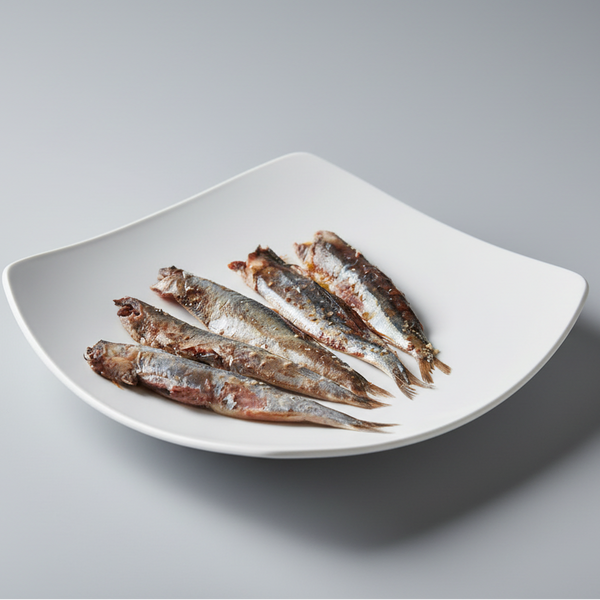
- Fresh anchovy or boquerón: This is the raw, silvery oily fish you buy at the fish market. This is the one that gets baked. When we talk about "baked anchovies" as a cooking recipe, we almost always refer to this fresh fish.
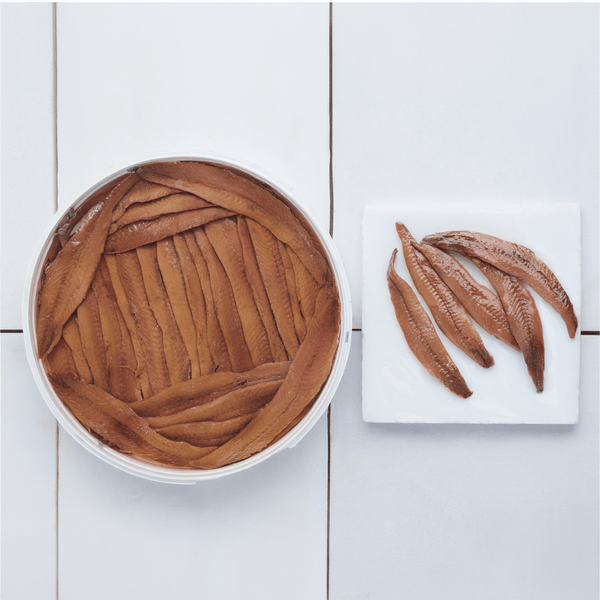
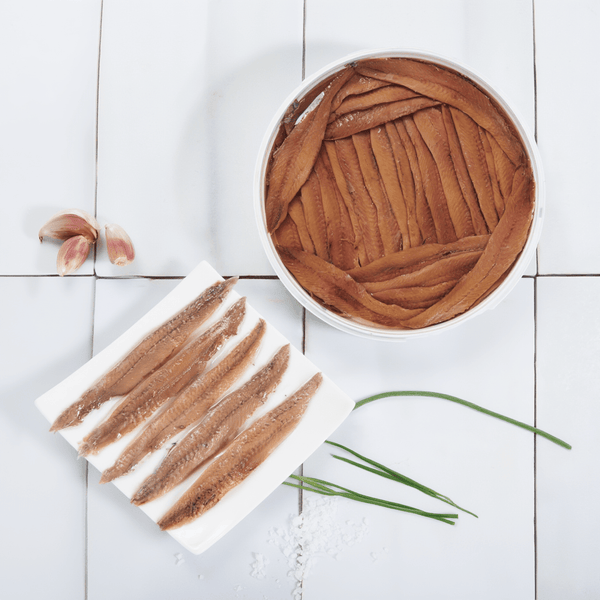
- Salted anchovy (in oil): This is the fillet cured in salt for months and then preserved in oil. This is NOT baked as a main dish: it is already cured, ready to eat, and baking would dry it out and make it excessively salty. It is used, however, as an ingredient that adds umami to other preparations (on toasted bread, melted into a sauce, on bread with tomato).
If you have doubts about the differences between the two products, I explain everything in the guide anchovy vs. boquerón: differences in flavor, price, and when to use each. For this baked recipe, buy fresh anchovies / boquerones, preferably medium to large in size for easier handling.
How to choose fresh fish
Look for specimens with bright, bulging eyes, vivid red gills, firm skin with bluish reflections, and a clean, fresh sea smell (never ammonia-like). Estimate about 200-250g per person as a main dish, or a little less if it’s an appetizer. Ask the fishmonger to clean them for you (gutted and, if you wish, deboned) to save work at home.
Ingredients
For 4 people:
- 800g fresh anchovies (boquerones), cleaned
- 3 cloves garlic
- 1 bunch fresh parsley
- Juice of 1 lemon
- 60ml extra virgin olive oil
- 1 small glass white wine (optional, about 80ml)
- Breadcrumbs (2-3 tablespoons, optional for gratin)
- Salt and freshly ground black pepper
Step-by-step preparation
- Clean the anchovies (5 min). If they haven't been cleaned for you, remove the head by gently pulling it downwards so it removes the guts. Open the fish along the belly, remove the central bone by running your finger along it, and rinse under cold water. Dry them thoroughly with paper towels: moisture is the enemy of browning.
- Preheat the oven to 200°C (390°F) with top and bottom heat. A hot oven is key for the fish to cook quickly and not release water.
- Prepare the dressing. Finely chop the garlic and parsley. Mix them in a bowl with the olive oil, lemon juice, salt, and pepper.
- Arrange the anchovies in a baking dish, fanned out or as fillets, without overcrowding. Drizzle with white wine and spread the garlic, parsley, and lemon dressing over them. If you want a crispy layer, sprinkle with breadcrumbs at this point.
- Bake for 8 to 12 minutes at 200°C (390°F). The exact time depends on the size: for medium boquerones, 8-10 minutes is sufficient. You'll know they're ready when the flesh turns from translucent to opaque white and separates easily.
- Gratin at the end (optional). For a golden finish, switch to grill mode for the last 2 minutes, watching carefully to prevent the breadcrumbs from burning.
- Serve immediately, with the pan juices over them and, if desired, a little more fresh lemon.
Tips for juicy, not dry, anchovies
The most common mistake with baked oily fish is overcooking: it becomes dry and fibrous. To avoid this:
- Don't overcook. Anchovies are thin and cook in minutes. It's better to undercook: residual heat finishes cooking them outside the oven.
- Oven hot from the start. If you put the fish in a cold oven, it releases water and boils (instead of roasting), losing texture.
- Dry them before baking. Wet fish never browns.
- Salt just before baking, not too far in advance, to prevent it from losing juices.
- A drizzle of oil on top creates a film that retains moisture and promotes browning.
Recipe Variations
Baked anchovies with tomato
A more Mediterranean and juicy version. Line the bottom of the baking dish with slices of ripe tomato (or crushed tomatoes), place the anchovies on top, add the garlic, parsley, and a good drizzle of oil, then bake as usual. The tomato adds acidity, color, and keeps the fish even juicier. It's a great recipe for using up ingredients during peak tomato season.
Baked anchovies with bread (gratinated)
The crispy variation. Mix breadcrumbs with chopped garlic, parsley, and a little oil to form a sandy paste, spread it over the anchovies, and gratin. This creates a golden, au gratin crust that contrasts with the tender flesh. If you like bread with fish, you'll love our bread with tomato and anchovies for using up leftovers.
Baked anchovies Arguiñano style
The classic formula popularized by Karlos Arguiñano is based on simplicity: open anchovies, a paste or finely chopped garlic and parsley, olive oil, a touch of white wine, and a hot oven for a few minutes. The charm lies in the golden garlic refrito (sautéed mixture) poured over them when they come out, which perfumes the entire dish. It is, in essence, the base recipe of this guide taken to its maximum simplicity.
Baked Boquerones: The Crispy Version
If you're looking for a crispier finish, almost like fried boquerones but without oil, we recommend following our specific recipe for crispy baked boquerones without frying, with a light coating and adjusted cooking times to achieve that golden crispness without losing juiciness.
Wine Pairing: What wine pairs with baked anchovies
Baked oily fish, with its garlic, lemon, and oil, calls for young, fresh, and acidic white wines: an Albariño, a Txakoli, or a Verdejo work wonderfully and cleanse the palate between bites. If the recipe includes tomato, a dry rosé also fits well. For more in-depth information, consult our guide on anchovy and wine pairing.
Storage: How to store leftovers
Baked anchovies are best enjoyed fresh, but if you have leftovers, store them in an airtight container in the refrigerator and consume within a maximum of 1-2 days. Reheat them gently in the oven (not the microwave, which dries them out) covered with aluminum foil. We do not recommend freezing already cooked fish, as it loses texture and juiciness when thawed.
The case of salted anchovies is different: if you enjoy cured preserves, we explain how to handle them in how to store open anchovies: the definitive guide and how to prepare them in cleaning salted anchovies step by step.
Frequently Asked Questions
How long do anchovies bake for?
Between 8 and 12 minutes at 200°C (390°F), depending on size. Medium boquerones are usually ready in 8-10 minutes. They are done when the flesh turns opaque white and separates easily.
What temperature should anchovies be baked at?
At 200°C (390°F) with heat from above and below. A hot oven from the start prevents the fish from releasing water and boiling instead of roasting.
Can salted anchovies (in oil) be baked?
Not as a main dish. Salted anchovies are already cured and ready to eat; baking would dry them out and make them very salty. Always use fresh anchovies or boquerones for baking. Salted anchovies are reserved as an ingredient for toasts, sauces, or gratins.
How do I prevent them from becoming dry?
Don't overcook them, bake them in a very hot oven, dry the fish before putting it in, and drizzle with a good amount of olive oil. It's better to undercook them: residual heat will finish cooking them.
Is it necessary to remove the bones?
It's not mandatory, but it makes them more comfortable to eat. Remove the central bone by running your finger along the opened belly; in medium boquerones, it comes out easily. You can also ask the fishmonger to clean them for you.
Looking for top-quality anchovies for your toasts and appetizers? Discover our selection of Cantabrian anchovies, cured using traditional methods. And if you want to know everything about this product, don't miss the definitive guide to Cantabrian anchovies.