How to Store Anchovies Once Opened: A Guide to Make Them Last for Weeks
The most frequent question we receive after "which anchovies do you recommend" is this: "I've opened the tin and haven't eaten them all — what do I do now?"
It's a legitimate question. A quality tin of Cantabrian anchovies costs between 7 and 15 euros. If they spoil due to improper storage, it's an unnecessary waste. And it happens more often than it seems: people open the tin, use 4 fillets, and leave the rest exposed in the fridge, only to discover two days later that they smell odd or the texture has changed.
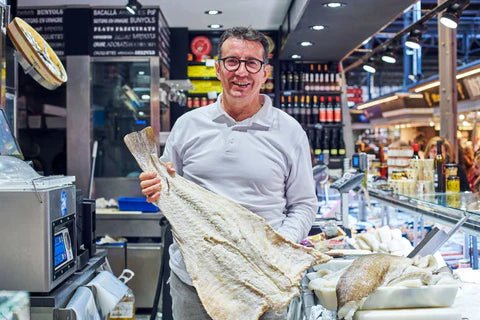
Having spent 35 years at Mercat del Ninot in Barcelona selling preserves and seafood has given us a very clear perspective on the most common mistakes and how to avoid them. This guide covers everything you need to know to make your anchovies last well once the tin is opened.
Why Anchovies Spoil Once Opened
Updated March 2026. Based on our more than 30 years of experience at Mercat del Ninot, this is what we recommend.
To understand how to store them properly, you must first understand why they deteriorate. Canned Cantabrian anchovies are a cured product — transformed by salt and time — but they are not indestructible once the contents are exposed to the outside.
There are three main deterioration mechanisms:
Oxidation: the olive oil in which they are preserved oxidizes upon contact with air. This process produces organic compounds that give a rancid flavor and unpleasant aroma. It is the fastest and most common deterioration. A "well-cured" anchovy with oxidized oil tastes bad even if the fish itself is not spoiled.
Microbial contamination: although the acidic and salty environment of a preserve is hostile to most bacteria, once opened and exposed to room temperature or unclean utensils, the risk of contamination increases. It is not the most immediate risk — salt acts as an effective barrier — but it exists, especially if the preserve is handled with dirty cutlery or kept at high temperatures.
Dehydration: anchovy fillets exposed to air without oil coverage dry out. The texture, which in a good anchovy should be firm but tender, becomes hard and leathery. The flavor intensifies unpleasantly — more salt, fewer nuances. A dried-out anchovy is not unhealthy, but it's a much worse experience.
The common denominator of all three mechanisms is the same: exposure to air. Eliminating that exposure is the key to any preservation strategy.
Method 1: Store in the Same Tin with Covered Oil
The simplest and perfectly valid method if you plan to consume the rest within 3 days. The protocol is as follows:
After removing the fillets you are going to consume, make sure that those remaining in the tin are completely covered with oil. If the oil level has dropped after removing fillets, add extra virgin olive oil until it completely covers the surface of the remaining fillets. No part of the fillet should be in contact with air.
Cover the tin with plastic wrap, pressing directly onto the oil surface (leaving no air pocket between the film and the liquid), or use a piece of aluminum foil folded several times to seal well. Store in the coldest part of the refrigerator, which is usually the central area or the vegetable drawer.
Maximum duration with this method: 2-3 days. The metal of the tin, once opened, can impart a metallic flavor to the oil, which limits the preservation time even if the product is not microbiologically deteriorated.
When to use it: when you have few fillets left (3-4) and know you will consume them within 2 days. For larger quantities or longer periods, use Method 2.
Method 2: Transfer to a Glass Container (The Definitive Method)
This is the method we recommend as standard at Bacalalo and the one professionals use. An airtight glass container — not plastic, as glass does not absorb odors or flavors — is the ideal container for storing opened anchovies.
The step-by-step process:
- Choose a glass container with an airtight rubber seal. The size should be just right for the contents — the less air space between the fillets and the lid, the better.
- Clean and thoroughly dry the container. Not a drop of water should remain — water and oil don't mix, and humidity can promote oxidation.
- Carefully transfer the fillets, placing them in horizontal layers, not irregularly stacked.
- Cover completely with the oil from the original tin. If there isn't enough oil, top up with extra virgin olive oil.
- Ensure no fillets are protruding above the oil level. All should be completely submerged.
- Close hermetically and store in the refrigerator.
Maximum duration with this method: 5-7 days with optimal quality. Under ideal conditions (refrigerator calibrated to 4 degrees, completely airtight container), they can remain in good condition for up to 10 days, although after day 7 the texture begins to change slightly.
The leftover oil: don't throw it away. The oil from a quality Cantabrian anchovy preserve has an extraordinary flavor — salty, with umami, with the nuances of curing. Use it to dress salads, dip bread, or add depth to a vinaigrette. It's a top-quality cooking ingredient.
Method 3: Wrap in Film (for Very Short-Term Use)
There are situations where you don't have a glass container available and need a temporary solution to store a few fillets for a few hours or at most a day. In that case, plastic wrap is an emergency option.
Place the fillets on a piece of plastic wrap. Add a generous drizzle of extra virgin olive oil directly over the fillets. Wrap with the film, ensuring the oil covers all the fillets and there are no areas exposed to air. Fold the ends down to seal. Store in the refrigerator.
Maximum duration: 24 hours, ideally less than 12. This method is not ideal because the film does not seal perfectly and the oil can leak. It is only a temporary solution.
What you should not do: store fillets wrapped in film without oil. Without the oil barrier, the anchovy will oxidize and dry out within a few hours, even inside the refrigerator.
How Long They Last with Each Method: Reference Table
| Method | Optimal duration | Maximum duration | Key condition |
|---|---|---|---|
| Original tin + oil covered | 1-2 days | 3 days | Well sealed, fridge at 4°C |
| Airtight glass container + oil | 5-7 days | 10 days | Fillets completely submerged |
| Wrapped in film + oil | Less than 12h | 24h | Only for emergency |
| No preservation (exposed) | 1-2 hours | Not recommended | Only when serving |
Important note: these durations assume a refrigerator correctly calibrated between 2 and 5 degrees Celsius. A refrigerator at 8-10 degrees will halve all these times. If you don't know the temperature of your refrigerator, it's worth checking — most household refrigerators are above their optimal temperature.
Signs That Anchovies Are No Longer Good
Knowing the indicators of spoilage helps you avoid consuming a bad product and lets you know when an anchovy has passed its optimal point, even if it's not technically "bad" yet.
Clear signs of spoilage — do not consume:
- Rancid smell or oxidized oil when opening the container. Old oil has a characteristic smell similar to wet cardboard or paint.
- Grayish or greenish color in the fillet. The amber-brown color should be maintained. If there are gray areas or strange colors, it's a sign of alteration.
- Extremely soft, almost mushy texture. An anchovy that falls apart when touched without any resistance indicates advanced deterioration.
- Visible bubbling in the oil. Indicates microbial activity.
Signs that it has passed its optimal point but is not dangerous:
- Harder texture than normal, somewhat chewy. The anchovy has partially dehydrated but is not spoiled. It loses quality but is edible.
- Saltier and more intense flavor than usual. Over time, salt concentrates. It is still edible but the experience is less balanced.
- Slightly cloudy oil. In the refrigerator, olive oil always becomes cloudy — this is normal and not a sign of a problem. If the cloudiness persists at room temperature, it may be the beginning of oxidation.
When in doubt: the rule is simple. If the smell is not right, do not consume it. Bad anchovies smell distinctly different. Your nose is the best detection tool.
Can Anchovies Be Frozen?
This is a question that generates debate and deserves a nuanced answer.
The technical answer is yes, anchovies can be frozen. The practical answer is: only as a last resort, because the result is not comparable to the fresh preserved product.
The problem with freezing is texture. Anchovies have a delicate protein structure that is affected by the ice crystals that form during freezing. Upon thawing, the texture becomes soft, mushy, and completely loses the firmness characteristic of a good Cantabrian anchovy. The flavor is better preserved than the texture, but the overall experience is disappointing.
If you decide to freeze anyway (for example, you have a large quantity that you know you won't consume within the week), the correct protocol is:
- Separate the fillets individually on baking paper on a tray.
- Freeze in that position until solid (1-2 hours).
- Transfer the solidified fillets to an airtight freezer bag, removing as much air as possible.
- Label with the date. Maximum duration in the freezer: 3 months.
- Thaw in the refrigerator for 12 hours. Never at room temperature or in the microwave.
The most appropriate use for thawed anchovies is in cooking — pasta, stews, sofritos — where texture matters less because it will melt anyway. For eating directly or on toast, the result does not compensate for the effort.
Our recommendation from Bacalalo: buy in formats and quantities that you will consume within a few days. A 50-gram tin for one or two people, two tins for a family. Quality Cantabrian anchovies deserve to be consumed at their optimal moment, not taken from the freezer.
The Most Common Mistakes That Ruin Anchovies
In 35 years at Mercat del Ninot, we have seen every possible mistake. These are the most frequent ones and those that have the greatest impact on product quality:
Mistake 1: Leaving the tin open in the refrigerator without sealing. The most common mistake. Refrigerator air is dry and cold, which accelerates dehydration and oil oxidation. An open tin without proper sealing in the refrigerator can ruin the product in less than 24 hours. Always cover before storing.
Mistake 2: Using plastic containers. Plastic absorbs odors and can transfer flavors to the oil over time. It is also micro-permeable to oxygen. Glass is always superior for storing anchovies.
Mistake 3: Handling with wet or dirty cutlery. Moisture is the enemy of preserved oil. Always use a dry and clean fork when handling fillets. Cutlery with traces of water or other food can contaminate the oil and drastically reduce preservation time.
Mistake 4: Storing at room temperature. An opened anchovy left out of the refrigerator at room temperature in summer (25 degrees or more) can spoil within a few hours. Opened anchovies always go in the refrigerator, without exception, except for the minutes before serving them.
Mistake 5: Not completely covering with oil. Oil acts as a physical barrier between the fillet and the air. A fillet that protrudes 2 millimeters above the oil level will oxidize and dehydrate in that area even if the rest of the fillet is perfectly preserved. Always oil above the last fillet.
Mistake 6: Storing leftover oil in the empty original tin. If you have consumed all the fillets and want to keep the oil to use as a dressing, do not leave it in the open metal tin. Transfer it to a sealed glass jar. Oxidized metal can quickly alter the oil's flavor.
Mistake 7: Mixing with other products in the same container. Anchovies have an intense aroma and can transfer it to other foods and vice versa. Always store in its own, sealed container, without mixing with other products.
Premium Seafood Products — Bacalalo
Since 1990, selecting the best from the sea at Mercat del Ninot, Barcelona. Refrigerated shipping 24-48h.
View Cantabrian anchovies →🛒 Recommended products in this guide
Cantabrian Anchovies "00" Gourmet Selection
Premium 00 caliber, artisanal preparation
38,90€
View product →⭐ 4.9/5 · Cold delivery 24-48h · Since 1990 at Mercat del Ninot
Frequently Asked Questions about Storing Opened Anchovies
How long do opened anchovies last in the fridge?
With the correct method — airtight glass container, completely covered in extra virgin olive oil, fridge at 4 degrees Celsius — they will last between 5 and 7 days with optimal quality. The absolute maximum is 10 days, after which the texture and flavor begin to perceptibly degrade, although the product is not dangerous.
Is the oil in the can enough to preserve them, or do I need to add more?
It depends on how many fillets are left in the can. If you have consumed half or more of the fillets, the oil level is likely not enough to cover the remaining ones when transferred to a smaller container. Always top up with extra virgin olive oil until all fillets are completely submerged.
Can I store anchovies in sunflower oil if I don't have olive oil?
Technically yes, but it's not recommended. Sunflower oil has a neutral taste that adds nothing and a different fatty acid structure than olive oil, with a greater tendency to oxidation. Extra virgin olive oil is part of the anchovy's flavor experience — sunflower oil impoverishes it. If you don't have olive oil on hand, use the minimum amount of oil possible (enough to cover) and consume as quickly as possible.
Do unopened canned anchovies need to be refrigerated?
No. An unopened preserve is stable at room temperature as long as it is stored in a cool, dark place without sudden temperature changes. Neither fridge nor freezer. Only once opened does the product require refrigeration.
Can you tell if anchovies are spoiled before tasting them?
Yes. Smell is the most reliable indicator. Spoiled anchovies smell unequivocally of rancid oil or deteriorated fish — there is no possible confusion with the normal aroma, which, although intense, is pleasant and marine. Visually, a grayish or greenish color in the fillet is also an indication of deterioration.
How many days do anchovies last if I buy them already opened at a market?
If you buy them already opened — for example, taken from a barrel or a large preserve at a market or deli — the clock is already ticking from when the original container was opened. Ask the seller when it was opened. Under correct store conditions, they are usually in good condition for up to 3-4 days after being served. At home, apply the glass container protocol and consume them within 2-3 days.
Which anchovies are best preserved once opened?
Anchovies with higher fat content and longer curing resist the passage of time better. In general, large caliber (00) anchovies with a minimum of 12 months curing are more stable than small caliber and short-cured ones. The 00 Selection anchovies and the artisanal anchovy fillets we sell at Bacalalo are in this category.
Anchovies worth preserving well
If you're going to store anchovies in a container, make sure they are anchovies worth it. Our selection of Cantabrian anchovies — chosen after 35 years at Mercat del Ninot and tasting dozens of brands — gives you the base to start well.
Cantabrian anchovy fillets | 00 Selection anchovies | Complete anchovy guide
Discover our premium selection
Seafood products carefully selected since 1990 at Mercat del Ninot, Barcelona. Refrigerated shipping 24-48h.
Discover our premium selection
Seafood products carefully selected since 1990 at Mercat del Ninot, Barcelona. Refrigerated shipping in 24-48h.