Quick Summary: Anchovy and boquerón (European anchovy) are the same fish (Engraulis encrasicolus), but completely different products. Anchovy wins in intensity, umami, and shelf-life (3-5 years); boquerón wins in freshness, mildness, and price (3 times cheaper). For fresh summer tapas, choose boquerón. For gilda, puttanesca pasta, or toast with butter, choose anchovy. For cooking and adding depth of flavor without being noticeable, use dissolved anchovy. Both available at Bacalalo directly from the producer.
What is an anchovy?
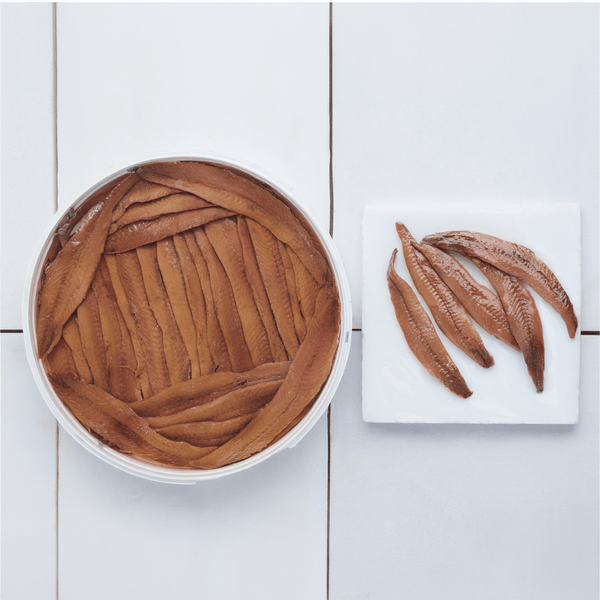
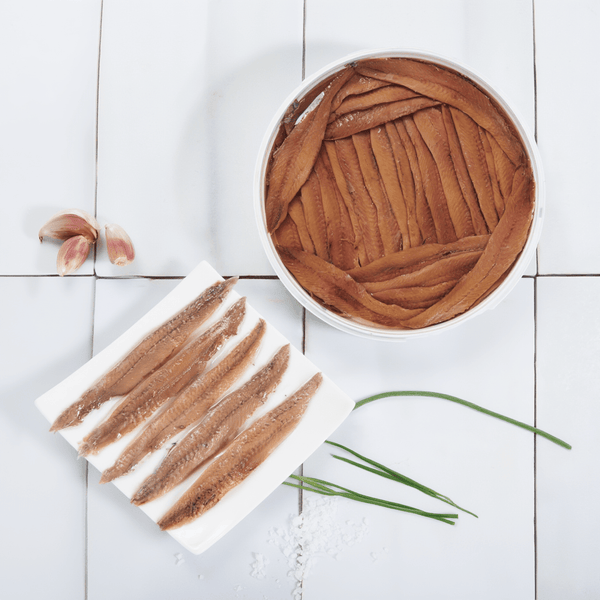
An anchovy is the same fish as a boquerón —Engraulis encrasicolus— but subjected to a process of salting and curing for 6 to 12 months. What enters as a small, silvery fish measuring 10-14 cm emerges as a golden-reddish, briny, silky, and umami fillet, with a concentration of flavor that only time can provide.
The process is carried out in cocetas—containers where the fish is layered alternately with coarse sea salt and weighted down. During these months, the fish's own enzymes break down proteins into free amino acids (proteolysis). This is the same chemistry that produces the flavor of cured ham, Parmesan cheese, or soy sauce: umami through controlled enzymatic fermentation.
The resulting product is filleted by hand—bone by bone, skin by skin—and packed in olive oil (ideally extra virgin). The best product comes from the Cantabrian Sea, particularly from the spring fishing season in Santoña, Laredo, and Castro Urdiales. If you want to delve deeper, read our complete guide to Cantabrian anchovies.
What is boquerón?
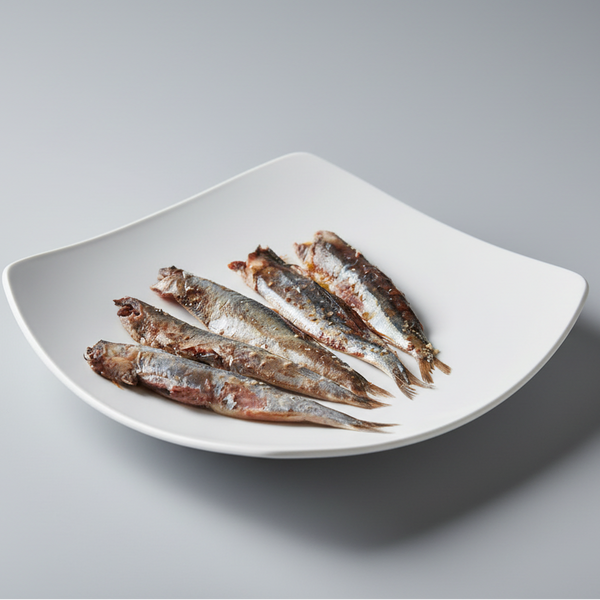
Boquerón is the same fish, either fresh or marinated in vinegar. There is no curing, no waiting time. The fish is caught, cleaned, and consumed within hours or at most days. It is a different product from what a palate accustomed to anchovy is used to: fresh, acidic, with the firm texture of raw or lightly cooked fish.
The most popular format in Spain is boquerón en vinagre (vinegar-marinated anchovies): the filleted fish is macerated in a mixture of white vinegar, garlic, parsley, and olive oil for 24-48 hours. The vinegar's acid denatures the proteins (it "cooks" them without heat), turning the fillet from translucent to opaque white. The result is a fresh, light, and very refreshing tapa.
By regulation, before marinating in vinegar, the fish must have been frozen at -20°C for at least 48 hours to eliminate the risk of anisakiasis. Vinegar alone does not kill the parasite.

Comparison Chart: 8 Key Differences
Let's put them both on the table, side by side. These are the eight practical differences that matter:
- Species: both are Engraulis encrasicolus. Technical tie.
- Process: anchovy = salting 6-12 months; boquerón = fresh or vinegar 24-48 h.
- Color: anchovy = dark golden-reddish; boquerón = silvery white.
- Texture: anchovy = silky, melts; boquerón = firm, slightly elastic.
- Flavor: anchovy = intense umami, briny, deep; boquerón = acidic, fresh, mild marine.
- Price (€/kg drained product): Cantabrian anchovy = 250-450 €/kg; vinegar-marinated boquerón = 25-45 €/kg. Anchovy costs between 5 and 10 times more per kg of final product.
- Preservation: unopened anchovy = 3-5 years at room temperature; boquerón = 5-10 days in the refrigerator.
- Best use: anchovy = strong tapas, gildas, pasta, sauces, cooking base; boquerón = fresh appetizers, salads, summer tapas.
Flavor: which is more intense and which is milder
If you open a can of Cantabrian anchovies and a package of vinegar-marinated boquerones and taste them blind, no one would believe they come from the same fish. Their flavors are opposite.
Anchovy is pure concentration. During salting, it loses between 40 and 60% of its water content, so everything else—proteins, fats, minerals, free amino acids—becomes much more concentrated per gram. This gives it the characteristic deep, persistent umami, comparable to cured Iberian ham or aged Parmesan cheese. Its notes: distinct brininess, slight fermentation, butter, marine background, and a mouthfeel lingering for 30-60 seconds.
Vinegar-marinated boquerón is acidic freshness. It has a clean sea flavor, clear acidity from the vinegar, the smoothness of olive oil, and a vegetal touch from parsley and garlic. Its persistence is short (5-10 seconds). It's a flavor that refreshes the palate rather than saturating it.
Which is "better"? Neither. That's the wrong question. It's like asking whether a Rioja Gran Reserva or a young Albariño is better: it depends on what you want them for and what you pair them with.
Price and Availability
Price tells a story. Cantabrian anchovy costs significantly more because it combines:
- Selected raw material by size (00, 0, 1) at the fish market, not "whatever the net catches."
- 6 to 12 months of curing: idle capital, warehouse space, shrinkage.
- Manual filleting: an expert worker fillets about 1,500-2,000 anchovies per day.
- Extra virgin olive oil in the packaging.
- Yield rate: 1 kg of fresh fish yields ~250-300 g of drained fillet.
Vinegar-marinated boquerón, on the other hand, involves a short process, less labor, and a reduced shelf life. Hence the ranges:
- Artisan vinegar-marinated boquerón: 25-45 €/kg drained product.
- Supermarket vinegar-marinated boquerón: 12-20 €/kg, with highly variable qualities.
- Cantabrian anchovy size 0 or 00: 250-450 €/kg drained product.
- Large supermarket anchovy: 80-150 €/kg, usually smaller size and short curing.
If you want to understand why premium anchovies cost what they do, read our analysis on the price of anchovies.
When to choose anchovy and when to choose boquerón?
Here's the honest truth: in many cases, one is not "better" than the other, it's simply for a different use. Let's go by context:
Choose anchovy if...
- You are making a classic gilda (anchovy + guindilla pepper + olive). Boquerón doesn't work here; the anchovy's potent flavor is the soul of the pintxo.
- You want toast with butter. Toasted bread, quality unsalted butter, an anchovy fillet on top. It's the ultimate test of an anchovy's quality: if it's good, it needs nothing else.
- You are cooking puttanesca pasta, Caesar dressing, bagna càuda, or any dish where you need a deep umami base.
- You are looking for a gourmet gift. A can of size 00 anchovies says "I know what's good."
- You want long-lasting pantry staples: 3-5 years unopened, ready for any improvisation.
Choose boquerón if...
- It's summer and you want fresh tapas. Vinegar-marinated boquerones with cold beer are unbeatable.
- You are making a Mediterranean salad with tomato, pepper, and onion.
- You are looking for a light appetizer that won't saturate the palate before the main meal.
- Budget matters: for less than €15 you have a tapa for 4 people.
- You are going to fry them—fresh boquerón breaded in flour and fried in olive oil—and you need the fish in its original state.
The uncomfortable truth: when it doesn't matter which one you use
If you're making an anchovy omelet where the fish will melt into the egg and onion, the difference between a size 1 anchovy and a good preserved boquerón is barely noticeable. The same goes for a homemade pizza where you toss 2-3 fillets and the oven will melt them. Here it's not worth paying €8 for the premium can: use whatever anchovy or boquerón you have on hand.

Pairing: wine and accompaniments
Each product demands a different accompaniment. Mismatched pairing means wasting both the fish and the drink.
Anchovy Pairing
- Manzanilla or dry Fino sherry: the classic Basque-Andalusian pairing. The anchovy's salinity is balanced by the oxidative dryness of the Fino.
- Txakoli: young, light Basque white wine with a subtle fizz. Cleanses the palate between bites.
- Cava brut nature: the bubbles cut through the umami and prepare the palate for the next fillet.
- Cold lager beer: a less sophisticated but universal option.
- Accompaniments: toasted bread, unsalted butter, guindilla pepper, gordal olive, confit tomato.
Vinegar-marinated Boquerón Pairing
- Cold Pilsner or lager beer: the classic. The freshness of the boquerón calls for something equally fresh.
- White vermouth with an olive: the perfect Saturday midday treat.
- Verdejo or Albariño: white wines with good acidity that respect the vinegar's acidity.
- Accompaniments: olives, roasted pepper, tomato, crusty bread with a drizzle of oil.
In summary: the choice is yours
Anchovy and boquerón are not competitors. They are two completely different products made from the same fish, each with its place at the table. If you can only have one in your pantry, anchovy is more versatile because it lasts for years and adds umami to any dish. But if you live in a warm place and enjoy fresh appetizers, vinegar-marinated boquerón is pure joy.
At Bacalalo, we have both products: Cantabrian anchovy in sizes 00 and 0 selected during the spring season, and artisanal vinegar-marinated boquerón fillets. We have been selecting both directly from the producer since 1990 at Mercat del Ninot. No marketing, just good judgment.
For further reading, we recommend: Cantabrian Anchovies: complete guide, How much anchovies cost and why, Anchovies 00: what they are and if they're worth it, and Spring anchovy vs. seasonal anchovy: differences.
Frequently Asked Questions
Are anchovy and boquerón the same fish?
Yes. Both are Engraulis encrasicolus. The difference is not in the species but in the process: boquerón is the fresh fish or marinated in vinegar, anchovy is the same fish after 6-12 months of salting in sea salt. Same species, opposite products in flavor, color, texture, and price.
Why do anchovies cost 5-10 times more than boquerones?
For four reasons: 6-12 months of curing (immobilized money and space), manual filleting (1,500-2,000 anchovies/day per worker), extra virgin olive oil, and yield rate (1 kg of fresh fish yields about 250-300 g of drained fillet). Vinegar-marinated boquerones are prepared in 24-48 hours and have minimal shrinkage.
Can I substitute anchovy for boquerón in a recipe?
Almost never. If the recipe calls for anchovy (gilda, puttanesca pasta, Caesar salad, bagna càuda), boquerón will not provide the concentrated umami, and the recipe will taste bland. If it calls for boquerón (summer salad, fresh tapas), anchovy adds too much salt and breaks the balance. They are opposite products. The exception is recipes where the fish melts with other ingredients (omelets, pizza), where they are interchangeable.
Which one has more salt?
Anchovy, by far. It provides between 3,000 and 5,000 mg of sodium per 100 g, compared to ~100 mg for fresh boquerón and ~500-800 mg for vinegar-marinated boquerón. If you have high blood pressure, opt for boquerón or lightly desalt the anchovy by rinsing it in oil or water before consuming.
Can vinegar-marinated boquerones have anisakis?
If the producer complies with regulations, no. The law requires freezing the fish at -20°C for at least 48 hours before marinating it in vinegar, which kills the parasite. Vinegar alone is not enough. That's why it's important to buy from reputable producers, and not prepare boquerones at home with fresh fish without freezing it beforehand.
What do I order at a bar to eat anchovy or boquerón?
If you order "anchoas," you will typically be served Cantabrian anchovies in oil (the salty, dark ones). If you order "boquerones," you will be served vinegar-marinated boquerones (the white, acidic ones). In Andalusia, "boquerón" sometimes refers to fried anchovies—ask if you want to be sure. In Catalonia, "anxoves" = salted anchovy and "seitons" = boquerón.
Which one has more omega-3?
Anchovy, due to concentration (dehydration during salting concentrates everything that isn't water). But both are excellent sources of EPA and DHA omega-3. For omega-3 intake without excess sodium, fresh boquerón is the most balanced option.
Where to buy quality anchovy and boquerón online?
At Bacalalo.com, we have both: Cantabrian anchovy in sizes 00, 0, and 1, and artisanal vinegar-marinated boquerón. Direct selection from the producer, cold shipping in 24-48h, the same criteria we've applied at Mercat del Ninot since 1990.
Lalo González Rodríguez
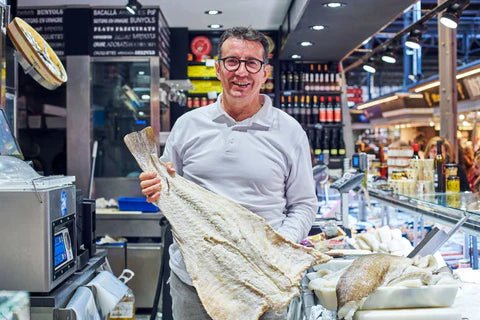
Codfish and Cantabrian preserves specialist. 30+ years selecting products at Mercat del Ninot, Barcelona. Writes about anchovies, codfish, and seafood with discernment and without marketing.