


Summary: The zeros in anchovies (0, 00, 000) indicate the fillet size: more zeros mean larger fillets, fewer units per can, and a higher price. The 00 anchovy is the sweet spot between quality and price. The 000 is for special occasions. We explain the real differences, when each size is worth it, and what marketing tricks are used to confuse you.

What the zeros in anchovies mean
The zeros are not a marketing invention or an arbitrary commercial designation. They are a fillet size classification system that the anchovy canning industry has been using for decades. It is a simple and objective system: it is based on how many fillets fit in a standard-weight can.
The logic is counter-intuitive: more zeros mean fewer fillets per can. Why? Because the fillets are larger, and therefore fewer fit. A 50-gram drained weight can may contain 14 small fillets (size 0) or 6 enormous fillets (size 000). The total weight is similar, but the size of each piece is radically different.
This has direct consequences on taste, texture, and price. It's not just a matter of size: larger fillets come from fish that have reached greater maturity, with more intramuscular fat, and it is this fat that, during salting, generates the aromatic compounds that give an anchovy a complex or flat flavor.
The size grading system explained
These are the standard ranges, although they may vary slightly between producers:
Size 0 (one zero)
Between 12 and 14 fillets per 50g drained weight can. Individual fillet weight: 3-4 grams. It is the most common size, with the highest production and most affordable. Narrow fillets, firm and compact texture, direct salty flavor with less aromatic complexity than superior sizes.
It is a perfectly valid anchovy for cooking (sauces, sofritos, pasta) and for tapas where it is combined with other strong ingredients. It is not the best option to eat alone or in preparations where the anchovy is the absolute protagonist.
Size 00 (double zero)
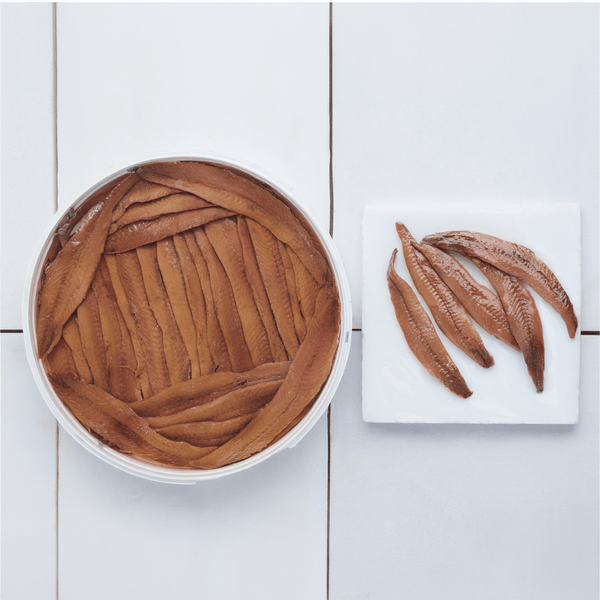
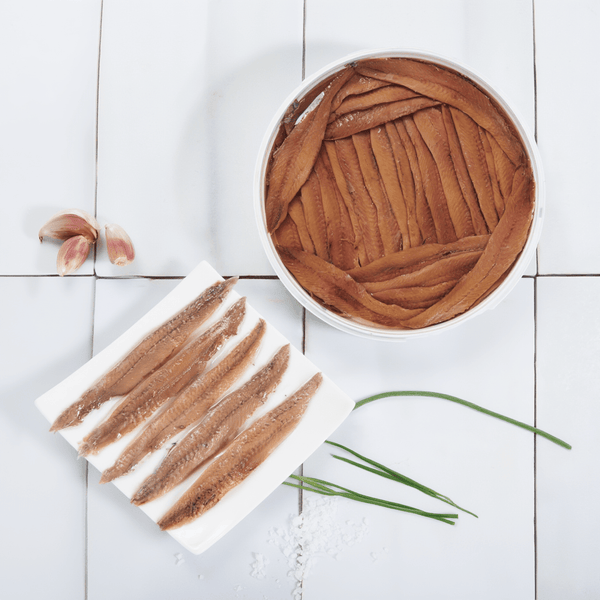
Between 8 and 11 fillets per 50g drained weight can. Individual weight: 5-7 grams. The fillet is noticeably wider and meatier. When cut, it has a silky texture, with visible intramuscular fat streaks that are responsible for the complex flavor.
The color is more intense and uniform —a deep golden-reddish— indicating complete maturation and adequate fat content. The flavor has layers: first salt, then umami, then notes of controlled fermentation, and a long, persistent finish.
It is the market's sweet spot: large and tasty enough for the difference with size 0 to be evident, but without the collector's price of size 000.
Size 000 (triple zero)
Between 5 and 7 fillets per 50g drained weight can. Individual weight: 8-12 grams. The largest fillets produced by the canning industry, reserved for the best specimens of the May-June season. Not all producers offer it, and when they do, production is limited.
The texture is exceptionally meaty. The flavor, very concentrated, with an intensity and complexity only found in fillets of this size and maturation. The price can be three or four times that of size 0.
Does size 0000 exist?
Some producers have used the designation "quadruple zero" or "supreme size" for exceptional pieces. It is not an industry standard and, in most cases, it is a commercial designation for fillets that would technically be large 000. There is no consensual definition of 0000.
🐟 Our Cantabrian Anchovies
Hand-selected at Mercat del Ninot since 1990. Size 00, artisanally made, incomparable flavor.
Why 00 anchovies cost twice as much
The premium price of size 00 compared to 0 (between 60% and 100% more expensive from the same producer) is not an extra profit margin for the manufacturer. It reflects real costs:
1. Lower yield per catch. In a fishing net for anchovy season, the large specimens that will yield size 00 are a small fraction of the total. Most fish are sizes that will yield size 0 or even smaller. Selecting large pieces requires manual separation and reduces the production volume of that size.
2. More valuable fish at source. A larger fish has required more years of life, more food, more time at sea. At the fish market, the price per kilo of large fish for salting is higher than for standard sizes. The raw material costs more before the process even begins.
3. More demanding filleting. A large fillet breaks more easily during manual processing. Spoilage (percentage of product lost or discarded due to defects) is higher in superior sizes. More broken product = more waste = higher cost per usable fillet.
4. Demand from the hospitality sector. Restaurants, gastro-bars, and gourmet shops preferentially request size 00 and 000 because it is what differentiates their offering. This sustained demand on naturally limited production keeps prices high.
In short: it's not that the producer earns more with 00 anchovies. It's that they cost more to produce and there is less quantity available.

Real taste differences between sizes
The question that really matters: can you taste the difference when you eat it? The answer is yes, but it depends on the context.
In a comparative tasting (three white plates, one size on each, extra virgin olive oil, and neutral bread), the differences are evident even to an untrained palate:
- Size 0: direct, predominantly salty flavor, short finish. Firm texture. Satisfying but one-dimensional.
- Size 00: layered flavor. Salt first, then umami, a light elegant bitterness, and a persistent finish. Silky texture with a melting sensation. The taste lingers in the mouth for a minute or more.
- Size 000: all of the above amplified. Maximum intensity, remarkable aromatic complexity, texture that melts on the tongue. An experience comparable to a long-cured Iberian acorn-fed ham.
However: these differences partially disappear when the anchovy is combined with other strong ingredients. In a puttanesca pasta, on a pizza, or in a base sofrito, the difference between size 0 and 00 is practically undetectable. The culinary context absorbs the nuances.
000 (triple zero) anchovies: Do they really exist?
Yes, they exist, but with important nuances:
Limited production. Not all producers in Santoña or the Cantabrian region offer size 000 regularly. It depends on the season: if the May-June catch brings many large specimens, there will be 000. If the season yields smaller sizes, there will be none or very little.
Collector's price. A can of 000 anchovies from a good producer can cost between 25 and 50 euros for 50g drained weight. It is a luxury product comparable to a vintage wine or a long-aged cheese.
Beware of fake 000. Some producers label fillets that are actually large 00 as "000" or "Gran Selección". Verification is simple: open the can and count the fillets. If there are 5-7 fillets in a 50g drained weight can, it's real 000. If there are 8 or more, you've been sold something else.

Marketing traps with anchovy sizes
The canned anchovy sector is not exempt from deceptive marketing. These are the most common tricks:
"Selection" without size. Some brands use "Special Selection" or "Premium" without indicating the numerical size. It sounds good, but is it a 0, a 00, or a 000? Without the number, you can't compare. Be wary of labels that substitute size with adjectives.
Inflated size. Labeling a can as 00 when it contains 13 fillets of 50g. The only way to check is by opening the can, which makes claims difficult. Buy from trusted brands or producers with a verifiable reputation.
Misleading drained weight. A large can of "00 anchovy" that contains a lot of oil and few fillets. Always compare the drained weight, not the total weight of the can. And calculate the price per gram of actual anchovy, not per can.
"00 Style". A designation that means nothing. Size is an objective measure of fillet size, not a "style."
When it's worth paying for 00
Practical guide based on use:
- Eaten alone, on a white plate with bread: 00 or 000. The large size shines when it has no competition on the plate.
- Gildas: 00, clearly. The large fillet rolls well and balances the guindilla and olive. With a smaller size, the gilda loses impact.
- Toasts with butter: 00. The fillet covers the toast, and the silky texture contrasts with the butter.
- Caesar salad: 0 is sufficient. The anchovy mixes with the dressing.
- Pasta, sauces, sofritos: 0 without a doubt. The anchovy dissolves. Size is irrelevant.
- Pizza: 0. It is chopped and mixed with other ingredients.
- Gourmet gift: 00 minimum, 000 if you want to impress. Presentation and size matter.
In our store, the Cantabrian "0" and "00" Gourmet Selection anchovies cover the two main scenarios. The "0" for daily use and cooking; the "00" for enjoying alone or in preparations where the anchovy is the star.
How to verify your 00 anchovy is real
The definitive test is simple:
- Open the can.
- Count the fillets. In a 50g drained weight can: 8-11 fillets = real 00. 12+ fillets = size 0. 5-7 fillets = you have a 000.
- Look at the width of the fillet. A real 00 has fillets at least 2 cm wide at their widest part. If they are narrow like a pinky finger, it's a disguised size 0.
- Observe the color. The 00 usually has a deeper, more uniform golden-reddish color than the 0, because the higher fat content of the large fillet produces more complete maturation.
If you regularly buy from the same brand and the count is consistent, you have found a reliable supplier. If the count varies significantly between purchases, that brand does not control its sizes well.
For more context on how to choose quality anchovies beyond size, consult our Complete Guide to Cantabrian Anchovies and the 2026 brand comparison. If you are interested in understanding market prices, we have an updated price guide by size and brand.
🛒 Recommended products in this guide
Cantabrian Anchovies "00" Gourmet Selection
Premium 00 size, artisanal preparation
38,90€
View product →⭐ 4.9/5 · 24-48h refrigerated shipping · Since 1990 at Mercat del Ninot
Frequently Asked Questions
What does 00 mean in anchovies?
It is the fillet size calibration system. Size 00 (double zero) indicates large fillets: between 8 and 11 units in a 50g drained weight can. More zeros mean larger fillets and fewer units per can. It is not a brand or a generic quality designation: it is an objective measure of size.
Do 00 anchovies taste better than 0?
Yes, generally. Larger fillets contain more intramuscular fat, which during curing generates more complex aromatic compounds. The result is a more layered flavor, a longer finish, and a silkier texture. But the difference is more noticeable when the anchovy is eaten alone than when it is used for cooking.
How much do 00 anchovies cost?
The price range for 00 anchovies from a quality Santoña producer is between 12 and 20 euros per 50g drained weight can. This is between 60% and 100% more than the equivalent size 0. Ultra-premium brands can exceed 25 euros for this format.
What is the difference between 00 anchovies and triple zero anchovies?
The 000 size has even larger fillets (5-7 per 50g can compared to 8-11 for 00). The taste difference between the two is noticeable but less significant than the difference between 0 and 00. The price jump, however, can be 100% or more. The 000 is a product for special occasions or gastronomic collecting.
How do I know if my anchovies are really 00?
Open the can and count the fillets. In a 50g drained format: 8-11 fillets indicates true 00 size. If there are 12 or more, you've been sold a 0 size with a 00 label. If there are 7 or fewer, it could be a 000 or a producer who uses slightly different ranges.
Do double zero anchovies have anything special?
No. The production process is identical to that of size 0: salting, curing, filleting, packaging in oil. The only difference is the size of the original fish, which determines the size of the fillet. Nothing extra is added, and they are not processed differently.
🎁 Anchovy Tasting Pack
Taste and compare the best anchovies from the Cantabrian Sea. Selection curated by experts from Mercat del Ninot.
See Gift Packs →


![¿Cuánto Cuestan las Anchoas del Cantábrico? Precios por Calibre y Marca [2026]](http://bacalalo.com/cdn/shop/articles/anchoa-del-cantabrico-exclusive-en-aceite-de-oliva-160-g-8181953_c7fe4c41-f412-46a6-be59-53b67bff232e.webp?v=1774815704&width=480)
