

Quick Summary: "Costera" (fishing season) and "primavera" (spring) are often the same concept in the Cantabrian Sea: the spring fishing season is the massive anchovy catch between March and May when the fish swim up from warmer waters to spawn. This is the best anchovy of the year for fresh fish: large, fatty due to the reproductive cycle, ideal for premium salt-curing. There is also a smaller "autumn fishing season" (September-October) with leaner anchovies. If a label reads "spring anchovy" or "costera anchovy," they are usually referring to the same raw material. The honest distinction is not "spring vs. costera" but "spring costera vs. autumn costera" — and the spring one always wins.
Preliminary Clarification: The Confusion of Names
Before continuing, it's important to clarify a common misconception: most of the time, "spring anchovy" and "costera anchovy" refer to the same concept. "Costera" is the word used by fishermen and canneries in the Cantabrian Sea to designate the massive catch period of the year. The great costera — which yields 80-90% of the product we call Cantabrian anchovy — is the spring costera, occurring between March and May.
The true honest distinction is between:
- Spring costera (March-May): the large one, the premium one, the one all serious producers use for their top cans.
- Autumn costera (September-October): minority, smaller and leaner anchovy, usually for mid-range preserves or for pickled anchovies (boquerón en vinagre).
When a label or blog says "spring anchovy," what they are emphasizing is that it is raw material from the spring costera, as opposed to anchovy caught at other times with smaller size and less fat. It's an argument of quality, not a taxonomic category.
What is the Spring Fishing Season (Costera de Primavera)?
The spring costera is the intensive anchovy fishing period in the Cantabrian Sea concentrated between March and May, with the usual peak in April. It coincides with the time when anchovies (Engraulis encrasicolus) migrate from deeper Atlantic waters to the coastal shelf to spawn. The fish are at their maximum weight, size, and fat content of the year, exactly what is needed for a quality salt-curing process.
Key characteristics of the spring costera:
- Fish size: 14-18 cm on average. Yields sizes 0, 00, and occasionally 000 (the largest).
- Fat content: 7-10% in the fish's body (compared to 3-5% in autumn). Fat is essential: it provides flavor, a silky texture, and better withstands the long salt-curing process.
- Main areas: Santoña, Laredo, Castro Urdiales, Bermeo, Ondarroa, Lekeitio. The symbolic capital is Santoña.
- Annual volume: between 5,000 and 12,000 tons depending on the campaign, with strict quotas to prevent overfishing after the collapse of 2005-2010.
- Destination: ~80-90% to the premium salt-curing canning industry. The rest to fresh consumption for pickled anchovies and direct consumption.
The end of the costera is marked by the fishing authorities themselves: when the quota is met, the costera closes. Anchovies caught during this window are salted in brining vats and begin a 6-12 month curing process that ultimately turns them into anchovy fillets in oil.

What is the Autumn Fishing Season (Costera de Otoño)?
The autumn costera is the secondary anchovy catch that occurs between September and October, after the spawning season has passed and the fish have returned to slightly deeper waters. It is very minor compared to the spring costera and has a different profile:
- Fish size: 11-14 cm on average. Yields smaller sizes (1, 2, and sometimes 3). Rarely size 0 or 00.
- Fat content: 3-5%. The fish has already used its fat reserves for spawning and has not yet fully recovered them.
- Volume: between 500 and 2,000 tons depending on the year, much less than spring.
- Destination: usually pickled anchovies (boquerón en vinagre), fresh preserves, direct consumption, or mid-range salt-cured preserves.
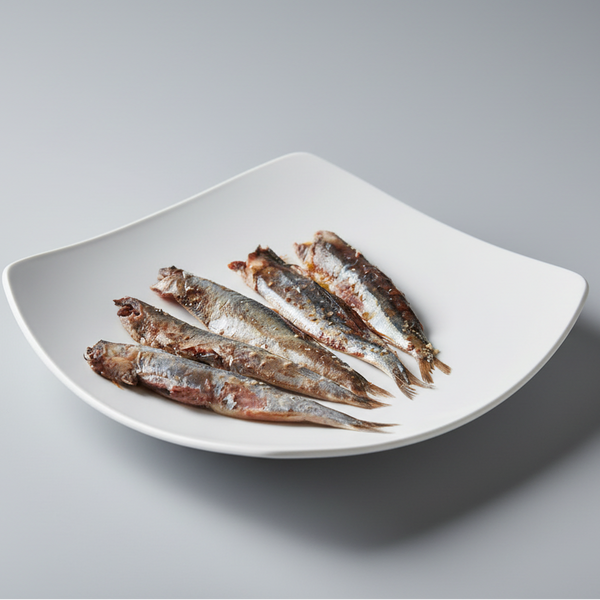
It's not "bad" anchovy: it's anchovy with a different profile, better for uses where the large, fatty, silky fillet of a premium product is not sought. For frying boquerones Andalusian style or making fresh pickled boquerones, the autumn costera is perfectly valid.
Comparative Table: 7 Key Differences
- Catch Period: spring = March-May (peak April); autumn = September-October.
- Biological State: spring = pre-spawning, maximum fat; autumn = post-spawning, low fat.
- Average Size: spring = 14-18 cm; autumn = 11-14 cm.
- Typical Size (fillet): spring = 0, 00, 000; autumn = 1, 2, 3.
- Fish Fat Content: spring = 7-10%; autumn = 3-5%.
- Usual Destination: spring = premium salt-curing 6-12 months; autumn = pickled anchovies, mid-range preserves.
- Price of Drained Fillet: spring (size 0) = 250-400 €/kg; autumn (size 2) = 80-150 €/kg.
Flavor and Texture: Why Spring is Premium
The flavor difference between a premium spring costera anchovy and an autumn costera one is notable in a direct tasting:
- Spring anchovy has depth and silkiness. The fat is evenly distributed throughout the fillet during the long salt-curing process, giving a melt-in-your-mouth texture. The umami is complex, with notes of butter and nut. The saltiness is pronounced but balanced.
- Autumn anchovy is drier and "flatter" in flavor. It lacks the fatty component that gives roundness to the salt-curing profile. Saltiness can be more dominant, and the texture is more brittle.
That's why serious producers in Santoña concentrate all their premium production on the spring costera. The autumn one is reserved for more economical ranges or for fresh pickled anchovies where fat is not as critical.
If you want to better understand sizes and their relationship to quality, read Anchovies 00 (double zero): complete guide.
Price and Availability by Season
The price cycle of Cantabrian anchovy directly reflects the costera calendar:
- March-May: the spring costera begins. The brining vats are filled. The premium product takes 6-12 months to be ready.
- October-December of the costera year: the first anchovies with short curing (~6 months) begin to appear. Correct quality but without the complexity of aged product.
- January-June of the following year: the premium product with long curing (8-12 months) is released. This is the time to buy size 0 and 00 cans.
- September-October of the following year: cans with 12-18 months of curing begin to appear, which some producers consider the optimal flavor peak.
Estimated prices for drained fillets in the 2026 market:
- Spring costera, size 00, 12 months curing: 350-450 €/kg drained product (≈ 14-18 € per 50g can).
- Spring costera, size 0, 8-10 months curing: 250-350 €/kg (≈ 10-14 € per 50g can).
- Autumn costera, size 1-2: 80-150 €/kg (≈ 4-7 € per 50g can).
- Industrial anchovy without traceability: 50-100 €/kg in large supermarkets, without guarantee of origin or costera.
To delve deeper into prices, read How much do anchovies cost and why.
When to Choose Each One?
Choose spring costera anchovy (premium) if...
- You are making a toast with butter where the anchovy is the absolute star.
- You are preparing gildas for a special occasion: large size and silkiness matter.
- It's a gourmet gift: a size 00 can speaks volumes.
- You are going to taste them alone, in a tasting, with bread and oil, nothing else.
- You want a long-lasting pantry: the premium product lasts 3-5 years unopened and improves during the first two.
Choose autumn costera anchovy / size 1-2 if...
- You are going to use them in dissolved cooking: puttanesca pasta, Caesar dressing, a stew's sofrito. The anchovy will melt, so you don't need a large size.
- You are making anchovy omelet, homemade pizza, or salad. Size and silkiness are not critical.
- Budget matters: you save significantly and the result in cooking is indistinguishable.
- You are looking for fresh pickled anchovies: here, autumn anchovy is perfectly suitable.
Honesty: when NOT to pay for spring anchovy
If you're going to throw the anchovy into a sofrito over high heat for 5 minutes, it doesn't matter if it was a size 00 spring costera or a size 2 autumn one: the taste will be indistinguishable. Paying €14 per can for it to melt with onions is a waste of money. Reserve premium anchovies for uses where the anchovy is visible and its quality is noticed.
How to Read an Anchovy Label Correctly
This is where honest information matters most. When buying anchovies, look for the following on the label:
- Fish origin: "Anchoas del Cantábrico" (Cantabrian Anchovies) or "FAO 27 IXa Cantábrico". If it only says "FAO 27" without a sub-zone, it could be Atlantic anchovy from anywhere.
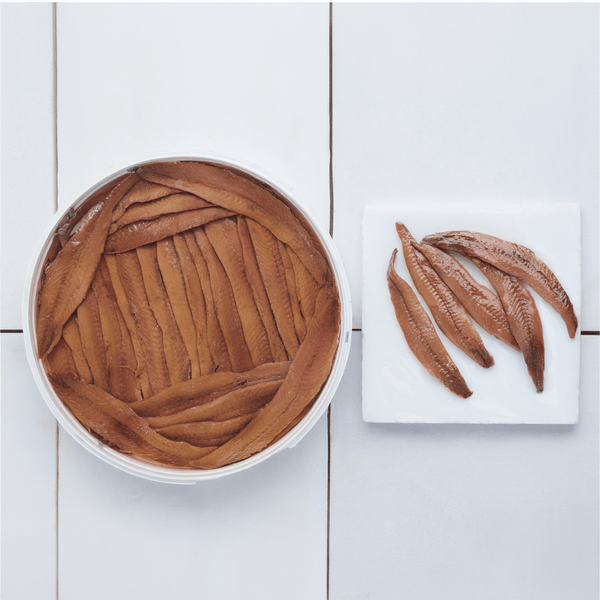
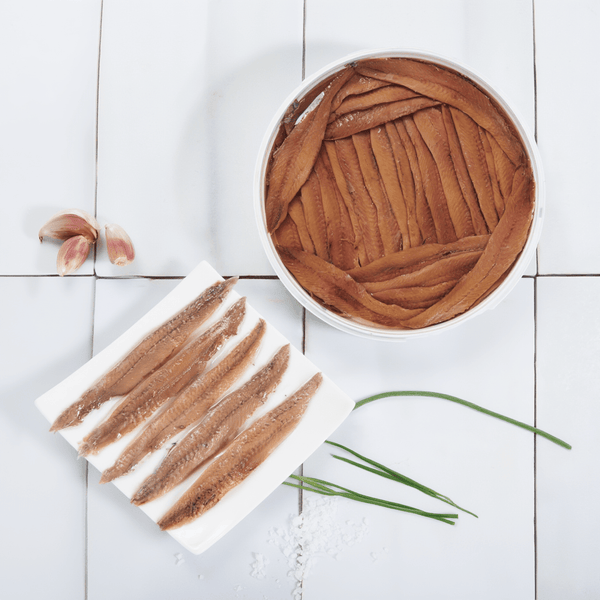
- Size or number of fillets: 00 or 000 (~14-18 fillets / 50g) = spring costera; 0 (~18-22 fillets) = spring with smaller size; 1-2 (~22-30 fillets) = autumn or spring of smaller size.
- Curing time: serious producers indicate 6, 8, 10, or 12 months of salt-curing. If not indicated, be suspicious.
- Oil: "extra virgin olive oil" is the best; "olive oil" is acceptable; "vegetable oil" or "sunflower oil" significantly lowers the quality.
- Geographical origin of packaging: Santoña, Laredo, Castro Urdiales, Bermeo, Lekeitio = real Cantabrian. Other origins may mean anchovy processed with different raw material.
If the label doesn't mention costera, size, or curing, it is usually industrial anchovy without seasonal origin guarantees. This is the difference between table wine without a DO and wine with a denomination.
In summary: what truly matters
"Spring anchovy" and "costera anchovy" are usually synonyms: both terms refer to the raw material from the massive catch period (March-May) in the Cantabrian Sea, which is the basis of the premium product. The honest distinction is between spring costera (the large, premium one) and autumn costera (minority, smaller and leaner anchovy).
If you have to choose just one can and you're going to use it on toast or a gilda, spring costera anchovy of size 0 or 00 is the clear choice. If you're going to use it dissolved in cooking, don't invest the extra cost: a size 1 or 2 from any costera will give you the same result for less money.
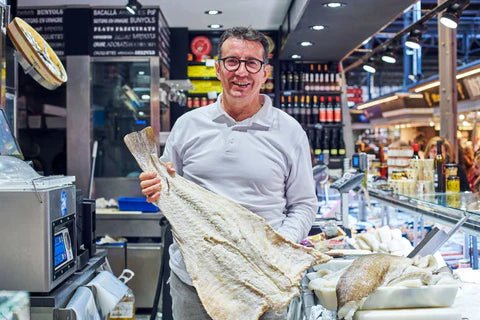
At Bacalalo, we work exclusively with spring costera raw material cured for 8-12 months, sizes 00 and 0. Direct selection at Mercat del Ninot since 1990. What we sell is what we would buy for ourselves: no marketing, just discernment.
To delve deeper, we recommend: Cantabrian Anchovies: complete guide, Anchovies 00: what they are and if they're worth it, How much do anchovies cost, Anchovy vs. Boquerón: differences and when to use each.
Frequently Asked Questions
Are spring anchovies and costera anchovies the same?
Almost always, yes. "Costera" is the period of massive catch. The great costera of the Cantabrian Sea is the spring costera (March-May), which yields 80-90% of the premium product. When someone says "spring anchovy," they are referring to raw material from that costera. There is also a smaller autumn costera (Sept-Oct) with leaner anchovies.
When is the 2026 spring costera?
The 2026 spring costera started at the end of February and is expected to peak in April. Quotas are set by the Spanish Government for the entire Cantabrian fleet. Until the quota is filled, the fleet fishes daily in coastal waters off Santoña, Laredo, Castro Urdiales, and the Basque coast.
Why are spring anchovies better than autumn ones?
Because the fish is pre-spawning: maximum weight, maximum fat content (7-10% vs 3-5% in autumn), larger size (14-18 cm vs 11-14 cm). Fat is essential for long salt-curing: it provides flavor, silkiness, and withstands the process. Autumn anchovies are post-spawning and the fish lacks that reserve.
What size indicates spring anchovies?
Sizes 0, 00, and 000 indicate large anchovies, typical of the spring costera. Sizes 1-2 can be spring anchovies of smaller size or autumn anchovies. Sizes 3-4 are rare in premium products. Size is measured by the number of fillets in a 50g can: 00 ≈ 14-18 fillets, 0 ≈ 18-22, 1 ≈ 22-26, 2 ≈ 26-30.
How long does it take for anchovies to be ready after the costera?
A minimum of 6 months of salt-curing. Serious producers work with times of 8 to 12 months for premium products. The first anchovies from the spring costera begin to appear on the market in autumn-winter of the same year, but the optimal product (10-12 months curing) is available from winter-spring of the following year.
How do I know if an anchovy is from the spring costera?
Indicators on the label: 1) size 0, 00, or 000; 2) indicated curing time (8-12 months); 3) Cantabrian origin with a specific locality (Santoña, Laredo, Castro Urdiales, Bermeo, Lekeitio); 4) extra virgin olive oil; 5) consistent price (>250 €/kg drained product). If any of these are missing, be suspicious.
Is it worth paying the difference between spring and autumn?
For starring roles (toasts, gildas, direct tasting): yes, very much so. The silkiness and flavor complexity are noticeable. For dissolved cooking (sofrito, puttanesca pasta, salads): the extra cost is not worth it. The anchovy will melt and the superior quality will not be appreciated.
Where to buy spring coastal anchovies online?
At Bacalalo we work exclusively with spring coastal raw material, sizes 00 and 0, cured for 8-12 months. Direct selection from the Cantabrian producer, the same criterion we have applied at Mercat del Ninot since 1990. Cold shipping in 24-48 h.
Lalo González Rodríguez
Specialist in premium Cantabrian products. 30+ years selecting anchovy, bocarte, and bonito at Mercat del Ninot, Barcelona. Writes without marketing, with discernment.