Quick summary: Skrei and Gadus cod are the same species (Gadus morhua), but Skrei is a migratory sub-group from the Arctic Atlantic caught within an 8-week window (January-April) in Norwegian waters. It has a firmer texture, more defined flakes, and a cleaner flavor. "Normal" Gadus (Iceland, non-migratory Norway, Atlantic) is excellent for almost all traditional recipes, lasts all year in dried/desalted form, and costs half as much. For omelets, croquettes, brandade, or fritters: desalted Gadus. For baked cod with crispy skin or grilled: fresh Skrei in season.

What is Skrei cod?
Skrei (pronounced "skrái") is not a distinct species from common cod. It is the same Gadus morhua, but a specific population subgroup: the migratory cod from the Barents Sea that every winter makes an 800-1,000 km journey to the coastal waters of the Lofoten and Vesterålen islands in Norway to spawn. The word "Skrei" comes from Old Norse and means the wanderer.
What makes it different from normal Gadus cod is this migratory effort. During the journey, the fish's muscle develops intensely—it's like an athlete at peak performance. This gives it:
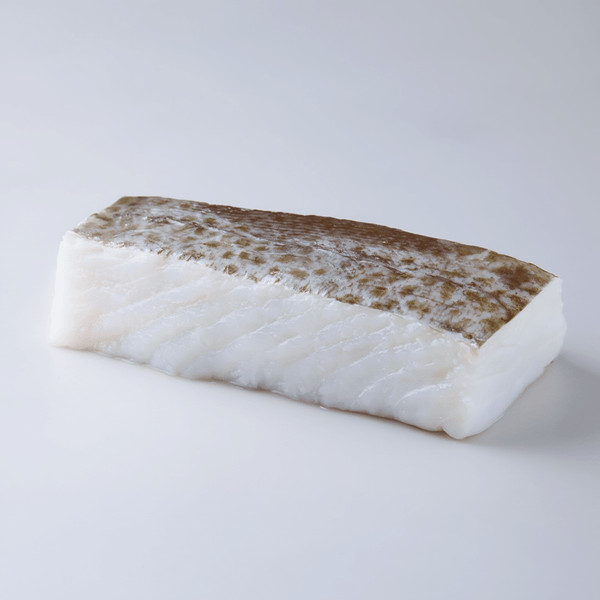
- Firm, flaky texture: the flakes separate cleanly, without falling apart.
- Whiter flesh and a translucent appearance when fresh.
- Low fat content (~0.5% vs 0.7-0.9% for non-migratory Gadus).
- Clean flavor, slightly sweet, without overly intense marine notes.
Skrei has an official quality seal regulated by Norwegian fisheries authorities. To bear the "Skrei" seal, it must meet a series of strict criteria: caught between January and the end of April, handled with strict quality criteria on board, minimum weight, cold chain preservation from capture, etc. It is one of the few fish with a verified designation of origin in the EU.
The availability window is very short: typically from mid-January to the end of April. Outside these months, what is sold as "Skrei" is usually normal Gadus cod with dubious labeling. If you see fresh Skrei in July, be suspicious.
What is Gadus morhua cod?
Gadus morhua is the species. It is what we simply call "cod" in Spanish. It inhabits the North Atlantic: waters of Iceland, Norway (non-migratory), Faroe, Greenland, the Baltic Sea, Newfoundland. The non-migratory Norwegian population—the one that lives year-round in an area—is typically labeled "Gadus cod" or "Atlantic cod" in the Spanish market.
It is the basis of salted, dried, and desalted cod that has been consumed in Spain for centuries. The salting technique was born out of the need to preserve fish for months without refrigeration. The process is similar to that of anchovies but with a different objective: not deep enzymatic fermentation, but dehydration for preservation. Desalted cod is rehydrated before cooking and returns to a texture close to that of fresh cod.
Quality Gadus features:
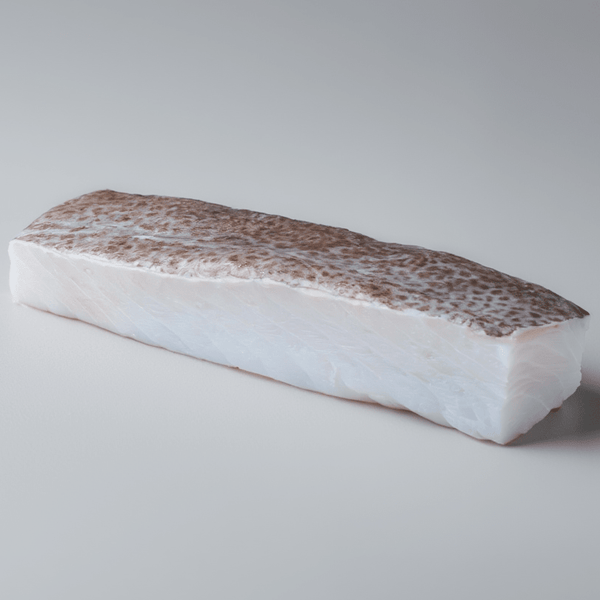
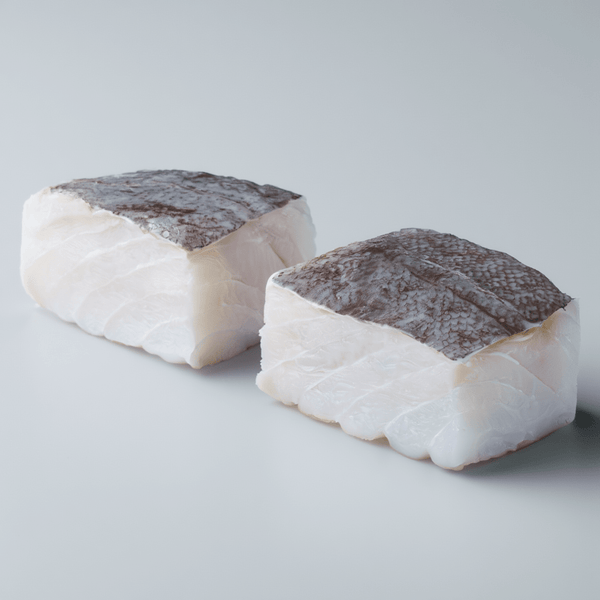
- White, thick loins, with distinct flakes but somewhat less firm than Skrei.
- Flavor with more marine depth, somewhat more iodized.
- Availability all year round in fresh, salted, dried, and desalted forms.
- Total culinary versatility: from Basque and Catalan salted cod cuisine to fresh grilled cod.
To delve deeper into how to distinguish authentic cod from imitations, read our guide on Gadus morhua vs other species.

Comparison table: 8 key differences
- Species: Skrei = migratory Gadus morhua from the Barents Sea; Gadus = Gadus morhua in general (including non-migratory).
- Origin: Skrei = Lofoten / Vesterålen, Norway exclusively; Gadus = Iceland, Norway, Faroe, North Atlantic.
- Season: Skrei = January-April; Gadus = all year (especially in salted/desalted form).
- Texture: Skrei = very firm, perfect flakes, translucent when raw; Gadus = firm, distinct flakes, slightly softer.
- Flavor: Skrei = clean, slightly sweet; Gadus = more marine depth, more iodized.
- Fat: Skrei ~0.5%; Gadus 0.7-0.9%.
- Estimated price (fresh, loin): Skrei = €22-32/kg in season; Gadus = €18-25/kg fresh; premium desalted Gadus = €40-55/kg.
- Best use: Skrei = whole baked, grilled, pan-fried (techniques that respect texture); Gadus = traditional Spanish recipes (pil pil, Vizcaína, brandade, omelet).
Taste and texture: the real detail
If you put a piece of freshly cooked Skrei and a piece of well-prepared desalted Gadus side by side, the differences are subtle but real:
- Skrei offers cleanliness in the mouth: flakes that separate on the fork, flesh that remains firm, a flavor more reminiscent of a "gourmet white fish" than traditional cod. It's the closest a cod can get to a premium hake.
- Desalted Gadus offers depth: somewhat more generous flakes, flesh that absorbs flavors during cooking, a more pronounced umami background from the salting-desalting process. It's the cod you expect in a Vizcaína or a pil pil.
A cook from Bilbao who knows her trade will tell you: Skrei is excellent, but "it's not cod for our cuisine". For a classic pil pil, the gelatin and fat from salted-desalted cod are what binds the sauce. Skrei, too lean and clean, doesn't produce the same pil pil. This is gastronomic honesty.
Price and seasonal availability

These are indicative ranges for the Spanish market in 2026:
- Whole fresh Skrei (in season, Jan-Apr): €18-26/kg for whole fish, €22-32/kg for clean loin.
- Skrei out of season: usually not legitimately available. What you see labeled as such is usually normal Gadus with unjustified overpricing.
- Fresh Gadus (all year): €14-22/kg for whole fish; €18-25/kg for clean loin.
- Premium dried salted Gadus (Norway/Iceland): €30-45/kg.
- Premium clean desalted Gadus: €40-55/kg.
- Supermarket desalted Gadus: €18-30/kg with very variable qualities.
An important observation: quality desalted cod can end up costing more per kilo than fresh Skrei, not because it's better, but because the salting-curing-desalting process adds months of work and considerable shrinkage (from 1 kg of salted piece, ~700 g of clean desalted product are obtained).
To better understand the differences in cod by origin, also read: Icelandic vs Norwegian Cod and Fresh vs salted vs desalted cod.
When to choose Skrei and when to choose Gadus?
Choose Skrei if...
- You are in season (January-April) and want a fresh cod with exceptional texture.
- You are going to do quick cooking: pan-fried, oven-baked with crispy skin, en papillote, grilled.
- You are looking for a modern cuisine dish where the quality of the raw material shines on its own.
- You have guests who appreciate a premium fish with precise cooking.
Choose desalted Gadus if...
- You are going to cook traditional Spanish recipes: pil pil, Vizcaína, Club Ranero, ajoarriero, brandade, croquettes, "soldaditos de Pavía".
- You need a cod that holds up during stewing without losing texture or turning into paste.
- You are out of Skrei season (May-December) and still want quality cod.
- You need to plan meals in advance: desalted cod lasts weeks in the fridge if well handled.
Choose dried salted Gadus if...
- You want to desalt it yourself and control the exact salt point according to the recipe.
- You are going to make cod omelet, esqueixada salad, or other recipes where the cod is not cooked.
- You are looking for the longest-lasting pantry option: months without refrigeration.
The gastronomic truth
If you are going to make cod omelet, croquettes, fritters, esqueixada, or brandade, DO NOT buy Skrei. It's a waste of money. The firm texture of Skrei is lost in the egg, dough, or purée. Quality medium-to-high desalted Gadus cod gives an equal or better result for half the price. This is what a serious chef will tell you if you ask with confidence.
Conversely: if you are going to make baked cod with cherry tomatoes, olive oil, and caramelized onion, where the loin is visible and feels whole, Skrei shines. Here you pay the difference and you notice it at the table.

Pairing and cooking techniques
Skrei: techniques that respect the texture
- Whole baked or loin: 10-12 minutes at 180°C with crispy skin. The flesh remains in perfect flakes.
- Pan-fried: 3 min per side on a hot griddle, skin side first.
- Steamed or en papillote: respects the clean flavor.
- Grilled: with soft woods (holm oak, oak), do not over-smoke.
Gadus: traditional techniques
- Pil pil: gentle cooking in olive oil with garlic. The gelatin from the desalted cod is what binds the sauce.
- Vizcaína: long stew with choricero peppers and onion. Gadus holds up to stewing without falling apart.
- Brandade: emulsified with milk, garlic, and oil. Here, Gadus is irreplaceable.
- Club Ranero: pil pil with pisto. Traditional Bilbao dish.
Wines for both
- Dry full-bodied whites: aged txakoli, Godello from Valdeorras, old Rueda vineyards.
- Albariño Rías Baixas with grilled Skrei.
- Barrel-fermented Rioja white with Gadus in pil pil.
- Light young reds: young Mencía with Vizcaína.
Discover our premium selection
Seafood products carefully selected since 1990 at Mercat del Ninot, Barcelona. Refrigerated shipping in 24-48h.
In summary: the honest choice
Skrei and Gadus are the same species with two distinct lives. Skrei is cod at peak athletic form, caught within a short window and sold fresh. Gadus is the historical raw material of Spanish cod cuisine, available all year round in salted, dried, and desalted forms.
If you have to choose only one for your everyday cooking, it's desalted Gadus. More versatile, better value for money, perfect for all traditional recipes. If you have a special occasion between January and April and want a baked or grilled fish with a "wow" factor at the table, then Skrei has its moment.
At Bacalalo, we exclusively work with premium quality salted and desalted Gadus cod, selected at Mercat del Ninot since 1990. For fresh Skrei in season, we recommend fishmongers specializing in Norwegian products—it's a product that requires a strict cold chain and a short season. If you see Skrei in the middle of summer, the labeling is dubious. We do not sell what we cannot guarantee here.
We also recommend: Skrei Cod: what it is, season and recipes, Skrei vs Icelandic cod, Fresh vs salted vs desalted cod and Loins vs flakes: differences and prices.
Frequently asked questions
Are Skrei and Gadus cod the same?
Same species (Gadus morhua), different subgroup and process. Skrei is the migratory cod from the Barents Sea caught in Lofoten/Vesterålen between January and April. "Gadus" or general "cod" also includes non-migratory populations from the North Atlantic. The difference is that Skrei has firmer musculature due to the migratory journey, while regular Gadus has more fat and flavor depth.
How much does Skrei cost in Spain?
In season (January-April): €18-26/kg for whole fish and €22-32/kg for clean loin in specialized fishmongers. Out of season, what is sold as Skrei is usually regular Gadus with an inflated price. If you see "Skrei" in July, be suspicious of the labeling.
Is it worth paying more for Skrei?
It depends on the recipe. For quick cooking (oven, pan-fried, grilled) where the whole loin is visible and noticeable, yes. For traditional Spanish recipes (pil pil, Vizcaína, brandade, croquettes, omelets, fritters), it is NOT worth it: the firm texture of Skrei is lost in the stew or dough, and the result is the same or worse than with good desalted Gadus.
When is Skrei season?
From mid-January to the end of April, when Skrei cod migrates from the Barents Sea to the Lofoten and Vesterålen islands to spawn. The window is about 8-10 weeks. Outside these months, certified Skrei is not legitimately available.
Is Skrei suitable for making pil pil?
Honestly, it's not ideal. Skrei is very lean (~0.5% fat) and the gelatin needed to emulsify the oil in pil pil is scarce. A good salted-desalted Gadus, with skin and well-selected, makes a much better pil pil. For pil pil, Gadus.
Is desalinated Gadus cod of lower quality than Skrei?
No. They are different products, made for different uses. A premium salted-desalinated Gadus can cost more than fresh Skrei and yield superior results in traditional recipes. Salting provides a concentration of flavor that fresh Skrei does not have. Quality ≠ freshness: it depends on the use.
How to distinguish legitimate Skrei from fake?
Certified Skrei bears the official "Skrei" / "Norwegian Quality Skrei" seal with a batch number. It is only caught between January and April in specific Norwegian waters (Lofoten, Vesterålen). If it is out of season, without a seal, without traceability, or if the price is suspiciously low, it is regular Gadus labeled as Skrei.
Where to buy quality Gadus cod online?
At Bacalalo we have premium salted and desalinated Gadus cod, selected at Mercat del Ninot since 1990. Loins, cheeks, flakes, esqueixada, tongues, tripe. Cold shipping 24-48 h. For fresh Skrei in season, look for fishmongers specializing in Norwegian products with an official seal.
Lalo González Rodríguez
Cod and North Atlantic product specialist. 30+ years selecting loins, cheeks, and flakes at Mercat del Ninot, Barcelona. Writes without marketing, with discernment.