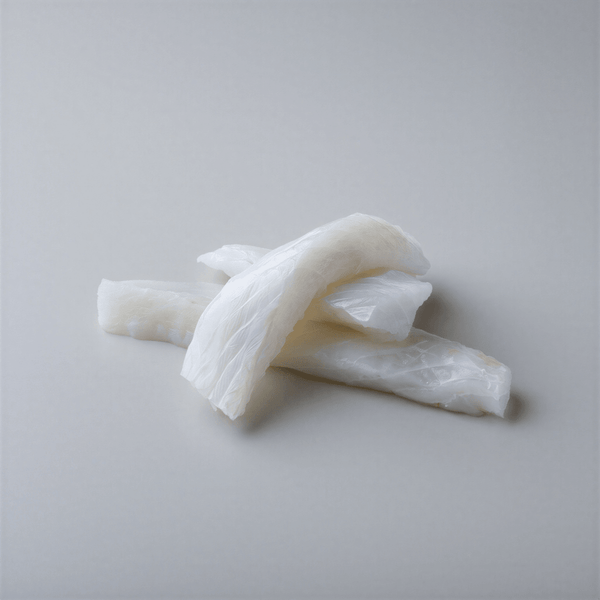
Summary: Not everything sold as "cod" is actually Gadus morhua. Cheaper substitutes—ling, pollock, pangasius, blue whiting, hake—circulate in supermarkets and fishmongers, often mistaken for (or passed off as) real cod. This comparative guide teaches you how to identify authentic Gadus morhua by its appearance, texture, taste, and labeling, and explains why Icelandic cod is the global benchmark for quality.
Table of contents
- What exactly is Gadus morhua?
- Comparison table: Gadus morhua vs other species
- Visual identification guide: flesh, texture, and flaking
- Differences in taste and cooking behavior
- Prices: why Gadus morhua costs more
- Labeling tricks in supermarkets and how to read labels
- Why Icelandic Gadus morhua is considered the best
- Frequently asked questions
What exactly is Gadus morhua?
Gadus morhua, known as Atlantic cod or common cod, is the species that for centuries has been the absolute benchmark when we talk about cod. It is a demersal fish that inhabits the cold waters of the North Atlantic—from the coasts of Iceland and Norway to Newfoundland and Greenland—and can reach 180 cm in length and over 90 kg in weight, although commercial specimens usually weigh around 60-80 cm.
What distinguishes Gadus morhua from any other species is the unique combination of its pearly white flesh, its firm texture that flakes into large, clean pieces, and a delicate, slightly sweet, and non-aggressive flavor. These characteristics have made Atlantic cod one of the most prized fish in the world and the star of culinary traditions in Portugal, Spain, Italy, France, and Nordic countries.
However, the name "cod" has historically been used loosely. Under this generic denomination, various species are marketed that, although belonging to the same family (Gadidae) or closely related families, have very different characteristics in terms of quality, texture, flavor, and price. Some of these substitutions are legal and correctly labeled; others, unfortunately, border on food fraud.
Knowing the differences between true Gadus morhua and its substitutes is not a gastronomic whim: it's a matter of knowing what you are buying, what you are paying for, and what you are putting on your table. At Bacalalo, we work exclusively with Icelandic cod (Gadus morhua) because we believe that the quality of the raw product determines the final outcome of any recipe.
Comparison table: Gadus morhua vs other species
Before going into detail, this table summarizes the main differences between Gadus morhua and the species most frequently confused with it or used as substitutes:
| Characteristic | Gadus morhua (Atlantic Cod) | Molva molva (Ling) | Pollachius (Pollock) | Pangasius (Panga) | Micromesistius poutassou (Blue Whiting) |
|---|---|---|---|---|---|
| Family | Gadidae | Lotidae | Gadidae | Pangasiidae | Gadidae |
| Habitat | North Atlantic (cold waters) | North Atlantic | North Atlantic | Rivers of Southeast Asia | North Atlantic and Mediterranean |
| Flesh Color | Pearly white, translucent | White, slightly pinkish | Grayish-greenish | White-pinkish, opaque | Grayish white |
| Texture | Firm, large flakes | Harder and more fibrous | Soft, crumbly | Very soft, watery | Fragile, easily breaks apart |
| Flavor | Delicate, sweet, clean | Stronger, earthy | Mild, less defined | Almost tasteless | Mild, somewhat bland |
| Flaking | Large, defined flakes | Long fibers, does not flake | Small flakes | Does not flake, falls apart | Very small flakes |
| Approx. Price/kg (salted) | 18-35 EUR | 10-18 EUR | 8-15 EUR | 4-8 EUR | 5-10 EUR |
| Legitimate use as "cod" | Yes — true cod | No, but often confused | No, different species | No, not even gadiform | No, although it is gadiform |
There are also other species that are occasionally labeled or confused with cod: Gadus macrocephalus (Pacific cod), which is a close relative but of inferior quality; Brosme brosme (cusk), with fattier flesh; and Molva dypterygia (blue ling), which is sold as salted ling.
Visual identification guide: flesh, texture, and flaking
Identifying true Gadus morhua from its substitutes is possible if you know what to look for. These are the visual keys any consumer can use:
Flesh Color
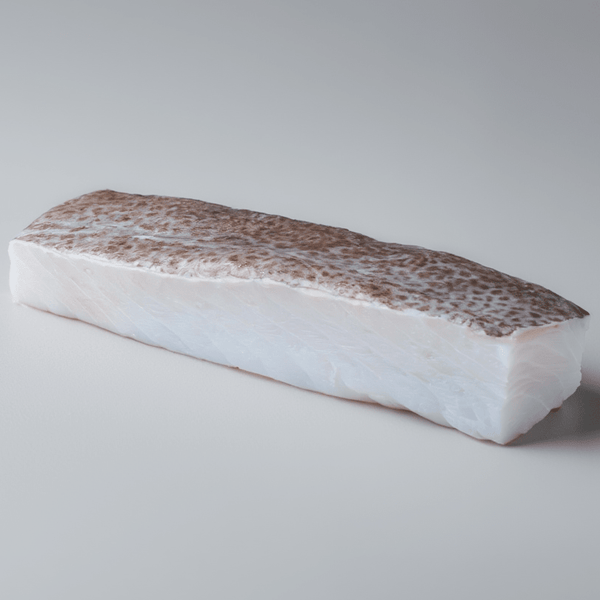
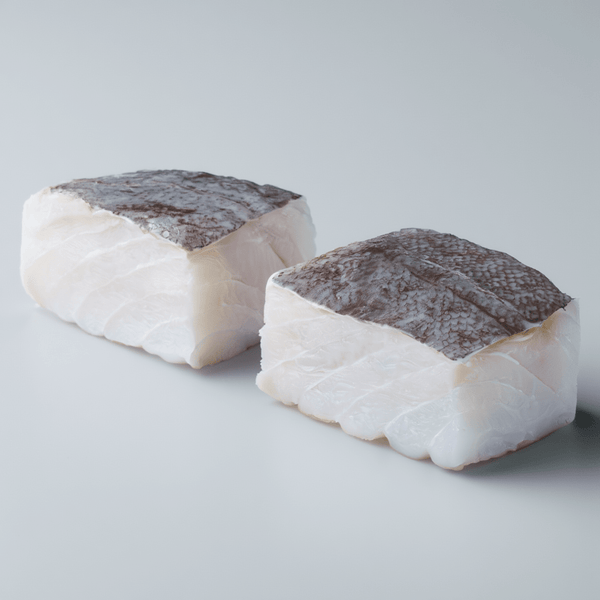
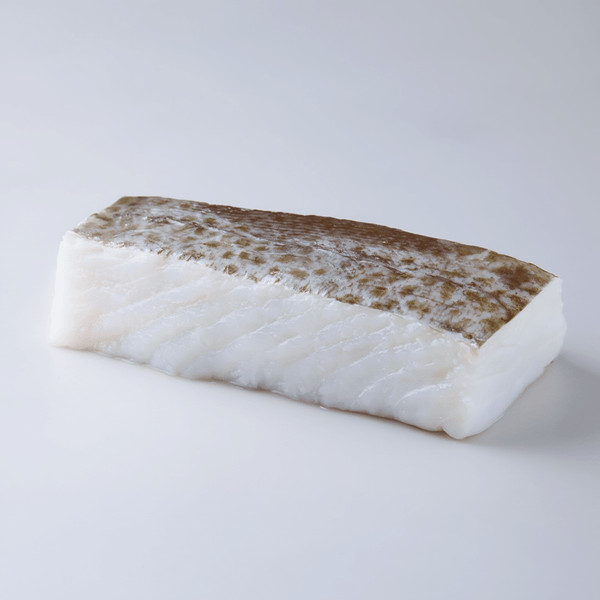
Fresh Gadus morhua has a bright white flesh with pearly reflections, almost translucent at the thinner edges. Once salted and desalted, it acquires a clean, uniform white color, without yellowish spots or dark areas. In contrast, ling tends to show a slightly pinkish or creamy tone, pollock has grayish or greenish tones, and pangasius has an opaque white, lacking the luminosity of authentic cod.
Texture to the touch
The flesh of Gadus morhua is firm when pressed with a finger: it quickly returns to its shape, like a good quality mattress. Ling feels harder and tougher, pollock softer and moister, and pangasius notably soft and watery—when pressed, the finger mark takes time to disappear or doesn't at all.
The flaking test
This is perhaps the most reliable test and the one we have used at Bacalalo for decades. Gadus morhua, once cooked, separates into large, clean, and well-defined flakes—like the pages of a thick book. This is what the English call large, clean flakes. This flaky structure is an unmistakable sign of quality and authenticity.
Ling, on the other hand, breaks into long, narrow fibers, like threads. Pollock produces very small and uneven flakes. And pangasius simply falls apart into a soft mass with no recognizable structure—it never flakes.
Loin thickness
Authentic Gadus morhua loins have a considerable thickness—premium loins can exceed 4-5 cm at their widest part. If you find a loin labeled "cod" that is thin and flat (less than 2 cm), it is probably not Gadus morhua, but pollock, blue whiting, or another smaller species.
Differences in taste and cooking behavior
Beyond appearance, the differences between Gadus morhua and its substitutes become evident in cooking and on the palate.
Flavor
Gadus morhua has a delicate, slightly sweet flavor, with clean notes of the sea that are never aggressive. It is a well-balanced fish that does not need strong sauces to stand out—a good cod pil pil or an esqueixada only need the prominence of the fish itself.
Ling, on the other hand, has a more earthy, almost mineral flavor, which can be somewhat strong. Pollock is more neutral, lacking the character of Gadus morhua. And pangasius is practically tasteless—a white protein without personality that needs a lot of seasoning to have any gastronomic interest.
Cooking behavior
- Gadus morhua: Maintains its shape and structure during cooking. It can be baked, grilled, confited, fried, or stewed without falling apart. When desalted and cooked, the flakes separate elegantly. Ideal for brandada, pil pil (gelifies well thanks to its natural collagen), and recipes where cod is the star.
- Ling: Holds up well to cooking but its fibrous texture is less pleasant. It does not gelify like Gadus morhua, making an authentic pil pil impossible. It works acceptably in stews where it is chopped.
- Pollock: Easily falls apart when cooked. It is not suitable for recipes where cod needs to maintain its shape (baked, grilled). It is mainly used in croquettes, fritters, or preparations where it is shredded.
- Panga: Releases a lot of water when cooked, breaks down quickly, and lacks the necessary structure for any traditional cod recipe. It does not produce pil pil, does not flake, and has no distinct flavor.
- Blue whiting: Small and fragile pieces that fall apart with minimal heat contact. Only suitable for quick frying or breading, but never as a substitute for cod in classic recipes.
If you want to prepare recipes where cod is the absolute star—an authentic Icelandic cod makes the difference between an acceptable dish and a memorable one.
Prices: why Gadus morhua costs more
One of the reasons for cod substitutes is, obviously, the price. Gadus morhua is significantly more expensive than its alternatives, and there are solid reasons for this:
Sustainable fishing and limited quotas
Gadus morhua fishing in the North Atlantic is subject to strict catch quotas managed by international organizations. Iceland, Norway, and other countries apply fishery management systems that limit catches to ensure the sustainability of populations. These quotas restrict supply and, logically, drive up the price. Pangasius, by contrast, is farmed in Mekong fish farms with very low production costs and without the limitations of wild fishing.
Cold waters = slow growth = better quality
Gadus morhua lives in waters at 2-10 °C and grows slowly—it can take 4-7 years to reach commercial size. This slow growth allows the flesh to develop a firm texture, balanced fat content, and a complex flavor profile. Intensively farmed fish in warm waters grow much faster but at the expense of meat quality.
Artisanal salting process
Quality salted cod follows a salting process that can last weeks, with stages of salting, pressing, and curing that require time, space, and knowledge. This process transforms the texture and concentrates the flavor of the fish. Cheap substitutes are often processed with accelerated methods that do not produce the same result.
Real yield vs. apparent yield
Here's an aspect many consumers overlook: Gadus morhua has a superior real yield. When desalted and cooked, pangasius can lose up to 40-50% of its weight in water, while well-processed Gadus morhua maintains its structure and weight. This means that the "cheap" kilo of pangasius yields less on the plate than the "expensive" kilo of authentic cod. The price per real serving is closer than it seems at first glance.
Labeling tricks in supermarkets and how to read labels
European regulations (EU Regulation 1379/2013) require indicating the commercial name, scientific name, production method, catch area, and fishing gear for all fishery products. However, the reality on supermarket shelves is not always transparent.
What should appear on the label
- Commercial Name: "Cod" (if it is Gadus morhua), "Ling" (if it is Molva molva), "Pollock" (if it is Pollachius), "Pangasius" (if it is Pangasius hypophthalmus). If it just says "cod" without a scientific name, be suspicious.
- Scientific Name: Look for Gadus morhua on the label. It is the ultimate proof. If it says Gadus macrocephalus, it is Pacific cod (inferior quality). If no scientific name appears, the label violates the regulations.
- Catch Area: FAO 27 (Northeast Atlantic) for Icelandic and Norwegian cod. If it says FAO 67 (Northeast Pacific) or no area is indicated, it is not Atlantic cod.
- Production Method: "Wild-caught" or "Caught" for wild cod. If it says "Aquaculture" or "Farmed," it is not wild Gadus morhua.
Common tricks you should know
These are the most common deceptions we find in the market:
- "Cod" alone on the price label: Some establishments label ling or pollock simply as "cod" on the counter label, without a scientific name. If the price seems too good to be true, it's probably not Gadus morhua.
- "Pacific Cod": Gadus macrocephalus is a legitimate cod, but of inferior quality to Gadus morhua. Its flesh is softer, less defined in its flaking, and has less flavor. It is often sold at the price of Atlantic cod.
- "Cod loins" without specifying species: Loins are the noble part of cod, but if the product does not indicate Gadus morhua, they could be loins from any gadid.
- Mixtures in processed products: Croquettes, fritters, or "cod" flakes made industrially may contain mixtures of species without being clearly indicated on the packaging. Read the ingredient list looking for the scientific name.
- "Desalted cod" vacuum-packed: Many desalted cod products in the refrigerated section are Gadus macrocephalus (Pacific) or even pollock. Always check the scientific name.
The golden rule is simple: if it doesn't say Gadus morhua, it's not real Atlantic cod. And if the price is well below 18-20 EUR/kg for salted cod, you have to ask yourself why.
Why Icelandic Gadus morhua is considered the best
Within Gadus morhua, not all are equal. Icelandic cod has a well-deserved reputation as the best in the world, and there are concrete reasons for this:
Pure, cold waters
Iceland is located at the confluence of the warm Gulf Stream and the cold Arctic currents. This mixture creates a marine ecosystem exceptionally rich in nutrients. Icelandic waters are among the cleanest and least polluted on the planet—far from industrial shipping routes and the mouths of large polluted rivers. Cod that grows in these waters absorbs fewer contaminants and develops cleaner-tasting flesh.
Abundant natural food
The waters around Iceland are home to huge populations of capelin, northern shrimp, and krill—the natural diet of Gadus morhua. Well-fed cod with its natural diet develops firmer flesh, optimal fat content, and a more complex flavor than cod from areas with less food availability.
Exemplary fisheries management
In 1984, Iceland implemented a system of individual transferable quotas (ITQ) that is a global benchmark in sustainable fisheries management. Each vessel is assigned a quota that it cannot exceed, and the Marine Research Institute annually assesses populations to adjust catches. The result: Icelandic cod populations are at healthy and sustainable levels, something that cannot be said for all fishing areas in the North Atlantic.
Salting and drying process
The Icelandic tradition of cod processing—salting, air-drying in the cold Arctic wind—produces a product with superior texture and flavor. Iceland's dry, cold air allows for slow, even drying that concentrates flavors without damaging proteins. This process is naturally made possible by Iceland's climate and is impossible to replicate artificially with the same quality.
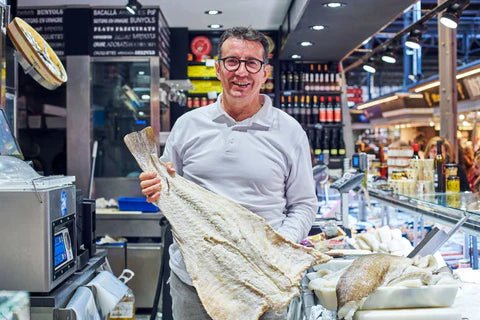
At Bacalalo, we work exclusively with Icelandic cod because since 1990, in Mercat del Ninot, we have seen that the difference is real: in flavor, texture, yield, and ultimate customer satisfaction. It's not marketing—it's experience accumulated over more than 35 years of selecting cod.
Frequently asked questions
What exactly does Gadus morhua mean?
Gadus morhua is the scientific name (Latin binomial) for Atlantic cod. "Gadus" is the genus that groups true cods, and "morhua" derives from the Old Norse term for this fish. Only species classified as Gadus morhua can be considered authentic Atlantic cod.
Is Gadus morhua the same as Gadus macrocephalus?
No. Gadus macrocephalus is Pacific cod, a different species that inhabits the North Pacific. Although both are legitimate cods from the genus Gadus, macrocephalus has softer flesh, less defined flaking, and less flavor. It is a more economical species that is often marketed without clearly differentiating it from Atlantic cod.
Can ling be legally sold as cod?
No. Ling (Molva molva) belongs to the Lotidae family, not Gadidae. European regulations require each species to be labeled with its correct commercial name. Selling ling as "cod" constitutes food fraud. However, in markets and open fish counters, where labeling is less rigorous, this confusion still occurs.
How can I tell if the cod in my supermarket is authentic?
Look for the scientific name Gadus morhua on the label. Regulations require its inclusion. Also, check the catch area (FAO 27 for the Northeast Atlantic) and the production method (wild-caught). If any of these details are missing, the product does not comply with current labeling regulations. Furthermore, a price below 18 EUR/kg for salted cod should make you suspicious.
Why is pangasius confused with cod?
Pangasius (Pangasius hypophthalmus) has white flesh and a mild flavor, which can superficially resemble cod. But that's where the similarities end. Pangasius is a freshwater fish, farmed in Mekong River fish farms, with a soft, watery texture that has nothing to do with the firmness and flaking of Gadus morhua. It is used as a cheap substitute in processed products.
Is frozen cod worse than salted cod?
Not necessarily, but they are different products. Cod frozen on board retains its nutritional properties well, but its texture and flavor do not reach the complexity of traditional salted cod, where the salting and curing process transforms proteins and concentrates flavors. For recipes like pil pil or brandada, salted Icelandic cod (Gadus morhua) offers a clearly superior result.
What FAO zone corresponds to Icelandic cod?
Icelandic cod is caught in FAO zone 27, sub-zone Va (Icelandic waters). This is the Northeast Atlantic area surrounding Iceland. When you see FAO 27.5.a on a label, you can be sure that the cod comes from Icelandic waters. Other sub-zones of FAO 27 correspond to Norway, the Barents Sea, or the North Sea.
Is there a real risk of cod fraud in Spain?
Yes. Various studies, including those by OCU and CSIC, have found that between 20% and 40% of products labeled "cod" in Spain contain wholly or partially other species (mainly ling and pollock). Fraud is more frequent in chopped, shredded, or processed products than in whole pieces, where visual identification is easier. Buying from specialized, trusted establishments significantly reduces this risk.