Summary: Ajoarriero is one of those dishes that carries the weight of history in its name. "Ajoarriero" referred to the mule driver who transported goods—including salt cod—along the roads of the Iberian Peninsula before the existence of roads or refrigeration. These mule drivers cooked at the end of each day with whatever they had in their pack: desalinated cod, garlic, oil, and whatever else they found in the market along the way.
The result was one of the most generous and straightforward recipes in Spanish cuisine: bacalao al ajoarriero. A preparation that varies by region—Navarra, Castilla, Aragón, La Rioja each have their own version—but in all of them, it shares the same character: honest, hearty, without frills.
At Bacalalo, we have been in Barcelona's Mercat del Ninot since 1990, and shredded cod is one of our most ordered products precisely because of recipes like this. In this guide, we give you the complete recipe, the history behind it, confit tips, and the most important regional variations.
What is bacalao al ajoarriero
Bacalao al ajoarriero is a preparation of shredded, desalted cod cooked with garlic, olive oil, and, depending on the version, peppers (choricero or seasonal), tomato, and/or chili pepper.
The defining characteristic of ajoarriero is not a specific ingredient but the technique: the cod is finely shredded and incorporated into a garlic and pepper sofrito (or directly into flavored oil) so that the mixture emulsifies slightly, the oil and collagen from the cod integrate, and the result is a juicy, unctuous mixture with a deep flavor.
It is, in essence, the most democratic cod dish: it uses cod flakes and trimmings, the most accessible ingredients, and transforms them into a dish with an unmistakable personality.
History of ajoarriero: from the road to the table
The mule driver and his cod
The arrieros or muleros were the transporters of medieval and early modern Spain: they led mule trains loaded with goods along the kingdom's roads for days or weeks. Salted cod was one of the most frequent goods in those packs: heavy, resistant, and not spoiling on the journey.
The mule drivers of Navarra and Aragón, who crossed the Pyrenees or traveled the Camino de Santiago, had access to both cod and the garlic and oil from the lands they traversed. The ajoarriero recipe was born from this combination of availability and necessity: shred the cod, sauté the garlic in oil, mix, cook, and eat.
The cod route in the Peninsula
Salted cod mainly reached the Iberian Peninsula via two routes:
- Atlantic route: through the Basque ports (Bilbao, San Sebastián) and the route to Castilla and Aragón
- Mediterranean route: through the Catalan ports (Barcelona, Tarragona) and the route inland
Navarra was at the crossroads of both routes, which explains why Navarran ajoarriero is the most documented and historically recognized version.
Navarran vs. Castilian version: the differences
Bacalao al ajoarriero has two major traditions:
Navarran version (with choricero pepper, without tomato)
The Navarran version—the oldest—uses dried choricero pepper as an aromatic and coloring base. It does not contain tomato. The result is darker, more concentrated, with a dried pepper flavor that is distinctly Navarran.
Distinctive ingredients:- Hydrated dried choricero peppers
- Plenty of garlic
- Olive oil
- Optional chili pepper
- No tomato
Castilian-La Mancha version (with tomato)
The version from the center of the Peninsula incorporates tomato, which provides acidity and juiciness. It is more colorful, fresher on the palate. Tomatoes arrived in Spanish cuisine much later than cod, which explains why this is a more recent version.
Distinctive ingredients:- Ripe tomato or canned crushed tomatoes
- Garlic and onion
- Fresh green or red peppers
- Olive oil
- Occasionally, chopped hard-boiled egg
Aragonese and Riojan version
Aragón and La Rioja have their own variations that combine elements from the two previous versions. Aragonese ajoarriero can include roasted piquillo peppers; Riojan sometimes adds pickled peppers.
Related Products from Bacalalo


Recommended Products

Natural Cod Liver Foie Gras - 120g | Smoked I...
3,90 €

CHATKA Wild King Crab 60% Legs 40% Shredded M...
95,00 €

Artisan-Cut Smoked Cod Carpaccio | 1 Tray Pa...
15,90 €

Dried Cod Cheeks (1 tray) - 500g
19,95 €
Refrigerated delivery 24-48h to the entire Peninsula
The traditional Navarran recipe: step by step
Ingredients (4 servings)
- 500 g desalted shredded cod (or already desalted cod flakes)
- 4 dried choricero peppers
- 6 cloves of garlic
- 150 ml extra virgin olive oil
- 2 dried chili peppers (optional, to taste)
- Fresh parsley
- Salt (with caution: cod already has residual salt)
Preparation
Step 1 - Prepare the choricero peppers: Hydrate the choricero peppers in hot water for 30 minutes. When soft, cut them in half and scrape out the flesh with a spoon. Discard the skin and seeds. Set aside the flesh.
Step 2 - Check the cod: If you have bought already desalted cod, simply drain it well and pat it dry with paper towels. If starting with salted cod, desalt it 24-36 hours in advance, changing the water every 8 hours.
Step 3 - Sauté the garlic: Heat the oil in a shallow casserole or large frying pan over very low heat. Add the sliced garlic and chili pepper (if using). The goal is for the garlic to confit slowly, without burning, at a temperature of about 60-70°C. This takes 8-10 minutes.
Step 4 - The confit trick: Confit garlic (not fried) is one of the secrets to quality ajoarriero. Fried garlic has a more aggressive and bitter taste; confit garlic is sweet, smooth, and integrates perfectly with the cod. Low temperature, patience, and do not let the oil smoke.
Step 5 - Add the choricero pepper flesh: Incorporate the pulp of the choricero peppers into the oil flavored with garlic. Mix well and cook for 2-3 more minutes for the flavors to integrate.
Step 6 - The cod: Add the shredded cod. Mix carefully with a wooden spoon or spatula, without crushing the cod too much: you want it to integrate with the sauce but retain some texture.
Step 7 - The emulsion: This is the key moment. Over low heat, move the casserole in gentle circular motions. The collagen from the cod and the oil will begin to emulsify. The mixture should be unctuous, almost creamy. If it is too dry, add a little of the water used to hydrate the choricero peppers.
Step 8 - Adjust and serve: Taste before adding salt (cod has residual salt). Serve with chopped parsley and, if desired, a fried egg on top.
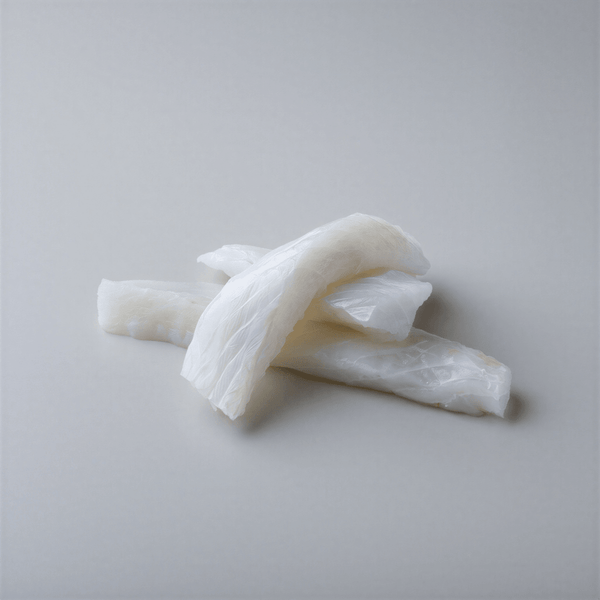
Shredded cod for ajoarriero at Bacalalo: flakes of North Atlantic cod, Gadus morhua, already desalted and ready to cook. The ideal product for a perfect ajoarriero. View shredded cod in our store
Variation: Castilian ajoarriero with tomato
Ingredients (4 servings)
- 500 g desalted cod flakes
- 3 large ripe tomatoes (or 400g crushed natural tomatoes)
- 4 cloves of garlic
- 1 medium onion
- 1 green pepper and 1 red pepper
- 150 ml extra virgin olive oil
- 1 teaspoon sweet paprika
- Parsley, salt
Preparation
Step 1: Sauté the onion in oil over low heat for 10 minutes until translucent.
Step 2: Add the sliced garlic and diced peppers. Cook for 10 more minutes.
Step 3: Add the grated or crushed tomato. Cook the sofrito over low heat for 20 minutes, stirring occasionally, until most of the water has evaporated from the tomato and the sofrito is well concentrated.
Step 4: Stir in the paprika off the heat (to prevent it from burning). Mix.
Step 5: Add the shredded cod. Mix carefully and cook over low heat for 10 more minutes.
Step 6: The cod should be perfectly integrated with the sofrito. Taste for salt, add parsley, and serve.
Variation: ajoarriero without tomato or choricero pepper (quick version)
The quickest and most direct version of ajoarriero: just cod, garlic, and oil. The pure essence of the recipe.
Ingredients (2 servings)
- 300 g desalted cod flakes
- 5 cloves of garlic
- 100 ml extra virgin olive oil
- 1 dried chili pepper
- Parsley
Preparation
- Confit the sliced garlic and chili pepper in oil over very low heat for 10 minutes
- Add the cod. Mix gently
- Move the casserole in circular motions for 5-7 minutes over minimum heat
- The result should be an unctuous and shiny, golden paste, served on toasted bread or with a fried egg
This minimal version of ajoarriero is possibly the closest to what the real mule drivers ate.
The confit trick: why it matters so much
The confiting of the garlic is the differentiator between a good and an excellent ajoarriero. Let's understand why:
Fried garlic (incorrect method for ajoarriero)
Garlic fried at high temperatures (over 150°C) develops intense aromatic compounds and, if overcooked for even a second, becomes bitter. The result is garlic with an aggressive flavor that dominates the dish and does not allow the cod to express itself.
Confit garlic (correct method)
Garlic confited at low temperatures (60-80°C in oil) undergoes a different transformation: the natural sugars in the garlic caramelize gently, the sulfurous compounds that give the aggressive flavor are transformed into milder compounds, and the result is sweet, smooth, almost mellow garlic.
Confit garlic is the base of many of the best cod recipes: pil-pil, Basque bacalao al pilpil, brandada, and ajoarriero all benefit from this technique.
Thermometer for confiting
If you have a kitchen thermometer, use it: the oil for confiting should not exceed 85°C. If you don't have a thermometer, the visual cue is that the garlic starts to release small bubbles but the oil doesn't smoke and the garlic doesn't brown. Keep the heat on low, with patience.
Accompaniments and presentations of ajoarriero
Classic Navarran presentation
Served directly in an earthenware casserole. With country bread for dipping and a glass of red Navarra wine. Nothing more.
Ajoarriero on toast or regaña
One of the most elegant presentations: ajoarriero spread on a slice of toasted bread or a regaña (crunchy savory cracker from Andalusia). Perfect as a tapa or appetizer.
Ajoarriero with egg
In Navarre and Aragon, it is common to add an egg to the ajoarriero at the end of cooking: either a fried egg on top, or beaten into the pan in the last few minutes (scrambled style). The egg softens and enriches the dish.
Ajoarriero as a filling
Ajoarriero works perfectly as a filling for roasted piquillo peppers, puff pastry vol-au-vents, or hollowed-out potatoes. In these more elaborate presentations, the contrast between the container and the filling works very well.
Ajoarriero with potato
A variant from northern Castile adds cooked potato to the ajoarriero, creating a more substantial dish. The potato absorbs the flavors of the cod and oil.
Frequently Asked Questions about Bacalao al Ajoarriero
1. What exactly is ajoarriero?
A preparation of desalted shredded cod cooked with garlic, oil, and peppers (choricero, fresh, or tomato, depending on the regional version). The name refers to the muleteers who cooked it on the road.2. What is the difference between Navarrese and Castilian ajoarriero?
Navarrese ajoarriero uses dried choricero pepper and does not contain tomato. Castilian ajoarriero incorporates tomato, onion, and fresh peppers. The Navarrese version is more concentrated and intense; the Castilian one is fresher and more acidic.3. Can ajoarriero be made with fresh cod?
It is not the traditional dish, but a version can be made with fresh flaked cod. The flavor will be completely different: milder, without the depth provided by salt curing.4. How much flaked cod do I need per person?
For a main course, 120-150g of desalted flakes per person. For a tapa, 50-70g.5. Why should the garlic in ajoarriero not be fried?
Garlic fried at high temperatures develops bitter and aggressive flavors that dominate the dish. Garlic confited at low temperatures is sweet and mild, allowing the cod to be the star.6. Can I use pre-desalted cod from the supermarket for ajoarriero?
Yes. Ajoarriero is a recipe where quality differences in cod are less critical than in a pil-pil. However, a better quality cod will yield more gelatin and a smoother emulsion.7. How long does ajoarriero last in the fridge?
Ajoarriero lasts 2-3 days in the fridge in a covered container. Reheat on very low heat with a little oil or water to prevent it from drying out.8. Can ajoarriero be frozen?
Yes, although the texture may vary slightly after thawing. Freeze in individual portions.9. What wine pairs well with ajoarriero?
A Navarrese rosé or young red for the Navarrese version (a pure tribute to its origin). A white wine with character (Rioja white, Godello) for the Castilian version with tomato.10. Does ajoarriero contain potato?
In the most common version, no, but some variants in Castile and Navarre do add cooked or fried diced potato.Conclusion
Bacalao al ajoarriero is proof that the most honest and flavorful cuisine does not require exotic ingredients or complicated techniques: it needs good produce, patience, and respect for the process.
The medieval muleteers who cooked this dish at the end of a day's journey did not have thermometers or designer pots. They had good cod, olive oil, garlic, and the time it takes for garlic to confit. That was enough.
Shredded cod is the ideal format for ajoarriero: economical, easy to handle, and perfect for integrating with the sofrito. At Bacalalo, we have it in its best version: Gadus morhua from the North Atlantic, artisanally desalted, ready to cook.
Buy desalted shredded cod at Bacalalo — perfect for ajoarriero, croquettes, and brandade
Discover more