Summary
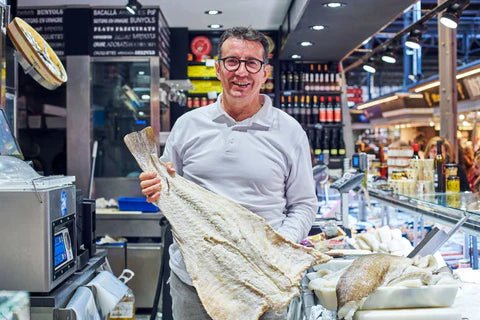
At Bacalalo, we have been selecting each piece of cod from Mercat del Ninot since 1990.
The gilda is the simplest pintxo in the Basque Country and, at the same time, the one that best understands what flavor balance means in a single bite. In this guide: The classic gilda: the pattern that defines everything, Anchovy gilda (the most common variant), Cheese gilda.
Types of Gildas: 10 Varieties of the Basque Pintxo
The gilda is the simplest pintxo in the Basque Country and, at the same time, the one that best understands what flavor balance means in a single bite. At Bacalalo, we have been making artisan gildas for years for Mercat del Ninot and for our online store, and what surprises us most is the creativity generated by this seemingly simple format: a skewer with three ingredients that allows for more variations than anyone imagines. This guide covers the ten most relevant types of gildas, from the classic to the most daring versions currently being served in the best pintxo bars in the north.
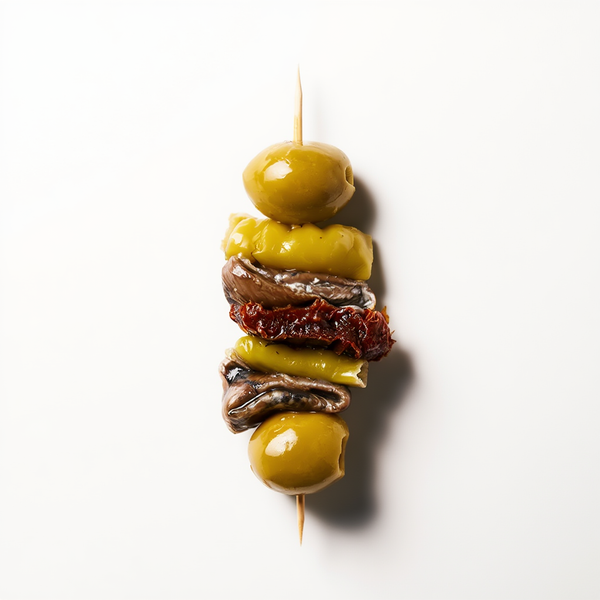
🫒 Artisan gilda ready to serve
Cantabrian anchovy, olive, and gherkin. Handmade.
€9.90 (gourmet unit)
The classic gilda: the pattern that defines everything
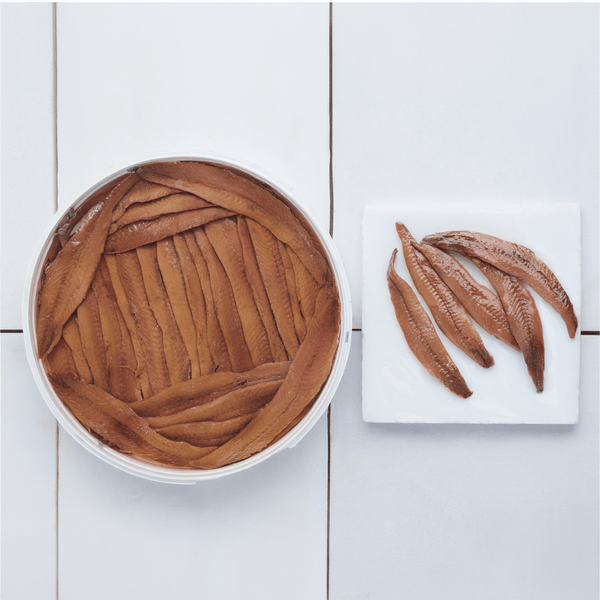
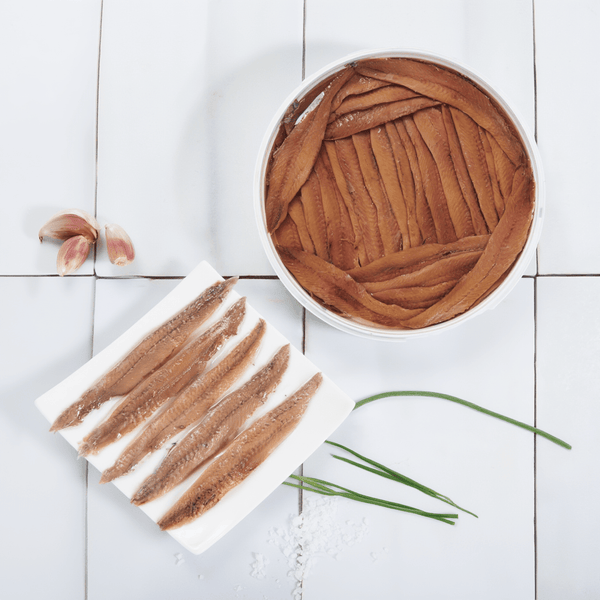
Before exploring the variants, one must understand the original. The classic gilda has three fixed ingredients: manzanilla olive (green, with pit or pitted), pickled Basque guindilla pepper (the typical Ibarra or similar, long and elongated) and Cantabrian anchovy in olive oil. All assembled on a skewer or long toothpick, in that order or with slight variations depending on the establishment.
The flavor is a combination of salty (anchovy), acidic (guindilla and olive), fatty (oil and the anchovy itself) and a mild spicy note. This complexity in three ingredients explains why this pintxo has been one of the most requested in the Basque Country for decades.
The types of gildas that exist today are all variations on that pattern. Some substitute an ingredient, others add a new one. But the spirit, the skewer with contrasting elements, remains.
1. Anchovy gilda (the most common variant)
The most widespread alternative to the anchovy gilda is one that uses pickled anchovy (boquerón) instead of cured anchovy in oil. The result is different: pickled anchovy has a more acidic and fresh profile, while cured anchovy provides a more intense, umami, and salty flavor.
The boquerón gilda is lighter and preferred by those who find anchovy too strong. It is also cheaper to prepare. Many bars in the Basque Country offer both versions simultaneously, and customers choose according to taste and time of day.
At Bacalalo, we make the boquerón gilda with quality vinegar-marinated boquerones, served on gordal olives and Basque guindilla peppers. Fresh marinated boquerón gives a very different result from canned boquerón; the texture is firmer and the flavor is milder and cleaner.
2. Cheese gilda
This variant replaces the fish with a wedge of cured or semi-cured cheese. The types of cheeses that work best in this format are cured Manchego cheese, smoked Idiazabal (the quintessential Basque cheese), or a semi-cured goat cheese with good consistency to skewer.
The cheese gilda eliminates the marine element but compensates with the fat and flavor of the cheese, which contrasts well with the acidity of the guindilla and the olive. It is an interesting option for those who do not consume fish or to diversify a gilda platter.
With Idiazabal cheese, the gilda has a smoky nuance reminiscent of mountain Basque cuisine and works especially well with a cold glass of natural cider or txakoli.
Bacalalo Products

Artisan Cheese Gilda Handmade Gou...
€9.75

Caper Berries in Vinegar - 1400g (600g Drained)
€9.95

Artisan Pickled Onions - 1.4 kg
€9.90

Artisan Boquerón Gilda Handmade ...
€9.90
Refrigerated shipping 24-48h to the entire Peninsula
3. Gilda with smoked salmon
The smoked salmon gilda replaces the anchovy with a piece of Norwegian or Scottish salmon cured with salt and sugar. The flavor profile changes completely: milder, fattier, with that characteristic smoky nuance that goes very well with the acidity of the guindilla pepper.
This version is very popular in the "signature" versions of restaurants. It is assembled with salmon in rolled or folded slices to give it presence on the skewer, along with gordal olives (the large green variety, with more flesh) and Basque guindilla pepper. Some also add capers or cherry tomatoes for an extra note of freshness.
4. Gilda with sun-dried tomato
Sun-dried tomato in oil adds a fourth element to the classic gilda. Its concentrated, slightly sweet flavor and chewy texture provide a counterpoint to the more aggressive ingredients (guindilla, anchovy). It's an ingredient of Mediterranean origin that Basque chefs have enthusiastically adopted.
At Bacalalo, we use quality sun-dried tomatoes in several of our artisanal gildas because the contrast between the concentrated tomato and the Cantabrian anchovy creates a dimension of flavor that the classic gilda doesn't have. A small addition, a big impact.
5. Gilda with capers or caper berries
Capers (the flower bud) and caper berries (the fruit, larger and fleshier) are common ingredients in Mediterranean cuisine that fit perfectly into the gilda format. Their acidic and slightly bitter vegetable flavor complements the anchovy and olive.
Pickled caper berries are especially useful in gildas because their size is similar to other ingredients and they have enough consistency to stay on the skewer. They are threaded onto the toothpick with the same ease as an olive.
6. Gilda with piquillo pepper
Roasted piquillo pepper (from Navarre, with designation of origin) is another ingredient that integrates well into the gilda format. Its sweetness and softness contrast the saltiness of the anchovy. It is used in strips or small pieces, interspersed among the other ingredients.
This variant is less acidic and sweeter than the classic, making it more accessible for palates that don't tolerate the vinegar of the guindilla well. It's a good option when you want a gilda with less intensity but just as flavorful.
7. Gilda with shrimp or prawn
Gilda versions with seafood are the most visually striking and also the most expensive. A cooked shrimp or small prawn inserts a luxurious element into the skewer, transforming the gilda into a premium appetizer.
Cooked and peeled prawn (just the body, to make it manageable) goes very well with a gordal olive and a mild guindilla pepper. No anchovy in this case, because the prawn provides enough seafood flavor. The presentation is spectacular and the taste, clean and elegant.
8. Gilda with smoked sardine
Smoked sardine in olive oil is a less common ingredient than anchovy but with a very interesting flavor profile: more intense, smokier, and with a different texture. It's assembled on the skewer in small pieces, combined with olive and mild guindilla pepper (to avoid competing with the smoke).
This variant has a very distinct personality and is not for everyone, but those who discover it often become repeat customers. It's ideal for lovers of smoked fish and strongly flavored preserves.
9. Gilda with pickled onion
Pickled onions are a classic Spanish pickle ingredient that fit perfectly into the gilda format. Their simultaneously sweet and acidic flavor adds a different dimension to the skewer, and their crunchy texture contrasts well with the softness of the anchovy.
Small "cocktail onions" are used, which are the right size for the skewer. They combine very well with anchovy and green olive for a balanced gilda that is slightly different from the classic.
10. Anchovy gilda with Gernika pepper
Gernika pepper is a green Basque pepper, smaller and milder than a regular pepper, which is usually prepared fried or grilled. In its pickled or preserved version, it works as a substitute for guindilla with less spice and more vegetable flavor.
This variant is preferred in some inland areas of the Basque Country where Gernika pepper is a key ingredient. The resulting gilda is milder, with the green pepper taking center stage, offering a different freshness compared to the more acidic guindilla.
Bacalalo Products
Artisan Cheese Gilda Handmade Gou...
€9.75
Caper Berries in Vinegar - 1400g (600g Drained)
€9.95
Artisan Pickled Onions - 1.4 kg
€9.90
Artisan Boquerón Gilda Handmade ...
€9.90
Refrigerated shipping 24-48h to the entire Peninsula
Frequently asked questions about types of gildas
What is the difference between a gilda and a pintxo?
A gilda is a type of pintxo, not a synonym. A pintxo is any small bite served on bread or on a skewer, typical of the Basque Country. A gilda is a specific variant: always on a skewer (without bread), with anchovy or boquerón, olive, and guindilla as its base. All types of gildas are pintxos, but not all pintxos are gildas.
What type of olive is used in the original gilda?
The classic olive for a gilda is the medium-sized green Manzanilla, with the pit. In more generous versions, the Gordal (larger and meatier) is used. Black olives are not common in gildas because they disrupt the established visual and flavor profile. The green olive provides acidity and firmness that complements the other ingredients well.
How many ingredients can a gilda have?
The classic gilda has three. Modern versions can have up to four or five ingredients. Beyond that, it becomes a different pintxo. The practical limit is set by the skewer: if the ingredients are stacked unstably or the result is difficult to eat in one bite, it is no longer a gilda in the functional sense of the term.
Does the guindilla have to be spicy?
Not necessarily. The Basque guindilla most commonly used in gildas (from Ibarra) is mild and primarily contributes acidity, not heat. Some bars use spicier guindillas according to local taste. If preparing at home, choose pickled guindillas of medium intensity so as not to overpower the other ingredients.
Which type of gilda is best for an appetizer platter?
For a varied platter, it's best to combine three or four different types. The classic anchovy gilda is a must. Add the boquerón version for those who prefer something milder, the cheese version for those who don't eat fish, and a version with salmon or sun-dried tomato to provide visual and flavor variety. This covers a wide range of tastes with a consistent format.
Why are artisanal gildas different from industrial ones?
Industrial or supermarket gildas are made with standardized ingredients: low-quality anchovies, uniformly sized olives, and very high-acidity pickled guindillas. Artisanal gildas, like those from Bacalalo, use Cantabrian anchovies cured for at least 12 months, selected quality olives, and guindillas with just the right amount of acidity. The difference is in each ingredient and is noticeable from the first bite.