Summary
Few dishes have an identity as defined as Pulpo a la Gallega. In Galicia, it's called Pulpo á Feira because for centuries it was prepared at village fairs, where "pulpeiras" (octopus cooks) would boil large... In this guide: Why Galician octopus is different, Ingredients for Pulpo á Feira, The frozen octopus trick.
Pulpo a la Gallega (á Feira): Recipe and How to Boil
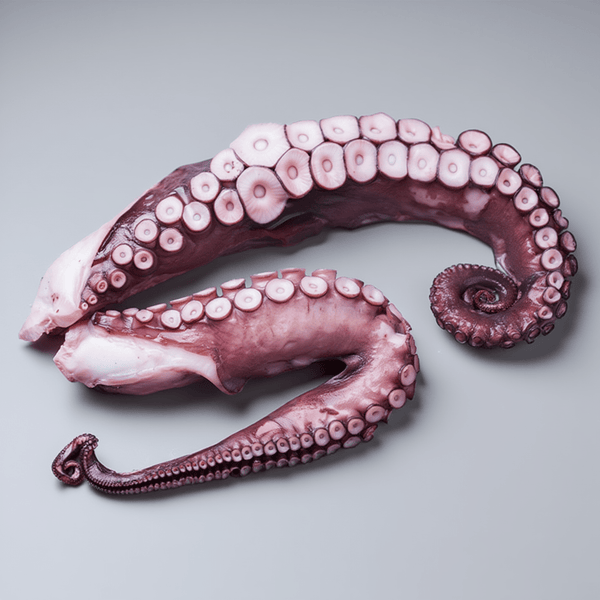
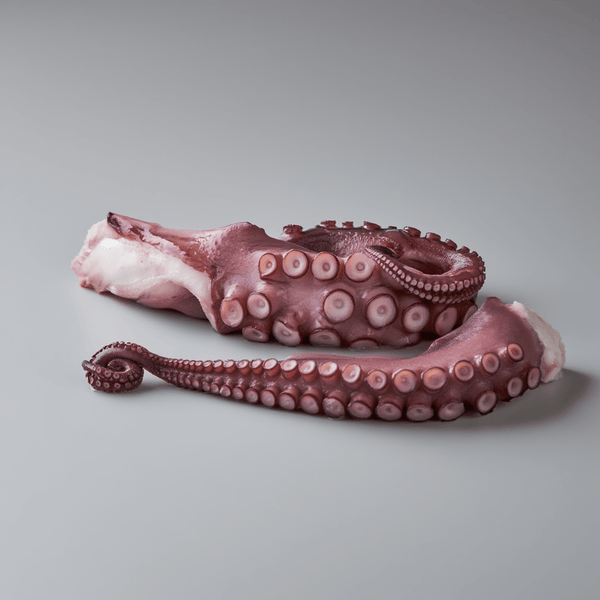
Few dishes have an identity as defined as Pulpo a la Gallega. In Galicia, it's called Pulpo á Feira because for centuries it was prepared at village fairs, where "pulpeiras" (octopus cooks) would boil large pots and serve the cut tentacles on olive wood boards. At Bacalalo, when quality Galician octopus arrives at Mercat del Ninot, it's one of the products that generates the most questions: how to boil it, for how long, the "scaring" trick, the exact paprika. This guide gathers what really works, without beating around the bush.
Why Galician octopus is different
Octopus (Octopus vulgaris) is fished in many parts of the world, but Galician octopus has particular living conditions that are noticeable in the dish. The Rías Baixas and the Costa da Morte coast offer cold, nutrient-rich waters with abundant shellfish that the octopus feeds on. This results in firmer, more flavorful meat with a texture that holds up better to cooking.
Most of the octopus consumed in Spain comes from Mauritania or other African Atlantic coasts, where it is caught in large quantities and at much lower prices. The quality difference with Galician estuary octopus is perceptible: Galician octopus has tougher skin (which protects the meat during cooking), the tentacles are more uniform, and the flavor is more intense and clean.
For authentic Pulpo á Feira, the origin matters. It's not about snobbery: it's that the result on the plate is different. A well-cooked Galician estuary octopus has a texture that combines a slightly firm exterior with a tender interior that almost melts. This cannot be achieved with just any octopus.
Ingredients for Pulpo á Feira
- 1 fresh or frozen octopus, 1.5 to 2 kg (for 4 people)
- Generous amount of coarse sea salt
- Sweet paprika from La Vera (essential; spicy is optional or combined)
- Spicy paprika from La Vera (optional, to taste)
- High-quality extra virgin olive oil
- 1 large onion (optional, for the cooking water)
- 1 bay leaf (optional)
A note on paprika: Paprika from La Vera, with its own Designation of Origin from Extremadura, is what traditional Galician "pulpeiras" have always used. It's not a whim: its smoking process with oak wood gives it an aroma and color that paprikas without a PDO do not have. The difference is visible in the dish and perceptible in the flavor. Buy the best one you can find; for this dish, it makes all the difference.
The frozen octopus trick
If using fresh octopus, it must be tenderized before cooking. Traditional Galician cooks do this by repeatedly beating the octopus against the rocks by the sea, which breaks down the muscle fibers and tenderizes the meat. At home, the most practical alternative is to freeze the fresh octopus for at least 24-48 hours at -18°C. The freezing-thawing process breaks down the fibers in the same way as beating.
If the octopus is already frozen from origin (most on the market), it is already in optimal condition. Thaw it in the refrigerator for 12-24 hours before cooking, never at room temperature or in hot water.
This step is fundamental to achieving the correct texture. An octopus that hasn't been properly tenderized will be rubbery on the outside even if the inside is well cooked. Pre-freezing is the most reliable method for a home cook.
Bacalalo Products

Fresh Coastal Sardines - Pack of 4 | ...
2,95 €

Whole Gourmet Extra Loin Tuna Mojama...
95,00 €

Natural Cockles 30/40 Pieces - 111g | Ba...
7,95 €

Northern White Tuna Loins in Olive Oil Gl...
13,95 €
Refrigerated shipping 24-48h throughout the Peninsula
Step-by-step preparation: how to boil Galician octopus
- Prepare the octopus: Once thawed, wash thoroughly under cold water. Check the ink sac (in the body area) and remove it if present. The beak (the mouth, in the center of the tentacles) should also be removed.
- Prepare the water: Fill a large pot with plenty of water. If desired, add half a peeled onion and a bay leaf. Do not add salt at this point (salt hardens the skin and can hinder the texture).
- Bring to a strong boil: The water should be at a vigorous boil before introducing the octopus.
- "Scaring" the octopus: This is the traditional Galician technique. Hold the octopus by the head and submerge it in the boiling water for 5-10 seconds, then remove it. Repeat this process 3 times. The goal is for the skin to contract quickly and adhere to the meat, preventing it from detaching during cooking. "Pulpeiras" say this makes it look nicer and the skin holds up better.
-
Main cooking: After the "scaring," fully submerge the octopus and maintain the boil. Cooking time depends on the weight:
- 1 kg octopus: 20-25 minutes
- 1.5 kg octopus: 30-35 minutes
- 2 kg octopus: 40-45 minutes
- Octopus over 2 kg: 50-60 minutes
- Check for doneness: The traditional method is to prick a tentacle with a wooden skewer at the thickest part. It should go in with slight resistance but without effort. If the skewer doesn't penetrate, it needs more time. If it sinks without any resistance, the octopus is overcooked.
- Resting: Once done, turn off the heat and let the octopus rest in the cooking water for 5-10 minutes. This step relaxes the muscle fibers and improves the final texture.
- Remove and cut: Using kitchen shears (the classic Galician method, more precise than a knife), cut the tentacles into slices 1.5 to 2 cm thick on a wooden board.
The classic Pulpo á Feira plating
There's no complication here: Pulpo á Feira is served on a wooden board (or a clay plate in a more home-style version), with the cuts arranged without piling them up so they are clearly visible. Then:
- Sprinkle coarse sea salt generously over the top.
- Add sweet La Vera paprika generously. If you want it spicy, mix two parts sweet to one part spicy.
- Finish with a good drizzle of extra virgin olive oil. Don't skimp: olive oil is an integral part of the dish, not just a garnish.
The order matters: first salt, then paprika, finally oil. This way, the paprika isn't masked by the oil's moisture, and the red colors remain vibrant. The dish should be served immediately, hot or warm. Cold Pulpo á Feira is a different, rather mediocre experience.
Galician octopus in a pressure cooker: quick method
For those who don't want to wait 40-45 minutes, the pressure cooker is an effective alternative that Galician cooks have adopted without reservation. The time is reduced by approximately half:
- 1.5 kg octopus: 15-18 minutes at high pressure from when steam rises
- 2 kg octopus: 20-22 minutes at high pressure
In a pressure cooker, the pre-scaring is not done because the pressurization process already sets the skin. Introduce the octopus directly with the water (without salt), close and cook for the indicated time. Allow to depressurize naturally (do not force the valve) for 10 minutes before opening. The result is very good, although purists insist that slow cooking in a conventional pot yields a slightly superior texture.
Pairing: what to drink with Galician octopus
The classic pairing is Albariño from Rías Baixas, and it's not a geographical coincidence: the fresh acidity of Albariño contrasts with the salt and paprika of the octopus and cleanses the palate between bites. Serve at temperatures between 8 and 10°C. A Galician Godello (Valdeorras, Ribeira Sacra) is another excellent option, slightly more structured but equally refreshing.
If beer is preferred, a light lager or wheat beer works well. What doesn't fit is anything very tannic or full-bodied: octopus has a delicate flavor, and wines with too much oak or tannins will overpower it.
Bacalalo Products
Fresh Coastal Sardines - Pack of 4 | ...
2,95 €
Whole Gourmet Extra Loin Tuna Mojama...
95,00 €
Natural Cockles 30/40 Pieces - 111g | Ba...
7,95 €
Northern White Tuna Loins in Olive Oil Gl...
13,95 €
Refrigerated shipping 24-48h throughout the Peninsula
🛒 Products mentioned in this article
⭐ 4.9/5 · Cold shipping 24-48h · Since 1990 at Mercat del Ninot
Frequently asked questions
Do you always have to "scare" Galician octopus?
Scaring is the traditional technique and has a real function: it contracts the octopus's skin so it doesn't detach during cooking. For previously frozen octopus, some cooks skip this step without getting bad results. But if you want the cleanest visual finish, with intact skin and well-formed tentacles, the three-dip scaring method is the most reliable.
Why is my octopus rubbery?
There are two main reasons: either it wasn't tenderized properly before cooking (you need to freeze it for at least 24-48 hours), or it was undercooked. The most common mistake is being afraid to overcook it and taking it out too soon. If in doubt, 5 more minutes of cooking is always a better option than less.
Can you make pulpo á feira with frozen octopus from the supermarket?
Yes, with some caveats. Supermarket frozen octopus is usually from Mauritania or Morocco, meaning the quality and flavor are different from Galician octopus. The result will be acceptable but not the same. For everyday recipes, it's perfectly valid. For a special occasion, it's worth seeking out Galician octopus from a specialized fishmonger.
Is the water from cooking octopus useful for anything?
The octopus cooking water has a lot of flavor and stains dark violet. Some chefs use it to cook potatoes that accompany the octopus (the famous Galician "patacas"), which acquire a soft lilac color and absorb the taste of the sea. It's a classic use that shouldn't be wasted.
How many servings does a 2 kg octopus yield?
A 2 kg raw octopus loses approximately 50% of its weight during cooking (water and proteins). This leaves about 900-1000 grams of cooked octopus. As a main course, it serves 3-4 people generously. As an appetizer or part of a seafood platter, it serves 6-8 people.
Can Galician octopus be reheated?
It can, but the quality decreases. Cooked and reheated octopus tends to toughen. If there's leftover cooked octopus, the best option is to eat it cold in a salad or at room temperature with the same seasonings (oil, paprika, salt). If it must be reheated, do so in a pan with a little oil over medium-low heat for 2-3 minutes, never in the microwave, which dries out the meat.
What exactly is "pulpo á feira" and why isn't it simply called "pulpo a la gallega"?
Both names refer to the same dish. "Á feira" means "at the fair" in Galician, referring to the rural fairs where octopus vendors cooked octopus in large copper cauldrons. In Galicia, "á feira" is preferred. In the rest of Spain and in restaurants outside Galicia, "a la gallega" became popular. They are the same dish with the same recipe: cooked octopus, coarse salt, pimentón de la Vera (paprika), and olive oil served on a wooden board.