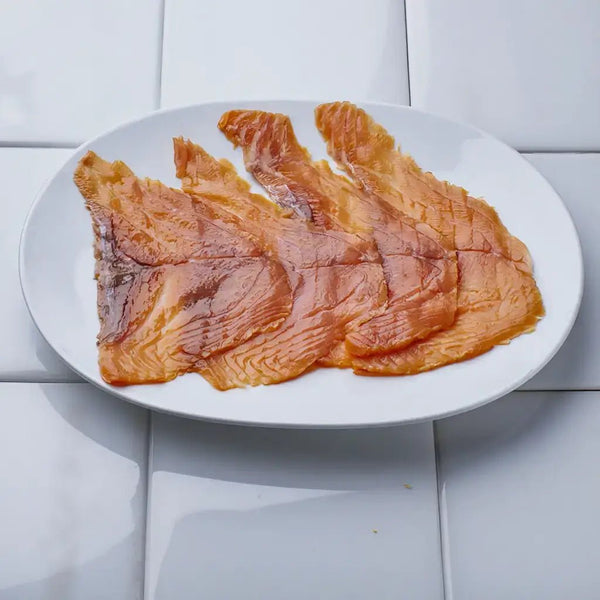


Summary: Mojama de atún (cured tuna loin) is a typical cured fish product from southern Spain, consisting of tuna loins salt-cured and air-dried for weeks. The result is a dark, firm, and compact piece of meat, with an intense taste of the sea, salt, and umami, earning it the nickname "the ham of the sea." It is sliced thinly and consumed as an appetizer or gourmet ingredient.

What is Mojama de Atún?
Mojama de atún is a typical cured fish product from southern Spain, consisting of tuna loins salt-cured and air-dried for weeks. The result is a dark, firm, and compact piece of meat, with an intense taste of the sea, salt, and umami, earning it the nickname "the ham of the sea." It is sliced thinly and consumed as an appetizer or gourmet ingredient.

Mojama is an ancient product: the Phoenicians and Romans were already making it on the coasts of Cadiz more than 3,000 years ago. Today, mojama de atún remains an artisanal product primarily made in Barbate (Cadiz), Isla Cristina (Huelva), and the coast of Murcia and Alicante. It is a product with a Protected Geographical Indication (PGI "Mojama de Barbate" is in process) and is increasingly present in high-end Spanish cuisine.
At Bacalalo, as specialists in cured and salted seafood products, mojama is one of our star products. It is the perfect demonstration that salt, time, and wind can transform a product into something extraordinary.
Origin and History: From the Phoenicians to Today
The word "mojama" comes from the Arabic musama (dry, cured). The technique of salting and drying tuna is one of the oldest in the Mediterranean: the Phoenicians established tuna salting factories in Cadiz (ancient Gadir) more than 3,000 years ago. The Romans continued the tradition and turned garum (fermented fish sauce) and mojama into luxury products that were exported throughout the Empire.
The almadraba (bluefin tuna fishing art using fixed nets) is another ancient tradition that remains alive on the coasts of Cadiz. Every spring, when tuna migrate from the Atlantic to the Mediterranean to spawn, the almadrabas of Barbate, Zahara de los Atunes, Conil, and Tarifa catch bluefin tuna sustainably — the same method used by the Phoenicians. The loins of these tuna are the raw material for the best mojama in the world.
Today, mojama has transcended its humble origin as a fishermen's preserve to become a gourmet product served in the best restaurants in Spain. Ángel León, Dani García, and other chefs have incorporated it into their menus, and its presence in international gourmet stores continues to grow.
How Mojama is Made
- Loin Selection: The two loins of the tuna (upper loin and lower loin) are extracted. The upper loin is leaner and more prized; the lower loin has more fat.
- Salting (24-48 hours): The loins are completely covered with coarse sea salt in trays. The salt penetrates the meat, extracting moisture and curing the muscle. The time varies according to thickness: 24-36 hours for thin loins, up to 48 for thicker ones.
- Washing: The salt is removed, and the loins are washed in fresh water to eliminate excess surface salt.
- Air Drying (2-3 weeks): The loins are hung in ventilated drying rooms (traditionally outdoors, with the westerly wind of Cadiz) for 2-3 weeks. The meat darkens, firms up, and concentrates its flavor. The weight loss during drying is 40-50%: this is why mojama is expensive.
- Rest and Maturation: After drying, the pieces rest in controlled chambers for the flavor to stabilize and homogenize.
The result is a compact, dark (garnet to brown) piece with a firm texture that is easily sliced. The flavor is intense: salty, deeply umami, with notes of nuts and a clean marine aftertaste. The tuna fat, concentrated during drying, provides a creaminess reminiscent of Iberian ham — hence the nickname "ham of the sea."

Related Products from Bacalalo


Types of Mojama
According to Tuna Species
- Bluefin Tuna Mojama (Thunnus thynnus): The most prized and expensive. Fattier meat, more complex flavor, more melting texture. Comes from the almadrabas of Cadiz.
- Yellowfin Tuna Mojama (Thunnus albacares): The most common and affordable. Milder flavor, drier texture. Excellent value for money.
- Frigate Tuna Mojama: Less known, smaller. Different, more delicate flavor.
According to Cut
- Upper Loin (lomo): Leaner, darker color, firmer texture. Preferred by purists.
- Lower Loin (tarantelo/ventresca): Fattier, lighter color, more melting texture. Harder to find and more expensive.
How to Slice Mojama
Slicing is essential to enjoy mojama:
- Knife: Use a long, sharp knife (ham or salmon knife type).
- Thickness: Thin slices, 2-3 mm. Thin but not transparent: they should have some body.
- Direction: Slice perpendicular to the muscle fiber, diagonally to get wider slices.
- Before Slicing: Remove the drier, darker outer part if the piece has been open for a while.
- Temperature: Mojama is best sliced at room temperature. Taken directly from the fridge, it's very hard.
How to Eat Mojama
The classic way to eat mojama is the simplest and best:
- Plain, in thin slices: A drizzle of extra virgin olive oil on top and some peeled Marcona almonds on the side. This is the most common presentation in Cadiz bars and the perfect appetizer.
- With tomato: Mojama slices over ripe tomato slices, olive oil, and salt flakes. Like a marine carpaccio.
- On toast: On crystal bread or baguette with grated tomato and olive oil.
- With almonds: The classic pairing. Raw or lightly toasted almonds perfectly complement the salty-umami flavor of mojama.
Mojama Recipes
Mojama and Tomato Salad
Ripe tomato slices, mojama slices on top, thinly sliced sweet onion, black olives, extra virgin olive oil, and a touch of oregano. The perfect summer salad: salty, acidic, fresh, and hearty.

Mojama with Hummus
Mojama slices on a base of homemade hummus, with a drizzle of sesame oil and toasted sesame seeds. The combination of mojama's umami with the hummus's creaminess is surprising.
Mojama Shavings in Pasta
Grate or finely shave the mojama and add it as a topping over pasta with garlic, oil, and chili (aglio e olio). Mojama acts like a "parmesan of the sea," adding saltiness and flavor depth. This technique is used by chefs like Ángel León.
Mojama with Melon
The marine equivalent of ham with melon. Mojama slices wrapped around cantaloupe melon wedges. The sweetness of the melon balances the salt of the mojama. Also works with fresh figs in season.
Perfect Pairing
- Manzanilla from Sanlúcar: The ultimate pairing. The iodine and salt of manzanilla complement the sea flavor of mojama. It's an iconic combination from Cadiz.
- Fino from Jerez: Similar to manzanilla, with more body.
- Albariño: Freshness and acidity to balance the salt.
- Beer: A cold lager or an artisanal pilsner. Casual and perfect.
- Vermouth: The southern appetizer. Mojama + almonds + vermouth = perfection.
Storage
- Whole piece (unopened/vacuum-sealed): In a cool, dry place (pantry) or refrigerator. Several months.
- Opened piece: Wrap the cut area in cling film or lightly oiled kitchen paper. In the refrigerator. Consume within 2-3 weeks.
- Sliced: Consume immediately or store in the refrigerator covered with olive oil, for a maximum of 3-4 days.
- Freezing: It can be frozen (up to 6 months), but the texture changes upon thawing. Only recommended if for cooking (grated in pasta, in stews).
- Before serving: Take out of the refrigerator 15-20 minutes before. At room temperature, the aromas unfold much better.
Nutritional Properties
- Calories: 215 kcal / 100 g
- Protein: 38 g / 100 g (one of the most concentrated protein sources available)
- Fats: 6 g / 100 g (rich in omega-3)
- Carbohydrates: 0 g
- Sodium: High (salt-cured product)
- Iron: Significant contribution (red tuna meat)
- Vitamin B12: Excellent source
Mojama is one of the richest protein foods available: 38 g per 100 g, more than chicken breast, more than Iberian ham, more than any cheese. It is a nutritionally dense food, ideal for athletes and protein diets. The downside is the high salt content, which makes it unsuitable for abundant consumption by people with hypertension.
🛒 Products mentioned in this article
⭐ 4.9/5 · Cold shipping 24-48h · Since 1990 in Mercat del Ninot
Discover our premium selection
Seafood products selected with expertise since 1990 in Mercat del Ninot, Barcelona. Refrigerated shipping in 24-48h.
Conclusions
- What is Mojama de Atún?: Mojama de atún is a typical cured fish product from southern Spain, consisting of tuna loins salt-cured and air-dried for weeks.
- Origin and History: From the Phoenicians to Today: The word "mojama" comes from the Arabic musama (dry, cured).
- How Mojama is Made: The result is a compact, dark (garnet to brown) piece with a firm texture that is easily sliced.
- Mojama Recipes: Ripe tomato slices, mojama slices on top, thinly sliced sweet onion, black olives, extra virgin olive oil, and a touch of oregano.
- Perfect Pairing: Mojama is one of the richest protein foods available: 38 g per 100 g, more than chicken breast, more than Iberian ham, more than any cheese.
Where to Buy Quality Mojama de Atún
The best mojama de atún is that which is made artisanally with tuna loin and air-dried for just the right amount of time. When buying mojama, look for three quality indicators: that it specifies the tuna species (almadraba bluefin tuna is the most prized), that the color is uniformly garnet and not excessively dark on the surface, and that it is sold whole or vacuum-sealed to better preserve its aromas.
At Bacalalo, we have carefully selected our cured fish products since 1990 at Mercat del Ninot (Barcelona) and ship them refrigerated within 24-48 hours. You can see our entire selection of artisanal cured fish — including mojama de atún — or explore our gourmet preserves to accompany it.
Frequently Asked Questions
What does mojama taste like?
Concentrated sea. Salty, with a deep umami flavor (like Iberian ham but from the sea), notes of nuts, and a clean ocean aftertaste. The texture is firm but melts slightly in the mouth. It's a unique and unmistakable flavor.
Why is mojama so expensive?
Several factors: tuna is expensive (especially wild almadraba red tuna), it loses 40-50% of its weight during drying, the process is artisanal and slow (3-4 weeks), and production is limited. A 1 kg piece of mojama requires 2 kg of fresh tuna.
How much does mojama cost?
Skipjack mojama: €40-80/kg. Almadraba red tuna mojama: €80-200/kg. Prices vary depending on quality, origin, and season. In a gourmet store, a 100g tray of good mojama costs €6-15.
Can mojama be eaten during pregnancy?
Mojama has been salt-cured and dried for weeks, making it safe from a pathogen standpoint. However, its sodium content is very high. Consume it in moderation during pregnancy. If you are concerned about mercury, skipjack mojama has less than red tuna mojama.
Is mojama the same as tuna jerky?
They are similar concepts (cured and dried meat), but mojama is specific to tuna and has its own tradition and technique from southern Spain. "Jerky" usually refers to beef. Some use "tuna jerky" as a synonym for mojama, but the traditional term is mojama.
How long does mojama last once opened?
An opened piece, well wrapped in cling film or oiled paper, lasts 2-3 weeks in the fridge. Already sliced pieces, covered in oil in an airtight container, last 3-4 days. The outer part may darken: trim it before serving.
Discover our artisanal cured seafood products at Bacalalo.
→ Prepare it with Bacalalo product: Gourmet Tuna Mojama 200g