Summary: The gilda is probably the most iconic pincho in the Basque Country. A toothpick. Three ingredients. And a depth of flavor that belies its apparent simplicity. At Casa Vallés bar in San Sebastián, where it was born in the 1940s, a gilda was "the boldest, saltiest, and a bit spiciest" thing on the counter—like actress Rita Hayworth in the movie that gave it its name. Eighty years later, it remains exactly that.
The problem is that a poorly made gilda—with a mediocre anchovy, a soggy pickled pepper, or a bland olive—is a huge disappointment. And a well-made gilda, with the right ingredients in the proper proportions, is a small masterpiece.
At Bacalalo, we have been selecting canned seafood at the Mercat del Ninot in Barcelona since 1990, and anchovies are one of our star products. Here's everything you need to know to make perfect gildas at home.
Contents
- History of the Gilda: The First Modern Pincho
- The Three Ingredients of a Gilda: Selection Guide
- Recipe for Perfect Gildas: Exact Proportions
- 5 Variations of the Gilda
- Common Mistakes When Making Gildas
- What to Drink with Gildas
- Where to Eat the Best Gildas
- Why Quality Anchovies Make All the Difference
History of the Gilda: The First Modern Pincho
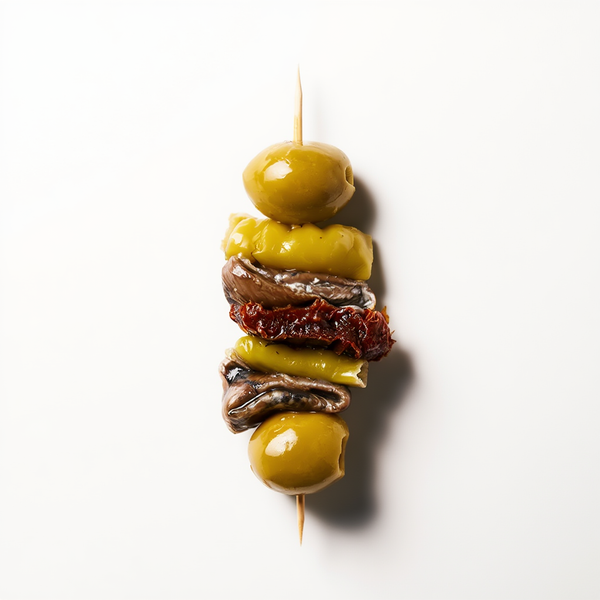
The gilda was born around 1946 in the Casa Vallés bar in San Sebastián, when Joaquín Aramburu took a toothpick and threaded three things he had at hand: a pickled chili pepper, an olive, and an anchovy. The result was so popular that it remained on the menu. The name came from a regular customer who noted the pincho's resemblance to Rita Hayworth in the 1946 film "Gilda": green, salty, and spicy, like the actress's character.
What makes the gilda special from a gastronomic point of view is the interaction between its three components:- The chili pepper provides acidity (from the vinegar), mild heat, and a vegetal note
- The olive gives body, fat, and a balancing bitter note
- The anchovy adds umami, concentrated salinity, and the creaminess that binds everything together
Together they create something greater than the sum of their parts. Separately, they are three common ingredients. Together, they are a perfect balance of flavors.
The Three Ingredients of a Gilda: Selection Guide
Anchovies: The Soul of the Gilda
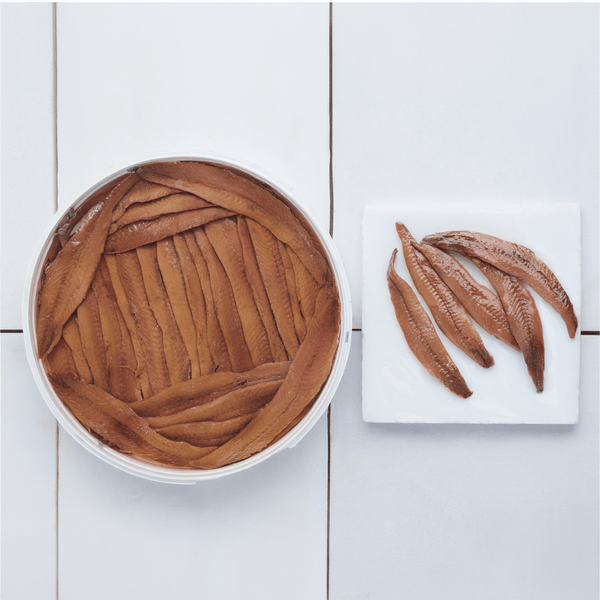
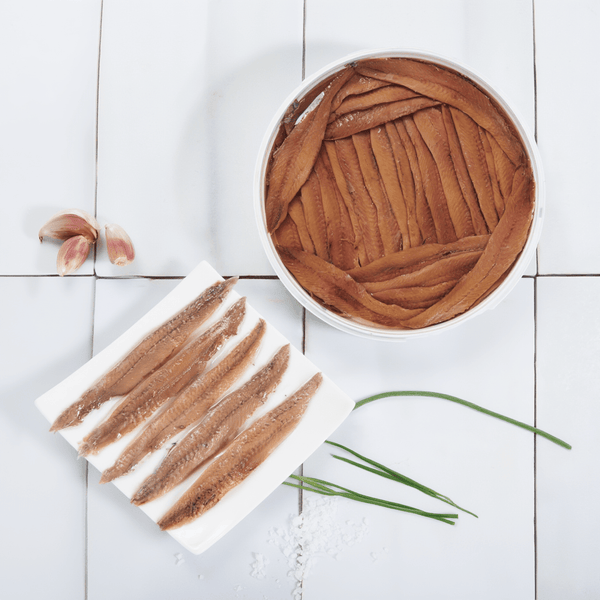
The anchovy is the ingredient that makes the most difference in a gilda. Not all anchovies are created equal—there is a huge difference between a mass-produced industrial anchovy and a Cantabrian anchovy slowly cured in salt.
What to look for in an anchovy for gildas:- Whole fillets, unbroken, with an intense mahogany brown color
- Firm texture that melts in the mouth, not chewy
- Salty but not overpoweringly so, with notes of sea, nut, and fermentation
- Zero raw or rancid fish aroma
The best anchovies for gildas: Cantabrian anchovies are the absolute benchmark. Those from Santoña, Laredo, or the Basque Country have the highest concentration of flavor. "00" or "triple zero" anchovies are the largest caliber—perfect for gildas because they have more flesh and visual presence. Anchovies in olive oil are always superior to those in sunflower oil.
At Bacalalo, we have anchovies of different calibers and origins. Discover our selection of anchovies. For gildas, we always recommend the larger calibers—a large anchovy in a gilda is visually impressive and sensually more satisfying.
Pickled Peppers: The Character of the Gilda
The pickled chili pepper is the component that provides acidity and that mild spicy kick. The perfect chili peppers for gildas are the long, thin, light green Basque pickled chili peppers. The most famous are those from Ibarra (Gipuzkoa), small and very aromatic.
Keys to choosing good pickled peppers:- Bright green color, not yellowish or brown
- Firm texture that "crunches" when bitten
- Mild spiciness—a traditional gilda is not very hot
- Quality vinegar, not harsh
Avoid soft chili peppers, those with wrinkled skin, or those that smell too strongly of industrial vinegar.
Olives: The Body of the Gilda
The olive acts as a counterpoint to the anchovy: where the anchovy is salty and intense, the olive provides a mild bitterness and a vegetal fat that softens the whole.
The most common olives for gildas:- Green Manzanilla olive: The most classic and popular. Pitted, slightly bitter, and firm.
- Gordal olive: Larger and fleshier. Gives the olive more prominence in the overall flavor.
- Arbequina olive: Smaller and more delicate, for more subtle versions.
- Anchovy-stuffed olive: For a triple anchovy gilda (though it can be excessively salty).
The important thing: the olive should be firm, not soft or mushy, and well-drained from its preserving liquid.
Recipe for Perfect Gildas: Exact Proportions
Ingredients for 10 gildas
- 10 anchovies in oil (whole fillets, good quality)
- 10-15 pickled chili peppers (depending on size)
- 10 pitted green olives (Manzanilla or Gordal)
- Extra virgin olive oil (for finishing, optional)
- Pickled gherkins
- Piquillo peppers
- Vinegared anchovies (boquerones)
The Toothpick: What Matters
Use long toothpicks (appetizer skewers, 15-18 cm) or thin bamboo skewers. A short toothpick does not allow all ingredients to be threaded correctly or for the gilda to stand upright. In top restaurants, metal skewers are used, but bamboo ones are perfect for home.
Assembly: The Correct Order
The order in which you thread the ingredients onto the toothpick matters—both aesthetically and for the eating experience.
Classic gilda order:- Start with the chili pepper: thread through the stem end
- Next, the olive
- Roll the anchovy in a spiral onto itself and thread it
- If the chili pepper is long, finish with another piece of chili pepper or with another end of the same one
Visual proportions: A well-assembled gilda should have the chili pepper as the central and longest element, with the olive in the middle and the anchovy rolled around it. The whole should look generous, not skimpy.
The Final Touch
Once the gildas are assembled, place them on a tray and drizzle with a very thin stream of EVOO. If the anchovies are good quality, they already come in oil, but a little extra EVOO polishes the overall look and enhances the flavor.
Serve immediately or let rest for 15-20 minutes for the flavors to meld. Gildas keep well in the refrigerator for 24 hours, covered with plastic wrap.
Related Products from Bacalalo


Recommended Products

Artisan Cheese Gilda Handmade Gou...
9,75 €

Caperberries in Vinegar - 1400g (600 g Drained)
9,95 €

Artisan Pickled Onions - 1.4 kg
9,90 €

Artisan Anchovy Fillet Gilda Handmade ...
9,90 €
Refrigerated shipping 24-48h throughout the Peninsula
5 Variations of the Gilda
1. Gilda with Boquerón (Vinegared Anchovy)
Replace the cured anchovy with boquerón (anchovy marinated in acid, not salt). The result is milder, with more acidity and less salt. Ideal for those who find anchovies too intense. The texture is different—boquerón is firmer and whiter.
2. Gilda with Gherkin
Add a piece of pickled gherkin between the chili pepper and the olive. The gherkin adds more acidity and a very pleasant extra crunch. This is a very popular variation in Madrid and increasingly common in the Basque Country.
3. Gilda with Piquillo Pepper
The piquillo pepper rolled around the anchovy (or instead of the chili pepper) gives a sweeter and milder variation. Less traditional but very striking and popular in restaurant versions.
4. Black Gilda with Kalamata Olive
Use black Kalamata olives instead of green olives. The result is more bitter and earthy, with the black olive taking more prominence. A more Mediterranean than Basque version.
5. Double Anchovy Gilda
For anchovy aficionados: two fillets instead of one. You can roll them together or in a double spiral. The result is saltier, more intense, and very satisfying for lovers of canned fish.
Common Mistakes When Making Gildas
Mistake 1: Poor quality anchovy This is the most frequent and most unforgivable mistake. An industrial anchovy, with a metallic taste or mushy texture, ruins the entire gilda. Don't skimp on anchovies.
Mistake 2: Soft pickled peppers If the chili pepper doesn't crunch when bitten, the texture of the whole is broken. Look for firm, well-preserved chili peppers.
Mistake 3: Too short a toothpick With a short toothpick, you can't thread all the ingredients properly and the gilda falls apart. Use long toothpicks.
Mistake 4: Pitted olive Although some prefer them this way, in a gilda a pitted olive is a problem—you can't eat it in one bite. Always pitless.
Mistake 5: Serving too cold If the gildas have been in the refrigerator for too long, the anchovies harden and lose their creaminess. Take them out 15-20 minutes before serving.
What to Drink with Gildas
Gildas were born to accompany txakoli, the sparkling white wine from the Basque Country: acidic, dry, slightly effervescent. The acidity of txakoli cuts through the fat of the anchovy and cleanses the palate for the next bite.
Other excellent options:- Cold blonde beer: A classic in San Sebastián and Bilbao bars
- Brut Cava: The bubbles serve the same function as txakoli
- Manzanilla or Fino Sherry: Amontillado and anchovies are a legendary combination
- Basque or Asturian natural cider: The acidity is perfect with the gilda
Where to Eat the Best Gildas
If you ever go to San Sebastián, there are three bars where the gilda is almost sacred:
- Bar Casa Vallés: Where the gilda was born. On Reyes Católicos street. The original place, no frills.
- La Cuchara de San Telmo: A more elaborate version, with premium anchovies.
- Bar Txepetxa: Anchovy specialists. Their gilda uses top-quality anchovies.
In Barcelona, gilda culture is widespread in El Born, Eixample, and Poble Sec. And at home, with good anchovies and good ingredients, you can rival any bar.
Why Quality Anchovies Make All the Difference
A gilda is only as good as its anchovy. There's no middle ground. Properly cured Cantabrian anchovy undergoes a long process: the anchovies are caught in spring (May-June), salted in barrels for 8-12 months, and then hand-filleted and packed in oil. This slow curing process develops the free amino acids that give it its characteristic umami flavor.
An industrial anchovy that goes straight from the factory to the jar in weeks does not have that complexity. You can taste it in the first bite.
At Bacalalo, since 1990 in the Mercat del Ninot, we select the best canned seafood. See our selection of anchovies — ideal for perfect gildas and for eating alone on toast.
Frequently Asked Questions about Gildas
How many gildas are served per person?
As an appetizer, 2-3 gildas per person is typical. As part of a selection of pintxos, 1-2 is enough. If they are the main snack before a light meal, 3-4 per person.
Can I prepare gildas in advance?
Yes. You can assemble them up to 24 hours in advance and store them in the refrigerator covered with cling film. Take them out 15-20 minutes before serving so the anchovy regains its optimal texture. Do not prepare them too far in advance because the guindilla pepper can soften the anchovy.
Which anchovy is best for gildas: in olive oil or sunflower oil?
Always in extra virgin olive oil. Anchovies in sunflower oil are cheaper but sunflower oil has a neutral taste that does not complement the anchovy. Olive oil adds complexity and rounds out the overall flavor.
Are gildas very spicy?
Basque guindilla peppers (those from Ibarra) have a mild spiciness — they are much milder than a jalapeño, for example. If you want non-spicy gildas, use mild guindilla peppers or substitute them with piquillo peppers. If you want more spice, add a few drops of hot sauce or use hotter guindilla peppers.
Can I make gildas without anchovies?
Technically yes, although it would no longer be a gilda. The anchovy is the defining ingredient of the pintxo. Without anchovy, it's a skewer of guindilla and olive. If you are vegetarian/vegan, you can explore with seaweed (nori, for example) or olives stuffed with pepper to imitate the saltiness.
How long do assembled gildas last?
In the refrigerator, well covered, they last 24-36 hours. Any longer than that, the guindilla starts to soften and the anchovy loses texture. They are best fresh.
Do I need to wash anchovies before using them?
No. Anchovies in oil are not washed. Only drain them lightly if they have too much oil. If you wash them, you lose flavor and leave them wet, which makes assembly difficult.
What is the difference between anchovy and boquerón for gildas?
Anchovy is the same fish (engraulis encrasicolus) but cured in salt for months, which gives it its dark brown color and intense flavor. Boquerón is the same fish marinated in vinegar, which gives it a white color and a milder, more acidic flavor. Both can be used in gildas, with very different results.
Does the gilda need extra oil?
It depends on the quality of the anchovy. If you use premium anchovies in good olive oil, there's no need to add more. If the anchovies come in lower quality oil or you drained them too much, a thin drizzle of extra virgin olive oil greatly improves the result.
Can a larger gilda be made for an event?
Yes. Use long skewers and increase the proportions: 2-3 guindilla peppers, 2-3 olives, and 2 anchovies per skewer. For large events, assemble the skewers and place them vertically in a glass or on a stand — they look very striking.
What exactly is "calibre 00" or "triple zero" anchovy?
The calibre in anchovies indicates the number of fillets per kilo: the fewer, the larger. "00" or "double zero" and "000" or "triple zero" are the largest sizes and therefore the most valued — fewer anchovies per kilo, each with more flesh. These are ideal for gildas because they have more presence and better texture.
Can a gilda be gluten-free?
Yes. The three ingredients of the classic gilda (anchovy, guindilla, olive) are naturally gluten-free. Check the labeling of pickled guindilla peppers to confirm there are no traces, but generally, gildas are suitable for coeliacs.