Summary
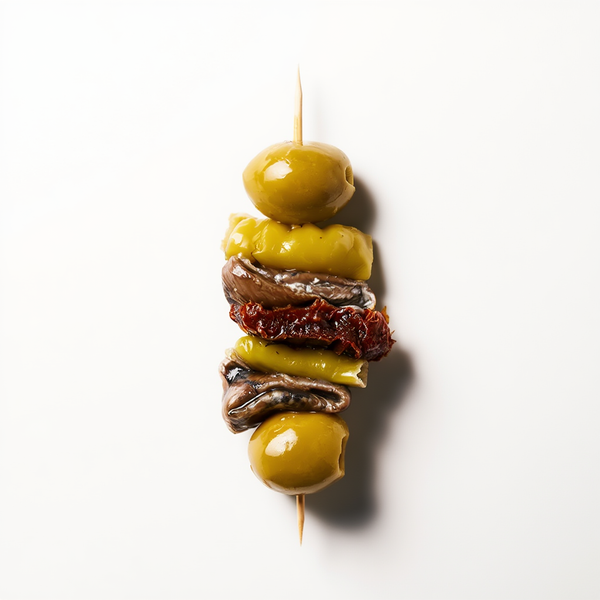
The gilda is one of the most iconic appetizers in Spanish gastronomy. Three ingredients, a toothpick, and a balance of flavors that has withstood eighty years without anyone being able to substantially improve it. In this guide: What is a gilda: origin and why it's called that, The original ingredients: premium anchovies, olive, and guindilla pepper, Authentic gilda recipe step by step.
The gilda is one of the most iconic appetizers in Spanish gastronomy. Three ingredients, a toothpick, and a balance of flavors that has withstood eighty years without anyone being able to substantially improve it. At Bacalalo, we have been selecting the best Cantabrian anchovies at Mercat del Ninot since 1990, and we know that a good gilda begins and ends with the quality of the fish. This guide provides the authentic recipe, all the variations worth knowing, and the assembly tricks that make all the difference.
What is a gilda: origin and why it's called that
The gilda was born in San Sebastián in the late 1940s. The most accepted version places its creation at the Casa Vallés bar, where chef Joaquín Aramburu began to skewer the three ingredients that customers requested separately to accompany their wine: a pickled guindilla pepper, an olive, and a salted anchovy.
The name came later. In 1946, the film Gilda, starring Rita Hayworth, premiered. The character she played was, according to the people of San Sebastián at the time, spicy, salty, and a little oily. The comparison was so apt that the name stuck forever. Today, the gilda is one of the few recipes whose origin is perfectly documented and localized.
Its expansion from the Basque Country to the rest of Spain was gradual but unstoppable. In Barcelona, it took strong root in markets and tapas bars, and at Mercat del Ninot, it has been one of the most requested appetizers for decades. The version we make at Bacalalo maintains the original spirit but incorporates artisanal cheese, a variation that has become our hallmark in recent years.
The original ingredients: anchovy, olive, and guindilla pepper
A gilda has only three ingredients, which means there's no room to hide. The quality of each component is crucial.
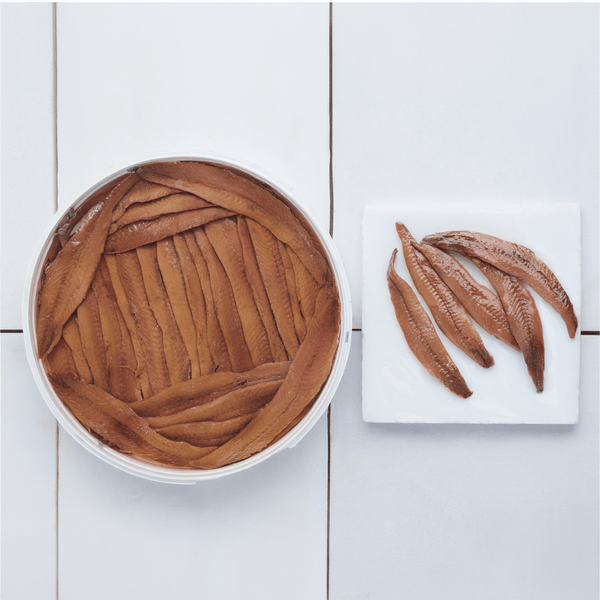
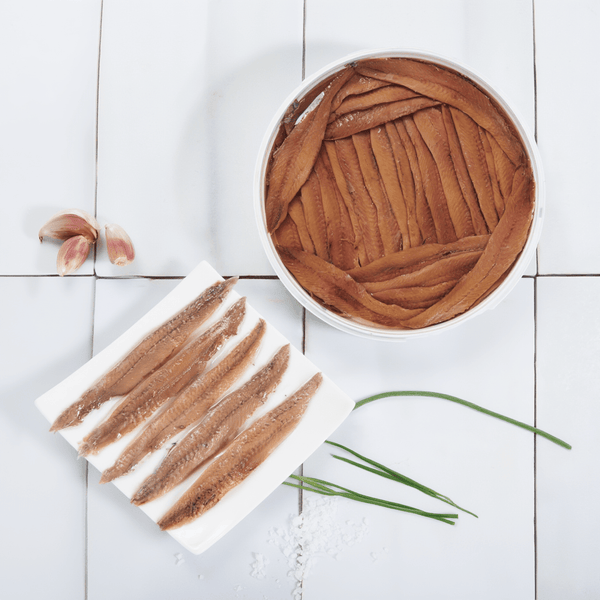
The anchovy: from Cantabria, 00 caliber
The anchovy is the star ingredient. Not all anchovies are suitable for a gilda. Cantabrian anchovies are the only ones with the fat, texture, and umami profile necessary to balance the acidity of the guindilla pepper and the neutrality of the olive.
Among Cantabrian anchovies, caliber matters. The 00 caliber is the largest (between 12 and 14 cm in length), with a thicker and fleshier fillet that holds up better when skewered and releases its flavor more gradually when eaten. A smaller caliber works, but the mouthfeel is noticeably worse.
The curing process is also key. Anchovies cured in salt for a minimum of twelve months develop a complexity of flavor that semi-preserved or industrial oil-packed anchovies cannot replicate. At Bacalalo, we work exclusively with Cantabrian producers who respect long curing times.
The olive: Gordal, Manzanilla, or Kalamata (pitted)
The olive must be fleshy, pitted, and have its own flavor, but not an overwhelming one. The three varieties that work best are:
- Sevillian Gordal: large, fleshy, with a mild bitterness and a strong presence. It's the most generous option in size and the most appreciated when bitten.
- Manzanilla: smaller, with a hint of acidity that complements the guindilla pepper well. The most common option in traditional Basque bars.
- Greek Kalamata: more intense and fruity, with a distinct character that can dominate if the anchovy is not top quality. For gildas with potent anchovies, it works very well.
Olives stuffed with anchovy or pepper are not suitable for gildas: the filling interferes with the other flavors, and the texture is not right.
The Basque guindilla pepper: Ibarra piparra, preferably
The guindilla pepper used in the authentic gilda is the piparra, a long, thin guindilla preserved in cider vinegar. It is not very spicy, although it has a kick that distinguishes it from a simple gherkin.
The most prized designation is the Ibarra piparra, from the Gipuzkoan municipality of the same name. They have a firmer texture and a balance between the acidity of the vinegar and the natural sweetness of the guindilla that other varieties do not achieve.
A common mistake is to substitute piparra with spicy guindilla pepper in wine vinegar. The result is a much more aggressive appetizer with excessive acidity that cancels out the anchovy flavor.
The toothpick: wood, long and thick
A standard cocktail stick works, but the result is better with longer (between 8 and 10 cm) and sturdier wooden toothpicks. Thin toothpicks tend to break when piercing the guindilla pepper. For events, designer bamboo toothpicks look aesthetically better and are more resistant.
Authentic gilda recipe step by step
The order of assembly is not arbitrary. Each ingredient has its position for a reason.
Ingredients for 12 gildas
- 12 Cantabrian anchovies in olive oil (00 caliber)
- 12 pitted Gordal or Manzanilla olives
- 12 pickled piparras (Basque guindilla peppers)
- 12 long wooden toothpicks
Step by step
- Prepare the ingredients: remove the anchovies from the oil and let them drain on absorbent paper for a couple of minutes. Drain the olives. The piparras are used directly from the jar.
- Skewer the guindilla pepper first: the piparra goes first because it is the firmest ingredient and the one that anchors the entire preparation. It is skewered through the thickest end, making an S shape so that it takes up more of the toothpick and is more stable.
- Add the olive in the center: the olive is skewered through the center, resting between the guindilla pepper and the anchovy. Its central position helps the gilda have visual and flavor balance.
- Roll and place the anchovy: the anchovy is rolled onto itself, forming a compact cylinder, and skewered at the end of the toothpick. This way of placing it is not just aesthetic: rolling keeps the anchovy juicier and makes biting easier.
- Serving temperature: gildas are served at room temperature or slightly chilled, never directly from the refrigerator. At room temperature, the anchovy releases its aromas better, and the olive has more flavor.
The ideal proportion is one anchovy, one olive, and one guindilla pepper per toothpick. In more generous versions, two guindillas can be used, but a single one firmly anchors the flavors.
Related Products from Bacalalo


Recommended Products

Cantabrian Anchovies in Olive Oil - 50g...
3,95 €

Cantabrian "Deluxe" Assortment
67,00 €

Artisan Cantabrian Anchovy Gilda Handmade...
9,90 €

Northern White Tuna Belly in Olive Oil -...
16,95 €
Refrigerated delivery 24-48h throughout the Peninsula
The best gilda variations
The classic gilda is perfect, but its structure allows for variations that expand the repertoire without betraying the original spirit. These are the six variations we most recommend at Bacalalo.
Gilda with cheese: Bacalalo's variation
This is our star variation and the one most successful with our customers at Mercat del Ninot. Adding cured cheese to the gilda enhances the umami and adds a layer of creaminess that softens the whole.
The most suitable cheese is aged Manchego, cut into cubes of approximately one centimeter. It is skewered between the olive and the anchovy, or at the end of the toothpick. Smoked Idiazabal is an excellent alternative for those who want a more complex profile. Fresh or creamy cheeses don't work because they disintegrate when skewered.
The assembly with cheese is: piparra + olive + cheese cube + rolled anchovy. The result is a more substantial gilda, perfect for longer aperitifs or when served as the only appetizer before a meal.
Gilda with quail egg
The quail egg adds unctuousness and a touch of neutrality that softens the intensity of the anchovy. It is a very photogenic variation, common in high-level pintxo bars.
The trick is in the cooking: exactly four minutes from when the water boils, followed by an ice bath to stop the cooking. The yolk remains semi-liquid, which makes all the difference. The peeled egg is skewered at the end of the toothpick.
The assembly is: piparra + olive + rolled anchovy + quail egg. It's important to put it at the end because it's the most delicate ingredient and can break if it's in the middle.
Gilda with piquillo pepper
This is the version for those who don't tolerate spice well. Roasted piquillo pepper replaces or accompanies the piparra, providing a smoky sweetness that contrasts differently with the anchovy.
Half a canned piquillo pepper is used, drained and folded over itself for easy skewering. This variation is especially popular for appetizers at heterogeneous gatherings where not everyone tolerates the spiciness of the piparra.
Gilda with pickled anchovy (boquerón)
Replacing the cured anchovy with pickled boquerón produces a fresher and less intense gilda. The boquerón provides a different acidity than the guindilla pepper, creating a lighter version that is easier to eat in quantity.
It is ideal for summer months and for people who find cured anchovies too intense. The assembly is the same as the classic gilda, simply changing the type of fish.
Gilda with truffle
The most sophisticated version. Top-quality Cantabrian anchovy is used, along with a few slices of black truffle and a few drops of truffle oil to finish. The assembly is the usual, but a slice of truffle is added between the olive and the anchovy.
It's not an everyday recipe, but at a special dinner or high-level event, it makes a remarkable difference. The truffle oil is applied with a dropper once the gilda is assembled, just before serving.
Triple gilda: for the brave
The most substantial version: two anchovies, two piparras, one olive. The assembly is the same but with double the main ingredients. The flavor is intense, salty, and very spicy.
This is a gilda for diners who are familiar with the format and want intensity. It is not suitable for beginners or those with low tolerance for spice or salt. It is served on longer toothpicks to fit everything.
How to present gildas
The presentation of gildas depends on the context. For an informal appetizer at home, simply arrange the toothpicks on a plate or cutting board. For events or catering, the presentation deserves more attention.
For appetizers at home: Arrange the gildas in a line on a wooden board or a long plate. Add a thin drizzle of extra virgin olive oil over them just before serving. A little chopped fresh parsley adds color without interfering with the flavor.
For events and weddings: Gildas can be served in individual shot glasses, with the toothpick resting on the rim. This presentation allows them to be served on a tray and for each guest to take theirs without the others shifting. They also work well on black slate boards, which highlight the green color of the piparra and the brown of the anchovy.
For professional catering: Prepare the gildas up to an hour before serving and keep them in the refrigerator covered with film. Take them out 15 minutes before serving so they reach room temperature. Add the final oil just before presenting.
Perfect pairing for gildas
The gilda is salty, acidic, and slightly spicy, which limits the margin for error in pairing but also makes it very clear.
- Txakoli: this is the classic and most accurate pairing. The high acidity and low alcohol content of txakoli counteract the saltiness of the anchovy and cleanse the palate between gildas. The slight effervescence helps. Serve very cold, between 6 and 8 degrees.
- Manzanilla or Fino de Jerez: the biological aging under flor of Manzanilla and Fino produces very dry wines with a natural saline touch that perfectly complements the anchovy. It is the most elegant option.
- Dry Vermouth: in the Barcelonan tradition, gildas and vermouth have always gone hand in hand. The bitterness of the vermouth contrasts with the umami of the anchovy and the acidity of the guindilla pepper.
- Ice-cold lager beer: the most informal option and one of the most effective. The carbonation cleanses the palate, and the neutrality of the lager doesn't compete with any ingredient.
- Natural Basque cider: if you want to maintain the San Sebastián spirit, natural unfiltered cider is the most authentic option. Its high acidity and low alcohol content work just like txakoli.
Where to buy quality ingredients for gildas
80% of a gilda's outcome depends on the anchovy. It's the only ingredient where you shouldn't cut corners.
At Bacalalo, we have been selecting top-quality Cantabrian anchovies for our customers at Mercat del Ninot in Barcelona since 1990. We work with producers who cure anchovies in salt for over twelve months, with size 00 as the minimum standard.
We also make our own artisanal cheese gildas, assembled daily with Cantabrian anchovy, Gordal olive, Ibarra piparra, and selected cured cheese. They are our best-selling appetizer and the one customers repurchase the most.
If you want the ingredients to make your own gildas or try ours already assembled, visit our gildas and appetizers collection.
🛒 Products mentioned in this article
⭐ 4.9/5 · 24-48h cold shipping · Since 1990 at Mercat del Ninot
Frequently asked questions about gildas
Can gildas be prepared in advance?
Yes, with nuances. Gildas without the final oil can be assembled up to 24 hours in advance and stored in the refrigerator covered with cling film. The oil is added just before serving. If assembled too far in advance, the piparra might start releasing vinegar, altering the anchovy's flavor, so ideally, assemble them a maximum of 2-3 hours beforehand.
How long do gildas last in the refrigerator?
Assembled and covered, they last well for up to 48 hours. After that, the anchovy starts to lose texture, and the olive absorbs too much vinegar from the piparra. If you plan to store them longer, it's better to keep the ingredients separate and assemble them at the last minute.
Why are they called gildas?
After the 1946 film Gilda, starring Rita Hayworth. Her character was known for being spicy, salty, and a bit oily, exactly like the appetizer that customers at Casa Vallés bar in San Sebastián started ordering skewered on a toothpick. The name was so fitting that it stuck permanently.
Which olive is best for gildas?
The pitted Sevillian Gordal is the most common and best option due to its generous size and controlled bitterness. The Manzanilla is the most authentic in Basque bars. Kalamata works well if the anchovy is of sufficient quality not to be overshadowed by the more intense flavor of the Greek olive.
Is the chili pepper in the gilda very spicy?
Authentic Basque piparra is not very spicy compared to other chili peppers. Its capsaicin level is low, with a mild, delayed heat that warms rather than stings. People with low spice tolerance can eat gildas with piparra without problems. If in doubt, it can be replaced with piquillo pepper without losing too much character.
Can I make vegetarian gildas?
Yes. The vegetarian version replaces the anchovy with a strip of roasted bell pepper, a piece of cured cheese, or a large caper. It's not an orthodox gilda, but the format works and allows people who don't eat fish to enjoy the appetizer. The umami flavor provided by the anchovy can be approximated with a little soy sauce or miso paste in the finishing oil.
What kind of anchovy should I use for gildas?
Cantabrian anchovy in extra virgin olive oil, size 00. This has the right size, texture, and flavor profile. Mediterranean anchovies or smaller sizes work less well because they are thinner and have less flavor depth. Salted anchovies (unwashed and not packed in oil) also work, but require desalting first.
How many gildas per person?
As an appetizer before a meal, 2 to 3 gildas per person is the usual amount. If they are the only appetizer at an informal gathering, between 4 and 6. At a standing catering event, estimate between 3 and 4 per person if there are other appetizers, and between 5 and 6 if gildas are the main event.
Are gildas eaten cold or at room temperature?
Room temperature is ideal. If stored in the refrigerator, take them out 10 to 15 minutes before serving. When cold, the anchovy loses some of its aroma, and the olive has less flavor. At room temperature, all ingredients better express their characteristics.
Do gildas contain oil?
The gilda itself doesn't have added oil, but the oil in which the anchovy comes permeates the whole when assembled. It's common to finish with a few drops of extra virgin olive oil over the plate once served, which adds shine and rounds out the flavor. Gildas are never marinated in oil because the piparra would release too much vinegar.
Products you might be interested in
Discover more