Quick Summary: Anchovies are classified by origin (Cantabrian PGI, Italian/French Mediterranean, Adriatic, Peruvian), by process (salted anchovy vs. marinated anchovy — same fish, different treatment), and by size (000, 00, 0, 1, 2 based on fillets per can). Cantabrian Anchovy is the global benchmark; sizes 00 and 0 are the best sellers. At Bacalalo, we only work with Cantabrian Anchovy PGI from Santoña, hand-filleted.
Information verified on May 11, 2026. Mercat del Ninot · Bacalalo since 1990.
The 3 axes of anchovy classification
As with cod, talking about "types of anchovies" without distinguishing axes is misleading:
- Geographical origin: Cantabrian (Spain PGI), Mediterranean (Italy, France), Adriatic (Croatia/Italy), Peruvian (Engraulis ringens, different species). Each fishing ground has its own tradition and regulations.
- Processing method: salted anchovy in oil (6-12 months curing) vs. marinated anchovy (fresh marinating). Same fish, completely different products.
- Fillet size: 000, 00, 0, 1, 2 — measured by the number of fillets per standard 50g can.

By origin: Cantabrian vs. Mediterranean vs. Adriatic vs. Peru
1. Cantabrian Anchovy (Spain) — PGI
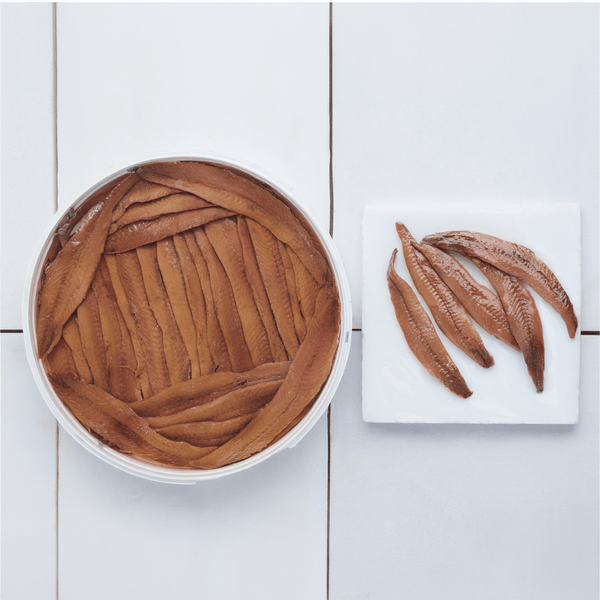
The global benchmark. Species Engraulis encrasicolus fished in the Cantabrian Sea (northern coast of Spain) between April and June (the "costera" fishing season). Characteristics:
- Large, fatty boquerón, caught at the optimal point before spawning.
- Traditional salt curing for 6-12 months.
- Hand-filleted (decapitated, eviscerated, boneless).
- Packed in olive oil (preferably virgin).
- Capitals: Santoña, Laredo, Bermeo, Castro Urdiales, Colindres, Hondarribia, Getaria, Ondarroa.
- PGI "Cantabrian Anchovy" since 2018: guarantees origin, species, and process.
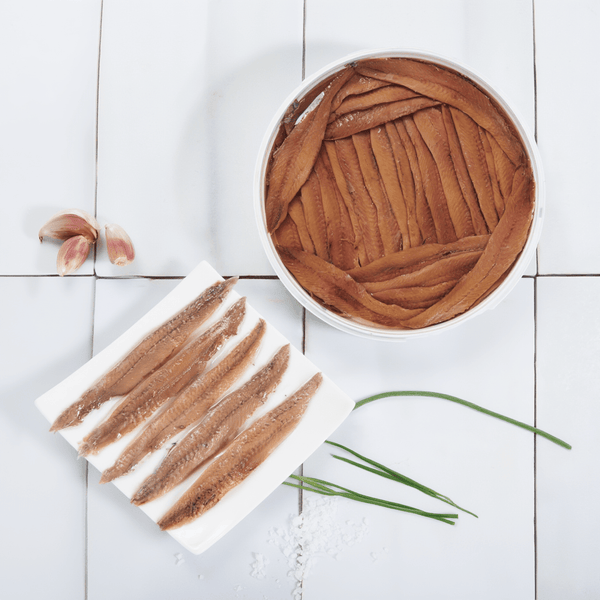
Deep reddish-brown color, buttery texture, concentrated yet clean umami flavor. Price: €15-50/50g can depending on size and brand.
Recommended with criteria
Cantabrian Anchovies "0" Gourmet Selection
"0" size fillets from Santoña, 8 months cured, hand-filleted. The best-seller in the catalog. Demonstrable quality.
2. Italian Acciuga (Cetara, Sciacca) — close equivalent
Same species (Engraulis encrasicolus) from the Italian Mediterranean. Famous traditions:
- Cetara (Amalfi Coast): "alici di Cetara", also famous for "colatura di alici" (the salty sauce that drips during maturation).
- Sciacca (Sicily): historical bluefin tuna fishing, strong canning industry.
- Ligurian Cantabrian: the Italian "Cantabrian" is a Tyrrhenian area (not the Spanish Cantabrian).
High quality. Usually slightly more cured and spicier than the Spanish. Medium size. Price similar to premium Cantabrian.
3. Collioure Anchovies (France) — Catalan tradition
Catalunya-France (Roussillon). Engraulis encrasicolus. Traditional curing with Aigues-Mortes salt. Maison Roque, Maison Desclaux are references. More saline flavor, firmer texture. Good alternative to Cantabrian.
4. Adriatic Anchovy (Croatia, Eastern Italy)
Same species but warmer, saltier waters. Medium size, more potent flavor. Interesting product but less international prestige.
5. Peruvian Anchovy (Engraulis ringens) — distinct species
South Pacific species. Not Engraulis encrasicolus. Mostly industrial product: easily accessible, low-cost fish. Stronger, oilier flavor, more broken texture. Used in economical cans (€2-5/can) and as an ingredient in Worcestershire sauce, industrial pizza, Argentine anchoítas.
More detailed comparison by origin: best anchovies in the world 2026.
By process: salted anchovy vs. marinated anchovy vs. fresh
The same fish (Engraulis encrasicolus) yields completely different products depending on the treatment:
Salted anchovy in oil
- Process: fresh boquerón → decapitated/eviscerated → layered with salt for 6-12 months → hand-filleted → packed in oil (olive or sunflower).
- Color: deep reddish-brown.
- Flavor: concentrated umami, mature sweetness.
- Storage: 18-24 months unopened; 3-5 days in the refrigerator once opened.
- Use: appetizer, pintxo, salad, pizza, pasta with bottarga.
Marinated anchovy
- Process: fresh boquerón → marinated in vinegar + salt for 4-12h → drained → seasoned with oil, garlic, parsley.
- Color: bright white.
- Flavor: acidic, fresh, mild.
- Storage: refrigerated for 7-15 days.
- Use: tapa, platter, vermouth, fresh salad.
Recommended with criteria
Gourmet Marinated Anchovy Fillets
Cantabrian boquerón marinated in traditional style with vinegar, salt, and oil. For tapas, platters, or vermouth.
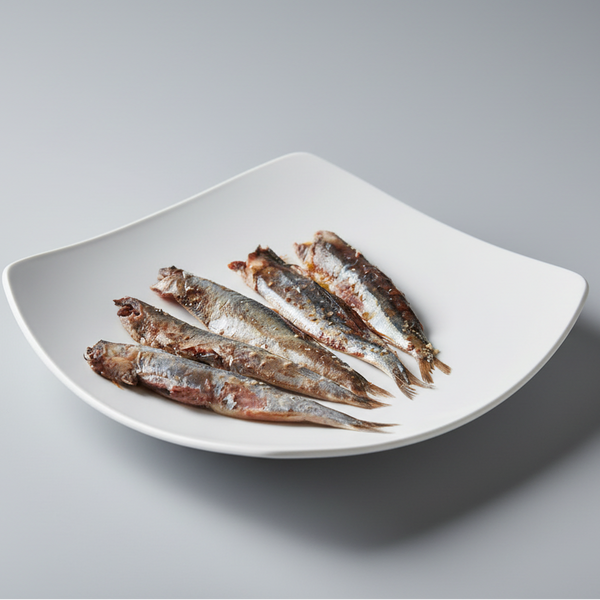
Fresh fried boquerón (pescaíto frito)
- Process: fresh boquerón breaded in flour and fried.
- Flavor: crispy, marine, salty.
- Serving: immediately, with lemon.
By size: 000, 00, 0, 1 explained
Size measures the fillet size (not the whole fish) and is expressed by the approximate number of fillets that fit in a standard 50g can:
| Size | Fillet size | Fillets/50g can | Price (€/50g can) | Best use |
|---|---|---|---|---|
| 000 | >28mm long | 6-8 | 35-55 | Absolute premium, gift, tasting |
| 00 | 22-28mm | 8-10 | 22-35 | Best-selling premium, gourmet pintxo |
| 0 | 18-22mm | 11-14 | 15-25 | Price-quality balance |
| 1 | 14-18mm | 15-20 | 8-15 | Daily cooking, pizza, pasta |
| 2 | <14mm | 20-28 | 4-9 | Industrial, sauces |
Full details on sizes: Anchovy sizes 00 vs 0 vs 1.
Recommended with criteria
Premium Cantabrian Anchovy Fillets "00"
Size 00, hand-filleted, in olive oil. For pintxos, salads, and appetizer platters.
Recommended with criteria
Cantabrian Anchovy Exclusive 160g — family size
Large size (160g) for family consumption or restaurants. Olive oil, uniform size.
Premium and economical brands: how to differentiate them
The Spanish anchovy market has three distinct levels:
Artisanal Premium
- Don Bocarte, Codesa, Conservas Emilia, Casa Santoña, Reina del Cantábrico, Yurrita, Angelachu, Leonardo, Olasagasti.
- Hand-filleted, 8-12 months curing, size 00 or 0, Cantabrian Anchovy PGI.
- €20-50/50g can.
Mid-range canneries
- Hijos de Carlos Albo, Frinsa, Cuca, La Tarifeña, Ortiz.
- Mix of hand and automated filleting. Variable sizes. Good value for money.
- €8-18/can.
Private label and economical brands
- Hacendado (Mercadona), Aliada (El Corte Inglés), Carrefour, Lidl Sol & Mar, Aldi.
- Often Engraulis ringens (Peruvian) or a blend. Machine-filleted. Size 1-2.
- €2-7/can.
More detailed brand ranking: Best Santoña Anchovies 2026: objective ranking of 12 brands.
Comparison table: all types of anchovies
| Type | Species | Origin | Process | Color | Price (€/50g) |
|---|---|---|---|---|---|
| Cantabrian Anchovy PGI 00 | E. encrasicolus | Santoña/Laredo | Salted + oil | Reddish-brown | 22-35 |
| Cantabrian Anchovy PGI 000 | E. encrasicolus | Santoña/Laredo | Salted + oil | Reddish-brown | 35-55 |
| Acciuga Cetara | E. encrasicolus | Cetara (IT) | Salted + oil | Reddish-brown | 18-32 |
| Anchois Collioure | E. encrasicolus | Rosselló (FR) | Salted + oil | Firm brown | 14-25 |
| Adriatic Anchovy | E. encrasicolus | Croatia/IT | Salted + oil | Medium brown | 10-18 |
| Peruvian Anchoveta | E. ringens | South Pacific | Industrially salted | Pale brown | 2-7 |
| Pickled Anchovy (Boquerón en vinagre) | E. encrasicolus | Cantabrian Sea/Mediterranean | Vinegar marinated | White | 5-12 |
| Fried Fish (Pescaíto frito) | E. encrasicolus | Fresh | Fried | Golden | Not canned |
Which to choose based on use and budget?
- Gift / tasting / celebration: Cantabrian Anchovy PGI 000 or 00 from Don Bocarte, Codesa or artisan cannery. €30-55/tin.
- Gourmet pintxo / guest appetizer: Cantabrian 00. €20-35/tin.
- Gourmet everyday: Cantabrian 0 or Italian Acciuga. €15-25/tin.
- Pizza, pasta, puttanesca sauce: Cantabrian 1 or medium size Mediterranean. €8-15/tin.
- Cooking with melted anchovy (bagna cauda, vitello tonnato): Mediterranean or size 1-2. €4-10/tin.
- Pickled anchovies (boquerón en vinagre) for tapa: Fresh Cantabrian. €10-15/250g tin.
- Anchovy sandwich with butter: Cantabrian 00 or 0. Butter demands quality.
Critically recommended
Cantabrian Anchovy Menu — 45 Fillets
Hospitality format with 45 uniform fillets. Ideal for restaurants, events or regular family consumption.
Bacalalo Collection
Cantabrian Anchovies — complete collection
Sizes 00 and 0 from Santoña, 50g, 160g and hospitality formats. PGI Cantabrian Anchovy, hand-filleted.
How to spot quality anchovy
- Label: must state species (Engraulis encrasicolus), origin (Cantabrian, PGI if applicable), size and curing.
- Color: deep, bright reddish-brown. Pale pink = short curing or Peruvian species.
- Texture: buttery when cut, not fibrous or dry.
- Bones: none in quality hand-filleted anchovy. Small bones = machine filleted.
- Oil: extra virgin olive oil is a sign of premium quality. Sunflower oil or simply "olive oil" = mid-range.
- Aroma: marine, deep, sweet. Smell of dry salt or oxidation = poor preservation.
- Tin: no dents, no oxidation, with legible lot number and date.
Storage and serving
- Unopened: in a cool, dry place, 18-24 months depending on manufacturer.
- Opened: in the refrigerator, in its oil, maximum 5 days. Better 2-3 days to maintain texture.
- Bring to room temperature before serving: 10-15 min out of the refrigerator so the oil becomes fluid.
- Serve on crusty bread with butter, on ripe tomato, in a gilda with piparra, in a Russian salad, on pizza at the end.
- Never freeze: it breaks the buttery fiber.
Anchovy vs. boquerón vs. bocarte vs. anchoveta: clear terminology
The same fish has several names depending on the process or region. We clarify the confusion:
- Bocarte: the fresh fish, freshly caught. Commercial name mainly from Cantabria and Basque Country for Engraulis encrasicolus. In Andalusia and the Mediterranean, it is called boquerón.
- Boquerón: the same fish (bocarte) fresh or processed in vinegar. "Boquerones en vinagre" are the marinated fillets. "Boquerones fritos" are fresh, battered and fried.
- Anchovy (Anchoa): the bocarte/boquerón salted and cured for 6-12 months in salt, hand-filleted, packed in oil. Only the cured product is called anchovy.
- Anchoveta (Anchoíta): Argentinian and Rio Plata term for bocarte. In Argentina, industrial anchoveta from the South Atlantic is sold, a similar species (Engraulis anchoita) but different from the European one.
- Acciuga (Italian): the Italian salted anchovy. Identical species to the Cantabrian (Engraulis encrasicolus) processed in Cetara, Sciacca and other Tyrrhenian towns.
- Anchois (French): generic term for bocarte and processed anchovy. In Collioure (Roussillon), anchovies with a regional designation are produced.
- Hamsi (Turkish) / Sardella (Croatian): terms for bocarte in the Eastern Mediterranean.
Summary: "anchoa" = cured bocarte + oil; "boquerón en vinagre" = marinated bocarte; "boquerón frito" = fresh, battered and fried bocarte. Three completely different products from the same fish. Knowing this avoids confusion when ordering or buying.
Wine pairings with anchovy
Quality anchovy is a cured, salted product with a deep umami flavor. Wines should have acidity to cut through fat and salt, minerality, and, in many cases, bubbles to cleanse the palate:
- Anchovy 00 PGI on bread with butter: Manzanilla en rama (Sanlúcar), Txakoli from Getaria, quality Brut Nature Cava.
- Gilda (anchovy + piparra + olive): Txakoli, Manzanilla, artisan white vermouth, Catalan Yzaguirre vermouth.
- Anchovy with tomato and toasted bread: Navarra rosé, Empordà Garnatxa rosada, young Fino Sherry.
- Pickled anchovies (boquerones en vinagre): Manzanilla en rama, young Fino, Brut Nature Cava. Vinegar and garlic demand dry, high-acidity wines.
- Anchovy with blue cheese: dry Oloroso, Palo Cortado, light Pinot Noir. Blue cheese calls for full-bodied wines.
- Piedmontese Bagna Cauda: Italian white wines from Piedmont (Arneis, Cortese), Txakoli, Godello.
- Puttanesca pasta: young Italian red (basic Chianti, Rosso di Montepulciano) or full-bodied white (Vermentino, Fiano).
- Pizza with anchovy: ice-cold lager beer, unpretentious young white wine, dry Lambrusco.
What DOES NOT work: heavily oaked and tannic reds (clash with salt), sweet wines (mask salty umami), gin and tonic with too much citrus (breaks down the oiliness).
How anchovies are made: from fresh bocarte to the tin
Understanding the process explains the price. Traditional steps on the Cantabrian coast:
- Fishing season (April-June): Bocarte fishing with traditional purse seines in Cantabrian waters. The legal season is regulated by ICES and lasts about 8 weeks.
- Hand-heading and eviscerating: In the factory, woman by woman. One kilo of fresh bocarte yields approximately 350g of final fillets (30-35% yield).
- Salting: Layers of bocarte and sea salt in wooden or plastic barrels. Controlled pressing for 6-12 months at a stable temperature (12-15°C).
- Maturation: Enzymatic action breaks down proteins, developing aroma and texture. The natural liquid extracted is called "garum" or "colatura" in Italy.
- Hand-cleaning and filleting: Removing skin, central bone, and filleting by hand, fillet by fillet, with gloves. This is why it's artisan work.
- Packaging: Tins or jars with olive oil or sunflower oil. Hermetic sealing, labeling, lot number, and traceability.
The complete process takes between 8 and 14 months per batch. A premium preserve can take two seasons (curing >12 months) for optimal organoleptic profile.
History of the anchovy: how Italy saved the Spanish preserve
Salted anchovy in oil as we know it today is not a Spanish invention but an Italian one, imported to Santoña in the late 19th century. The story has several twists:
- Before 1880: Cantabrian bocarte was mostly sold fresh, salted in barrels for local consumption, or smoked. No industrial process.
- 1883 — Arrival of the Vellas: Giovanni Vella Scaliota, a Sicilian canner, settled in Santoña after studying the quality of Cantabrian bocarte. He brought the Italian technique of filleting, heading, and packing in oil.
- Late 19th-early 20th century: Italian canneries proliferated in Santoña, Laredo, Bermeo, and Castro Urdiales: Scuriatti, Vella, Mancini, Albo... Most became naturalized Spanish and gave rise to historical brands.
- World Wars: European demand for Spanish anchovy skyrocketed. Italy massively consumed Cantabrian preserves due to the temporary suspension of its own fishing.
- Bocarte crisis (2005-2010): Overfishing led to collapse. Total ban on fishing season between 2005 and 2010. Drastic quotas after recovery. Today biologically recovered.
- Today: the PGI Cantabrian Anchovy (created 2007) protects the denomination; artisanal canning is the economic base of several coastal municipalities in Cantabria and the Basque Country.
This history explains why Italy and Spain share the world's leading position in anchovy quality: the same filleting technique, the same species (Engraulis encrasicolus), but different fishing grounds (Cantabrian vs. Tyrrhenian) and curing methods (Cantabrian tends to more curing, Italy tends to lower salinity).
Pairings and combinations that work
Quality anchovy requires respectful accompaniment that doesn't mask its flavor. Verified classic combinations:
- Anchovy 00 + butter + country bread: the classic French and Basque sandwich. The fat in the butter softens the saltiness.
- Anchovy 00 + ripe tomato + EVOO + toasted bread: the pa amb tomàquet with anchovy, a Catalan identity.
- Anchovy + piparra + Manzanilla olive (gilda): the oldest pintxo in San Sebastián, created at Casa Vallés bar in 1946.
- Anchovy + hard-boiled egg + Russian salad: a finishing touch for a traditional pintxo or tapa.
- Melted anchovy + oil + garlic (Piedmontese bagna cauda): size 0-1 over low heat until melted; a sauce for crudités.
- Anchovy + caper + parsley + garlic (Italian puttanesca): a pasta sauce with tomato.
- Anchovy + blue cheese / Parmesan: the salt in the cheese amplifies the umami; serve with grissini.
- Pickled anchovy (boquerón en vinagre) + piparra + cherry tomato: a refreshing summer salad.
Suggested wines: Txakoli, Albariño, Manzanilla en rama, and Brut Nature Cava. What DOES NOT work: powerful reds (tannins clash with saltiness), sweet wines, heavy fried foods that mask the flavor.
Conclusion: how to understand anchovy with discernment
"Types of anchovy" is not just an abstract classification — it defines the pleasure and price of the product. Cantabrian PGI 00 is for savoring; Mediterranean size 1 is for integrating into a recipe. Pickled anchovy (boquerón en vinagre) is a different story altogether, despite being the same fish.
Always check three pieces of information before buying: species (it should say Engraulis encrasicolus, not ringens if you're paying premium), origin (Cantabrian PGI, Italy, France), and size (00, 0, 1). Without these three details on the label, be wary of the premium price.
Common mistakes when buying and serving anchovies
Over 30 years of working with anchovies at Mercat del Ninot have taught us the mistakes that most penalize the customer:
- Buying anchovies without a scientific name on the label. If it doesn't say Engraulis encrasicolus, it's probably Engraulis ringens (industrial Peruvian) or a mixture. Huge difference in quality.
- Paying a premium price for small sizes. Size 1 or 2 anchovies at €25/can are a trap: that price corresponds to size 00 or 0. Size 1 rarely exceeds €12-15.
- Serving anchovies cold from the fridge. Solidified oil masks the aroma and hardens the texture. Warming them up for 15-20 min before serving is mandatory.
- Pairing premium anchovies with balsamic vinegar. Strong vinegar masks the umami nuances of the cured product. Better: EVOO, butter, toasted bread, or sweet tomato.
- Using 00 PGI anchovies on pizza. Overqualified product. For pizza, puttanesca pasta, or hot sauces, size 1 performs perfectly at a third of the price.
- Freezing opened anchovies. Irreversibly breaks the buttery texture. Only freeze fresh anchovies before marinating boquerones (anisakis sanitation).
- Storing an opened can without enough oil. The fillets must always be submerged. Otherwise, they oxidize and dry out within 24 hours.
- Confusing "salted anchovies" with "anchovies in oil." Salted anchovies in a jar (without oil, in their salt) are a different product: they require brief desalting before serving. "In oil" anchovies are ready to eat.
- Buying a can without a batch number or packing date. Without traceability, you don't know the actual curing time or whether the anchovies have been in the same oil for 6 months or 3 years.
- Paying the same for "Cantabrian" without PGI. The Cantabrian Anchovy PGI seal is official protection. Without the seal but with a Cantabrian brand, at least demand verified species and a plant in Cantabria/Basque Country.
How to do an at-home anchovy tasting
The best way to learn to differentiate qualities is to do a comparative tasting with 3-4 brands at once. We propose a simple protocol that can be replicated at home:
- Select 3-4 different cans: ideally one premium (Cantabrian PGI 00 €25-35), one medium (Cantabrian size 0 €12-18), one economical (size 1-2 €5-10), and optionally a Peruvian one (€2-5). Buy on the same day to ensure equal preservation.
- Warm up for 15 min: remove from the refrigerator and let sit for 15-20 minutes so that the oil becomes fluid. Cold anchovies are "gagged" in their texture.
- Neutral plate and natural light: use a white plate and, if possible, natural light. This allows you to assess the true color (deep reddish-brown in premium, pale pink in industrial).
- Ascending order: start with size 2 / Peruvian (stronger and saltier) and work your way up to 00 / PGI. If you do it the other way around, the premium will make the lower-quality ones seem worse than they are.
- Evaluate five criteria: color, aroma of dry salt vs. marine, buttery vs. fibrous texture, salty vs. sweet umami aftertaste, persistence. Each criterion scores from 1 to 5.
- Toasted bread between tastings: palate reset.
- Repeat blind: have someone cover the cans and try again. Price memory biases judgment.
The result is often surprising: often the "intermediate" wins over the premium for daily use, and the Peruvian stands out in hot sauces but is left out in a clean tasting. This home tasting gives you your own criteria for future purchases.
Step-by-step recipes with Cantabrian anchovies
Premium anchovies are not just for eating raw with bread: there are historical and modern recipes that take advantage of their umami. The classic and fundamental ones:
1. Gilda (San Sebastián, 1946)
- Per skewer: 1 Ibarra piparra pepper, 1 manzanilla olive, 1 rolled 00 anchovy fillet.
- A drizzle of EVOO at the end. Serve cold with a glass of txakoli or vermouth.
Recipe from Casa Vallés bar (1946), inspired by the movie "Gilda" for its "spicy, salty, and green" character. It is the first formally documented pintxo in the Basque Country.
2. Anchovy toast with butter and country bread
- Toasted country bread, lightly rubbed with raw garlic (optional).
- Thin layer of quality French or Basque salted butter.
- 2-3 warmed 00 anchovy fillets on top.
- Pinch of freshly ground black pepper and a few drops of EVOO.
3. Puttanesca pasta
- For 4 people: 400g spaghetti, 4 cloves garlic, 6 size 1 anchovy fillets, 1 tablespoon capers, 100g Kalamata olives, 400g crushed tomatoes, chili, EVOO.
- Sauté garlic + chili in EVOO, add anchovies until dissolved (90s). Add capers, olives, tomatoes. Cook for 10 min.
- Al dente pasta, mix with the sauce. Chopped parsley when serving. No cheese.
4. Piedmontese Bagna Cauda
- Hydrate 10 size 0 anchovy fillets in 100ml milk for 30 min. Drain.
- In an earthenware pot: 200ml EVOO, 8 confit garlic cloves (previously cooked for 20 min in milk), the drained anchovies. Blend everything and return to the pot.
- Keep warm at the table. Serve with crudités: carrot, celery, bell pepper, fennel, artichoke, endive.
5. Pa amb tomàquet amb anxoves (Catalonia)
- Toasted country bread.
- Rub with an opened ripe tomato, coarse salt, EVOO.
- 2 size 0 anchovy fillets on top. Catalan version of the butter and anchovy sandwich.
6. Vinegar-marinated anchovies (boquerones) with piparra and cherry tomato
- Buy quality vinegar-marinated anchovies (not the industrial fluorescent version).
- Plate with 6 boquerones, 4 piparra peppers, 8 halved cherry tomatoes, generous EVOO, and sweet paprika from La Vera.
- Serve with toasted bread.
The Bacalalo criteria for selecting anchovies
We have been working with Cantabrian canneries for over 30 years. Before incorporating a brand into the catalog, we apply these filters:
- Verified species: only Engraulis encrasicolus. The label must declare it. If a brand only says "anchovy" without specifying the species, it's discarded.
- Origin PGI Cantabrian Anchovy or equivalent recognized in Cantabria/Mediterranean. We do not work with Peruvian or mixtures.
- Curing >6 months: minimum. Premium ones reach 12 months. The label or product sheet must be able to show this.
- Hand-filleted: verifiable by the absence of small bones, uniformity of cut, and buttery texture.
- Extra virgin olive oil in premium lines. Normal olive oil in medium lines. We do not use sunflower oil in premium products in the catalog.
- Batch and traceability: each can must be able to identify the fishing date, plant, and responsible female worker for filleting in premium cases.
The result: our anchovy catalog covers everything from size 0 for everyday use (€14.95 for 160g format) to 00 Premium (€24.90) and hospitality formats (Menu 45 fillets €26.95, 1 kg for restaurants). If you are unsure what to choose for a specific use, write to us: the recommendation is based on suitability for the dish, not on profit margin.
Cluster: Types of fish and comparisons
Frequently Asked Questions
What are the main types of anchovies?
Are anchovy and boquerón the same fish?
What does size 00 mean for anchovies?
What is the difference between Cantabrian anchovies and Peruvian anchovies?
What is the best Cantabrian anchovy?
Are Italian acciughe comparable to Cantabrian anchovies?
What size should I buy for each use?
How long does an opened can of anchovies last?
Why do Cantabrian anchovies cost 5 times more than Peruvian ones?
Are Peruvian anchovies bad?
About the author — Lalo González Rodríguez
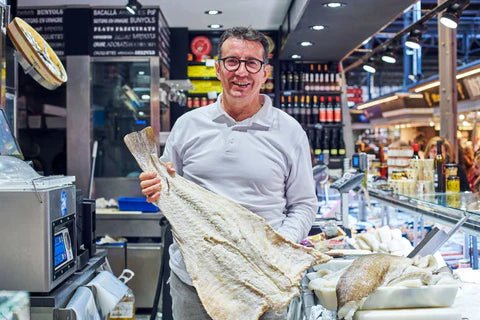
Lalo González Rodríguez has been selecting cod and seafood at the Mercat del Ninot in Barcelona for over 30 years. Advisor to professional chefs and head taster at Bacalalo. Every classification and technical data published in this guide is verified against scientific sources (FAO, AESAN, ICES) and the real market (Mercabarna, premium retail, canneries).