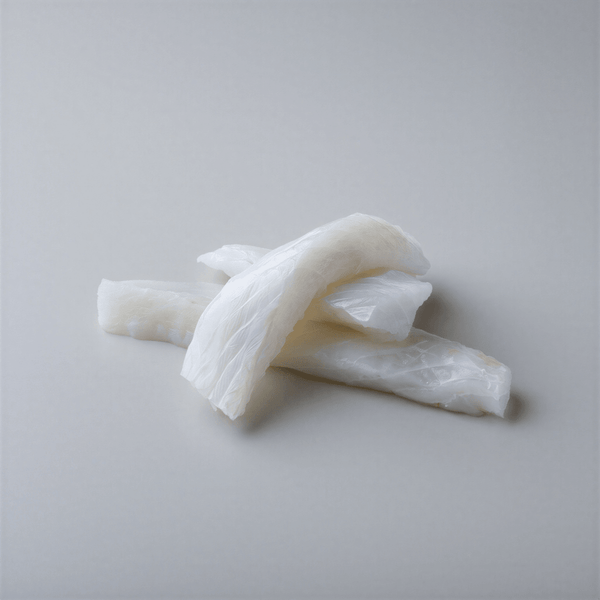


Quick Summary: Cod types are classified by three axes: species (Atlantic Gadus morhua vs. Pacific Gadus macrocephalus), origin (Iceland, Norway, Faroe, Spanish Atlantic), and process (fresh, salted, desalted, dried/stockfish, smoked). Skrei is a migratory variant of Gadus morhua found from January to April. The noble species for Spanish cuisine is Gadus morhua, preferably from Iceland. At Bacalalo, we only work with Gadus morhua from Iceland.
Information verified on May 11, 2026. Mercat del Ninot · Bacalalo since 1990.

The 3 axes of cod classification
Talking about "types of cod" without distinguishing the three axes leads to confusion. Each axis generates a distinct classification:
- Biological axis (species): Gadus morhua (Atlantic, noble) vs Gadus macrocephalus (Pacific, industrial). Skrei is a migratory sub-category of morhua.
- Geographical axis (origin): Iceland, Norway, Faroe, North Sea/Baltic, Spanish Atlantic. Each fishing ground produces distinct cod due to temperature, salinity, and diet.
- Process axis (transformation): fresh, salted, desalted, dried/stockfish, smoked, frozen. The same cod yields completely different products depending on how it is processed.
A "premium cod" can be premium on one axis (Gadus morhua) and mediocre on another (Spanish Atlantic from low catches, defrosted, industrial cheeks). The key is to verify all three.

By biological species: Gadus morhua vs macrocephalus
Gadus morhua — Atlantic cod (noble)
This is the species used in Spanish cuisine. It inhabits cold waters of the North Atlantic (Iceland, Norway, Faroe Islands, Greenland, Newfoundland). Characteristics:
- White, flaky flesh that separates into "leaves" when cooked.
- High natural gelatin content — the base for pil-pil.
- Deep, sweet, marine flavor.
- Withstands salting and desalting without losing texture.
- Sizes: 3-15 kg is common, up to 40 kg for premium specimens.
Gadus macrocephalus — Pacific cod
A distinct species, mainly from the North Pacific (Alaska, Russia, Japan). Characteristics:
- Whiter flesh but shorter and less gelatinous fibers.
- More neutral, less profound flavor.
- Less resistant to traditional salting.
- Lower cost; predominant in industry (substitute, surimi, fish sticks).
If you buy "cod" without further specification at a supermarket for a suspiciously low price, it is usually macrocephalus or even pollock. Always ask for the scientific name.
Skrei: the seasonal premium variant
Skrei is not a distinct species: it is migratory Gadus morhua that travels from the Barents Sea to the Norwegian coasts of Lofoten to spawn. It is fished only from January to April.
Distinguishing characteristics:
- Extra firm, bright translucent white flesh.
- Young age (5-7 years): optimal muscle texture.
- Artisanal fishing with longline, careful handling.
- Certified "Skrei" label: mandatory traceability.
- Price: €25-40/kg fresh vs €15-22/kg for conventional cod.
Full details: Skrei vs Gadus morhua: which is better.
By geographical origin: Iceland, Norway, Faroe, Atlantic
Origin is one of the most reliable predictors of quality. 2026 Ranking (summary — more detail in our origin ranking):
1. Iceland — the premium reference
Colder and saltier waters of the North Atlantic. Cod with the firmest flesh and highest gelatin content. Fishing regulated by a system of individual transferable quotas since 1990 — a global sustainability model. Most fishing is done by longline and pot. Most of Bacalalo's cod is from Iceland.
2. Norway — the great competitor
Millennial fishing tradition (Lofoten since the 9th century). Produces Skrei and conventional cod. Very high quality, although conventional Norwegian cod can be fattier and less pressed than Icelandic cod. Norwegian stockfish (air-dried) is the global reference.
3. Faroe Islands — quality at an economical price
Cod from waters similar to Iceland but with smaller fishing grounds. Good price-quality ratio. The difference with Iceland is nuanced, not categorical.
4. North Sea / Baltic — the industrial one
Waters with lower salinity and variable temperatures. More fibrous cod, less premium. Mainly industrial. Baltic quotas have been in biological crisis for years.
5. Spanish Atlantic / Galician — rarity
Cod from the Spanish Atlantic is extremely rare (it is not a common area for the species). What is sold as "Galician cod" is usually hake, pollock, or a substitute. Red flag.
By process: fresh, salted, desalted, dried, smoked
Fresh cod
No preservation treatment. Fillets or whole, refrigerated. Cooked baked, grilled, in a casserole. Less common in Spain because almost all of it comes from the North Atlantic and requires a strict cold chain.
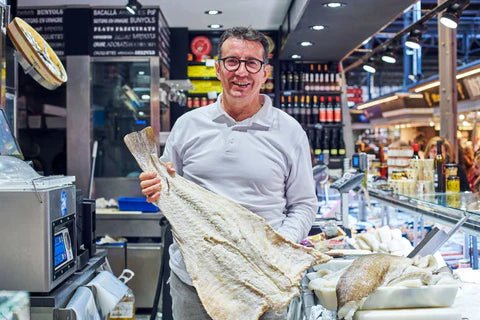
Salted cod (in salt)
Traditional curing: layers of cod and sea salt for 21-30 days. Reduces moisture and develops flavor. Lasts 6-12 months without refrigeration. Requires desalting for 24-48h in cold water before cooking (changing water every 8h). This is the historical form of commercialization for Spanish cod.
Recommendation with criteria
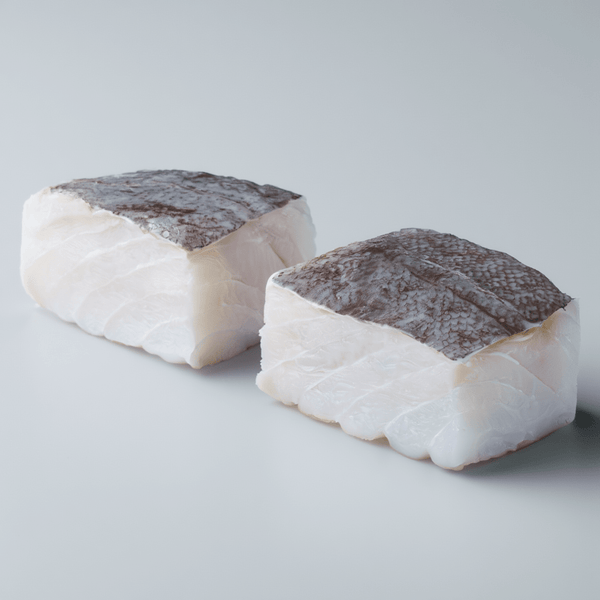
Special Pil Pil Dried Cod Loin (2pcs) — 500g
Loin of Gadus morhua from Iceland, salted and partially dried. The honest base for pil-pil and Vizcaína.
Desalted cod to perfection
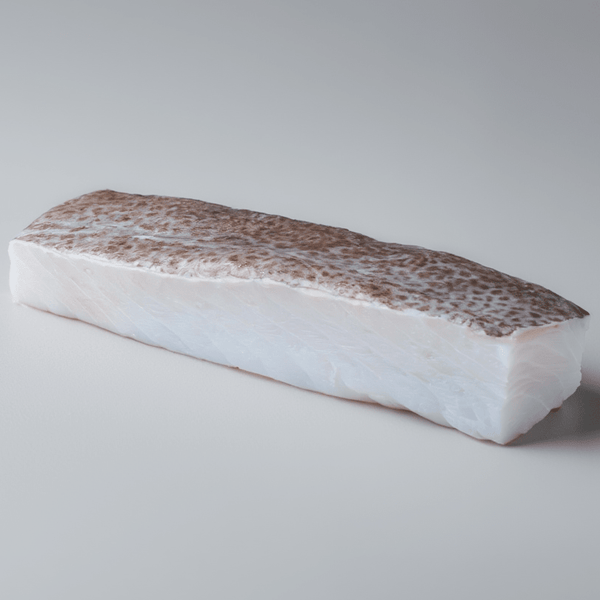
Salted and then desalted to the optimal point (3-4% residual salt). Ready to cook immediately. The modern formula: domestic convenience + concentrated flavor. Sold in specific cuts: jowl, loin, cheeks, tripe, shredded.
Recommendation with criteria
Clean Desalted Cod Loins — 500g
Loins of Gadus morhua from Iceland desalted to perfection. Boneless, ready to fry, bake, or make pil-pil.
Dried cod / stockfish
Air-dried in cold climates without salt or with very little. Traditional in the Norwegian Lofoten Islands (since the 12th century): hung outdoors for 2-3 months between February and May. Extremely hard product, must be rehydrated for 48-72h with water changes. Base of Portuguese bacalhau and Italian baccalà cuisine.
Smoked cod
Loins cured in salt and cold-smoked with wood (beech, oak). For platters, tartar, warm salads, carpaccio. Not for cooking — it is a finished product.
Recommendation with criteria
Sliced Smoked Cod in Oil — 1000g
Finely sliced, cold-smoked over noble woods. Ready for platters, salad, or carpaccio.
By cut: jowl, loin, cheeks, tripe, shredded, tail
- Jowl: the thickest and meatiest part. For Vizcaína, Club Ranero, grilled.
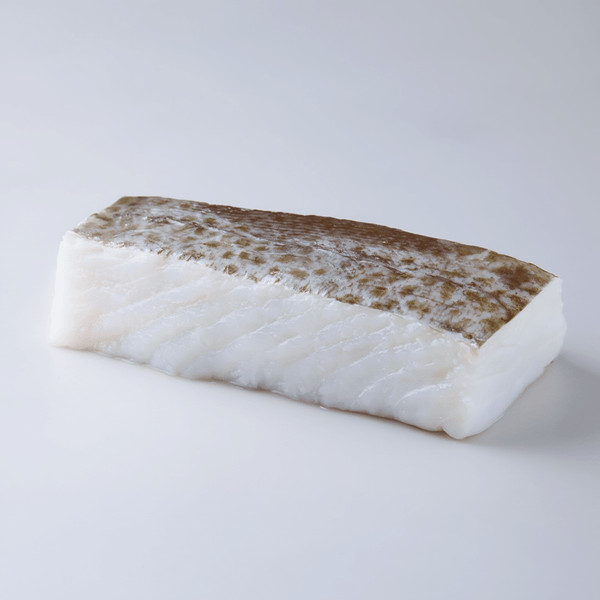
- Loin / penca: main fillet with skin and few bones. For pil-pil.
- Cheeks: the cod's chin. Pure gelatin. For emulsifying pil-pil or green sauce.
- Tripe: the stomach. A regional Basque/Cantabrian dish. Gelatinous texture.
- Shredded: small pieces of cod. For salads (esqueixada, malagueña), fritters, croquettes, brandade.
- Tail: thin end part. Economical, for stews and scrambled dishes.
- Head: traditional for soups and broths.
Recommendation with criteria
Desalted Cod Cheeks — 500g
Real cheeks: pure gelatin for pil-pil, green sauce, or tempura. Premium product.
Comparative table: all types of cod
| Type | Species | Typical origin | Process | Price (€/kg) | Best use |
|---|---|---|---|---|---|
| Icelandic Gadus morhua | G. morhua | Iceland | Any | 20-35 | Pil-pil, Vizcaína, Brandade |
| Skrei | G. morhua migratory | Barents Sea/Lofoten | Mainly fresh | 25-40 | Baked, grilled, fresh in season |
| Norwegian Gadus morhua | G. morhua | Norway | Salted or desalted | 18-30 | Vizcaína, Club Ranero |
| Faroese Gadus morhua | G. morhua | Faroe | Salted or desalted | 16-26 | Esqueixada, fritters, daily meals |
| Norwegian stockfish | G. morhua | Lofoten | Air-dried | 30-50 | Portuguese, Italian cuisine |
| Gadus macrocephalus | G. macrocephalus | Pacific (Alaska, Russia) | Industrial | 8-14 | Surimi, sticks, frozen |
| Smoked cod | G. morhua | Iceland/Norway | Cold smoked | 60-90 | Platter, carpaccio |
| Baltic cod | G. morhua | Baltic Sea | Salted | 12-18 | Beware: stock in crisis |
Which to choose based on recipe and occasion?
- Pil-pil: loin or jaw of Gadus morhua from Iceland, desalted to perfection. High gelatin content = clean emulsion.
- Vizcaína / Club ranero: thick jaw. Withstands long cooking without falling apart.
- Esqueixada catalana: rehydrated dry shredded cod or finely shredded desalted cod.
- Buñuelos (fritters): shredded cod or specific batter.
- Baked cod (Skrei in season): Fresh Skrei from January to April, whole loins with skin.
- Grilled and for celebrations: Skrei or Icelandic loin, desalted, pan-seared.
- Portuguese cod (bacalhau à brás): stockfish or shredded cod.
- Platter / appetizer: sliced smoked cod.
- Brandada: desalted into a creamy paste with oil and garlic.
Bacalalo Collection
Desalted Cod — Bacalalo collection
Main cuts of Icelandic Gadus morhua: jaw, loin, cheeks, tripe, shredded. Verifiable traceability and origin. Weekly replenishment.
Other cuts and derivatives: roe, kokotxa, tripe, tongue
Cod is utilized "from snout to tail." In addition to the main cuts (loin, jaw, shredded), there are specialized parts with their own recipes:
- Cheek / kokotxa: the chin. Pure gelatin. Canonical Basque recipe (pil-pil, green sauce, tempura).
- Tripe / cod belly: the stomach. Basque-Cantabrian sofrito with choricero pepper and paprika.
- Tongue: yes, cod has a muscular "tendon" at the base of the tongue that is a delicacy in Iceland and Norway. Nordic recipe with butter.
- Roe / egg sack (gospel, rogn): in male cod, the "milt," and in female, the eggs. In old Basque cuisine, they were eaten fried or pickled.
- Liver: historical source of cod liver oil (high in vitamin A and D). Today it is sold canned as a Norwegian and Icelandic product.
- Backbone and head: for cooking stocks, fish soups, suquet, marmitako.
While the average Spanish customer sticks to loin, jaw, and shredded cod, professional chefs utilize every last gram. In sustainable and nose-to-tail cooking, cod is a model case: true zero waste.
Cod vs. hake vs. pollack vs. forkbeard: how not to confuse them
Four white fish that are confused in fish markets and supermarkets. Key differences:
| Species | Family | Flesh | Flavor | Withstands salting | Fresh Price (€/kg) | Distinguishing feature |
|---|---|---|---|---|---|---|
| Cod (Gadus morhua) | Gadidae | White, flaky, gelatinous | Deep, sweet, marine | Yes (historical process) | 14-22 | Broad flakes, "leaves" when cooked |
| Hake (Merluccius merluccius) | Merlucciidae | White, fine, soft | Clean, neutral | No (it shreds) | 12-30 | Elongated body, firm spine |
| Pollack (Pollachius pollachius) | Gadidae | White, fibrous | Less deep than cod | Partially | 8-15 | Black spot near head, denser fiber |
| Forkbeard (Phycis blennoides) | Phycidae | White, gelatinous | Sweet, fine | No | 6-12 | Elongated dorsal fin, smaller size |
The most common confusion is between cod and pollack. Visually whole, they are similar; both are Gadidae. But pollack is cheaper, has denser fiber, and a less deep flavor. Many industrial substitutes (fish sticks, surimi, "light cod" in supermarkets) are pollack or Gadus macrocephalus.
Practical rule: if you pay cod prices, demand Gadus morhua on the label. If the label just says "cod" or "Pollachius" or "Gadidae," be suspicious.
Quotas, fishing, and price: why cod changes so much
Cod is one of the seafood products with the strictest international regulation. Three factors explain the price and availability fluctuations in fish markets:
International quotas
Each year, the ICES (International Council for the Exploration of the Sea) assesses the biological stock of cod by fishing ground and recommends the maximum sustainable catch. Countries (EU, Norway, Russia, Iceland, Faroe) negotiate the final quotas in autumn. When quotas are reduced, prices rise and availability falls.
- Barents Sea (Skrei + conventional cod): Norway-Russia quota. In 2024-2025, it was reduced by 20% due to population decline.
- Icelandic waters: national Icelandic quota with a system of transferable individual quotas since 1990. Stable stock.
- North Sea: EU-Norway-UK quota. Recovering after decades of pressure.
- Baltic Sea: under partial moratorium since 2019. Stock in severe biological crisis.
Skrei season and fishing campaign
Skrei has a very strict season: January to April, with a peak in February. Outside of this period, what is sold as "Skrei" is either frozen from the previous season or not real Skrei. Official certification requires labeling with a batch number and catch date. Buying "fresh" Skrei in July is a red flag.
Salted → desalted price conversion
Many people compare the price of salted cod (€18-25/kg) with desalted cod (€35-50/kg) and think they are paying double. But desalting loses 40-50% of its weight: 1 kg of salted cod yields 500-600g of perfectly desalted cod. The final price per kilo is similar; what you pay for in desalted cod is the professional desalting work (24-48h with water changes) and the guarantee of optimal "point." Details in our cod price guide.
Products by origin: what you'll see in stores in 2026
- Desalted Icelandic cod (Gadus morhua): €30-50/kg depending on the cut. The premium standard in the Spanish market.
- Salted Icelandic / Norwegian cod: €18-28/kg. For home desalting. Better final price per kilo.
- Dried cod / Norwegian stockfish: €30-50/kg dry. Rehydration 48-72h. Specialized product for Portuguese or Italian cuisine.
- Fresh Skrei (in season): €25-40/kg. Only between January and April. For oven or grilled cooking.
- Smoked cod in oil: €70-100/kg. Finished product for platters. Not for cooking.
- Desalted cod cheeks: €30-45/kg. Premium cut (the cod's chin, pure gelatin).
- Industrial Gadus macrocephalus / Pollack: €8-14/kg. Substitutes not recommended for traditional cuisine.
History and regional cod cuisine in Spain
Cod is not native to Spain: it arrived in Iberian cuisine via the Basque fleet that fished in Newfoundland (Canada) since the 15th century, long before its official discovery. Salting allowed it to be brought to port and distributed throughout the Iberian Peninsula.
Three dominant regional culinary traditions:
- Basque Country — pil-pil, vizcaína, club ranero, ajoarriero, callos: desalted Icelandic cod is the base. The pil-pil emulsion is a 19th-century Bilbao invention. Vizcaína sauce with choricero pepper is a Basque culinary identity.
- Catalonia — esqueixada, bacallà a la llauna, samfaina amb bacallà, brandada: traditionally with rehydrated dry cod, then shredded. Esqueixada is a raw salad with onion, tomato, olives, and oil.
- Portugal and the Lusophone world — 365 recipes said: bacalhau à brás (shredded with egg and potato), à Gomes de Sá (with boiled potato and egg), à lagareiro (baked with oil). They use stockfish and shredded cod equally.
On a smaller scale: Malaga-style cod with tomato (Andalusia), bacalao a la importancia (Castilla), cod with pisto (Madrid). Each requires a different cut: shredded for broken dishes, loin for whole dishes, jaw for long stews.
Cod sustainability in 2026
The biological situation of cod varies greatly by fishing ground:
- Iceland (FAO 27.Va): stock in good biological condition since the 90s moratorium. Individual transferable quotas, constant monitoring. International model. MSC Green.
- Barents Sea (FAO 27.I-II) — Skrei: stock recovered after the 80s crisis. Quotas jointly regulated by Norway-Russia. MSC Green.
- Norway Atlantic / Lofoten: stable stock. Dominant artisanal and longline fishing. MSC Green.
- North Sea (FAO 27.IV): recovering after decades of overfishing. Restrictive quotas. Yellow.
- Baltic Sea (FAO 27.III): in biological crisis since 2019. ICES recommends zero catches in the Eastern Baltic. Red.
- Pacific (FAO 61, 67) — Gadus macrocephalus: mostly MSC certified in Alaska. Russian stocks are less transparent.
Practical recommendation: Icelandic and Norwegian cod (Skrei or conventional) is the most responsible and highest quality option. Avoid Baltic cod and verify the FAO origin before purchasing.
How to verify the real type at the fishmonger
- Ask for the scientific name. "Gadus morhua" must appear on the label (required by EU Regulation 1379/2013).
- Check the FAO origin. North Atlantic = FAO 27 (Iceland, Norway, Faroe). Pacific = FAO 61 or 67 (industrial).
- Look at the specific fishing area. "Iceland" or "Barents Sea" is a good sign; "North Atlantic" without further detail is vague.
- Day of landing or batch. Fresh: maximum 5 days. Salted: salt protects much longer.
- If it's Skrei: official certification. It has a stamp with a batch number and public traceability on skrei.no.
- White salt crystals on salted cod (brown = recovered salt, low quality).
- Flesh color: translucent pearl-white when fresh; firm ivory-white when desalted; never yellow or gray.
Conclusion: how to understand cod critically
Cod is not just one thing; it's three intersecting axes: species, origin, and process. It's correct to ask for "Gadus morhua from Iceland desalted to perfection" instead of "good cod." When the seller responds vaguely ("our cod," "from the Atlantic"), it's a sign they don't differentiate.
For 90% of Spanish recipes, desalted Gadus morhua from Iceland in the appropriate cut (loin, jaw, cheeks, shredded) is the optimal choice. For celebrations in January-April, fresh Skrei. For a finished product, sliced smoked cod.
Common mistakes when buying and cooking cod
Cod comes in so many formats and species that it's one of the products where most mistakes are made. The most frequent ones:
- Buying "cod" without the scientific name on the label. If it doesn't say Gadus morhua, be suspicious. It could be Gadus macrocephalus (Pacific) or pollack (Pollachius pollachius).
- Paying a premium price for "Galician" or "Atlantic" cod without further specification. Galicia is not a regular cod fishing area. "Atlantic" can be anything between Iceland and Morocco.
- Buying Skrei out of season (January-April). If they sell you "fresh" Skrei in July, it's either frozen from the previous season or not Skrei.
- Confusing salted and desalted cod. Salted cod needs 24-48 hours of desalting in cold water with changes. Properly desalted cod is ready to cook.
- Desalting cod in hot water. This speeds up desalting but cooks the fish. Always use cold water, refrigerate, and change water every 8 hours.
- Pil-pil without skin. Cod skin provides gelatin. Without skin, there's no emulsion and the recipe fails.
- Making Vizcaína with only choricero peppers. Dried choricero peppers are not the same as "piquillo" or "morrón" peppers. They are a specific variety from the Basque Country that needs hydration and scraping.
- Buying cod cheeks without verifying the species. Hake cheeks also exist and are different. If you're paying a premium for cod cheeks, demand Gadus morhua on the label.
- Cooking dried cod / stockfish without properly hydrating it. It needs 48-72 hours in cold water with changes. If you cook it dry, it will turn out like cardboard.
- Using smoked cod for cooking. Smoked cod is a finished product for platters, cold salads, or carpaccio. Cooking it destroys its smoked flavor and texture.
Cod at Bacalalo: traceability and selection
Since 1990, we have been working with cod at Mercat del Ninot in Barcelona. The specialization in the name ("Bacalalo" = "cod") is no coincidence: cod represents more than 50% of the store's historical sales. This has forced us to learn about the product in absolute detail and apply strict selection criteria:
- Only Gadus morhua from Iceland, Norway, or the Faroe Islands. Never Gadus macrocephalus, pollock, ling, or other substitutes.
- Mandatory traceability: each batch comes with a fishing ground sheet, catch date, processing plant, and internal batch number. We do not work with suppliers who do not provide documentation.
- Professional, perfectly desalted cod: desalted cod must arrive at the store with controlled moisture and concentrated flavor, not "washed" without residual salt. The correct level is between 1.8 and 3% salt.
- Skrei only in actual season (January-April): we never sell "Skrei" out of season. That would be deceiving the customer.
- Defined cuts: loin, jowl, cheeks, tripe, shredded, tail. Each with an optimal recipe and differentiated price.
- Weekly replenishment: fresh-desalted product has a short turnover. We work based on orders and actual stock, not permanent stock.
For Marc (founder) and the team, cod is not just a product: it is the piece that defines the honesty of the catalog. If we fail on cod, we fail on everything. That is why we prefer to lose a sale rather than sell a product whose origin or quality we cannot 100% verify.
Bacalalo Collection
Bacalalo Cod — complete collection
All formats: desalted, salted, dried, smoked. Gadus morhua from Iceland, Norway, and the Faroe Islands. Weekly replenishment, public traceability.
Cluster: Fish types and comparisons
Frequently asked questions
How many types of cod are there?
What is the difference between Gadus morhua and Gadus macrocephalus?
Is Skrei a different type of cod?
What is the best cod in the world?
What is the difference between dried cod and salted cod?
Which cod cut is best for pil-pil?
What cod does Mercadona use?
Is it true that Galician cod is premium?
How long does salted cod last?
Why is there such a price difference between cods?
About the author — Lalo González Rodríguez
Lalo González Rodríguez has been selecting cod and seafood for more than 30 years at the Mercat del Ninot in Barcelona. Advisor to professional chefs and tasting manager for Bacalalo. Every classification and technical data published in this guide is verified against scientific sources (FAO, AESAN, ICES) and the real market (Mercabarna, premium retail, canneries).