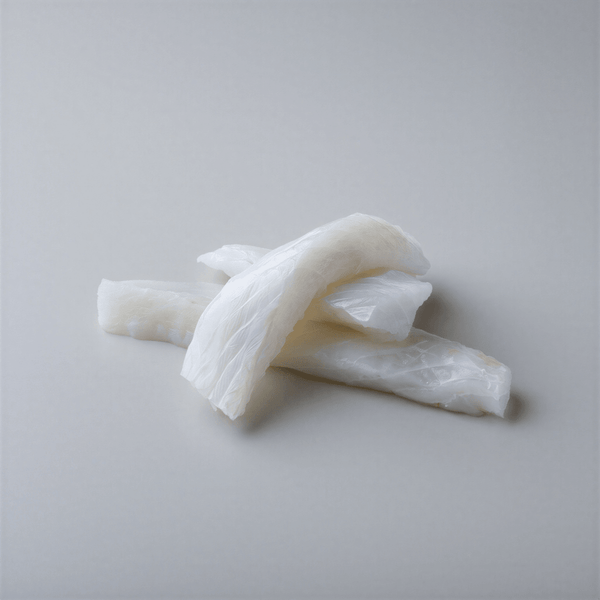


Quick summary: White fish is fish that contains less than 2% fat: cod, hake, sole, monkfish, megrim, pollock, turbot. It provides complete protein (18-22g/100g) with only 70-90 kcal, no significant omega-3 but high digestibility. It is the basis of low-calorie diets, children's cuisine, and post-operative recovery. At Bacalalo, the star white fish is rehydrated Icelandic cod.
Information verified on May 11, 2026. Mercat del Ninot · Bacalalo since 1990.

What is white fish?
White fish or "lean fish" is fish that contains less than 2% fat in its muscle. The flesh is light, almost translucent in some cases. Any fat it does have is concentrated in the liver (a classic example: cod, whose liver oil has historically been medicinal), not in the fillet.
These species have sedentary habits and live in bottom or mid-water zones. They do not need to store fat for migration. The culinary consequence: their flesh cooks quickly, dries out easily, and benefits from external liquid or oil.
Although it has less omega-3 than oily fish, white fish is an excellent source of complete protein, phosphorus, selenium, iodine, and B vitamins. And it provides only 70-90 kcal/100g, ideal for diets.
Main species of white fish (8 types)
1. Cod (Gadus morhua)
The most versatile white fish on the Spanish market. Four commercial formats:
- Fresh / frozen: fillets or whole, baked or grilled. Tender flesh and white flakes.
- Salted (in salt): traditional preservation. Needs rehydration for 24-48h in cold water.
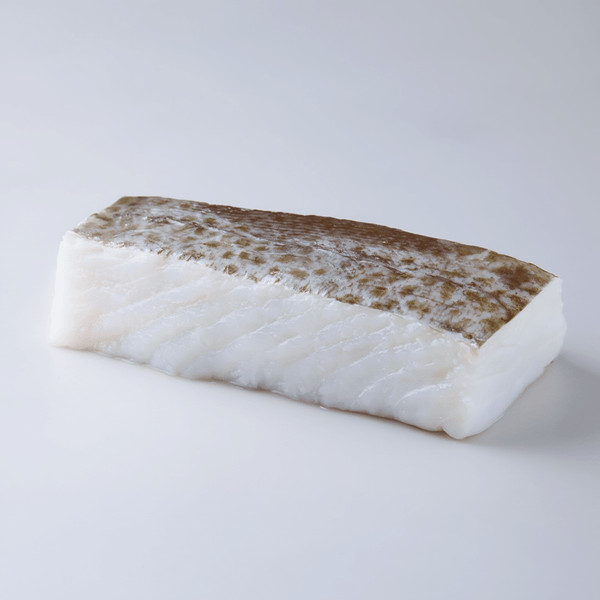
- Ready-to-cook rehydrated: ready to cook. Cuts: jowl, loin, cheeks, tripe, shredded.
- Dried / stockfish: air-dried in cold climates (Norway, Iceland). Needs rehydration for 48-72h.
Main origin: Iceland (premium), Norway, and Faroe Islands. The noble species is Gadus morhua; Skrei is the migratory variant from the Barents Sea, fished only from January to April. Full details: types of cod.
Recommended product
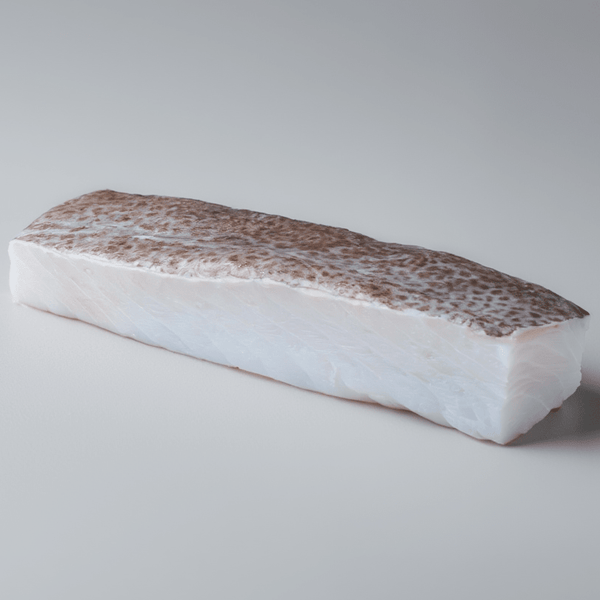
Clean Rehydrated Cod Loins — 500g
Icelandic cod rehydrated to perfection. Boneless, ready for frying, baking, or pil-pil. Best-seller from the catalog.
2. Hake (Merluccius merluccius)
The historical queen of Spanish fishmongers. 70 kcal/100g. Very fast cooking (4-7 min). Distinctions:
- Line-caught hake (artisanal, hook): premium, intact flesh.
- Trawl-caught hake: industrial, more economical, flesh damaged by the net.
- Whiting: young hake (less than 1.5 kg).
Recipes: green sauce with clams, boiled with mayonnaise, baked fillets, in soups and broths.
3. Sole (Solea solea)
The finest. Flat fish, translucent white flesh, delicate texture. 75 kcal/100g. Emblematic recipe: à la meunière (flour, butter, lemon, parsley). Also baked with mushrooms or steamed with vegetables.
4. Monkfish (Lophius piscatorius)
The "chicken of the sea." Firm texture, similar to lobster, intensely neutral flavor. 80 kcal/100g. Excellent in a casserole with clams, thick pan-fried, en papillote, or as a lobster substitute in rice dishes.
5. Megrim (Lepidorhombus boscii)
Flat fish, more economical than sole. Fine and soft flesh. Fried or grilled. Ideal for children and soft diets.
6. Pollock (Pollachius pollachius)
Cod's cousin. Similar but slightly more fibrous and more economical flesh. Sold fresh, rehydrated, or smoked (often appears as a cod substitute in supermarkets).
7. Hake (Urophycis chuss) / Forkbeard
Miniature cod family. Sweet, gelatinous flesh. Excellent for fish stock and fisherman's suquet.
8. Turbot (Scophthalmus maximus)
Premium flatfish. Firm, gelatinous flesh, deep flavor. Classic recipe: Galician style baked with potatoes, garlic, paprika, and vinegar.
Cod: the king of white fish in Spain
Cod deserves its own section because it is the most consumed white fish and the most versatile in Spanish cuisine. Four reasons:
- Natural preservation: salting allows it to be kept at home for months without losing quality.
- Versatility of cuts: jowl, loin, cheeks, tripe, shredded, tail — each with an optimal recipe.
- Deep flavor: controlled rehydration concentrates umami that fresh cod does not have.
- Rich regional cuisine: Bacalao a la Vizcaína, al Pil-pil, al Club Ranero, Bacalao a la Portuguesa, Catalan Bacalao with esqueixada, brandada...
Recommended product
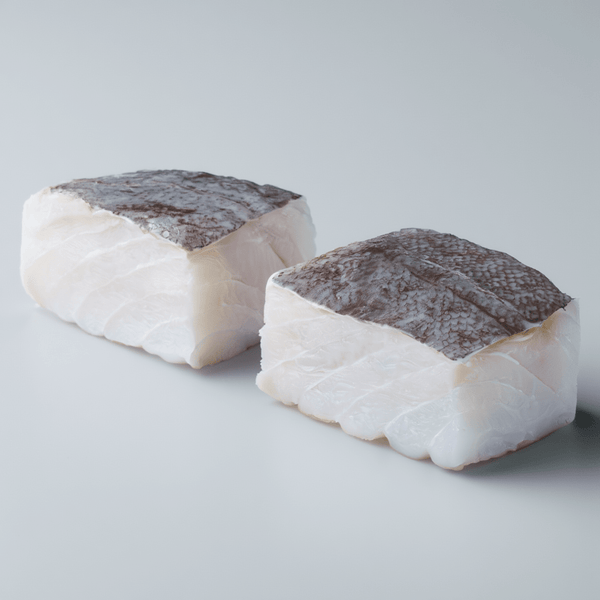
Extra Clean Rehydrated Cod Jowl (2 units) — 500g
The thickest and meatiest cut. For Bacalao al pil-pil, a la Vizcaína, al Club Ranero. Gadus morhua cod from Iceland.
Recommended product
Rehydrated Cod Brandada — 250g
Creamy paste of rehydrated cod, oil, and garlic. Ready for toast, canapés, and an elegant appetizer.
Why is white fish ideal for diets?
Objective nutritional reasons:
- Low in kcal: 70-90 kcal/100g vs 150-200 for oily fish.
- High in protein: 18-22g/100g, complete protein (all essential amino acids).
- Low energy density with high satiety: volume, protein, and water. A combination that fills you up with low caloric intake.
- Digestible: short muscle fibers, easy to chew and digest.
- Rich in iodine, selenium, phosphorus, vitamins B12 and D.
It is the recommended base for:
- Low-calorie diets for weight loss.
- Post-operative recovery and digestive recuperation.
- Light dinners (quick cooking).
- Children's cuisine (from 9 months, boneless).
- Soft diets and gastric protection.
Comparative nutritional table of white fish
Data per 100g of edible portion (source: BEDCA):
| Species | Kcal | Protein | Fat | Iodine (µg) | Selenium (µg) | Fresh price (€/kg) |
|---|---|---|---|---|---|---|
| Fresh cod | 80 | 18g | 0.7g | 110 | 32 | 12-22 |
| Rehydrated cod | 85 | 20g | 1g | 120 | 34 | 20-35 (rehydrated weight) |
| Line-caught hake | 70 | 17g | 1.8g | 15 | 36 | 18-30 |
| Trawl-caught hake | 70 | 17g | 1.8g | 15 | 36 | 8-14 |
| Sole | 75 | 17g | 1.5g | 20 | 30 | 20-40 |
| Monkfish | 80 | 17g | 0.7g | 12 | 30 | 15-30 |
| Megrim | 70 | 17g | 1g | 10 | 25 | 8-14 |
| Pollock | 80 | 18g | 1g | 95 | 30 | 8-15 |
| Turbot | 85 | 18g | 2g | 20 | 32 | 30-60 |
| Forkbeard | 70 | 17g | 1g | 15 | 25 | 6-12 |
How to choose white fish at the fishmonger's
Five quick checks:
- Eyes: bright, convex, transparent. If sunken and opaque: it's been on the counter for days.
- Gills: intense red, moist. Brown or dry = discard.
- Flesh: firm to the touch, regains shape if pressed. Soft and indented = bad sign.
- Smell: clean, light sea smell. Strong ammonia smell = fish is past its prime.
- Label: demand scientific name, FAO origin, fishing technique. "Assorted white fish" without further information is suspicious.
For salted cod: ask for loin or jowl clean, without yellow spots, white salt crystals (not brown). For desalted: sea smell, no yellowish dryness on edges.
Best recipes by species
- Bacalao al pil-pil: oil, garlic, chili, desalted cod loins over low heat; emulsify with the natural gelatin.
- Bacalao a la vizcaína: bell pepper, onion, tomato sauce.
- Bacalao al club ranero: pil-pil with sautéed green and red peppers.
- Hake in green sauce: with clams, parsley, garlic, white wine. Loins cooked 4-5 min.
- Boiled hake with mayonnaise: water, salt, bay leaf, 6-8 min. Boil with skin on.
- Sole meunière: flour, noisette butter, lemon, parsley.
- Monkfish casserole with clams: sauté, wine, fish stock, thick monkfish slices.
- Galician baked turbot: thin potatoes, garlic, paprika, vinegar.
- Catalan brandade with desalted cod, oil and garlic.
Recommended with criteria
Universal Shredded Dry Cod — 500g
For esqueixada, salads, croquettes. Dry cod ready to hydrate in cold water. Traditional Catalan recipe.
Storage and smart shopping
Practical tips:
- Fresh: consume within 1-2 days. Otherwise, freeze immediately, wrapped in cling film and an airtight bag. Lasts 6 months in a freezer.
- Salted cod: in the refrigerator or a dry, cool place. Lasts 6-12 months.
- Desalted cod: in the refrigerator for 4-6 days; frozen for up to 6 months.
- Dried cod / stockfish: dry at room temperature for months.
To optimize cost: buy whole salted cod (€18-25/kg) instead of desalted cod (€35-50/kg already hydrated). Homemade desalted cod takes 24-48h in cold water with changes every 8h.
Cod Collection
Desalted cod — complete collection
Main cuts of Icelandic Gadus morhua cod: jowl, loin, cheeks, tripe, shredded. Verifiable traceability and origin.
White fish for children: the best for introducing fish
White fish is the first fish recommended by pediatricians and AESAN for introduction from 9-10 months onwards. Reasons:
- Low in mercury: being small/medium sedentary species, they do not accumulate heavy metals like bluefin tuna or swordfish.
- Soft flesh, easy to mash: ideal for purees and creams.
- Few bones in prepared fillets: desalted cod, sole, John Dory, hake pincho in loins are easy to handle.
- Complete protein with a neutral flavor: well accepted by infant palates that reject the strong taste of oily fish.
Pediatric recommendations: avoid swordfish, shark, bluefin tuna and pike until age 10. White fish (cod, hake, sole, monkfish, John Dory, pollock) can be offered 2-3 times a week from the start of complementary feeding. To begin: boneless desalted cod loin baked with a drizzle of oil is an excellent option.
Fresh vs. Frozen vs. Desalted: How to Choose
"Fresh" is not always better. The real rules:
- Frozen at Sea (FAS): frozen on the boat at -40°C within hours. FAS hake, cod, and monkfish can be superior to "fresh" that has been in the supply chain for 4-5 days.
- Refrigerated at the counter: optimal if it's been less than 48 hours since catch. After that, FAS frozen is better.
- Desalted to perfection: professionally desalted cod comes out of the process with controlled moisture and flavor. It is a different product from "fresh" — its flavor is deeper and more concentrated.
- Traditional salted: requires home desalting (24-48h, water changes). Allows you to keep cod at home for months at a good price.
- Stockfish / air-dried: very concentrated Norwegian and Icelandic product. Requires rehydration for 48-72h.
Cod Cheeks, Tripe, and Other Special Cuts of Cod
Beyond the loin and jowl, cod has special cuts that are regional gastronomic references and unknown to many people:
Cod Cheeks (kokotxas)
The cod cheek is the chin of the cod: a small, gelatinous piece weighing about 30-50 grams. It is pure gelatin, which makes it a premium product and a canonical Basque recipe. Classic recipes:
- Cod cheeks al pil-pil: with oil, garlic, and chili, over very low heat, until the sauce emulsifies.
- Cod cheeks in green sauce: with garlic, parsley, flour, white wine, and fish stock. Serve with clams.
- Grilled cod cheeks: less common but valid. Quickly seared with EVOO and served with Maldon salt.
- Tempura cod cheeks: battered and fried. A modern recipe that takes advantage of the gelatinous texture.
There are cod cheeks and hake cheeks. Cod cheeks (Gadus morhua) are whiter and more gelatinous; hake cheeks are finer. Same dish, different raw material. Always ask for the species.
Cod Tripe (stomach)
The cod's stomach, emptied and cured. A regional Basque-Cantabrian dish with sautéed onion, bell pepper, tomato, and paprika. Texture similar to meat tripe but with a taste of the sea. A difficult product to find, highly prized by traditional cooks.
Shredded Cod (esmicolat)
Small pieces of cod ready for recipes that require shredded product:
- Catalan esqueixada: raw salad with shredded cod, tomato, onion, EVOO.
- Cod fritters: dough with shredded cod, potato, garlic, parsley, egg, and flour. Fried in hot oil.
- Croquettes: béchamel with shredded cod, flour, and egg. Breaded and fried.
- Pa amb tomàquet with cod: bread + tomato + shredded cod on top. Classic Catalan tapa.
- Málaga salad: potato, orange, onion, olives, and shredded cod.
Tail, backbone, and head
Economical cuts but full of flavor. The tail is ideal for stews; the backbone and head, for traditional broths and soups (cod soup, suquet, marmita).
Desalted cod step by step: the 4 recipes you must know
If you only learn 4 cod recipes, let them be these. They cover the fundamental techniques and are a staple on any Spanish table:
1. Bacalao al pil-pil (Basque)
The most legendary technique and the one that best demonstrates the quality of Gadus morhua cod. Requires loin or jowl with skin.
- Heat 200ml of EVOO in a wide clay pot with 6 sliced garlic cloves and one dried chili. Brown the garlic and remove.
- Lower to very low heat (70-80°C, the oil should not smoke). Place 4 desalted cod loins skin-side down.
- Cook for 8-10 minutes over very low heat. The natural gelatin will be released into the oil.
- Remove the loins to a plate. Take the pot off the heat, wait 1 minute, and start stirring the oil with a gentle circular motion (preferably with a strainer).
- The oil emulsifies with the gelatin, forming the golden, frothy pil-pil sauce. Return the loins to the pot and garnish with the garlic.
Tips: if the sauce doesn't thicken, add 1 tablespoon of cold water and continue stirring. The quality of the cod is paramount — without natural gelatin (typical of desalted Icelandic Gadus morhua), there is no true pil-pil.
2. Bacalao a la vizcaína (Basque-style cod)
Vizcaína sauce = choricero pepper (not just chorizo) + sautéed onion + mild tomato + cod broth. A technique that suits thick jowl.
- Hydrate 6 choricero peppers in warm water for 1 hour. Scrape out the pulp.
- Sauté 4 julienned onions with 2 garlic cloves, EVOO, very slowly for 40-50 min. Add the pepper pulp, 1 grated ripe tomato, 100ml of broth.
- Cook for 20 min and blend very finely. Pass through a chinois.
- Sear desalted cod loins in a pan for 1 min/side, and cook for 6-8 min in the sauce.
3. Esqueixada Catalana
Raw salad with desalted cod or hydrated dry shredded cod. A raw summer recipe.
- Shred 300g of desalted cod (or hydrate 200g of dry shredded cod for 24h with water changes) and dry thoroughly.
- Add 1 sweet onion, thinly sliced, 2 ripe tomatoes diced, black olives, EVOO, mild vinegar.
- Rest for 30 min in the refrigerator. Serve with toasted bread.
4. Brandada de Bacalao
Creamy purée of desalted cod + milk + garlic + oil. A French Niçoise recipe, adopted in Catalonia.
- Cook 400g of desalted cod in 250ml of milk with 2 garlic cloves, 4-5 min over low heat.
- Blend while hot, adding 100ml EVOO in a thin stream. Texture similar to creamy mashed potatoes.
- Serve warm with toasted bread or as a canapé base with quail eggs.
Recommended with criteria
Special Pil Pil Dried Cod Tail (2 pcs) — 500g
Tail of Icelandic Gadus morhua, salted and partially dried. The honest base for pil-pil, vizcaína, and brandade.
The hidden use of white fish: broths and fumets
Bones, heads, and trimmings of white fish are the base of great culinary stocks:
- Fish fumet: hake, monkfish, or John Dory bones + vegetables (leek, onion, celery) + cold water. Cook for a maximum of 25 min (longer makes it bitter).
- Court bouillon: water, salt, bay leaf, peppercorns, parsley to boil hake, John Dory, or any white fish.
- Catalan or Gaditan fish soup: fumet base + toasted bread, saffron, almonds, garlic, paprika.
- Salsa americana / suquet: with monkfish head, prawns, fried bread.
Buying whole white fish (not fillets) gives you 30-40% more product in the form of bones and head for stocks. A 2 kg hake = loins for 4 people + fumet for 2 liters.
Recommended with criteria
Desalted Cod Cheeks — 500g
Cod cheeks are pure gelatin: for pil-pil, green sauce or tempura. Premium product from the cut that supports the cod's jaw.
Conclusion: how to choose white fish wisely
White fish is not "flavorless" as is sometimes said — it has a clean and technical flavor. It allows the fishmonger, cook, and diner to interpret it correctly with short cooking times, precise sauces, and garnishes that don't compete.
For diet and daily use: desalted cod, hake, John Dory. For celebration: sole, turbot, monkfish, Skrei cod. For a Sunday recipe: bacalao a la vizcaína or al pil-pil with thick loin.
Common mistakes when cooking white fish
White fish is delicate. These typical mistakes lead to wasted good product and discourage those who try it:
- Overcooking. White fish is ready when the flesh easily separates from the bone. Past that point, it dries out quickly. Typical cooking time: 4-8 min depending on thickness.
- Not drying the piece before cooking. With surface moisture, it steams instead of browning. Drying with paper towels is a mandatory step before grilling or pan-frying.
- Putting desalted cod in boiling water. Desalted cod is not boiled: it's cooked in oil, sauce, or baked. Boiling it breaks it apart.
- Salting too early. Salt added 30 min beforehand dehydrates the flesh. Salt just before or when serving.
- Pil-pil with skinless cod. The skin provides the gelatin that emulsifies the oil. Without skin, there's no real pil-pil.
- Confusing cheeks with tripe. Cheeks = chin (pure gelatin, premium). Tripe = stomach (texture similar to meat tripe). Different product and recipe.
- Using pollock in recipes that call for cod. Pollock is more fibrous and less profound. In pil-pil, vizcaína, or club ranero, it doesn't perform the same.
- Not using heads and bones for fumet. Buying whole white fish (not fillets) gives you 30-40% more product in the form of cooking stock.
- Marinating hake in lemon before cooking. The acid cooks it. If you want lemon, add it when serving.
- Lowering the heat too much when cooking monkfish or turbot. Monkfish and turbot can withstand medium-high heat. At low temperatures, they become soft without texture.
Wine pairings with white fish
White fish calls for wines that respect its delicacy. The general rule: fresh, young, and mineral whites, with low oak and moderate alcohol content. But nuances matter depending on the recipe:
- Cod pil-pil style: Getaria txakoli (Bizkaiko or Getariako Txakolina), mineral Rías Baixas Albariño, Bierzo Godello. The acidity cuts through the oil and chili fat.
- Hake in green sauce: Albariño with a couple of years in the bottle, Godello, young Alsatian Riesling. The parsley and garlic in the sauce call for aromatic wine.
- Cod a la Vizcaína: young and fresh red wines from Rioja Alavesa, or Navarra rosé wines. This is one of the exceptions where a light red works because the choricero pepper dominates the sauce.
- Sole meunière: Chablis premier cru, aged Albariño, Mosel Riesling. The noisette butter is balanced by wines with a certain unctuousness.
- Monkfish casserole with clams: Godello, Rueda Verdejo with little oak, Italian Fiano. Structure for the stew, without overpowering the seafood.
- Cod brandade: Manzanilla en rama, Cava Brut Nature, young Fino. The creaminess calls for acidity and bubbles.
- Galician baked turbot: Bierzo Godello or Albariño aged on lees. Structure for the paprika and vinegar in the refrito.
- Catalan esqueixada: Cava Brut Nature, artisanal white vermouth from L'Empordà, Txakoli. It's a summer dish, calls for fresh wine and bubbles.
What DOESN'T work with white fish: powerful red wines with a lot of oak (their tannins clash with the delicacy of the flesh), sweet white wines (muddle the nuances), dry fortified wines (Oloroso, Amontillado) except in specific recipes like cod with Andalusian amontillado.
Key white fish cooking methods: times and temperatures
The number one mistake with white fish is overcooking it. Here are the real times and temperatures to get it right:
- Steamed (sole, hake, John Dory): 4-6 min/cm of thickness, at 90-95°C. The flesh is cooked when it flakes easily.
- En papillote (any white fish): 200°C oven, 10-15 min/cm. Onion and lemon infuse aroma in the sealed steam.
- Grilled (monkfish, hake with skin): very hot pan or grill, EVOO, 2-3 min skin side and 1-2 min flesh side. Do not move until browned.
- Baked (turbot, desalted cod, whole loin): 180-200°C, 8-15 min depending on thickness. Serve with roasted vegetables for moisture.
- Boiled (cooked hake with mayonnaise): water + salt + bay leaf; immerse when it starts to boil; reduce to low heat for 6-8 min. Do not boil vigorously (breaks the flesh).
- Pil-pil (desalted cod with skin): oil at 70-80°C, loins 8-10 min skin side down. Gentle circular motion to emulsify.
- In a casserole / stewed (monkfish, cod a la Vizcaína): sear first for 1 min/side, then cook in sauce for 8-12 min maximum.
- Deep-fried (cod fritters, croquettes): oil at 180°C, 3-4 min. The inside remains juicy, the crust golden.
Universal rule: white fish flesh separates easily from the bone when cooked. If you have to force it, it needs more time. If it falls apart when you touch it, you overcooked it.
Bacalalo cod catalog: cuts and uses
If cod is the king of white fish in Spain, it's worth knowing the cuts we offer and what they are best for. We work exclusively with Gadus morhua from Iceland, desalted to perfection, in the following formats:
- Desalted loins (500g): the central loin, boneless, with skin. For pil-pil, pan-frying, baking, en papillote. The most versatile and best-selling cut in the catalog.
- Extra desalted cheek (500g, 2 units): the thickest and meatiest part. For Vizcaína, Club Ranero, thick pan-frying. Withstands long cooking without falling apart.
- Desalted cod cheeks (500g): the chin of the cod. Pure gelatin. For pil-pil cod cheeks, green sauce, tempura. Premium product by cut.
- Desalted cod tripe: the stomach. Regional Basque-Cantabrian recipe with sofrito and paprika. Gelatinous texture.
- Universal dry shredded cod (500g): small pieces ready to rehydrate. For esqueixada, croquettes, fritters, salads.
- Cod brandade (250g): creamy paste ready to serve. For canapés, toasts, recipe base.
- Smoked cod slices: finished product for platters, warm salads, carpaccio.
- Dry cod fillet (penca): traditional base for homemade desalting. Best price per final kilo.
All cuts come with verifiable origin data: Iceland, FAO 27.Va, Gadus morhua, lot and date. If you have a specific recipe and are unsure which cut to use, contact us: the answer will be based on suitability for the technique, not price.
Cluster: Fish types and comparisons
Frequently asked questions
What is white fish?
What are the 8 most common white fish?
Does white fish have omega-3?
Is fresh or frozen white fish better?
Why is cod the king of white fish?
Which white fish is best for a diet?
What is the difference between line-caught and trawled hake?
How to cook desalted cod so it doesn't get dry?
Is pollock the same as cod?
How much white fish should I eat per week?
About the author — Lalo González Rodríguez
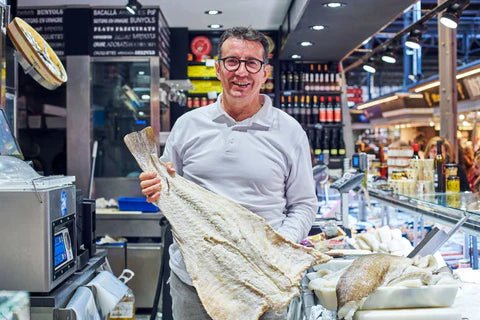
Lalo González Rodríguez has been selecting cod and seafood for more than 30 years at the Mercat del Ninot in Barcelona. Advisor to professional chefs and tasting manager for Bacalalo. Every classification and technical data published in this guide is verified against scientific sources (FAO, AESAN, ICES) and the real market (Mercabarna, premium retail, canneries).