Quick Summary: Fish are classified as oily (>5% fat, omega-3), white (<2% fat, diet), and semi-oily (2-5%). Separately, there are seafood (crustaceans and mollusks). This guide covers 30+ species with their nutritional profile, best culinary use, and how to identify them at the fishmonger. If you're looking for verified premium canned goods, at Bacalalo we only work with products of clear denomination, size, and origin.
Information verified on May 11, 2026. Mercat del Ninot · Bacalalo since 1990.

How fish is classified (real criteria)
At the fishmonger, you'll hear "oily fish" and "white fish" as if it were obvious. It isn't. The official classification (AESAN, FAO) is based on muscle fat content:
- Oily fish (fatty): >5% fat. Dark or reddish flesh. Migratory species that need energy reserves: tuna, bonito, salmon, mackerel, sardine, anchovy, horse mackerel, pomfret, frigate tuna.
- White fish (lean): <2% fat. Light flesh. Bottom-dwelling, sedentary species: cod, hake, sole, monkfish, John Dory, pollock, forkbeard, whiting, sea bass (in some cases).
- Semi-oily fish: 2-5%. The middle range: sea bream, sea bass, red mullet, trout, red sea bream, ray, small bonito.
Fat content varies by age, season, and fishing area: a sardine in summer (fattened) can go from traditionally "oily" to semi-oily. That's why the classification is indicative, not rigid.
Beyond fish, there is seafood, which are technically not fish but marine invertebrates: crustaceans (shrimp, prawn, lobster) and mollusks (mussel, oyster, octopus, squid).
Oily fish: species, characteristics, and omega-3
Oily fish is the most recommended by nutritionists: 1-2 servings/week of oily fish cover the intake of omega-3 EPA + DHA associated with cardiovascular health and neurological development (AESAN/EFSA consensus).
Bluefin tuna, skipjack tuna, albacore tuna
All three are Thunnus, but different species:
- Bluefin tuna (Thunnus thynnus): the fattiest (10-15% fat in the belly). Deep red flesh. Reserved for sashimi, tataki, mojama, Almadraba de Cádiz. Premium price (€60-150/kg fresh).
- Skipjack tuna (Thunnus albacares, yellowfin): 4-7% fat. Pinkish-brown flesh. Majority of canned goods on the market. Good price-quality ratio.
- Albacore tuna (Thunnus alalunga, white tuna): 7-10% fat. White-pinkish flesh. Finer and more delicate canned good. Limited season (July-September).
Recommended with expertise
Cantabrian Tuna Loin in Olive Oil — Olasagasti 270g
Artisan-fished skipjack tuna in virgin olive oil. Ideal for salads, pintxos, pasta, and gourmet sandwiches.
Anchovy and boquerón (same fish, different process)
Both are Engraulis encrasicolus. The difference is the process:
- Anchovy: salted and cured bocarte for 6-12 months, hand-filleted, packed in oil. Reddish-brown color, buttery texture.
- Boquerón en vinagre: bocarte marinated in vinegar, garlic, parsley. White color. Firm texture.
- Fried boquerón: breaded fresh bocarte.
The Cantabrian Sea has the most prestigious fishery (IGP Anchoa del Cantábrico), followed by the Mediterranean and Adriatic. Sizes (00, 0, 1) measure fillets per can: 00 = largest, most expensive.
Recommended with expertise
Cantabrian Anchovies "0" Gourmet Selection
"0" fillets from Santoña, 8 months cured, hand-filleted. Bacalalo's best-seller.
Salmon, sardine, mackerel, horse mackerel
The other heavyweights of oily fish:
- Salmon (Salmo salar): 10-13% fat. Fresh for baking/grilling, smoked for appetizers, marinated for gravadlax. Norwegian aquaculture is dominant (95%); wild Atlantic is rare and expensive.
- Sardine (Sardina pilchardus): 6-12% fat depending on season. Málaga's "espetada", grilled sardines, pickled, canned.
- Mackerel / Atlantic mackerel (Scomber scombrus): 8-13% fat. Economical and very nutritious. Excellent pickled.
- Horse mackerel (Trachurus trachurus): 5-9% fat. Undervalued. Economical, pronounced flavor.
Recommended with expertise
Soft, buttery smoked salmon loins
Norwegian salmon smoked over natural woods. Sliced piece ready for platters, salads, or breakfast.
White fish: species, lightness, and diet
White fish is the primary choice for low-calorie diets and children's cuisine: 70-90 kcal/100g, complete protein (18-22g), virtually fat-free.
Cod (Gadus morhua) and its relatives
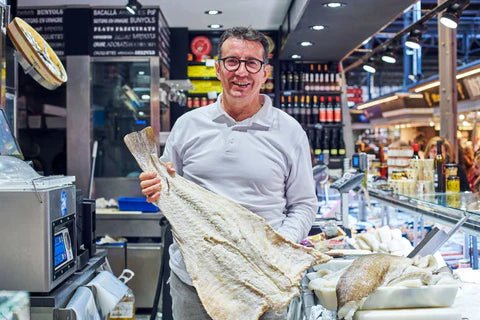
Cod is the king of white fish in Spain, although it is barely fished in our waters: it comes mainly from Iceland, Norway, and the Faroes. The noble species is Gadus morhua (Atlantic cod). There are close relatives such as Gadus macrocephalus (Pacific), but the classic gastronomic quality is Gadus morhua. Read the complete guide to cod types to distinguish Skrei, Iceland, Norway, and Faroes.
Other species of the Gadidae family you'll find at the fishmonger:
- Pollock: cod's cousin, more economical. Similar but more fibrous flesh.
- Forkbeard / Rockling: smaller, milder version.
- Whiting: young hake (not to be confused).
Recommended with expertise
Clean Desalted Cod Loins — 500g
Icelandic cod desalted to perfection, boneless, ready to fry, bake, or pil-pil. Best-seller of the desalted collection.
Hake, sole, monkfish, John Dory
- Hake (Merluccius merluccius): the queen of Spanish fishmongers. 80 kcal/100g. Quick cooking (5-8 min). In fillets, steaks, or whole.
- Sole (Solea solea): the finest, flat, translucent white. Delicate flavor, ideal à la meunière.
- Monkfish (Lophius piscatorius): firm texture similar to lobster. For stews, casseroles, grilling.
- John Dory / St. Peter's Fish / Lemon sole: economical options with good flavor.
Semi-oily fish: the bridge between oily and white
Family with 2-5% fat. Firm flesh, more pronounced flavor than white but lighter than oily. Ideal when seeking flavor with simple cooking:
- Sea bream (Sparus aurata): baked in salt, baked, butterflied.
- Sea bass (Dicentrarchus labrax): farmed (majority) or wild (premium). White flesh with a fatty nuance.
- Red mullet (Mullus barbatus): intense, fried or in soup, grilled.
- Red sea bream (Pagellus bogaraveo): Spanish winter reserve, baked with potatoes and paprika.

Seafood: crustaceans and mollusks
Seafood is not fish but shares shelves and tables. Two large families:
Crustaceans
- Shrimp, prawn, scarlet prawn, langoustine, lobster, common lobster: quick cooking or raw. Technical distinction: shrimp (pink) vs. prawn (larger) vs. scarlet prawn (intense red, premium).
- Crab: velvet crab, spider crab, edible crab, king crab.
- Gooseneck barnacles: unique to the Galician Atlantic coast.
Bivalve mollusks and cephalopods
- Bivalves: mussel, clam, cockle, razor clam, oyster, scallop, queen scallop.
- Cephalopods: octopus, squid, cuttlefish, baby squid, chocos.
- Univalves: sea snail (cañadilla, periwinkle).
Comparative table: fat, protein, and omega-3 per species
Data per 100g of edible portion (source: BEDCA / AESAN, spring 2026):
| Species | Category | Kcal | Protein | Fat | Omega-3 (g) | Best use |
|---|---|---|---|---|---|---|
| Salted anchovy | Oily | 210 | 26g | 12g | 1.4 | Appetizer, pintxo, pizza |
| Bluefin tuna | Oily | 160 | 23g | 7g | 1.3 | Sashimi, tataki, grilled |
| Fresh salmon | Oily | 180 | 20g | 11g | 2.3 | Baked, grilled, marinated |
| Sardine | Oily | 155 | 20g | 8g | 1.5 | Grilled, pickled |
| Mackerel | Blue | 180 | 20g | 11g | 1.9 | Pickled, smoked |
| Fresh cod | White | 80 | 18g | 0.7g | 0.3 | Pil-pil, brandade, club ranero |
| Hake | White | 70 | 17g | 1.8g | 0.2 | Slow cooked, green sauce |
| Sole | White | 75 | 17g | 1.5g | 0.1 | Meunière, steamed |
| Sea bream | Semi-fatty | 125 | 20g | 4g | 0.3 | Salt-baked, oven-baked |
| Sea bass | Semi-fatty | 120 | 21g | 4g | 0.3 | Split and grilled |
Which to choose based on recipe, diet and occasion?
Practical rules we apply daily at Mercat del Ninot:
- If you are looking for omega-3 / cardio: fatty fish twice a week. Sardines/mackerel are the economical option; salmon and tuna are the premium option.
- If you are looking for a low-calorie diet: white fish (hake, cod, sole). Steamed or en papillote cooking without added fat.
- If children or people with a mild palate are coming: white fish (hake, sole, John Dory). No small bones.
- If you are celebrating: oven-baked sea bream, baked sea bass, red tuna tataki, Skrei cod in season.
- If you want to save money: horse mackerel, mackerel, sardines, pollock, John Dory. Excellent nutritional profile at a third of the price.
- If you are in doubt at the fishmonger's: ask about provenance (FAO 27 / 34 / 37), fishing day and if it has been defrosted. A reputable fishmonger will tell you without hesitation.
Bacalalo Collection
Gourmet Canned Goods — all categories
Cantabrian anchovies, tuna, bonito, sardines, mussels, cockles. Verified product, batch and origin visible on each can.
When canned fish surpasses fresh
A key idea that few mention: good canned goods are better than bad fresh goods. Premium canned goods capture the product at its optimal point and pack it within hours, while "fresh" from the supermarket can take 4-7 days in the supply chain.
- Anchovies: canning is the natural form of the product (curing 6-12 months). Fresh = anchovy, a different dish.
- Northern Albacore: traditional canned is better than fresh frozen and then defrosted.
- Sardines, mackerel, little tunny: canned, they perfectly preserve omega-3, are economical and last for years.
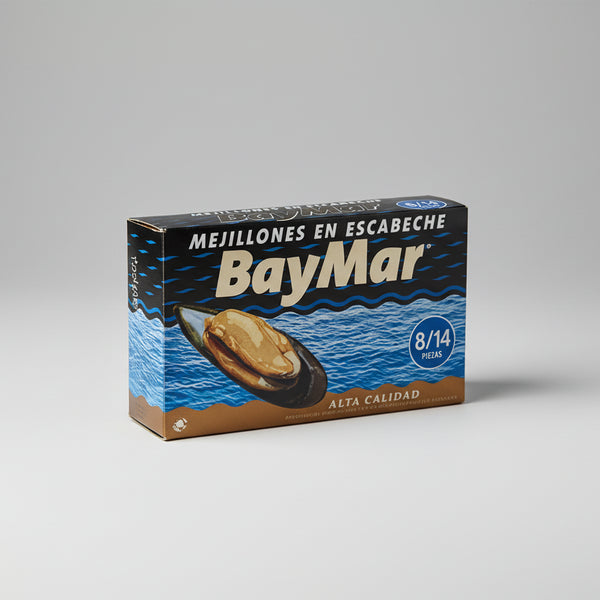
- Galician mussels in escabeche: Designation of Origin product, caught → packaged within 24h.
The practical rule: for an appetizer, pintxo, tapa, salad or pasta, premium canned goods are often the best decision.
Recommended with expertise
Dardo Sardines 12/18 in Olive Oil — traditional can
Caliber 12/18 (12-18 sardines per can), olive oil, cannery from Galicia. Quality daily canned goods that are truly good.
Season for each type of fish (real calendar)
Fish has a fishing season and a season for optimal organoleptic quality. Regulations (fishing bans, quotas) and biology dictate the seasons. Approximate calendar for the Mediterranean and the Cantabrian Sea:
- January-April: Skrei (Norwegian migratory cod), salted cod, clams, oysters.
- March-June: bonito, red tuna from almadraba (Cadiz), white prawns from Huelva, Galician mussels.
- May-August: sardines (best in July-August), anchovies from the Cantabrian Sea, horse mackerel, mackerel.
- July-September: Northern Albacore (coastal season).
- October-December: sea bream, Galician hake, gooseneck barnacles, fine clams, lobster.
- All year round: desalted cod (thanks to salted preservation), farmed salmon, deep-sea frozen hake, canned goods.
Buying in season means better price, peak flavor, and a smaller environmental footprint. Especially for fatty fish: a sardine from August vs. one from February is a different product.
Classic recipes by type of fish (expert routes)
Each category has its culinary tradition. We compile the most representative techniques and recipes, with practical notes so as not to spoil the product:
For fatty fish
- Grilled sardines (Mediterranean): coarse salt, sliced garlic, lemon. Hot grill, 3-4 min per side. Serve with toasted bread, EVOO and a young white wine.
- Malaga-style "espetada": sardines on a cane over an open fire. Only salt. The fat bastes itself.
- Homemade pickled anchovies: clean, marinate for 6h in vinegar + salt, drain, store in oil with garlic and parsley for 24h in the refrigerator.
- Pickled mackerel: sauté onion, garlic, bay leaf, paprika; add vinegar and water; pour over boiled mackerel; let rest for 24h. A refreshing summer dish.
- Red tuna tataki: loin with sesame crust + Maldon salt, sear for 30s on each side, slice thinly. Soy sauce, ginger, wasabi on the side.
- Baked salmon with dill: 200°C, 12-15 min en papillote. Sautéed onion underneath, fresh dill on top, a drop of butter.
For white fish
- Cod al pil-pil (Basque): oil + garlic + chili; desalted cod loins at 70-80°C, 8-10 min; emulsify with natural gelatin.
- Hake in green sauce with clams: garlic + parsley + flour + white wine + fish stock; cook loins for 4-5 min in the sauce; add clams at the end.
- Galician oven-baked turbot: thin potatoes at the base, salt, garlic, paprika, vinegar, turbot on top. 200°C, 18 min.
- Sole meunière: flour, noisette butter, lemon, parsley. 3 min per side in a pan.
- Catalan cod brandade: desalted cod, milk, confit garlic, EVOO; blend hot; serve with toasted bread.
- Monkfish in casserole with clams: soffritto + wine + fish stock + monkfish slices; cook for 12 min total with clams at the end.
For semi-fatty fish
- Salt-baked sea bream: cover whole with coarse salt mixed with beaten egg white; 200°C, 25-30 min for 1 kg; break the crust when serving.
- Baked sea bass: open whole, salt, garlic, grill skin-side down; finish with a quick garlic and chili fry with vinegar.
- Oven-baked sea bream (Christmas): thin potato slices, sautéed onion, paprika, vinegar, white wine. 190°C, 25 min depending on weight.
For seafood
- Garlic prawns: oil + sliced garlic + dried chili + peeled prawns; 90s over high heat; parsley; bread for dipping.
- Steamed mussels: water, white wine, bay leaf, parsley; 5-6 min with lid until they open; oil and lemon when serving.
- Galician-style octopus: boil for 30-40 min depending on the piece; cut with scissors, boiled potato, coarse salt, sweet paprika, EVOO.
Origin and sustainability: what really matters on the label
European labels require three key pieces of information: scientific name, FAO capture zone, and fishing method. Learning to read them will save you trouble:
- FAO 27: Northeast Atlantic (Cantabrian Sea, Galicia, North Sea, Barents Sea). Cold waters, species such as cod, hake, anchovy, sardine, salmon.
- FAO 34: East Central Atlantic (Morocco, Mauritania, Senegal). Octopus, shrimp, horse mackerel, African Mediterranean sardine.
- FAO 37: Mediterranean and Black Sea. Anchovy, sardine, almadraba red tuna, sea bass, wild sea bream.
- FAO 41-48, 51, 57: South Atlantic, Pacific, Indian Ocean. Imported species (skipjack tuna, swordfish, king prawns, etc.).
Regarding fishing methods: artisanal fishing with hook and line (pincho), trammel net, purse seine are the most selective. Trawling allows for volume but damages seabeds and discards non-target species. For premium fresh fish, look for "pincho", "almadraba", "artisanal purse seine" or MSC/ASC certified label.
Buying fish online in Spain: what to look out for
Online sales of fish and preserves grew x4 since 2020. Not everything sold as "gourmet" is. Five checks before buying online:
- Visible traceability: the product must show origin, cannery or fishery, batch and date of canning or capture.
- Real, not perpetual stock: artisanal products have limited stock. Be suspicious of websites with "infinite stock" at a premium price.
- Declared cold chain: for fresh and refrigerated, isothermal transport declared in maximum hours.
- Quality policy: replacement or refund if the piece does not arrive optimally.
- Brand or store history: has it been active for years? are there real reviews (Trustpilot, Google Maps)?
At Bacalalo, we only work with canneries and suppliers with a public traceability sheet. The catalog reflects real stock from Mercat del Ninot; we do not list references that we cannot serve that week.
Cluster: Types of fish and comparisons
Common mistakes when buying and cooking fish
Over 30 years at Mercat del Ninot serving customers has taught us about the recurring mistakes made by both novices and advanced cooks. Reviewing them will save you money and trouble.
When buying
- Confusing "fresh" with "quality". A fresh fish that has been on display for 5 days is worse than one frozen on the boat at -40°C on the same morning it was caught. The "Frozen at Sea" or FAS label is a superior guarantee to "fresh" without traceability.
- Looking only at the price. Cod at €8/kg in the supermarket is Gadus macrocephalus (Pacific) or pollock, not Gadus morhua. Three-quarters of the same applies to Peruvian anchovies vs. Cantabrian anchovies. The price difference reflects a real product difference.
- Buying fish without a visible label. EU Regulation 1379/2013 requires indicating the scientific name, FAO area, and fishing method. If the fishmonger doesn't show it, it's a bad sign.
- Accepting "Atlantic" as an origin. "North Atlantic" encompasses everything from Iceland to Morocco. Ask for specificity: Iceland, Barents Sea, Cantabrian Sea, Galicia.
- Assuming that the neighborhood fishmonger "always has the best". False by default. Rotation, the fishing ground they buy from, and the cold chain determine more than the location.
- Buying whole fish without asking for professional cleaning. You lose the opportunity to use heads and bones for fish stock. Always ask them to clean it in front of you.
In the kitchen
- Overcooking white fish. Hake, desalted cod, and sole are ready in 4-8 minutes. After 10, they become irreversibly dry. The rule: if the flesh easily separates from the bones, it's done.
- Cooking fatty fish at low temperatures. Fatty fish tolerates and benefits from high heat. Sardines on the grill need red-hot iron; red tuna tataki needs a quick sear.
- Not drying the fish before cooking. If there is moisture on the surface, it won't brown—it will steam. Drying thoroughly with paper towels is essential before grilling or pan-frying.
- Salting in advance. Salting 30 minutes before cooking dehydrates it. Salt just before cooking or when serving.
- Thawing at room temperature. Bacterial risk. Always thaw in the refrigerator (12-24 h) or in cold water in a sealed bag.
- Pil-pil with poor quality cod. Without natural gelatin (properly desalted skin-on Gadus morhua), there will be no emulsion. It's about the product, not the technique.
- Starting to sauté garlic in cold for stews. Garlic burns before the fish sautés and turns bitter. Heat the oil first.
- Boiling fish stock for more than 25 min. It will turn bitter. Fumet should be cooked for a maximum of 20 to 25 minutes from when it starts to boil.
Regarding storage
- Freezing defrosted fish. Loss of texture and health risk.
- Storing desalted cod in its water. Better wrapped in plastic film or in oil, not in water, as it will continue to desalinate.
- Keeping opened anchovy cans in the refrigerator without enough oil. The fillets must always be submerged.
- Freezing canned goods. Not necessary, a sealed can can be stored for 18-24 months.
- Confusing expiration date with best-before date. For canned goods, "best-before" means the flavor is guaranteed optimal, not that it's expired. An anchovy can from 18 months ago can be perfect.
Conclusion: how to buy fish wisely
There is no "best fish" in the abstract. There is the right fish for your recipe, your diet, and your budget. The blue / white / semi-fatty classification is the base; above that comes origin, freshness, season, and price.
If you are going to invest in quality fish, prioritize:
- Clear origin (FAO 27, Cantabrian Sea, North Atlantic) — be wary of just "Atlantic".
- Fishing day or batch visible.
- Size (for anchovies, sardines, tuna).
- Brand or cannery with public traceability.
At Bacalalo, since 1990, we have worked in the Mercat del Ninot only with products whose traceability sheet we can show. If you have doubts about what to choose for a specific recipe, write to us: the recommendation is based on suitability, not on margin.
The Bacalalo criterion: how we select our catalog
Since 1990, we have worked in the Mercat del Ninot in Barcelona. Our catalog selection follows three filters that we apply before accepting any supplier or reference:
- Verifiable public traceability. Each preserve must be able to show an origin, catch, and processing sheet. We do not accept brands that only say "from the Atlantic" or "from the Cantabrian Sea" without further information.
- Real and honest replenishment. We work by season when the product has one. If the anchovy season was short, we say so. We do not sell "infinite stock" of artisanal products.
- Contextual recommendation, not based on margin. When a customer asks us what to choose, we recommend based on the recipe and budget, not on what is most expensive. If canned sardines meet your needs, we won't sell you premium bluefin tuna.
Our catalog covers the main categories: desalted cod from Iceland (Gadus morhua), Cantabrian IGP anchovies from Santoña and Laredo, canned tuna and bonito from historic brands, sardines, mackerel, mussels, selected caviar and roe, smoked salmon, mojama, and cured products. What does not enter the catalog: white label brands, industrial substitutes without traceability, and products that we cannot serve that same week.
If you have doubts about what to choose, write to us. The recommendation is based on suitability for use, not on commercial margin. It is the only honest way to sell seafood products.
Frequently Asked Questions
What is the real difference between blue fish and white fish?
Which fish has the most omega-3?
Are anchovy and boquerón the same fish?
Why is bluefin tuna more expensive than light tuna?
How many times a week should one eat fish?
Is farmed fish of lower quality?
Which fish is best for children?
How to distinguish fresh fish from thawed fish?
Does canned fish lose nutrients compared to fresh?
Why are there so many types of cod in Spain?
About the author — Lalo González Rodríguez
Lalo González Rodríguez has been selecting cod and seafood for more than 30 years at the Mercat del Ninot in Barcelona. Advisor to professional chefs and head taster for Bacalalo. Every classification and technical data published in this guide has been verified against scientific sources (FAO, AESAN, ICES) and real market (Mercabarna, premium retail, canneries).