

Quick answer: The grade of an anchovy indicates the number of fillets per kilogram of the original anchovy. 00 is the largest grade (8-9g fillets, 14-16 cm, 90-110 fillets/kg), 0 is medium (6-7g, 12-14 cm, 130-150 fillets/kg), 1 is small (4-5g, 10-12 cm, 180-220 fillets/kg). Larger grades mean longer curing and higher prices. For toast with butter, 00. For gildas and daily use, 0. For cooking, 1. We explain it all without tricks.
What exactly is the grade
The grade of an anchovy is the classification assigned by the cannery to the anchovy by size before salting. When fresh anchovies arrive at the factory, they are sorted manually or with grading machines. The largest ones go to one side, the medium ones to another, the small ones to yet another. Each group is cured separately and produces a different final quality.
The numbering works counter-intuitively: the smaller the number, the larger the anchovy. That is, 00 (double zero) is the largest, 0 is medium-large, 1 is medium, 2 is small, 3 is very small. The historical reason is found in the fish market: old weights were counted by "double zero" or "zero" to indicate superior batches.
The practical equivalence:
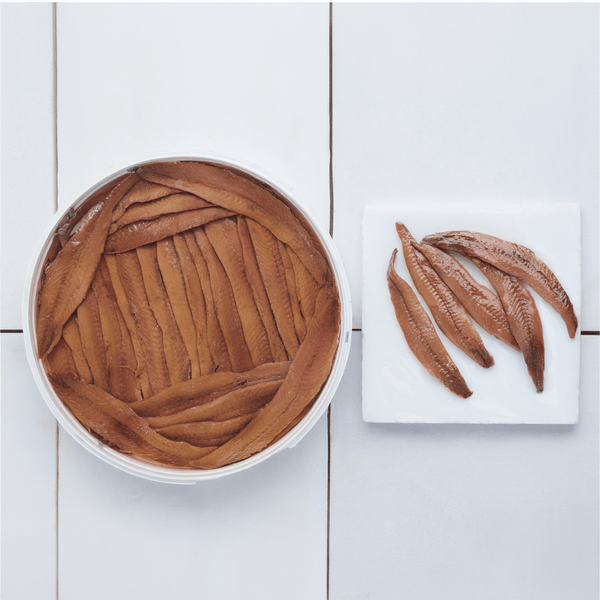
- Grade 00: 90-110 pieces per kilo. Fillets of 14-16 cm. Weight per fillet: 8-9 g.
- Grade 0: 130-150 pieces per kilo. Fillets of 12-14 cm. Weight per fillet: 6-7 g.
- Grade 1: 180-220 pieces per kilo. Fillets of 10-12 cm. Weight per fillet: 4-5 g.
- Grade 2: 250+ pieces per kilo. Fillets of 8-10 cm. Weight per fillet: 3 g.
It is important to note that the grade is not just a matter of visual size: it also determines the curing process and the final price. Larger grades are reserved for long cures because they better withstand the weight and time in the barrel. Smaller ones cure faster because the salt penetrates more quickly.
Grade 00: The large one
Grade 00 is the absolute premium category. Meaty, thick fillets, with the buttery texture that only large anchovies cured for a long time can provide.
- Weight per fillet: 8-9 g
- Length: 14-16 cm
- Fillets per 50g tin: approx. 5-7
- Fillets per 100g tin: approx. 11-14
- Typical curing: 18-24 months
- Approximate price per fillet: €1.30-2.50
What it is ideal for:
- Toast with butter and anchovy (the classic)
- Canape where anchovy is the sole star
- Tasting at room temperature with wine
- Gift
What it makes NO sense to pay 00 for: pizza, mixed Caesar salad, puttanesca sauce. When the anchovy competes with other strong flavors, you won't notice the difference in grade.
"00" Premium Cantabrian Anchovies
Real 00 grade, 18-24 month curing, hand-filleted, EVOO. For toast with butter and special occasions. €24.90.
Grade 0: The balanced one
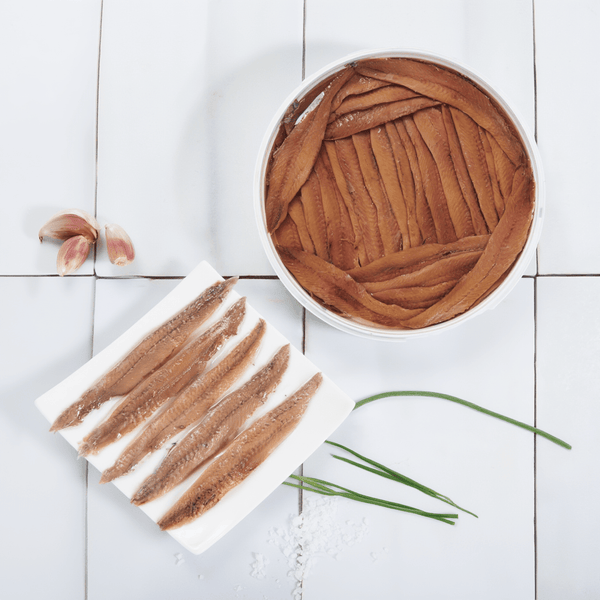
Grade 0 is the most versatile and, in terms of quality-price ratio, the one we recommend as a benchmark for weekly use. A generous fillet but without the premium price of 00.
- Weight per fillet: 6-7 g
- Length: 12-14 cm
- Fillets per 50g tin: approx. 7-9
- Fillets per 100g tin: approx. 14-16
- Typical curing: 12-18 months
- Approximate price per fillet: €0.80-1.20
What it is ideal for:
- Homemade gildas (perfect proportion with the gherkin)
- Everyday tapas and appetizers
- Marinated tomato with anchovy and EVOO
- Anchovy tartare
- Weekly home use for a family
"0" Gourmet Selection Anchovies
Our top seller. Grade 0, gourmet curing, first-class olive oil. Ideal for gildas and daily tapas. €38.90.
Grade 1: For cooking
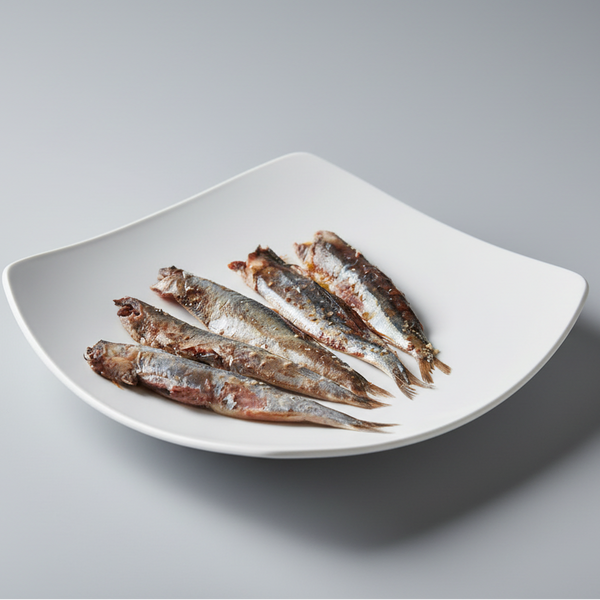
Grade 1 is the smart option when the anchovy will add flavor but is not the visual star. Smaller fillet, shorter curing, much more accessible price.
- Weight per fillet: 4-5 g
- Length: 10-12 cm
- Fillets per 50g tin: approx. 10-12
- Fillets per 100g tin: approx. 20-24
- Typical curing: 8-12 months
- Approximate price per fillet: €0.30-0.60
What it is ideal for:
- Sofritos for stews (Mediterranean, Basque-Cantabrian)
- Puttanesca pasta
- Sauce for chicken or lamb
- Homemade pizza
- Caesar salad
- Compound butter with anchovy
Extra grades: 000, 2 and 3
There are grades outside the standard trio, usually reserved for limited productions or specific applications:
- Grade 000 (triple zero): rare and exclusive. Fillets > 9 g, > 16 cm. Only in exceptional fishing seasons (years with very large anchovies). Prices > €3 per fillet. Limited production from the best canneries in Santoña.
- Grade 2: 3-4 g fillets. For industrial preserves in vegetable oil. Good price for intensive use in cooking.
- Grade 3: small fillets, almost "whitebait". For preparations where the anchovy is minced or chopped.
Visual comparative table
| Grade | Fillet weight | Length | Fillets/kg | Curing | €/fillet |
|---|---|---|---|---|---|
| 000 | >9 g | >16 cm | 70-90 | 24+ m | 2-4 € |
| 00 | 8-9 g | 14-16 cm | 90-110 | 18-24 m | 1.30-2.50 € |
| 0 | 6-7 g | 12-14 cm | 130-150 | 12-18 m | 0.80-1.20 € |
| 1 | 4-5 g | 10-12 cm | 180-220 | 8-12 m | 0.30-0.60 € |
| 2 | 3-4 g | 8-10 cm | 250+ | 6-9 m | 0.15-0.35 € |
How much to pay per fillet: real price
The trick to buying well is to think in €/fillet, not in €/kg. The price per kilo is misleading because it mixes the weight of the fillet and the weight of the oil. These are the verified market ranges:
- 50g tin grade 0 industrial (Mercadona, Lidl): €3-4 → €0.30/fillet
- 100g tin grade 0 medium brand (Leonardo, Ortiz): €6-9 → €0.40-0.60/fillet
- 100g tin grade 0 gourmet selection: €14-25 → €0.80-1.40/fillet
- 50g tin grade 00 premium Santoña: €15-25 → €2.15-3.60/fillet
Below €0.30 per fillet, suspect quality or origin. Above €2 per fillet, make sure it is really 00 and from an identifiable cannery.
Which to buy depending on your use
- Toast with butter: 00 without a doubt. This is the dish where the grade is most noticeable.
- Homemade gilda: 0. The proportion with gherkin and olive is balanced.
- Canned appetizer on bread: 0 if you want to showcase the anchovy, 1 if you are covering it with another ingredient.
- Marinated tomato: 0.
- Pizza, pasta, sauce: 1 or 2. It makes no sense to pay for 00.
- Sofrito for stew: 1 or 2. It will disintegrate in the oil.
- Utilized in cooking (butters, pâtés): 1 or 2.
- Gift: 00 in a premium box.
Common market traps
- "Selection" or "Premium" without indicating grade. This is rhetoric. Always demand that the grade be on the label.
- Weighing including oil. A "100g" tin can have 60g of oil and 40g of fillet. Always look at the "drained net weight."
- Confusing large size with grade 00. A long, thin fillet is not the same as a thick, short fillet. The real grade is seen in the weight, not the length.
- Grade 0 marketing but actually 1. Some brands allow themselves to be "creative" with the classification. If a 100g tin contains 22 fillets, it is grade 1, not 0.
- Vegetable oil in a "premium" product. If you pay premium, demand EVOO. Without EVOO, it's not premium.
Frequently asked questions
Is grade 00 always better than 0?
In size and price, yes. In taste, it depends. A grade 0 anchovy from Santoña cured for 18 months can have more aromatic complexity than an industrial grade 00 cured for 6 months. Grade indicates size, not absolute quality. Always combine grade + curing + origin.
How many fillets are in a 100g tin of anchovies?
It depends on the grade. 100g drained weight contains approximately: grade 00, 11-14 fillets; grade 0, 14-16 fillets; grade 1, 20-24 fillets; grade 2, 25-30 fillets. Count the fillets and you will know the actual grade.
Which grade is the best seller?
Grade 0 has the highest commercial volume: it balances price and quality for weekly use. 00 is a premium niche. 1 is mostly used in hospitality and industrial cooking.
Why are there fewer grade 00 anchovies some years?
Because it depends on the anchovies caught that season. If spring brings smaller anchovies, there is less 00 available and prices soar. It is a seasonal product subject to the biology of the fish.
Are anchovy 00 double zero and anchovy 00 the same?
Yes. "Double zero" is the literal reading of the symbol "00". It is also sometimes written "doblecero" or "DZ". It is the same grade.
Does grade 0000 exist?
Not officially. Some canneries use it as marketing to indicate "extra large" in exceptional seasons. It is not a standardized category.
How to measure the grade of a tin that doesn't indicate it?
Count the fillets and compare with the table. Weigh the drained net weight and divide it by the number of fillets to get the weight per fillet. If each fillet weighs 7g+, it is 0 or higher. If it weighs 5g or less, it is 1 or 2.
Grade 00 or 0 for a gift?
For a gift, grade 00 in a premium box. The visual and presentation difference justifies the price for a special treat. For daily personal use, grade 0 is the best value for money.
Conclusion
Grade is the most honest metric for comparing anchovies. A real 00, long-cured, is an exceptional product that justifies its price. A 0 is the smart option for weekly use. A 1 is the best decision when the anchovy is for cooking or combining with other strong flavors.
Buying well requires looking at three pieces of information: grade + curing + origin. If all three are stated on the label, you are looking at a serious product. If any are missing, there is probably something to hide. It's not marketing — these are verifiable factors.
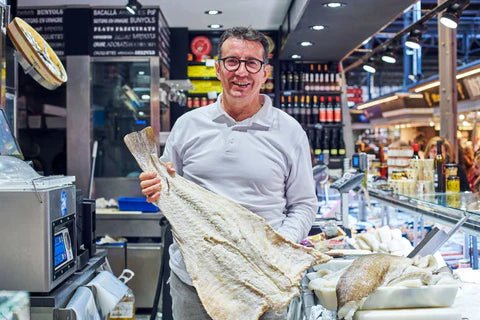
— Lalo González Rodríguez
Third generation in Mercat del Ninot. Selecting anchovies in Santoña and Cantabria since 1990.