The world's best anchovies in 2026 (summary): 1) Cantabrian Anchovy (Spain) — the global benchmark for cured anchovy fillets in oil. 2) Acciughe del Mar Cantabrico/Adriático (Italy) — Delfino, Don Filippo, Recca: similar Ligurian tradition. 3) Anchois de Collioure (France) — salted anchovy in a ceramic jar, another niche. 4) Peruvian Anchovy / Engraulis ringens — from the Pacific. Spoiler: Cantabrian wins in premium anchovy fillets in oil, but not in all categories. We tested 9 origins in March 2026.
"Best anchovy in the world" is an easy phrase to sell but requires nuance. The anchovy that won the 2024 Santoña competition world final is not the same one you want to eat on an Italian pizza. This article compares 9 global origins with verifiable technical criteria, not national slogans. We tested in April-May 2026.

Anchoa, boquerón, bocarte: vocabulary before we start
Before judging brands, it's worth knowing what you're comparing:
- Anchoa (in Spain): fish salted and cured in dry salt for 6-22 months, usually in oil. An evolving product.
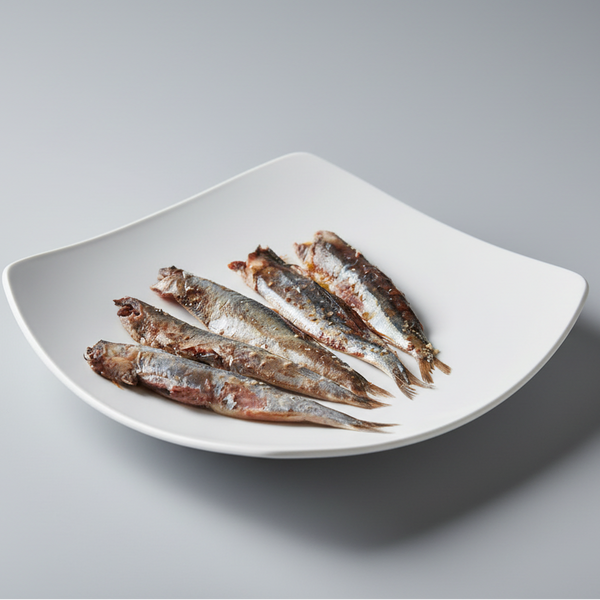
- Boquerón: the same fresh fish, marinated in vinegar or fried. Not cured.
- Bocarte: name of the fresh fish before processing (Cantabrian).
- Acciuga (Italy): Italian equivalent of "anchoa". Also salted and cured.
- Anchois (France): same concept. In Collioure, it is sold in a jar with dry salt, without oil.
- Peruvian Anchoveta: a different species (Engraulis ringens). Smaller, generally for fishmeal/oil, rarely for premium preserves.
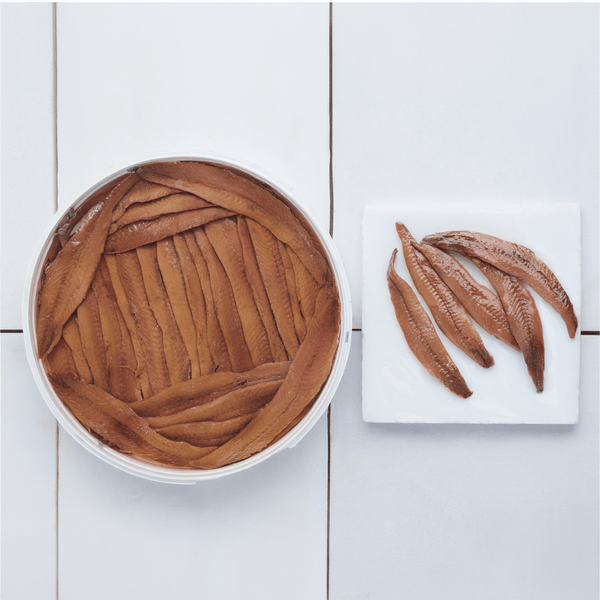
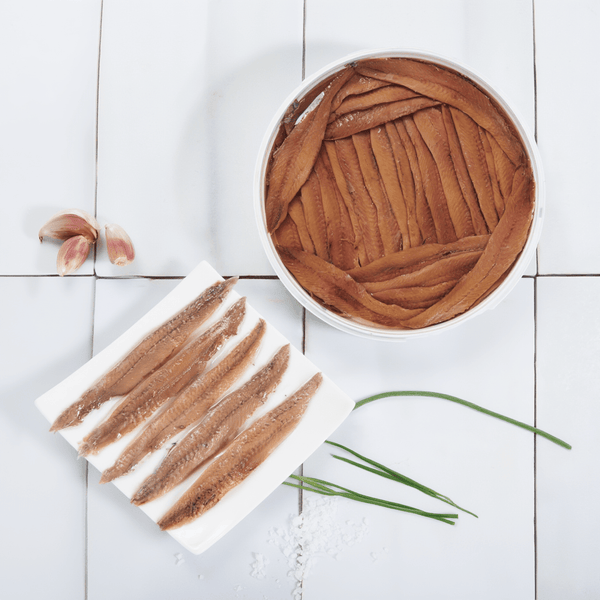
What we popularly call "Cantabrian anchovy" is made from Engraulis encrasicolus, caught between April and June in the Bay of Biscay, and cured for 6 to 22 months. This is the world's leading category for cured anchovy fillets in oil.
Comparison methodology
Comparing Cantabrian anchovy with Peruvian anchovy is like comparing Iberian ham with prosciutto cotto: both are pork, but different categories. Still, the criteria are the same:
- Verifiable species and geographical origin: Engraulis encrasicolus vs ringens; traceable fishery.
- Salting time: 6-22 months (premium), 3-6 (standard).
- Manual or industrial bleeding/cleaning.
- Flavor: depth, salt balance, aftertaste.
- Texture: firmness of the fillet, absence of bone.
- Real price €/kg (drained, not gross).
#1 — Cantabrian Anchovy (Spain) — 9.5/10
Cantabrian anchovy is objectively the world's premium category for cured anchovy fillets in oil. Three factors support this:
- Traditional fishing season (April-June) with anchovy of optimal size and fat content.
- Long curing time (8-22 months) that deepens the flavor without losing texture.
- Manual bleeding with a spoon, especially in Santoña, Laredo, and Zumaia.
Premium brands: Anchoa "00" Premium (Bacalalo/Leonardo, 22 months), Don Bocarte Serie Oro, Casa Santoña, Reina del Cantábrico, Yurrita. The "00" Premium we sell competes directly in this top tier.
Real price €/kg: 45-95€/kg depending on size and curing. For the detailed ranking, see our comparison of 12 Santoña brands.
Try premium Cantabrian anchovy
View collection#2 — Italian Acciughe (Sciacca, Cetara, Ligurian Cantabrian) — 8.8/10
Italy has three centers of excellence for anchovies:
- Cetara (Amalfi Coast, Campania): they produce "colatura di alici," the fermented liquid that is a culinary base in Naples. Cetara anchovies in salt or oil are excellent, small to medium sizes.
- Sciacca (Sicily): with anchovies from the central Mediterranean, medium curing, especially good with pasta and pizza.
- Ligurian Sea (Recco, Imperia): brands like Delfino or Recca. Premium product with anchovies from the Ligurian Sea itself.
Why aren't they #1? For two technical reasons: Mediterranean anchovy is generally smaller and less fatty than Cantabrian (the Mediterranean season does not have the concentration of the Cantabrian October-June), and Italian tradition places more emphasis on preservation in dry salt than long curing in oil. Both products are excellent, but different.
Where Italy wins: in pasta, pizza, focaccia, and as a melted ingredient in hot oil. Here, the small size and fresher flavor fit better than a Cantabrian 00 size.
#3 — Anchois de Collioure (France) — 8.5/10
Collioure is a village in the French Catalan Roussillon with a 7-century tradition of anchovy salting. The specificity: "Anchois de Collioure" has a PGI (Protected Geographical Indication), something Santoña lacks.
The typical product is very different: fillets in ceramic jars with dry salt and sometimes vinegar, without oil. They need to be rehydrated before eating. More saline and less creamy flavor than Spanish anchovy in oil. Brands: Anchois Roque, Desclaux. Price: 80-110€/kg.
When to choose Collioure: if you want a product with protected designation, secular tradition, and a more austere/saline flavor profile. It's not the option if you're looking for the creamy Cantabrian fillet in oil.
#4 — Adriatic Anchovy (Croatia/Italy) — 8.0/10
The Adriatic Sea produces small to medium-sized anchovies (alici), with Croatian (Drniš) and northern Italian brands. A decent product, with local fishing tradition, medium curing (4-8 months). More economical than Cantabrian or Ligurian (28-42€/kg). Good for daily culinary use; it doesn't compete with premium Cantabrian for toast consumption.
#5 — Peruvian Anchovy (Engraulis ringens) — 7.0/10
The Peruvian anchoveta (Engraulis ringens) is a different species. Smaller, oilier, caught in the South Pacific. Its historical use was fishmeal and fish oil for animal feed; in the last 15 years, Peru has developed a premium canning industry with brands like Don Anchoa, Vichayito, or Anchoveta del Pacífico.
The resulting product is very decent and honest in price (20-32€/kg), but the organoleptic profile is different: oilier, more robust, less delicate. For industrial culinary use (vermouth, salads, pizza), it is competitive. For toast consumption competing with Cantabrian 00 size, it doesn't quite measure up.
#6-9 — Other notable origins
- Morocco (#6, 6.8/10): large industrial producer. Moroccan anchovy often ends up in European private labels or large supermarkets. Low price (15-25€/kg), correct quality for intensive use.
- Argentina (#7, 6.5/10): Engraulis anchoita from the South Atlantic. Similar anchovy to European but with less tradition of premium curing. Much of the cheap "Spanish anchovy" is actually Argentine anchovy salted in Spain.
- California (#8, 6.5/10): Engraulis mordax. Small production, brands like Wild Planet. Correct quality, premium price, different profile.
- South Africa (#9, 6.0/10): Engraulis japonicus in Austral-African fisheries. Industrial product, rarely premium.
Comparative table by origin
| # | Origin | Species | Typical Salting | €/kg | Score |
|---|---|---|---|---|---|
| 1 | Cantabrian (Spain) | Engraulis encrasicolus | 8-22 months | 45-95€ | 9.5 |
| 2 | Acciughe (Italy) | Engraulis encrasicolus | 3-12 months | 35-80€ | 8.8 |
| 3 | Collioure (France, IGP) | Engraulis encrasicolus | 3-10 months (salt) | 80-110€ | 8.5 |
| 4 | Adriatic (Croatia/IT) | Engraulis encrasicolus | 4-8 months | 28-42€ | 8.0 |
| 5 | Peru (Pacific) | Engraulis ringens | 4-8 months | 20-32€ | 7.0 |
| 6 | Morocco | Engraulis encrasicolus | 3-6 months | 15-25€ | 6.8 |
| 7 | Argentina | Engraulis anchoita | 3-6 months | 18-28€ | 6.5 |
| 8 | California | Engraulis mordax | 4-8 months | 35-55€ | 6.5 |
| 9 | South Africa | Engraulis japonicus | 3-6 months | 15-22€ | 6.0 |
Which to choose based on your use
- For toast with butter / pintxo / premium experience: Cantabrian, size 00 or 0. No other origin matches it.
- For pasta / pizza / focaccia: Italian Acciughe (Cetara, Ligurian). The fresher flavor and smaller size fit well in cooking.
- For cooking with dry salt and rehydration: Anchois de Collioure. Different tradition, more austere flavor.
- For colatura / culinary base: Cetara Acciughe. Italian colatura is a staple.
- For intensive use / restaurant with margin: Adriatic or Peruvian. Reasonable quality-price.
- For an international gift: Cantabrian size 00 is still the most internationally recognized.
Try the world's premium category
Cantabrian anchovy size 00 with 22 months of curing.
View "00" Premium AnchovyConclusion: the best anchovy depends on the use
Cantabrian anchovy is the global benchmark for cured anchovy fillets in oil. That is a technical fact: neither Italy nor France have the combination of traditional fishing season, long curing, and manual bleeding of Cantabrian anchovy. But "best" depends on the dish. Italian acciughe are superior for pizza and pasta. Collioure has PGI and a different tradition. Peruvian anchovy performs well at a reasonable price.
Honestly: if a customer asks us, "do you want me to buy the best anchovies for cooking Italian pasta?", we tell them to try Cetara, not our "00" Cantabrian. That "00" is for biting into on toast, not for melting in hot oil.
More resources: ranking of 12 Santoña brands, Cantabrian anchovy size guide, best gildas in Spain.
Frequently asked questions
What fishing is truly "Cantabrian anchovy"?
The anchovy (Engraulis encrasicolus) caught in the Cantabrian Sea during the traditional fishing season, generally between April and June. It is the same species as the Mediterranean anchovy, but caught at a different time and with its own curing tradition.
Why is Peruvian anchovy so cheap?
The Peruvian anchovy (Engraulis ringens) is a distinct and much more abundant species. Historically, it has been used for fishmeal and fish oil, not premium preserves. Premium Peruvian brands have improved significantly in 15 years, but economies of scale keep the price low.
Cetara, Sciacca or Cantabrian for pizza?
Cetara or Sciacca, no doubt. Cantabrian anchovy size 00/0 with 12+ months of curing is too delicate and too expensive to melt on a pizza. Small Italian acciughe in dry salt or oil, size 1, are ideal.
What is "colatura di alici"?
The amber liquid that anchovies release during salting. In Cetara (Italy) they collect it, filter it, and bottle it: it is a very powerful culinary stock, the base of pasta alla colatura. In Spain, it is not commercialized as widely, but Roman "garum" was almost the same.
Does Collioure anchovy really have PGI?
Yes. "Anchois de Collioure" has been a Protected Geographical Indication since 2004 at the European level. This means audited origin and production criteria. The "Cantabrian Anchovy" does not have an equivalent PDO/PGI as of March 2026.
Can Argentine anchovy be sold as "from Cantabria"?
Legally no, but it happens. A lot of Argentine bocarte (Engraulis anchoita) arrives in Spain and is salted in Cantabria; some brands ambiguously label it "produced in Cantabria" without clarifying the origin of the fish. It's perfectly legal but confusing. Always ask for the origin of the bocarte if you're paying more than €40/kg.
What Italian brand do you recommend?
For Ligurian acciughe: Delfino or Recca. For Cetara: Nettuno or Iasa. For Sciacca: Scalia. We don't sell them: if you want them, go directly to their websites or Italian stores. We say this honestly because "best anchovy" is not limited to what we sell.
Is it healthy to eat anchovies every day?
Anchovies are rich in omega-3 (beneficial) but also in salt (a 30g serving provides 1-1.5g of salt, ~25% of the recommended daily intake). As an occasional appetizer or ingredient in cooking, it is healthy. For daily consumption in large quantities, monitor blood pressure.
How do I distinguish a real Cantabrian anchovy from one "produced in Cantabria"?
Three checks: 1) Label states "Cantabrian Bocarte" or "Engraulis encrasicolus from the Cantabrian Sea" (not just "produced in"); 2) Explicit curing of 8+ months; 3) Consistent price: a real, well-made anchovy doesn't cost €18/kg. If all three are met, it's real.
About the author
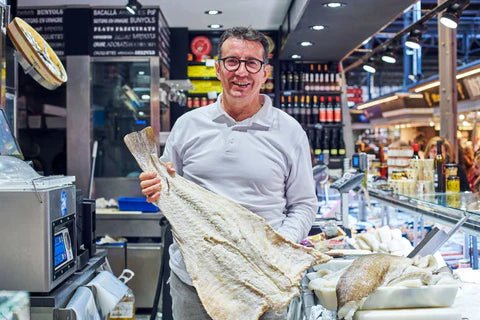
Lalo González Rodríguez — Mercat del Ninot, Barcelona. 30 years working with seafood products. We publish open tastings, without sponsorships. If you think a relevant origin is missing from this comparison (Portugal, Tunisia, Japan) please write to us: we will add it.