

Summary: Canned sardines seem like a simple product until you study them: then you discover there's a huge world between a supermarket can of small sardines and a quality artisanal preserve. At Bacalalo, we've been working with the best seafood preserves since 1990 in Barcelona's Mercat del Ninot, and sardines and small sardines are one of the products that generate the most questions. What's the difference between sardines and small sardines? Does the oil matter that much? Why do some cans cost €3 and others €20?
This guide answers all these questions and helps you make better decisions the next time you choose a can.
Sardines vs. Small Sardines: The Difference That Matters
In the canned goods market, two terms often cause confusion:
Canned Sardines
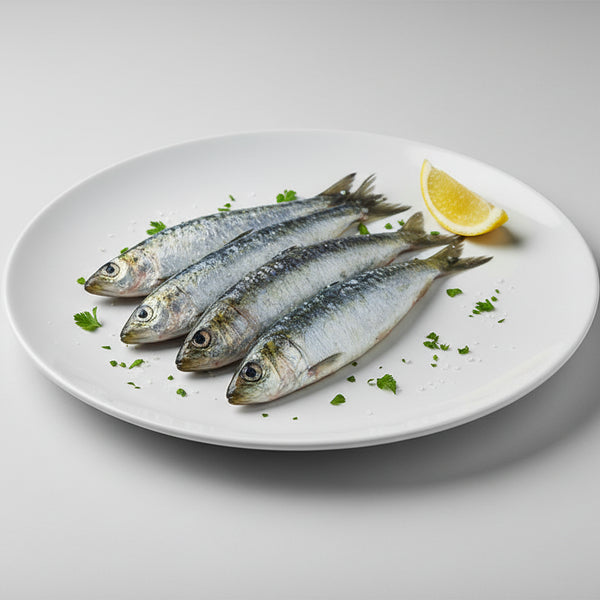
Canned sardines are mature specimens of the species Sardina pilchardus, with a minimum size usually above 11 cm. They are larger, fattier (fat equals flavor), have a more pronounced taste, and a firmer texture.
Classic sardines in olive oil—those eaten directly with bread—are typically of this size. They are a product that improves with time: a well-made can of sardines gets better with years of maturation, just like wine.
Canned Small Sardines
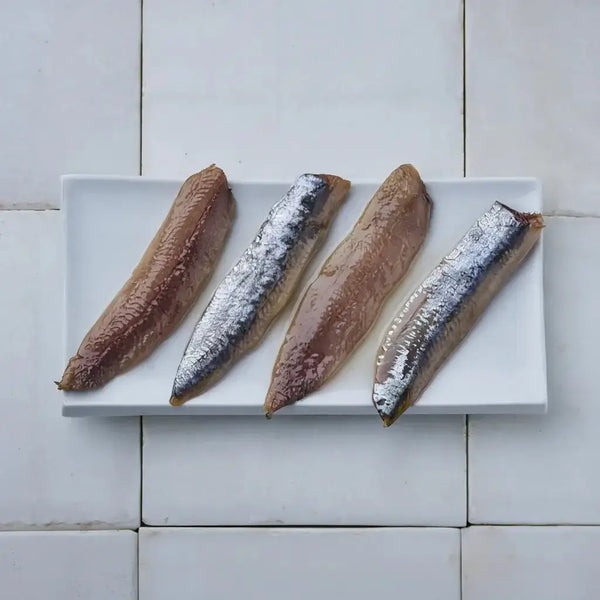
Small sardines are smaller sardines, generally caught before full maturity. The size is usually below 11 cm, although exact calibers vary by manufacturer.
Small sardines have a more delicate texture and a milder flavor. They are perfect for tapas, for those who don't like the intense flavor of adult sardines, and for preparations where the fish is part of an ensemble.
Sardine and Small Sardine Sizes
On artisanal preserve labels, you'll find references to the size expressed as "number of pieces per kg":
| Designation | Pieces per kg | Approximate Size |
|---|---|---|
| Large Sardines | 10-20 per kg | 15-20 cm |
| Medium Sardines | 20-40 per kg | 11-15 cm |
| Small Sardines | 40-80 per kg | 7-11 cm |
| Tiny Small Sardines | 80-120 per kg | 5-7 cm |
Olive Oil vs. Sunflower Oil: Yes, It Matters a Lot
The covering liquid in which sardines or small sardines are preserved is not a minor detail: it affects the flavor, texture, and nutritional quality of the final product.
Sardines in Extra Virgin Olive Oil
Olive oil adds its own nuances to the fish during the canning maturation process. The result is a more complex product with a rounder and deeper flavor. Furthermore, the olive oil itself becomes an ingredient: perfectly suitable for dressing a salad or dipping bread.
Extra virgin olive oil in canned sardines is also the vehicle for the fish's omega-3s: the fat from the olive and the fish nutritionally complement each other.
Sardines in Sunflower Oil
Sunflower oil is neutral. It doesn't add its own flavor, which makes sense if the goal is to let the fish shine without interference. However, sunflower oil is more prone to oxidation, which can affect the sardine's flavor after months of preservation.
Good quality artisanal small sardines in sunflower oil are perfectly valid, but they don't have the depth of those prepared in olive oil.
Other Coverings
- Escabeche (Pickled): Sardines marinated in an acidic liquid (vinegar, lemon) with spices. A very different flavor from sardines in oil, more vibrant and refreshing.
- Tomato Sauce: Less common for small sardines, more typical for large sardines.
- Olive Oil with Lemon or Herbs: Gourmet preparations that add aromatics to the oil.
Why Canned Sardines Improve with Time
One of the most fascinating characteristics of quality canned sardines and small sardines is that they improve with time, which is unusual for food products.
During the first few months after canning, the sardines are in their most "raw" state. The fish, oil, and cooking juices have not yet fully integrated. The flavor may be more direct and less rounded.
After a year of maturation in the can, the flavors integrate, the texture becomes smoother, and the whole gains complexity. The best artisanal sardine preserves are usually recommended with a minimum of 2-3 years of maturation, and some "vintage" collections are marketed with 10-15 years.
This is one of the main arguments for investing in artisanal preserves: they enhance the experience the longer you wait.
Canned Small Sardines and Sardines at Bacalalo: artisanal selection of the best preserves from the Spanish and Portuguese coasts. From Mercat del Ninot in Barcelona. See preserves in our store
Related Products from Bacalalo


Recommended Products

Fresh Coastal Sardines - 4 Piece Pack | Fresh F...
€2.95

Whole Gourmet Extra Tuna Mojama Central Loin Ar...
€95.00

Cockles in Brine 30/40 Pieces - 111g | BayMar E...
€7.95

Bonito del Norte Loins in Olive Oil Glass Jar -...
€13.95
Refrigerated shipping 24-48h throughout the Peninsula
How to Read a Canned Small Sardine Label
A correct label tells you everything you need to know about the product:
What should appear:
- Product name: "Small sardines in extra virgin olive oil" — must specify the oil.
- Species: Sardina pilchardus (European sardine). Other species like Sprattus sprattus (sprat) are cheaper and have a different flavor.
- Catch area: FAO 27 is the Northeast Atlantic (Galicia, Cantabrian Sea, Portugal). FAO 34 is the Central-East Atlantic (Morocco, Mauritania) — both are valid, but the flavor profile is distinct.
- Size: number of pieces per kg.
- Production method: "artisanal" or "handcrafted production" indicates a manual process instead of industrial.
- Production date or batch: allows calculating the product's maturation.
Quality signals:
- Extra virgin olive oil (not just "olive oil")
- Caught in the North Atlantic (Galicia, Cantabrian Sea)
- Size indicated on the label
- Artisanal production
Warning signs:
- "Vegetable oil" without specifying which one
- No information on species or catch area
- No visible production date
The Best Origins for Canned Sardines
Galicia
Galicia is the heart of the Spanish canning industry and one of the best origins in the world for canned sardines. The Galician rías produce a fatty and flavorful sardine thanks to the cold currents of the North Atlantic and the abundance of plankton. Brands like Jealsa, Conservas Ortiz (better known for its anchovies), Paco Lafuente, or artisanal preserves from O Grove or Cambados are benchmarks.
Cantabrian Sea
The Cantabrian Sea shares the quality of the Galician Atlantic with slight differences in profile. Cantabrian sardines are particularly appreciated when combined with the canning technology of the Basque and Cantabrian regions.
Portugal
Portugal has a canning tradition as strong as Spain's, with its own visual and cultural identity (the illustrated Lisbon-style cans are iconic). Portuguese sardines caught off the Atlantic coast of Setúbal or the Algarve are excellent, with a lighter profile than Galician ones.
Morocco and Mauritania
80% of industrial sardines on the market come from the Central-East Atlantic (Morocco, Mauritania). They are not necessarily of worse quality, but the flavor profile is different: less fat, milder taste. They are the basis of most supermarket brands.
Recipes with Canned Small Sardines
Small Sardine Toast with Butter and Pickles
The simplest and most perfect way to enjoy good small sardines.
Ingredients (4 tapas):- 1 can of small sardines in olive oil (artisanal quality)
- Toasted rye or sourdough bread
- Good quality butter at room temperature
- Sliced pickled gherkins
- Fresh chives or chervil
- Toast the bread until crisp but not too much.
- Spread a generous layer of butter.
- Place 2-3 small sardines on top.
- Add thinly sliced gherkins.
- Finish with fresh herbs and a drizzle of oil from the can.
The oil from the can is liquid gold: never throw it away.
Small Sardine, Roasted Pepper, and Egg Salad
A complete dish where small sardines act as the main protein.
Ingredients (4 servings):- 2 cans of small sardines in olive oil
- 4 roasted red peppers (or quality canned)
- 4 hard-boiled eggs
- Black olives
- Sliced red onion
- Olive oil, Sherry vinegar, salt
- Arrange the roasted peppers in strips on a platter.
- Add the quartered hard-boiled eggs, olives, and onion.
- Place the small sardines on top.
- Dress with the oil from the can + a splash of Sherry vinegar.
- Serve with crusty bread.
Pasta with Small Sardines, Garlic, and Chili
A quick pasta dish with intense, Mediterranean flavor.
Ingredients (4 servings):- 2 cans of small sardines in olive oil
- 400 g spaghetti or linguine
- 4 cloves of sliced garlic
- 1-2 dried chilies
- Fresh parsley
- Lemon
- Cook pasta al dente.
- In a large pan, heat the oil from the cans with garlic and chili over low heat.
- When the garlic begins to brown, add the small sardines and lightly flake them.
- Add the pasta with a little cooking water.
- Sauté for 2 minutes. Serve with parsley and lemon zest.
Small Sardine Fritters
A crispy tapa that transforms small sardines into a festive bite.
Ingredients (20-25 fritters):- 2 cans of small sardines in olive oil, drained
- 150 g flour
- 1 teaspoon baking powder
- 150 ml cold sparkling water
- 1 egg
- Salt, pepper, parsley
- Oil for frying
- Mix flour, baking powder, egg, and sparkling water until a smooth batter is formed.
- Add the flaked small sardines and parsley.
- Fry spoonfuls of batter in hot oil (180°C) until golden.
- Drain on paper. Serve with aioli or lemon mayonnaise.
Frequently Asked Questions About Canned Sardines
1. What is the difference between sardines and sardinillas (sprat/small sardines) in a can?
The size. Sardinillas are smaller (less than 11 cm) and more delicate; sardines are adult specimens (more than 11 cm), fattier, and have a more intense flavor.2. Do canned sardines improve with time?
Yes. Sardines in artisanal quality olive oil improve with aging: after a year, the flavors integrate and the texture softens. Some brands market "vintage" sardines aged 5-10 years.3. Are canned sardines healthy?
Very much so. They are rich in omega-3, high-quality proteins, vitamin D, B12, calcium (in the bones, which are completely edible), and iodine. They are one of the most nutritious canned fish.4. Can I eat the bones of canned sardines?
Yes, and it is recommended. The bones of canned sardines are completely softened by the sterilization process. They are an excellent source of calcium.5. Can the oil from canned sardines be used?
Absolutely. The oil from a good can of sardines in olive oil collects all the fish juices during maturation. It's perfect for dressing, dipping bread, or using in sauces.6. Why do some sardinillas cost €2 and others €15?
Due to the quality of the fish, its origin, the production process (artisanal vs. industrial), the oil used, and the aging. Price differences reflect real differences in the product.7. How long does an unopened can of sardines last?
Most canned goods have a shelf life of 4-5 years. However, a well-made preserve in olive oil can remain in perfect condition for 10-15 years or more in a cool, dark place.8. How long does an opened can of sardines last?
Once opened, transfer the contents to an airtight glass container and refrigerate. Consume within 2-3 days.9. Is Cantabrian sardine better than Moroccan sardine?
Not necessarily "better," but different. The Atlantic sardine from the north (Galicia, Cantabrian Sea, Portugal) has more fat and a more intense flavor. Moroccan sardine is milder. It depends on personal preference.10. Are pickled sardinillas the same as those in oil?
No. Escabeche (pickle) is an acidic preparation (vinegar, spices) that gives a completely different flavor. Pickled sardines are more vibrant and tart; those in oil are milder and more unctuous.Conclusion
The difference between an industrial sardinilla and an artisanal one is the same as between a table wine and a protected designation of origin wine: same basic product, but different worlds in terms of quality and experience.
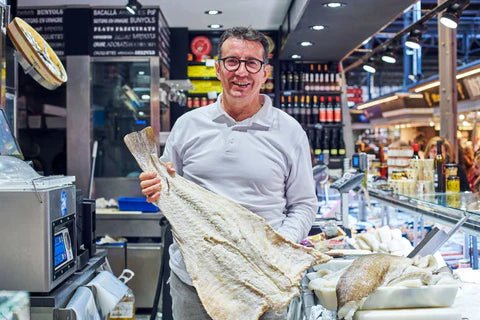
At Bacalalo, we select canned sardines and sardinillas using the same criteria we apply to all our products: controlled origin, artisanal production, and quality that is evident from the very first bite. We have been in the Mercat del Ninot in Barcelona since 1990 and know the producers firsthand.
Discover our selection of canned sardines and sardinillas at Bacalalo
Discover more