Summary: Curing with salt is one of humanity's oldest preservation techniques, predating writing, pottery, and likely agriculture. For millennia, salt was the only method available to preserve fish beyond a few hours after its capture, and from this necessity, a culinary universe was born that today includes some of the most prized and complex products of Mediterranean and Atlantic cuisine.
At Bacalalo, we have been working with the finest cured seafood from the Mercat del Ninot in Barcelona since 1990. In this guide, we explore this universe from top to bottom: from the history of salt curing to its star products, covering the difference between artisanal and industrial processes, and concluding with practical tips for choosing and preserving each product.
Contents
- History of Salt Curing: The Technique That Changed the World
- How Salt Curing Works: The Science Behind the Tradition
- The Great Salt-Cured Seafood Products
- Smoking: Salt Curing's Sister Technique
- Artisanal vs. Industrial Salt Curing: The Differences That Matter
- How to Preserve and Enjoy Cured Products
History of Salt Curing: The Technique That Changed the World
Salt curing was born from an observation: animals that died near the sea and were covered in sea salt did not decompose in the same way as those that died inland. Humans, being observant and pragmatic, copied the mechanism.
Mediterranean Antiquity
The Phoenicians traded salt-cured fish (mainly tuna and sardines) throughout the Mediterranean basin over 3,000 years ago. Carthage was one of the great centers for the production and distribution of cured fish in antiquity.
The Romans took salt curing to another level with the production of garum: a fermented fish sauce preserved in salt that was the universal condiment of Roman cuisine, the equivalent of our soy sauce, present in almost all dishes. Roman garum factories have been found from Hispania (Spain) to North Africa.
Cod and the Middle Ages
Salted cod transformed the history of northern Europe. Vikings carried dried and salted cod on their exploration ships from the 9th century onwards. The Basques, who discovered the cod banks of the Grand Banks of Newfoundland before Columbus reached America, built one of the greatest fishing industries in history on the trade of cured cod.
For centuries, salted cod was Lenten food, the fuel of wars, the product that financed explorations, and the dietary staple of the poor throughout Europe. "Cod goes to Victory" is not just a saying: the supply of salted cod was a decisive logistical factor in numerous military campaigns.
Salt Curing in the Iberian Peninsula
Spain and Portugal have a particularly intense relationship with cured seafood. Portugal is the largest per capita consumer of cod in the world. Spain has a tradition of Mediterranean cured products —mojama (cured tuna loin), roe, hake roe, mullet roe— that is a first-rate gastronomic heritage.
How Salt Curing Works: The Science Behind the Tradition
The principle of salt curing is osmosis: salt, in contact with the surface of the fish, draws water from the inside to the outside. At the same time, salt penetrates the muscle tissue.
This double process has two effects:- Dehydration: by reducing water content, the growth of bacteria that need moisture to survive is inhibited
- Chemical modification: salt and the fish's own enzymes, in a low-water environment, transform proteins and create new flavor compounds that do not exist in fresh fish
The result is a product with a more concentrated flavor, modified texture, and a greatly extended shelf life compared to fresh fish.
The Difference Between Salt Curing and Fermentation
Salt curing and fermentation are related but distinct techniques:
- Pure salt curing: salt almost completely inhibits microbial activity. The result is a stable product with concentrated flavor but without the complexity added by fermentation
- Salt curing-fermentation: with less salt and more time, the fish's lactic acid bacteria remain active and produce lactic acid and other compounds. The result is more complex, with acidic and umami notes. Roman garum was essentially a salt curing-fermentation. Cantabrian anchovies fall into this category
Cantabrian anchovies, for example, spend up to 18 months in salt at controlled temperatures: during this time, naturally occurring bacteria produce the compounds that give quality anchovies their incomparable flavor.
The Great Salt-Cured Seafood Products
Salted Cod (Gadus morhua)
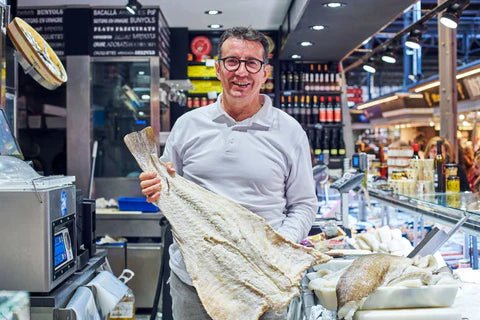
The undisputed king of Mediterranean and Atlantic salt curing. North Atlantic cod cured in salt for months is the basis of more than a thousand recipes in Spain, Portugal, Italy, Croatia, and Greece. At Bacalalo, it has been our flagship product since 1990.
Well-cured salted cod has a deep, iodized, and complex flavor that has no equivalent in any other cured fish. It requires prior desalting (24-48 hours) before use.
Reference origins: Norway, Iceland, Faroe Islands
Mojama (Salt-Cured Tuna Loin)
Mojama —a name of Arabic origin, like many Andalusian gastronomic products— is the loin of tuna (Thunnus thynnus) cured in salt and then dried in the sun and wind for weeks. The result is a product with a firm, almost leathery texture, an intense dark red color, and a deep, concentrated flavor that is the prototype of Mediterranean umami.
The best mojama comes from Isla Cristina (Huelva) and Barbate (Cádiz), made with tuna caught in the traditional almadraba (trap fishery) of the Strait of Gibraltar.
How to eat it: in thin slices like ham, with extra virgin olive oil and almonds. A glass of manzanilla sherry is the perfect accompaniment.
Tuna Roe (Mediterranean Bottarga)
Tuna roe (the female gonads of bluefin tuna cured in salt) is the Mediterranean equivalent of Italian bottarga. Cartagena (Murcia) and La Escala (Girona) are the major Spanish production centers.
Cured tuna roe has a firm texture, a concentrated and intense flavor, rich in umami, with a long and persistent aftertaste. It is used grated over pasta, in thin slices on toast, or crumbled into salads.
Variant: mullet roe (Mugil cephalus) is similar but has a slightly milder flavor and a more affordable price. It is the best-known Italian bottarga.
Cantabrian Anchovies
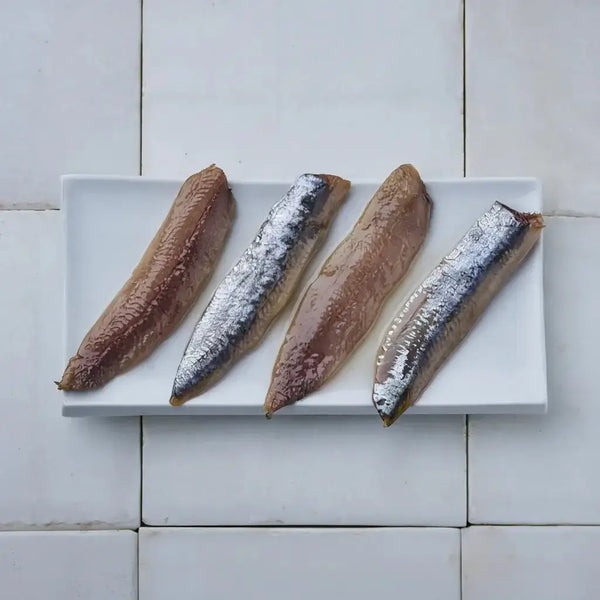
Technically a salt curing-fermentation rather than pure salt curing. Anchovies (Engraulis encrasicolus) caught in the Cantabrian Sea between April and June are cured in salt for 12-18 months, then cleaned, hand-filleted, and preserved in olive oil.
The best Cantabrian anchovies (Santoña, Laredo, Bermeo) are one of Spain's great seafood products: intense flavor, smooth texture, with a complexity that bears no resemblance to industrial anchovies.
Bacalà Mantecato and Cod Mojama
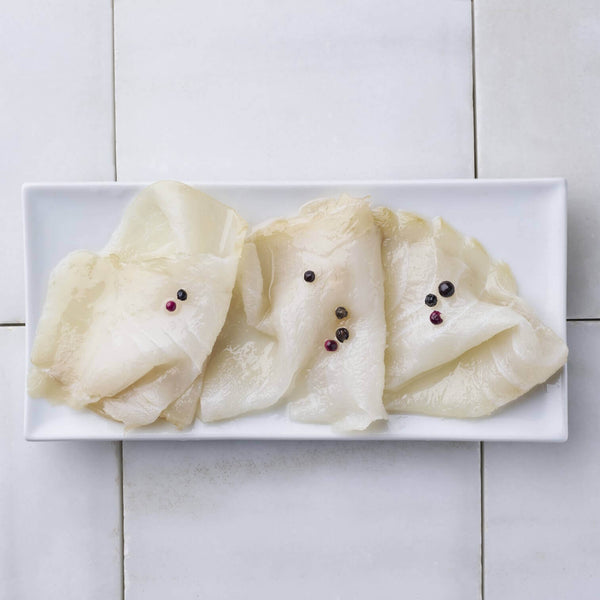
Products made from dried and salted cod that deserve mention in any guide to cured products: Venetian bacalà mantecato (Italian brandade with whipped olive oil) and cod mojama (cod loin cured and dried in the style of tuna mojama).
Smoked and Marinated Herring
Herring (Clupea harengus) has its own preservation tradition: smoked, brined, pickled. Rollmops (herring rolled in vinegar with gherkin) and hareng saur (smoked herring) are Northern European classics.
Cured and Smoked Products at Bacalalo: artisanal selection of the best seafood products, from North Atlantic cod to the finest Mediterranean cured items. From the Mercat del Ninot in Barcelona. View our selection of cured products
Related Products from Bacalalo


Recommended Products

Supreme Gourmet Smoked Salmon Domínguez Slice...
8,90 €

Whole Smoked Salmon Domínguez Unprecut -...
145,00 €

Smooth and buttery texture smoked salmon loins
24,90 €

Sliced Smoked Salmon Piece Celebration Forma...
89,95 €
Refrigerated shipping 24-48h throughout the Peninsula
Smoking: Salt Curing's Sister Technique
Smoking arose from the same need as salt curing: to preserve fish beyond the hours following its capture. Unlike salt, the preservation mechanism of smoke is twofold: superficial dehydration (smoke dries the fish's surface) and the antimicrobial action of phenolic compounds present in the smoke.
Smoking never replaced salt curing: both techniques have coexisted since antiquity and are frequently combined (smoked cod begins with a light salting).
Star Products of Marine Smoking
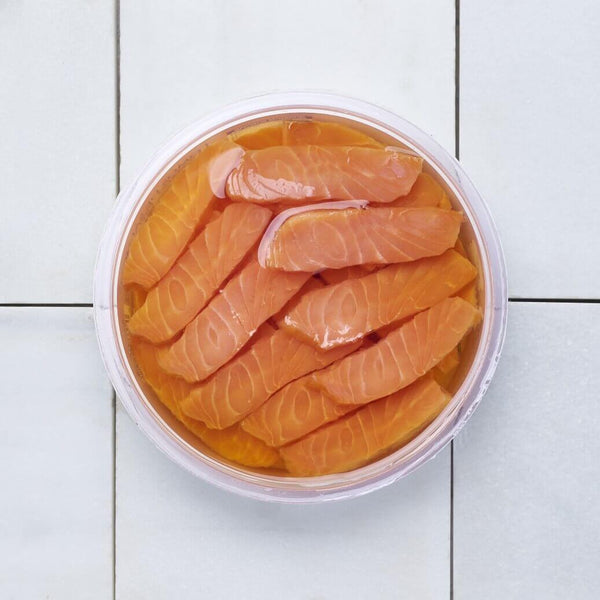
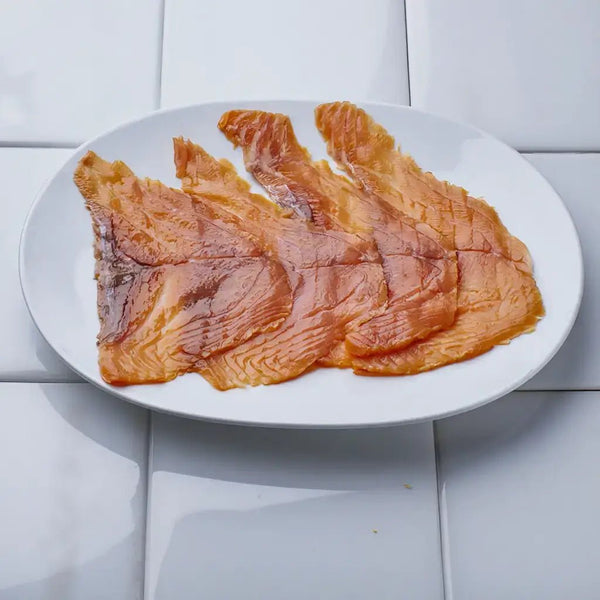
Smoked salmon: the most globally known. Cold-smoked salmon (Salmo salar) is the benchmark for smoked fish in Western Europe.
Smoked cod: a lesser-known product in Spain but with a great tradition in Northern Europe and the United Kingdom. The two varieties (cold and hot smoked) have very different culinary uses.
Smoked eel: a nearly extinct product in Spanish gastronomy but with a great tradition in the Netherlands and Germany. Smoked eel (Anguilla anguilla) has an extremely intense and fatty flavor.
Smoked trout: a more accessible variant than salmon, with a milder flavor profile. Common in European trout farms.
Smoked herring: already mentioned. Smoked herring is the basis of English kippers and a product of great tradition throughout Northern Europe.
Artisanal vs. Industrial Salt Curing: The Differences That Matter
Artisanal Process
- Manual selection: each piece is individually selected before curing
- Artisanal sea salt: the salt used in the best artisanal cured products is unrefined sea salt, with its own minerals that contribute to the final flavor
- Time respected: artisanal curing does not shorten times. Santoña anchovies spend 12-18 months in salt because this time is necessary for flavor development
- Manual control of salt points and texture: each batch is individually tested and adjusted
- Limited quantities: artisanal production has a natural ceiling that ensures attention to detail
Industrial Process
- Automated selection: selection criteria are visual and volumetric, not organoleptic
- Refined salt: industrial salt is purer in sodium chloride but poorer in minerals and flavor
- Accelerated times: industry uses methods to shorten curing times: controlled temperatures, higher concentration brines, additives
- Uniformity: the industrial objective is product uniformity, not the excellence of each piece
The conclusion is not that industrial products are necessarily bad: they are different. But the difference in flavor between an artisanal anchovy from Santoña and an industrial one from the Mediterranean is as clear as between a vintage wine and a table wine.
How to Preserve and Enjoy Cured Products
Preserving Cured Products at Home
Salted cod: in a cool, dark place (cellar, pantry). Does not need refrigeration until desalted. Once desalted, refrigerate and consume within 3-5 days.
Anchovies in oil: once opened, cover completely with oil and refrigerate. Consume within 7-10 days.
Mojama: wrapped in kitchen paper (not plastic, which suffocates it) in the refrigerator. Shelf life: weeks at cool temperature, months if perfectly cured.
Whole tuna roe: wrapped in aluminum foil in the refrigerator. Once cut, cover the cut surface with cling film and refrigerate.
Smoked cod: in an airtight container, refrigerated. Consume according to the date on the package.
Serving and Tasting
Salted products need time to express themselves at the right temperature:
- Take anchovies out of the fridge 15-20 minutes before serving
- Mojama slices best at room temperature (it comes out thinner, with less breakage)
- Cold smoked cod gains nuances at 10°C, not straight from the fridge
Pairings
| Product | Ideal Pairing |
|---|---|
| Cantabrian Anchovies | Manzanilla or Fino sherry, Txakoli, Cava Brut |
| Tuna Mojama | Fino de Jerez, Manzanilla, Amontillado |
| Tuna Roe | Albariño, Verdejo, dry white wines with acidity |
| Smoked Cod | Albariño, dry Riesling, Cava |
| Salted Cod (cooked) | Galician white wine, Garnatxa blanca |
Frequently Asked Questions about Salting and Smoking
1. What exactly is salting?
A preservation technique that uses salt to extract moisture from fish and inhibit bacterial growth. The result is a product with concentrated flavor and a long shelf life.2. Are anchovies a salted product?
Yes, although with an additional fermentation element. Cantabrian anchovies spend 12-18 months in salt, during which naturally present bacteria produce compounds that give the product its characteristic flavor.3. What is the difference between salting and smoking?
They are distinct techniques, though often combined. Salting uses salt; smoking uses smoke compounds (and the dehydration it produces). Many products are first salt-cured and then smoked.4. Can I make mojama at home?
It's possible but requires the right temperature and ventilation conditions. The homemade mojama process with tuna or bonito loins is a tradition in some coastal areas. You need salt, time (2-3 weeks), and a place with good ventilation and a consistently cool temperature.5. Is tuna roe the same as caviar?
No. Caviar is specifically sturgeon roe. Tuna roe is a different product, with a distinct flavor profile and price. Both are luxury products but are not directly comparable.6. What is bottarga?
Bottarga is the Italian name for salted fish roe (mainly mullet or tuna). It is the Italian equivalent of Spanish mullet roe. It has similar names in Greece (avgotaraho), Turkey, and other Mediterranean countries.7. Where can I buy artisanal salted products online?
In specialized shops that guarantee the origin and artisanal process of the product. Always look for traceability: species, origin, producer, and production date.8. Are salted products healthy?
They are rich in protein and, depending on the product, in omega-3 (anchovies, smoked products). The main caution is the high sodium content. For people with hypertension or salt restriction, they should be consumed in moderation.9. How long does unopened mojama last?
Well-made mojama can last for months, even over a year, in a cool, dark place. Once cut, consume within 2-4 weeks, kept in the fridge wrapped in paper.10. What is mullet salting?
Mullet (Mugil cephalus) is used for the production of two major Mediterranean salted products: mullet roe (bottarga) and salt-cured mullet (equivalent to a white fish mojama). Both are high-quality products with a long tradition in Murcia and the Valencian Community.🛒 Products mentioned in this article
⭐ 4.9/5 · 24-48h chilled delivery · Since 1990 at Mercat del Ninot
Conclusion
Salting and smoking are the bridge between sea and table that humanity has built for millennia. They are not outdated techniques or secondary products: they are the result of intelligence and ingenuity applied to the best available ingredient, with the sole objective of preserving it and transforming it into something more.
From North Atlantic cod to almadraba tuna mojama, and Santoña anchovies to Murcia mullet roe, the universe of Spanish and Mediterranean salted fish is one of the richest gastronomic heritages in the world.
At Bacalalo, from Barcelona's Mercat del Ninot, we have been the bridge between this heritage and our customers' tables since 1990.
Discover our selection of salted and smoked products at Bacalalo — delivery throughout the Peninsula
Discover more