Anchovy sauce is one of those kitchen essentials that, once you discover it, you won't want to let go. With a handful of anchovy fillets in oil, garlic, fat (oil or butter), and little else, you have a base capable of transforming a piece of meat, a pasta dish, or an unpretentious salad into something with a restaurant-quality flavor. It's not a single recipe: it's a versatile sauce that changes in body and texture depending on how you use it.
In this guide, we explain why anchovy makes such umami-rich sauces, how to prepare a basic anchovy sauce from which all versions stem, and three specific applications that cover almost any meal: anchovy sauce for meat, anchovy sauce for pasta, and anchovy sauce for salad. We conclude with tips, storage, and frequently asked questions.
Why anchovy makes umami-rich sauces
The secret lies in umami, that savory and deep fifth taste we associate with meat broth, aged Parmesan, or a long-simmered sauce. Salt-cured anchovy is one of the highest concentrations of umami in the pantry: during its maturation, it generates glutamate and nucleotides that, on the palate, are perceived as depth and "oomph" without tasting fishy.
That's why an anchovy fillet dissolved in hot oil doesn't add a preserved taste: it adds saline and savory depth. When that anchovy melts into a sauce, it amplifies the flavor of the other ingredients—the meat, the tomato, the cheese in the dressing—instead of competing with them. This is the same reason why many chefs add "a secret anchovy" to a meat stew or a tomato sauce: no one identifies it, but everyone notices that the dish tastes better.
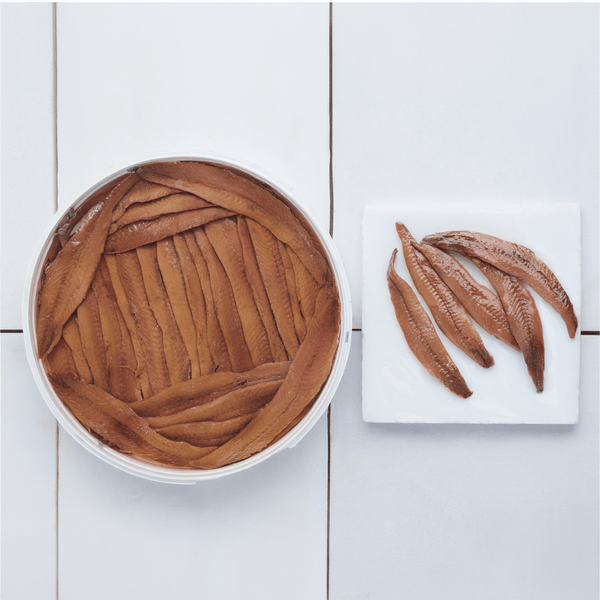
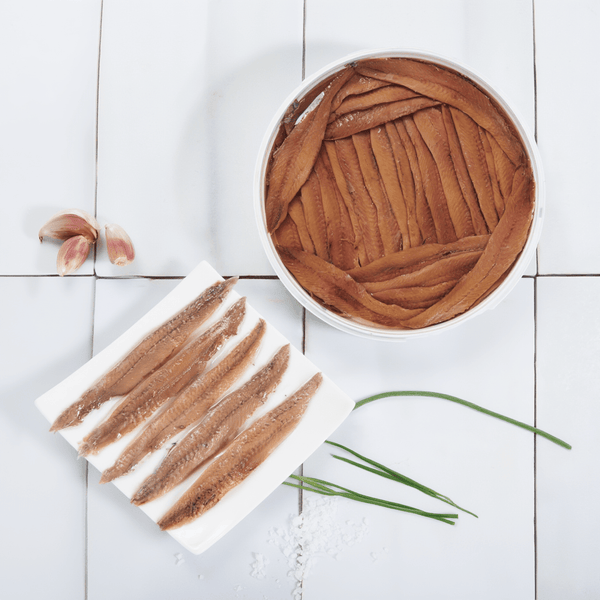
The practical consequence is twofold. First: you almost never need to salt an anchovy sauce, because the fillet itself already provides the salt. Second: the quality of the anchovy makes a difference. A well-cured Cantabrian anchovy has an unctuous texture and balanced saltiness; cheap ones are often dry and very salty, and unbalance the dish. If you want to choose well, in our Cantabrian anchovy collection you'll find selected sizes and brands for cooking and for charcuterie boards.
The basic anchovy sauce (everything starts here)
Before the three applications, it's worth mastering the base. It's a very simple emulsion of garlic and anchovy in fat that is then adapted to each use. This amount yields 4 servings of pasta or enough to dress a large salad.
Ingredients for the basic sauce
- 8 anchovy fillets in olive oil
- 2 cloves of garlic
- 6 tablespoons of extra virgin olive oil (includes some of the oil from the can)
- 1 tablespoon of lemon juice or mild vinegar
- Freshly ground black pepper
- Optional: a pinch of chili flakes and a little chopped parsley
How to prepare it
- Slice the garlic thinly. Heat the olive oil in a small skillet over medium-low heat and slowly brown the garlic, making sure it doesn't burn (it would become bitter).
- Lower the heat, add the drained anchovies, and mash them with a wooden spoon until they completely dissolve in the oil and form a flavorful paste.
- Remove from heat, add the lemon juice or vinegar and pepper, and stir to combine. Taste: it almost certainly doesn't need salt.
- You now have the base. Depending on the use, you'll leave it as is (for pasta), combine it with butter (for meat), or extend it with more oil and acid (for salad).
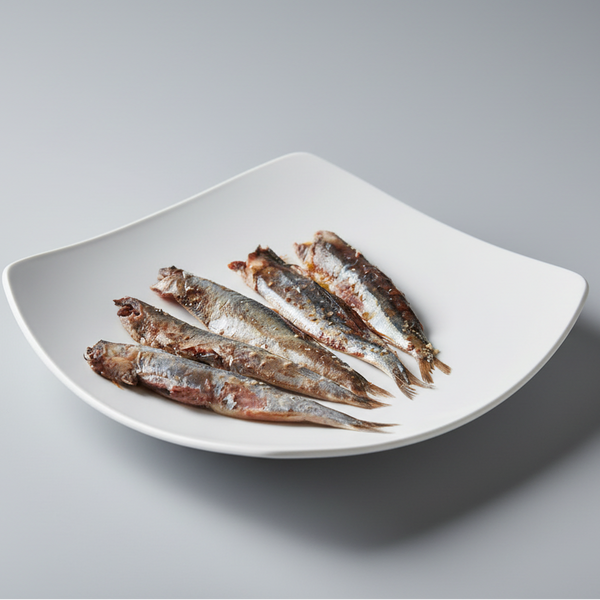
Always use anchovies in oil, the already cured fillets that come in a can or jar, ready to eat. Salt-cured anchovies without desalting won't work (they would be too salty), nor will marinated anchovies (the vinegar breaks the emulsion and they don't melt the same way).
Anchovy sauce for meat
For meat, the anchovy base calls for body and richness: here, the best fat is butter, which envelops the hot meat and melts over it. There are two classics worth knowing.
Anchovy butter. This is the quickest and most elegant version. Mix 80g of softened butter with 4-5 finely chopped anchovy fillets, a little grated garlic, lemon zest, and parsley. Form a cylinder with plastic wrap, chill, and slice. A slice on a freshly cooked steak, tenderloin, or grilled fish melts instantly and creates an express sauce full of umami. It's the simplest way to "elevate" a dish without making a sauce on the spot.
Bagna cauda. This is Piedmont's great anchovy sauce: a warm emulsion of anchovy, garlic, and traditionally, butter and oil, sometimes with a touch of cream to soften it. It's served hot as a fondue for dipping raw and cooked vegetables, but it also works wonderfully as a sauce for grilled red meats or roasted vegetables. To make it, start with the basic sauce, add a knob of butter, and cook it very gently for 10 minutes until it's silky; if you want it finer, add a tablespoon of cream at the end.
Tips for meat: add the sauce off the heat or when plating, do not boil it with the meat, so that the anchovy doesn't lose its profile. And only adjust the salt at the end: with butter and anchovy together, the saltiness rises quickly.
Anchovy sauce for pasta
For pasta, anchovy sauce works as a quick emulsion: it doesn't need long reduction, it thickens in the pan with a little cooking water. It's the most immediate version of all, ready in the time it takes for the pasta to cook.
Cook the pasta al dente and reserve a ladleful of the cooking water. Meanwhile, prepare the basic sauce in a large skillet. Drain the pasta, transfer it to the skillet with the anchovy base, and sauté for a minute, adding a splash of the cooking water: the starch from the water emulsifies the oil and anchovy, and the sauce becomes smooth and silky, coating every strand. Finish with parsley, a drizzle of raw oil, and, if desired, grated Parmesan or Pecorino.
With a chili pepper and some toasted breadcrumbs, you have the base for spaghetti aglio, olio e acciughe. If you prefer a tomato-based sauce and the arrabbiata and puttanesca variations, we develop it in the recipe for pasta with anchovies and tomato, which starts from the same umami idea but with tomato as the star.
Golden rule for pasta: the sauce should not taste fishy. If it does, the anchovy hasn't fully dissolved or you've added too much. 2-3 fillets per person are enough to add depth without overpowering the dish.
Anchovy sauce for salad
For salad, anchovy becomes a vinaigrette or creamy dressing: here we're looking for more acidity and the sauce is served cold. The reference is Caesar dressing, where anchovy is one of the secret ingredients that gives it that savory depth.
Simple anchovy vinaigrette. Start with the basic sauce cold (without having heated it excessively), extend it with more olive oil, and increase the acid: one part sherry vinegar or lemon to three parts oil, with a pinch of mustard to emulsify. This creates an intense vinaigrette ideal for escarole, endives, tomato, or boiled potato. It's the same logic as asparagus with anchovy vinaigrette.
Caesar-style dressing. For something creamier, blend 4 anchovy fillets with one egg yolk (or a tablespoon of mayonnaise), a clove of garlic, a tablespoon of mustard, lemon juice, grated Parmesan, and olive oil in a stream until emulsified. This is the dressing for Caesar salad, but it also works over roasted cabbage, grilled chicken, or a bitter greens salad.
If you want to see anchovy as the whole star in a classic salad, the Niçoise salad with anchovies is the perfect example of how they combine with egg, green beans, and potato.
Tips for making any anchovy sauce turn out well
- Truly dissolve the anchovy. Over low heat and mashing with a spoon until no pieces remain. If there are partially melted fillets, it will taste preserved.
- Don't burn the garlic. Medium-low heat: bitter garlic ruins any anchovy sauce.
- Salt at the end, if at all. Anchovies are already quite salty. Taste before adjusting.
- Use the oil from the can. It's packed with flavor: use it as part of the fat in the sauce.
- Balance with acid. A touch of lemon or vinegar "lifts" the sauce and prevents it from being too heavy, especially in butter-based versions.
- Adjust to the dish: powerful and unctuous for meat, light and emulsified for pasta, acidic for salad.
Storage
The basic anchovy sauce in oil keeps for 4-5 days in the refrigerator in a sealed jar, covered with a thin layer of oil; take it out 10 minutes before use to allow it to regain fluidity. Anchovy butter keeps for a week in the refrigerator and up to 2 months in the freezer in a cylindrical shape: cut off the slice you need and return the rest. Vinaigrettes and Caesar dressing with egg or mayonnaise should be consumed within 1-2 days for food safety. Never leave the sauce at room temperature for more than two hours.
Frequently asked questions
We answer the most common questions about anchovy sauce and its uses.
Does anchovy sauce taste very fishy?
No, if the anchovy dissolves well in the hot fat. When it melts, it loses the fillet taste and leaves only umami and a salty note. Most people don't identify anchovy in the dish, they just notice that it tastes deeper.
Which anchovy should I use for the sauce?
Anchovies in olive oil, the cured fillets from a can or jar. They dissolve in seconds in hot garlic. Do not use salt-cured anchovies without desalting (too much salt) or marinated anchovies (they won't melt and will break the emulsion).
How many anchovies should I use?
As a reference, 2-3 fillets per person for pasta or salad, and 4-5 for a more intense butter or meat sauce. It's better to start with less: you can always add, not take away.
Do I need to add salt to anchovy sauce?
Almost never. Anchovies are already quite salty. Always taste before salting and adjust only at the end if necessary.
What's the difference between the sauce for meat, pasta, and salad?
The base is the same (garlic + anchovy + fat). For meat, it's combined with butter and becomes unctuous; for pasta, it's left as a quick emulsion thickened with cooking water; for salad, it's extended with more oil and acid to turn it into a vinaigrette or creamy dressing.
Can it be prepared in advance?
Yes. The oil-based sauce and anchovy butter can be prepared days in advance (the butter can even be frozen). Vinaigrettes and egg-based dressings are best made fresh and consumed within 1-2 days.