

Legal and Editorial Note: This guide is for informational purposes only. The information regarding origin, quality characteristics, and brands mentioned are general market references. We do not conduct direct commercial comparisons or make unverifiable claims about third parties. Our goal is to help you buy better cod, whether you are our customer or not.
Best Cod Brands: An Honest Guide to Origins and Quality
Summary: At Bacalalo, we have been selecting cod at the Mercat del Ninot in Barcelona since 1990. During that time, we have worked with cod from dozens of origins, suppliers, and processing methods. We have seen trends, discarded entire batches for not meeting our standards, and learned to read cod like a good book: from cover to cover.
This guide is not a ranking of the best brands. It's a guide for you, the consumer, to know what to look for when you're at a counter or shopping online. Because the best cod is not always the most expensive, nor the most famous. It's the one that has been well processed, from the right origin, with the appropriate curing time.
Contents
Why Origin Matters So Much
Cod (Gadus morhua) is primarily fished in the North Atlantic. But not all of the North Atlantic is the same, and subsequent processing makes enormous differences.
Iceland: A Powerhouse of Salted Cod
Iceland is currently the main exporter of salted and cured cod to Spain and Portugal. The reason is simple: cold waters, certified sustainable fishing, and a highly technical processing industry.
Characteristics of Icelandic cod:- Waters between 2°C and 6°C — slow growth, denser flesh
- High proportion of protein per kg of fresh fish
- Thin and uniform skin when well cured
- MSC (Marine Stewardship Council) certifications for most industrial fleets
Icelandic cod is usually processed in Iceland or Portugal (especially in the factories of Aveiro and Viana do Castelo), where it undergoes the salting and curing process that turns it into the dried cod we know.
Points to watch: Low-end Icelandic cod may show excessive residual moisture if the curing process has not been completed properly. Look for pieces with a uniform golden color, not whitish in the center.
Norway: Tradition and Stockfish
Norway has two main products:
- Salted cod (klippfisk): Similar to Icelandic, but with a centuries-old tradition. The areas of Ålesund and Kristiansund are world references. Norwegian klippfisk is associated with longer curing and a slightly more pronounced flavor.
- Dried unsalted cod (stockfish or bacalà): A different product from salted cod. It is air-dried in the Lofoten Islands between February and May. It is the origin of Venetian bacalà alla vicentina and many Italian preparations. In Spain, it is less common but there is specialized demand.
For the Spanish market, Norwegian salted cod is the most appreciated by enthusiasts looking for a more pronounced flavor and a firmer texture after desalting.
Cod from the Faroe Islands
The Faroe Islands (Denmark) have gained increasing prestige. Artisan fishing with hooks (not trawling), which prevents stress to the fish and improves meat quality. Smaller scale than Iceland or Norway, but very consistent quality.
Ideal for: consumers looking for maximum traceability and certified artisan fishing. The price is usually slightly higher.
Cod from the Canadian and Russian North Atlantic
There are batches of cod from Newfoundland (Canada) and the Barents Sea (Russia). Quality varies. Canadian cod can be excellent, but the distribution chain to Spain is usually longer. Russian cod (especially Gadus macrocephalus, a different but similar species) is sometimes sold as cod without strictly being so — legally, it must be labeled differently.
Tip: If the price is very low and the origin is unclear, ask if it is Gadus morhua (authentic cod) or Gadus macrocephalus (Pacific cod). Both are good fish, but they are different species.
What Brands You'll Find in the Market
We do not create brand rankings or misleading comparisons. What we can tell you is how the sector works:
The Traditional Wholesale Channel
Cod in Spain is mostly distributed through specialized importers-wholesalers. Companies like Bacalaos Alkorta (Basque Country), Giraldo (now in liquidation), and other regional importers buy directly from the source and supply shops and restaurants.
The brand on the final consumer's label is usually that of the wholesaler or distributor, not the Icelandic or Norwegian processor. This is normal and does not imply lower quality.
What you should know: A well-known private label guarantees traceability and consistency, but not necessarily the best price/quality. A traditional market with a direct relationship with importers can offer you the same quality at a better price.
Supermarket Cod
Large supermarket cods have a clear profile:- Competitive price
- Controlled humidity (they are usually at the legal limit of permitted moisture)
- Pre-desalted vacuum-packed: convenient but with variable quality control
- The ripening point is rarely at the level of specialized fishmonger cod
It's not bad cod. It's standard cod for everyday use.
Specialized Fishmongers and Traditional Markets
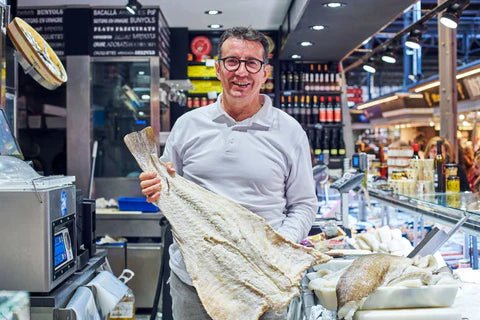
This is where you'll find real differences. A good fishmonger specializing in cod (like Bacalalo in the Mercat del Ninot since 1990) maintains:- Direct or semi-direct relationship with selective importers
- Stock rotation that guarantees the freshness of the cured product
- Home desalting with process control
- Knowledge to recommend the cut and origin according to the dish
Related Products from Bacalalo


Recommended Products

Natural Cod Liver Foie Gras - 120g | Smoked C...
€3.90

CHATKA Wild King Crab 60% Legs 40% Shredded | ...
€95.00

Smoked Cod Carpaccio Artisan Cut | 1 Tray Pac...
€15.90

Dried Cod Cheeks (1 tray) - 500g
€19.95
Refrigerated 24-48h shipping to the entire Peninsula
The Quality Criteria That Really Matter
Beyond the brand, here are the objective parameters that determine the quality of cod:
1. Moisture Content
Salted-dried cod has legal moisture ranges. Premium quality is found in cod with lower residual moisture (more cured), which means:- More concentrated flavor
- Better texture after desalting
- Higher real yield (you pay for protein and flavor, not water)
Excessively moist cod may seem cheaper per kilo, but it has lower yield and flavor.
How to detect it: Gently press the piece. If it gives too much or has soft spots in the center, it has excessive moisture. Well-cured cod is firm and uniform.
2. Ripening Point (Curing)
Salted cod needs a minimum of 3-4 months of curing to develop its complete organoleptic characteristics. Premium cods are cured for 6-9 months.
During curing, the fish's own enzymes work on the proteins, developing complex flavors impossible to achieve with short curing.
How to detect it: Uniform golden color throughout the piece (not raw white), intense but clean characteristic aroma (not ammoniacal), texture that feels firm without being excessively hard.
3. The Salt Used
Traditional sea salt (especially Portuguese and Galician) is associated with superior results in cod curing. Industrial rock salt can work but rarely produces the same organoleptic characteristics.
4. The Cut and Part of the Fish
A mediocre cod cut from the loin can be better than an excellent cod poorly cut. Premium cuts are:
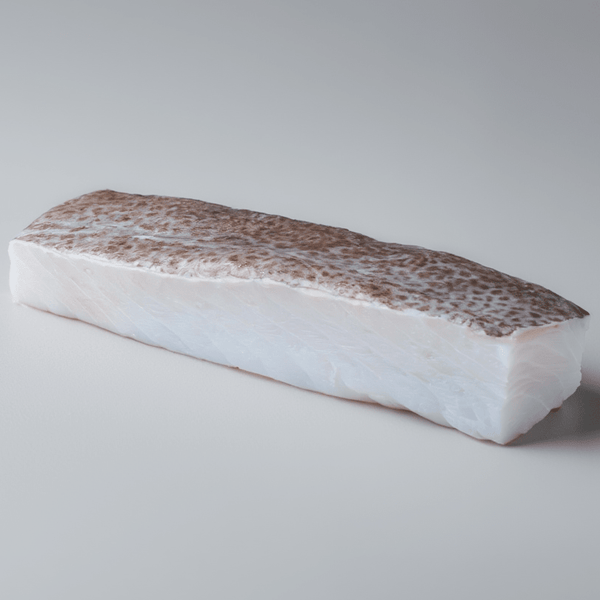
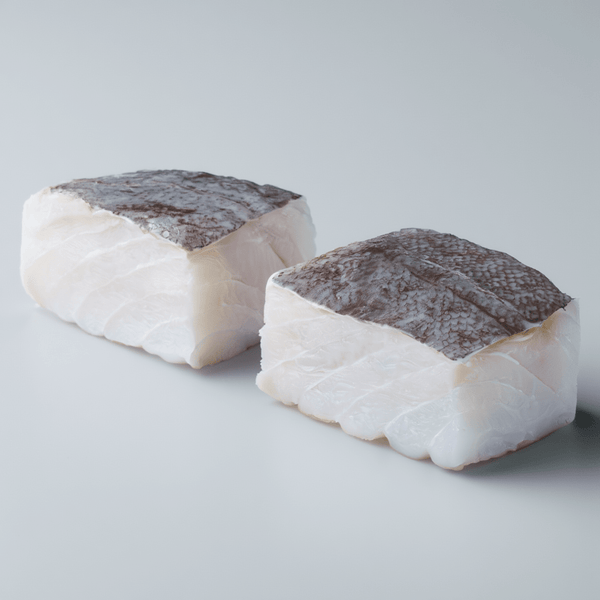
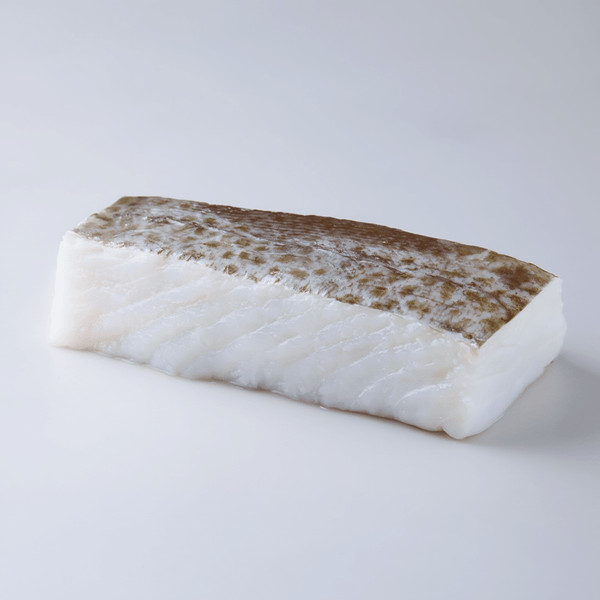
- Upper loin (or center loin): The thickest part, the most valued. Perfect flaking texture.
- Belly: Belly area, fattier, intense flavor. Ideal for pil pil and confit.
- Cheeks: The "cheeks" of the cod. Extreme gelatinousness. For pil pil and stews.
- Snout: Area anterior to the loin. Gelatinous and firm. Excellent for long stews.
- Tail: Less meat, more bones, but excellent flavor for stocks and rice dishes.
5. Desalting: The Step Many Ignore
You can have the best cod in the world and ruin it with poor desalting. The basic rules:
- Cold water (never lukewarm or hot)
- Refrigerator throughout the process (maximum temperature 8°C)
- Water changes every 8 hours at a minimum
- Time according to thickness: thick loin (48-72h), belly and medium pieces (36-48h), flakes and small pieces (18-24h)
- Taste before cooking: a small raw piece at the end of desalting
Designations of Origin and Certifications
Cod does not have a Spanish D.O. (unlike Iberian ham or Manchego cheese). However, there are:
MSC (Marine Stewardship Council): Sustainable fishing certification. It does not guarantee organoleptic quality but does guarantee sustainability and traceability of the chain.
Friend of the Sea: Similar to MSC, with some additional criteria on animal welfare.
Mandatory labeling in Spain: Fishery products must indicate commercial name, scientific name (Gadus morhua for authentic cod), FAO capture area, and production method (capture/aquaculture). Demand this information when purchasing.
Reference Prices (2026)
Prices vary considerably depending on quality and channel:
| Type | Approximate price/kg |
|---|---|
| Desalted packaged cod (supermarket) | €8-15/kg |
| Standard salted cod loin | €10-18/kg |
| Premium salted cod loin (cured 6+ months) | €18-28/kg |
| Salted cod cheeks | €20-35/kg |
| Salted cod belly | €16-24/kg |
| Salted cod snout | €14-22/kg |
What to Look for at Bacalalo
At Bacalalo, we select cod with clear criteria that we do not negotiate:
- Verified Icelandic or Norwegian origin (Gadus morhua)
- Minimum curing of 4-5 months, preferably 6+
- Visual and tactile control of each piece upon receiving the goods
- Stock rotation that ensures you never sell a piece that has been around too long
- Desalting on demand with process control
Buy premium cod at Bacalalo — the same standard since 1990
Frequently Asked Questions about Cod Brands and Quality
Is Norwegian or Icelandic cod better?
It depends on the dish and personal taste. Norwegian tends to have a slightly more pronounced and intense flavor. Icelandic is more neutral and versatile. Both can be excellent or mediocre depending on the processing.
How do I know if the cod is fresh or has been on the counter for a long time?
Salted cod does not have a short expiration date — well-cured cod can last for months under proper conditions. But quality does deteriorate with improper storage. Look for uniform color, a clean smell (not rancid or ammoniacal), and a firm texture.
Is supermarket cod inferior?
Not necessarily in raw material quality, but it often is in terms of maturation point and the personalization of the desalting process. Vacuum-packed desalted cod is convenient but rarely reaches the level of a well-controlled artisanal desalting.
Does farmed cod exist?
Cod aquaculture exists (especially in Norway), but it represents a very small fraction of the market. Most commercial cod is wild-caught. If origin matters to you, ask the vendor for information — the law requires it to be indicated on the labeling.
Is the most expensive cod always the best?
No. A high price can reflect quality, but it can also reflect brand, packaging, or distributor's margin. What matters are the objective criteria: origin, curing, cut, and freshness.
How long can salted cod be stored at home?
In the refrigerator (2-4°C), well-wrapped and without external moisture, salted cod can be perfectly preserved for 1-2 months. In traditional salting (covered in salt) it can last longer, but in a modern home, it is practical to consume it sooner.
Can I freeze salted cod?
Yes, although it's not technically necessary because it's already preserved. If you want to freeze it for convenience, do so before desalting. Once desalted, freeze quickly (in less than 2 hours) and consume within 3 months.
What is "bacalao al punto de sal" (cod at the right salt point)?
It is partially desalted cod sold ready or almost ready to cook. Convenient, but with less control over the final result. Ideal for those who have no experience with desalting but seek higher quality than standard packaged cod.
How does the size of cod affect quality?
Large cod (3-5 kg of fresh fish, which yield 1.5-2 kg salted pieces) are generally more valued because they have thicker and well-formed loins. Small ones are perfectly edible but yield less in premium cuts.
Which Spanish cod processing brands are trustworthy?
Spain has more of an importing tradition than a processing one. The reference Iberian processors are mainly in Portugal (Aveiro, Viana do Castelo) and in the Basque Country (Bermeo, Getaria). Look on the label for the registered importer — that is the real guarantee of traceability.
At Bacalalo, since 1990 at Mercat del Ninot, we have learned that the best cod is the one that has traveled well, been cured with time, and reaches your table with the fewest possible intermediaries. If you have questions about which cod to choose for a specific dish, write to us — we have been answering that same question for decades.
Discover more