Summary: If you've ever bought desalted cod fillets at both a supermarket and a specialized fishmonger, and cooked them in the same way, you'll have noticed a difference that goes beyond price. Supermarket cod tends to be dry, lacking texture, with erratic salt levels. Quality cod separates into perfect flakes, has body, flavor, and holds up well to cooking. This difference isn't subjective perception: there are clear technical reasons behind it.
At Bacalalo, we've been selecting cod with discernment since 1990 in Barcelona's Mercat del Ninot. In this guide, we explain exactly what to look for when buying desalted cod fillets, what the real differences are compared to supermarket products, and how to get the most out of your purchase.
Contents
- What exactly is a desalted cod fillet?
- Why is there such a big difference between desalted cod fillets?
- How to recognize a quality desalted cod fillet at the counter
- Desalted cod fillets vs. Mercadona and other supermarkets: the real comparison
- Formats of desalted cod and when to use each one
- How to cook desalted cod fillets without spoiling them
What exactly is a desalted cod fillet
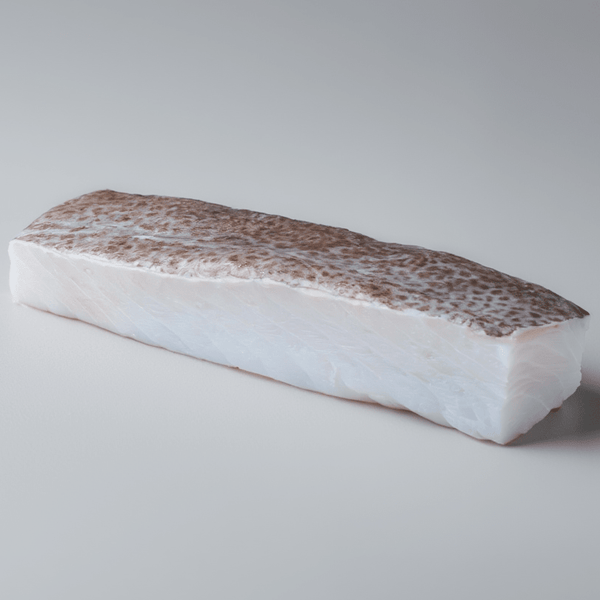
A cod fillet is the dorsal part of the cod (Gadus morhua or other species of the genus Gadus), the meatiest and most uniform area of the fish. It is the most valued part culinarily because:
- It has uniform thickness, which facilitates even cooking
- It is the area with more muscle and less fat than the belly
- It has fewer bones than other parts
- It holds up well to the most demanding cooking methods (confit, pil-pil, grilling)
A desalted fillet is that same fillet that has already undergone the soaking process in cold water to remove excess salt, ready to cook directly without additional preparation.
Why is there such a big difference between desalted cod fillets?
The quality difference between a desalted cod fillet from a supermarket and one from a specialized fishmonger has several explanations:
1. The species
The gastronomic reference cod is Gadus morhua, the North Atlantic cod. However, other species are marketed under the generic name "cod":
- Gadus morhua: the authentic North Atlantic cod. Better texture, more complex flavor
- Gadus macrocephalus: Pacific cod. Slightly different texture, milder flavor
- Pollachius virens (saithe) or Merluccius (hake): sometimes marketed as "cod" in low-price formats. Inferior texture, lower price
The label should specify the species. If it doesn't, the probability that it's not Gadus morhua is high.
2. The quality of the cod before desalting
A quality desalted fillet starts with quality cured cod: caught in cold North Atlantic waters, from adult, good-sized specimens, cured for the appropriate time. Low-cost industrial desalting often uses smaller cod, with faster curing, or alternative species.
3. The industrial vs. artisanal desalting process
Industrial desalting is done in water tanks with controlled temperature and mechanical rotation, which speeds up the process but can affect the texture. Artisanal desalting — like the one we do at Bacalalo — respects the cod's timing: 24-36 hours in cold, with regular water changes, without shortcuts that compromise texture.
4. The final salt level
The salt level is the most difficult variable to control in industrial desalting because it depends on the size and thickness of each piece. A standardized process can leave some pieces over-desalted and others still with excess salt. Artisanal desalting allows for piece-by-piece adjustment.
5. The time between desalting and sale
Desalted cod has a limited shelf life: 3-5 days in proper refrigeration. On supermarket shelves, distribution and display time can compromise product freshness. In a specialized fishmonger, rotation is higher and the product is fresher.
How to recognize a quality desalted cod fillet at the counter
By visual appearance
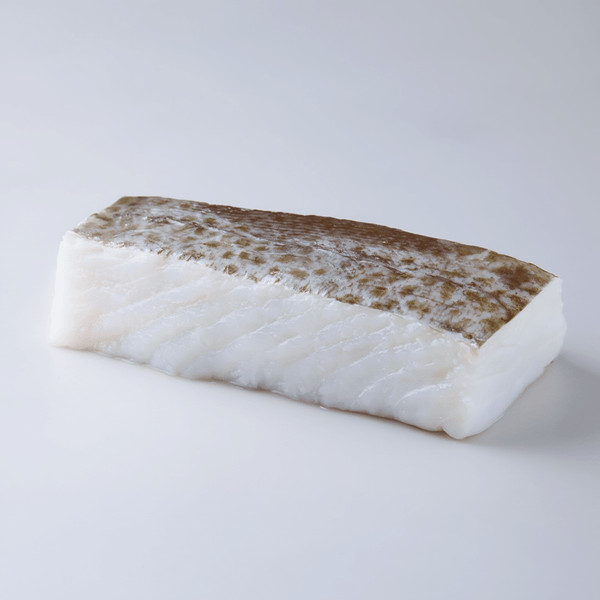
Color: pearly white or slightly yellowish white, homogeneous. A well-desalted fillet should not have dark yellow areas (excess original curing) or gray spots (poor preservation).
Visual texture: the flakes should be visible but the fillet should have cohesion. A quality fillet has a clear structure; it doesn't look like a uniform block or disintegrate.
Thickness: the best fillets are at least 2-3 cm thick in the center. Very thin fillets usually come from small cod or the peripheral parts of the fish.
Surface moisture: the fillet should have moisture but should not be "swimming" in water. Excess surface water can indicate overly aggressive desalting or that the product has been on display for too long.
By smell
A quality desalted fillet smells:- Of clean sea
- With a subtle, non-aggressive cod note
- Without an ammoniacal smell (a sign of deterioration)
- Without a rancid or sour smell
By the label (if packaged)
- Species: Gadus morhua (always insist on this)
- Origin: Norway, Iceland, or Faroe Islands (the best North Atlantic origins)
- Ingredients: cod and salt. Only these two
- Packing or best-before date: the more recent, the better for desalted cod
Related Products from Bacalalo


Recommended Products

Natural Cod Foie Gras - 120g | Smoked Cod L...
3,90 €

CHATKA Wild King Crab 60% Legs 40% Shredded | ...
95,00 €

Smoked Cod Carpaccio Artisan Cut | 1 Tray Pack
15,90 €

Dried Cod Cheeks (1 tray) - 500g
19,95 €
Refrigerated shipping 24-48h to the entire Peninsula
Desalted cod fillets vs. Mercadona and other supermarkets: the real comparison
The search for "desalted cod fillets Mercadona" is one of the most frequent on Google, which says a lot about many shoppers' starting point. To be direct:
Supermarket desalted cod fillets have their advantages: affordable price, immediate availability, no need for preparation. For recipes where the cod is shredded or combined with intensely flavored ingredients (croquettes, fritters, industrial brandade), they can work.
Where the difference becomes evident:
- Pil-pil: you need cod with a lot of available collagen and an exact salt level. Low-cost fillets often don't emulsify well.
- Confit and griddle: the texture of the fillet becomes critical. An inferior fillet will be dry and lack structure.
- Esqueixada and raw consumption: the flavor of the cod is the star. Quality differences are immediately noticeable.
The choice is yours, but it's good to know what is sacrificed with each decision.
Desalted cod fillets at Bacalalo: artisanally desalted in Barcelona's Mercat del Ninot, with over 30 years of selecting only North Atlantic Gadus morhua. Ready to cook. See desalted fillets in our store
Formats of desalted cod and when to use each one
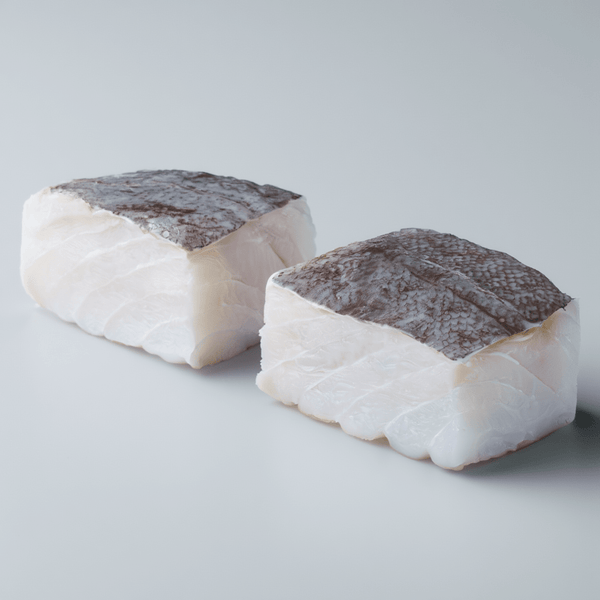
Whole fillets (180-250g per piece)
The noblest part. Uniform thickness, impeccable presentation. For preparations where cod is the star: pil-pil, confit, baked, grilled, "a la llauna" style.
Medium fillets or portions (100-150g)
Perfect for individual servings in a restaurant or at home. The same quality as the whole fillet in a more controlled format.
Contrabackalao or tail
The back part of the fillet, thinner and less uniform. Equally good texture but less regular presentation. Slightly more affordable price. For stews where appearance matters less.
Desalted belly
The belly of the cod, fattier and more gelatinous. Ideal for confits and recipes seeking richness. Not strictly a "fillet" but worth mentioning.
Flakes and shredded desalted cod
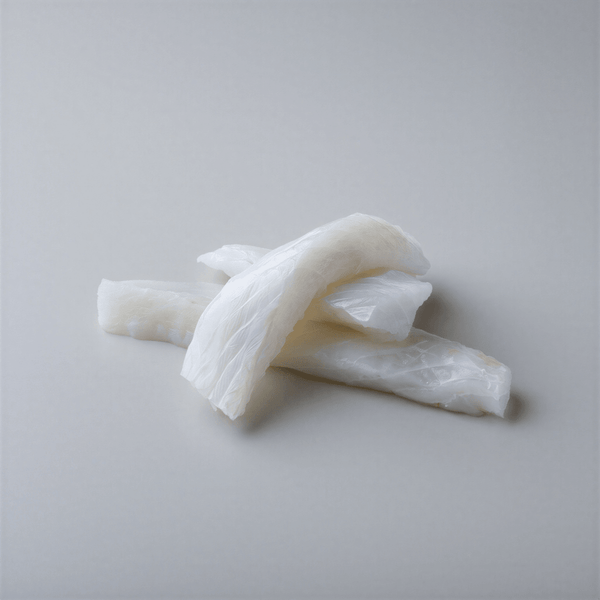
Irregular pieces from different parts of the cod. They don't have the presentation of the fillet but are perfect for brandade, croquettes, fritters, fillings, and rice dishes. Noticeably more affordable price.
How to cook desalted cod fillets without spoiling them
Temperature, key in everything
The biggest mistake with desalted cod is cooking it at too high a temperature. Cod is a lean fish with a low protein coagulation temperature (around 60°C). Above 70°C, proteins contract, collagen hardens, and the fillet dries out.
Recommended temperatures:- Confit (the most perfect way): 55-60°C for 8-12 minutes
- Pil-pil: maximum 65°C in the oil during the first phase
- Griddle: high heat 30-45 seconds per side (sealing), then reduce
- Oven: 180°C maximum, 10-12 minutes for a 200g fillet
Confit: the method that never fails
Confit in olive oil at a low temperature is the method that best preserves the texture and flavor of quality cod.
Process:- Pat the fillet dry with kitchen paper (surface moisture can lower the oil temperature)
- Cover with olive oil in a pot or pan
- Heat to 55-60°C (use a thermometer if you have one)
- Cook the fillet for 8-12 minutes, depending on thickness
- The oil should not bubble at any point
Properly confited cod flakes perfectly and has a juiciness that no other method can replicate.
Frequently asked questions about desalted cod fillets
1. How long does desalted cod last in the fridge?
3-5 days if well-refrigerated (between 0°C and 4°C) and covered. After that time, the quality noticeably decreases.2. Can desalted cod be frozen?
Yes. Desalted cod freezes well. Freeze in individual, well-wrapped portions. Thaw in the fridge 12-24 hours before use. The texture may lose some firmness but it is still perfectly fine.3. Why is desalted cod from the supermarket dry?
It's usually due to a combination of inferior species, industrial desalting that damages the texture, and/or too high cooking temperature at home.4. Is desalted cod ready to eat?
Not in the sense of being regularly consumed raw. It is ready to cook without additional preparation, but must be cooked before eating (except in specific preparations like esqueixada, where the cod is briefly "cooked" in lemon).5. How do I know if a desalted cod loin is Gadus morhua?
Ask at the fishmonger or read the packaging label. The species should be listed. If not specified, ask directly.6. How much desalted cod do I need per person?
For a main course, 150-180g of desalted loin per person. For stews or rice dishes where cod shares the spotlight, 100-120g.7. Why doesn't pil-pil emulsify with supermarket cod?
Pil-pil requires available collagen in the cod. Lower quality loins (aggressive desalting, incorrect species) have less available collagen, which makes emulsification difficult. With quality cod and the correct process, pil-pil always emulsifies.8. Desalted cod or fresh cod for pil-pil?
For traditional pil-pil, always desalted cod. The salt-curing process modifies the cod's collagen in a way that facilitates the pil-pil emulsion. Fresh cod has less available collagen of that type.9. What is the difference between cod loin and belly?
The loin is the dorsal part, firmer and leaner. The belly is the underside, fattier and more gelatinous. For pil-pil and grilling, use the loin. For unctuous confits and long-cooked stews, use the belly.10. Can I make esqueixada with desalted cod?
Yes, it's the basis of esqueixada. Traditional Catalan esqueixada is made with desalted cod that is then "esmiqueña" (shredded by hand) and seasoned. It is not cooked.11. Is it worth paying more for a cod loin from a fishmonger?
It depends on the recipe. For pil-pil, confit, and grilling, definitely yes: the difference in texture and flavor is considerable. For brandade, croquettes, or recipes where cod is mixed with other powerful ingredients, the difference is less critical.12. How do you distinguish a center loin from a tail loin?
The center loin is thicker, more uniform, and rectangular. The tail loin is thinner, conical, and less regular. The center loin is more expensive and yields better results for pil-pil and grilling.🛒 Products mentioned in this article
⭐ 4.9/5 · Cold shipping 24-48h · Since 1990 at Mercat del Ninot
Conclusion
Desalted cod loins are the most in-demand product in our Mercat del Ninot store, and the reason is simple: they are the entry point to the universe of quality cod for those who don't want to manage the desalting process but demand an excellent result in the kitchen.
The difference between a quality loin and a supermarket one is not perception: it's about species, process, and care at every step. When you cook a Gadus morhua loin from the North Atlantic, artisanally desalted and at its exact point, the pil-pil emulsifies on its own, it sears perfectly on the griddle, and the flakes separate effortlessly.
Products you might be interested in