Summary
At Bacalalo, we have been selecting each piece of cod at Mercat del Ninot since 1990.
The gilda is one of those appetizers that seems simple until you start thinking about how many variations it allows without losing its essence. In this guide: The classic Basque gilda: anchovies and boquerones, guindilla pepper and olive, Gilda with cured cheese, Gilda with quail egg.
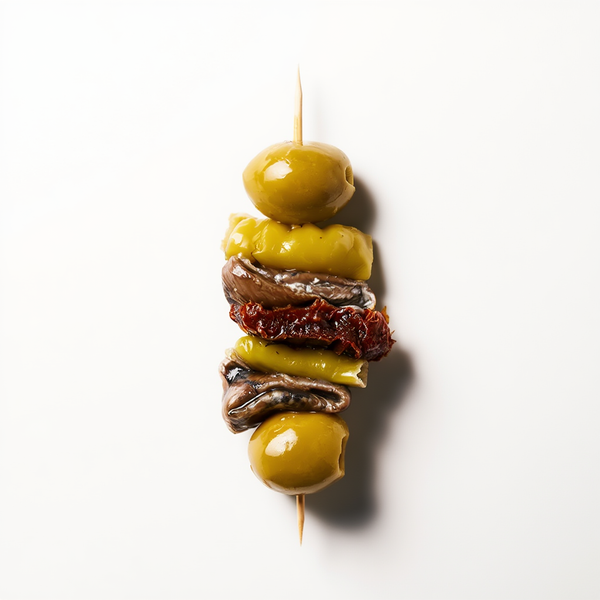
A gilda is the most famous Basque pintxo in the world: a Cantabrian anchovy, a guindilla pepper (piparra), and an olive skewered on a toothpick. It was born in San Sebastián in the late 1940s and today allows for dozens of variations. In this guide, you'll find what it is, its origin, how to make gildas step by step (8 recipes), and a summary of the existing types of gildas.
🫒 Artisan gilda ready to eat
Cantabrian anchovy, olive and guindilla pepper. Handmade.
9,90€ (unit)
A poorly made gilda tastes like vinegar and nothing else. The piparra overpowers the anchovy, the olive is cold, and the oil from the jar ruins the bite. It can be fixed in three moves.
Inside: 9 tested versions with exact timings (3 to 20 minutes), 4 variations prepared without any cooking, which anchovy caliber to choose depending on the context (00 for a platter, 0 for an express pintxo), and the assembly order that prevents the piparra from dominating. Calibers, grams per bite, and the trick of tempered oil, not improvised.
We start with the classic gilda — three minutes — and go up to versions with bonito, boquerón, and blue cheese.
The classic Basque gilda: anchovy, guindilla, and olive
The original and the best reference for understanding all variations. It was born in the Casa Vallés bar in San Sebastián in the late 1940s and owes its name to the character played by Rita Hayworth in the 1946 film: spicy, salty, and a little oily.
Ingredients (per unit): 1 Cantabrian anchovy caliber 00, 1 Basque piparra pepper in vinegar, 1 pitted gordal olive, 1 long toothpick.
Assembly: skewer the piparra in an S-shape from the thick end. Add the olive in the center. Roll the anchovy on itself and skewer it at the end of the toothpick. A few drops of extra virgin olive oil to finish.
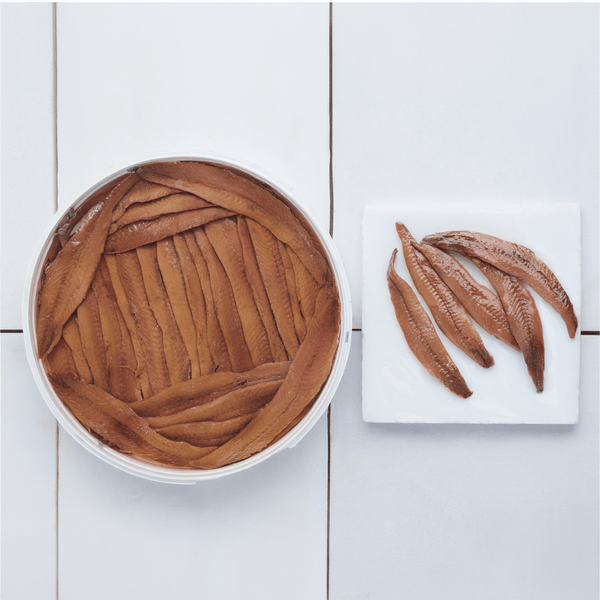
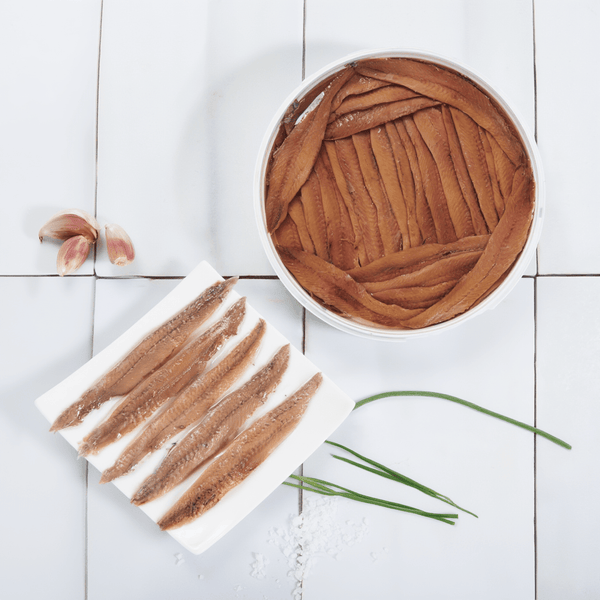
Key to success: the anchovy. Without a Cantabrian anchovy cured in salt for a minimum of twelve months and with caliber 00, the result is not the same. It is the only ingredient where you should not economize.
Gilda with cured cheese
The most popular variation at Bacalalo and the one customers repeat the most. The cured cheese adds an additional layer of umami, a different texture, and a creaminess that rounds out the flavor profile of the classic gilda.
Ingredients (per unit): 1 Cantabrian anchovy caliber 00, 1 Basque piparra pepper, 1 gordal olive, 1 1.5 cm cube of cured Manchego cheese or smoked Idiazábal cheese, 1 long toothpick.
Assembly: piparra in an S-shape + olive + cheese cube + rolled anchovy. The cheese goes between the olive and the anchovy because it harmonizes best with the latter.
Cheese variation: smoked Idiazábal is the most sophisticated option and the most consistent with the Basque origin of the gilda. Cured Manchego aged between 9 and 12 months is the most reliable choice for its texture and flavor. Cabrales, for the most daring, produces an explosion of umami that is not for everyone but which fans describe as extraordinary.
What not to use: fresh or creamy cheeses. They melt when skewered and alter the texture of the whole.
Gilda with quail egg
The most visually elegant and creamiest variation. The quail egg with a semi-liquid yolk provides a smoothness that softens the intensity of the anchovy and creates an extraordinarily round mouthfeel.
Ingredients (per unit): 1 Cantabrian anchovy caliber 00, 1 Basque piparra pepper, 1 gordal olive, 1 quail egg, 1 long toothpick.
Egg cooking: boiling water, exactly 3 minutes and 30 seconds, followed by an immediate cold water bath. This time produces a semi-liquid yolk with a set white. Peel under cold water to avoid breaking the white.
Assembly: piparra in an S-shape + olive + rolled anchovy + quail egg at the end of the toothpick. The egg goes at the end because it is the most fragile ingredient. When bitten, the yolk breaks and envelops all the flavors.
Finishing touch: a few flakes of salt on the egg enhance it remarkably. Extra virgin olive oil for the whole.
Related products from Bacalalo


Recommended Products

Cantabrian Anchovies in Olive Oil - 50g...
3,95 €

"Cantábrico Deluxe" Assortment
67,00 €

Artisan Cantabrian Anchovy Gilda, Handcrafted...
9,90 €

Northern White Tuna Belly in Olive Oil - 190 g |...
16,95 €
Refrigerated delivery 24-48h to all the Peninsula
Gilda with piquillo pepper
The version for those who don't tolerate spice or for heterogeneous groups where not everyone enjoys piparra. Roasted piquillo pepper replaces or complements the guindilla, providing a completely different smoky sweetness.
Ingredients (per unit): 1 Cantabrian anchovy, 1 gordal olive, half a drained preserved piquillo pepper, 1 toothpick.
Assembly: fold the half piquillo pepper over itself and skewer it first. Add the olive. Close with the rolled anchovy.
Flavor note: the piquillo has a natural sweetness that contrasts with the saltiness of the anchovy in a completely different way than the piparra. It's not the original gilda, but it has a very pleasant balance of its own. Ideal for Christmas appetizers or when guests are unfamiliar with the Basque appetizer.
Mixed combination: a variation can be made with both piparra and piquillo, to have the acidity of the guindilla and the sweetness of the pepper. In this case, the assembly is piparra + piquillo + olive + anchovy.
Gilda with marinated anchovy (boquerón en vinagre)
Substituting cured anchovy with marinated anchovy (boquerón en vinagre) produces a gilda with a completely different flavor profile: fresher, lighter, and more acidic. It is the quintessential summer version.
Ingredients (per unit): 1-2 marinated anchovies (depending on size), 1 Basque piparra pepper, 1 gordal olive, 1 toothpick.
Assembly: identical to the classic gilda. If the marinated anchovies are small, use two rolled-up fillets together for more presence on the toothpick.
Key difference: marinated anchovy has a different acidity than piparra, which creates a gilda with two overlapping sources of acid. The result is more refreshing but also more one-dimensional than the gilda with cured anchovy. To compensate, a more generous drop of olive oil and a little chopped fresh parsley can be added.
When to make it: in summer, for hot weather appetizers, for people who don't tolerate the salt of cured anchovy, or simply to vary the repertoire in an appetizer with several options.
Gilda with black truffle
The haute cuisine version. A top-quality Cantabrian anchovy, a slice of black truffle, and a few drops of truffle oil produce a gilda that can be served in a Michelin-starred restaurant without any complexes.
Ingredients (per unit): 1 Cantabrian anchovy caliber 00 (the best available), 1 Basque piparra pepper, 1 gordal olive, 1-2 thin slices of fresh or preserved black truffle, quality truffle oil, 1 toothpick.
Assembly: piparra in an S-shape + olive + folded truffle slice + rolled anchovy. The drops of truffle oil are applied with a dropper or a very small spoon over the assembled gilda, just before serving.
Fresh vs. preserved truffle: fresh truffle gives a superior result but has a high cost and a limited season (December-February for Perigord black truffle). Good quality preserved truffle works perfectly the rest of the year.
When to serve it: at Christmas dinners, high-level corporate events, or when you want to surprise guests who are knowledgeable about gastronomy. It is not a daily recipe, but the impact it generates justifies the investment on the right occasions.
Triple gilda: for the daring
The most potent version of the gilda. Double anchovy, double piparra, one olive. This is the gilda ordered in Basque bars when you want to show that you know the format and have a high tolerance for salt and spice.
Ingredients (per unit): 2 Cantabrian anchovies caliber 00, 2 Basque piparra peppers, 1 gordal olive, 1 extra-long toothpick.
Assembly: first piparra in an S-shape + olive + second rolled piparra + first anchovy + second anchovy. All on an extra-long toothpick (minimum 12 cm) so that all ingredients fit.
Warning: this is not a gilda for beginners. The double anchovy and double piparra produce an intensity of flavor that can be excessive for those not used to it. Always serve with very cold txakoli or beer to cleanse the palate between gildas.
When to make it: in groups where everyone knows and enjoys gildas, as a variation of the classic for the most enthusiastic. For long appetizers where the classic gilda has already been served and you want to escalate the experience.
Vegetarian gilda
Without anchovy. For people who don't eat fish but want to enjoy the gilda format, there is a vegetarian version that maintains the balance of flavors without resorting to fish.
Option 1 - with large caper: capers in vinegar have a surprisingly similar umami profile to anchovy. A large caper (caper berry, with the stem) can take on the role of the anchovy in the gilda with remarkable results. Assembly: piparra + olive + large caper with rolled stem.
Option 2 - with intense cheese: aged Manchego or well-cured Idiazábal as the star, with piparra, olive, and a few drops of truffle oil for umami. No fish but with a complexity of flavor that holds the whole together well.
Option 3 - with sun-dried tomato: half a sun-dried tomato in oil, well-drained and folded, instead of the anchovy. It provides umami from the tomato's natural glutamate, concentrated sweetness, and a chewy texture reminiscent of cured fish.
Honesty: none of these versions replace anchovy in flavor intensity. They are valid alternatives for those who cannot or do not want to eat fish, not equivalent substitutes.
General tips for assembly and presentation
Regardless of the variation chosen, there are several assembly principles that apply to all gildas.
- Order matters: the guindilla pepper always comes first (it's the firmest and anchors the whole), intermediate ingredients follow, and the most delicate ingredient (egg, anchovy, boquerón) goes at the end of the toothpick.
- Serving temperature: at room temperature, not straight from the fridge. Take out 10 to 15 minutes before serving. When cold, anchovies lose aroma and olives have less flavor.
- The finishing oil: a few drops of extra virgin olive oil over the final assembly are almost mandatory. It adds shine and rounds out the flavor. The anchovy's own oil already permeates the toothpick, but the fresh oil finish makes a difference.
- Appropriate toothpicks: minimum 8 cm, sturdy wood that doesn't break when piercing the guindilla. For variations with more ingredients (the triple, the egg and cheese), 12 cm minimum.
- Tray presentation: in a row, with the toothpicks parallel, makes the tray neater and makes it easier for each diner to take theirs without the others moving. In individual shot glasses, the presentation is more elegant and functional at events.
🎉 Pack to assemble your own gildas
Anchovies, olives, guindillas and everything you need. For 4-6 people.
Assorted Appetizers — €74.90 →
Or the economical option: Assorted Seafood Appetizers — €26.59
Types of gildas: how many varieties are there
Although the classic gilda is always the same — anchovy, guindilla, and olive — there are many types of gildas depending on the fish (cured anchovy, marinated anchovy, tuna), the level of spiciness (mild piparra or strong guindilla), the additions (cheese, quail egg, piquillo pepper, truffle), and the format (classic, double, or triple). Broadly speaking, they are grouped into blue fish gildas, gildas with dairy, sweet and spicy gildas, and premium gildas.
If you want the complete breakdown of each variety and their differences, we have prepared a specific guide on types of gildas. And if you prefer to buy them already assembled, in our collection of gildas and appetizers you have several artisan varieties ready to serve.
Gilda or banderilla: what's the difference
One of the most frequent doubts when talking about gildas. A banderilla is any pintxo of pickled ingredients threaded on a toothpick: it can include spring onion, gherkin, caper, olive, guindilla pepper, and sometimes fish. A gilda is a specific, canonical banderilla: Cantabrian anchovy + guindilla (piparra) + olive, in that order and with no additional ingredients. In other words: every gilda is a banderilla, but not every banderilla is a gilda. The name "gilda" comes from the character played by Rita Hayworth in the 1946 film, for being equally "green, spicy, and salty."
Frequently asked questions about gilda recipes
What is the easiest gilda variation to start with?
The classic Basque gilda. Three ingredients, one toothpick, five minutes. The only requirement is to buy a good anchovy. If the anchovy is good quality, the result is excellent with no more technique than correct assembly.
Can several variations be mixed in the same appetizer?
It is the most recommended way to serve them in a group. Preparing the classic, the cheese, and the piquillo pepper versions in similar quantities allows each diner to try all three and choose their favorite. Variety also makes the appetizer more visually appealing and interesting.
How far in advance can gildas be prepared?
Classic gildas, up to 24 hours. Cheese gildas, a maximum of 6-8 hours (the cheese dries out). Quail egg gildas, a maximum of 12 hours with the egg already peeled in cold water and assembly within the last 4 hours. Marinated anchovy gildas, the same day. Truffle gildas, just before serving so the oil is fresh.
What drink pairs best with gildas in general?
Basque txakoli is the classic and most suitable pairing for any variation. Its high acidity, low alcohol content, and slight effervescence cleanse the palate between gildas and perfectly complement the umami of the anchovy. Manzanilla from Sanlúcar is the second most elegant option. Dry vermouth is the traditional Barcelona option. Well-chilled lager beer always works in informal settings.
Which variation is the most substantial for an appetizer to replace the first course?
The triple gilda (double anchovy and double piparra) or the combination of cheese with quail egg are the most substantial. In a standing appetizer where gildas are the only food, 4-5 gildas of the cheese and egg version per person are equivalent to a light first course.
Where can I buy Cantabrian anchovies and pre-assembled gildas?
At Bacalalo, in Barcelona's Mercat del Ninot since 1990, you'll find 00-grade Cantabrian anchovies and our artisanal gildas with cheese, assembled daily. You can also order them through our online store for gildas and appetizers with refrigerated shipping throughout Spain.
What is the difference between a gilda and a banderilla?
A banderilla is any pintxo of pickled ingredients on a stick (spring onion, gherkin, caper, olive...). A gilda is a specific banderilla made only of Cantabrian anchovy, guindilla or piparra pepper, and olive. Every gilda is a banderilla, but not every banderilla is a gilda.
Why are they called gildas and what is the liquid they contain?
The name comes from the movie Gilda (1946) starring Rita Hayworth: the pintxo is "green, spicy, and a little salty," just like the character. The liquid that accompanies them in a jar is the brine or mild vinegar from the piparra and olive, plus the olive oil from the anchovy; it keeps the ingredients juicy and adds acidity.
Products you might be interested in
Discover more