Summary: The history of the tuna empanadilla actually begins with the Galician empanada. The empanada—that large, filled pastry baked whole and cut into portions—was already a documented dish on the Iberian Peninsula in the 13th century, mentioned in the Libro de Buen Amor by the Archpriest of Hita and present in medieval codices as food for travelers, soldiers, and pilgrims on the Camino de Santiago. The most common filling was fish: tuna, sardines, cod, or whatever the day's catch brought.
Tuna empanadillas are, arguably, the most democratic tapa in Spanish cuisine. They are found in village bars and grandma's homes, at school snacks and Sunday appetizers, at birthday parties and impromptu dinners. They are inexpensive, simple, and when well-made—with a juicy filling and a crispy crust that crunches with every bite—no one can resist a second helping.
In this guide, we tell you how to make homemade tuna empanadillas from start to finish: from preparing the perfect filling to making the dough at home, including three cooking methods (fried, baked, and air-fried) so you can choose the one that best suits your day. We include exact proportions for 20 units, sealing tricks to prevent them from opening, and creative variations for when you want to step outside the classic.
At Bacalalo del Mercat del Ninot, since 1990, we make artisan empanadillas following the same recipe we have perfected over decades. We know the product, the timing, and the mistakes to avoid. Everything you read here comes from the real experience of a stall that has been feeding Barcelona for over thirty years.

Tuna Empanadillas: The Quintessential Spanish Tapa
The history of the tuna empanadilla actually begins with the Galician empanada. The empanada—that large, filled pastry baked whole and cut into portions—was already a documented dish on the Iberian Peninsula in the 13th century, mentioned in the Libro de Buen Amor by the Archpriest of Hita and present in medieval codices as food for travelers, soldiers, and pilgrims on the Camino de Santiago. The most common filling was fish: tuna, sardines, cod, or whatever the day's catch brought.

The evolution from the large empanada to the individual empanadilla was a natural one. At some point between the 18th and 19th centuries, Spanish kitchens began making small, self-contained versions that could be fried in olive oil and eaten by hand. The empanadilla inherited the essence of its larger sibling—tender dough, flavorful filling, portable format—but added frying, which gave it that crispy, irresistible crust that made it the queen of tapas.
Today, tuna empanadillas are everywhere. Every bar in Spain has its own, every grandma has her recipe, and every family claims theirs are the best. There is no village festival, fair, or pilgrimage without a tray of empanadillas. And although the food industry has popularized them in their frozen version (which serves its purpose but is nothing like homemade), the homemade tuna empanadilla remains a pleasure within reach of anyone who dedicates an hour to it in the kitchen.
What differentiates a good empanadilla from a mediocre one is, above all, balance: a juicy but not watery filling, with tuna as the clear protagonist but well accompanied by sautéed onion, tomato, and that hint of hard-boiled egg that adds creaminess. And a dough that is thin but resistant, that crunches with the first bite but doesn't fall apart. If you're looking for the reference recipe for the large version, don't miss our guide to tuna empanada: Galician recipe with homemade dough.
Ingredients for the perfect filling
This recipe is calculated for 20 tuna empanadillas, a generous amount for 4-6 people as an appetizer or tapa. The proportions are those we use in our kitchen at Mercat del Ninot and have been tested hundreds of times.

For the filling
- 2 cans of light tuna in oil (about 200g drained) — good quality canned tuna makes all the difference
- 1 medium onion, very finely chopped
- ½ Italian green pepper, very finely chopped
- 200g of homemade fried tomato sauce (or crushed tomato reduced in a pan)
- 2 hard-boiled eggs, chopped into small pieces
- 8-10 pitted green olives, chopped (optional but recommended)
- 3 tablespoons extra virgin olive oil
- 1 teaspoon sweet paprika
- Salt and black pepper to taste
For breading (only if frying)
- 2 beaten eggs
- Flour for dusting
Notes on ingredients
The tuna: Always use light tuna in olive oil, not in water. The oil adds juiciness and flavor that the filling needs. Tuna in vegetable oil is acceptable, but olive oil is superior. Quality Galician preserves, such as Dardo brand Light Tuna in Oil, offer tuna with a firm texture and clean flavor that flakes into generous pieces, not dry crumbs.
The tomato: Homemade fried tomato sauce is ideal because it has body, sweetness, and a hint of caramelization. If you don't have homemade, use good quality crushed tomatoes and reduce them in a pan for 10 minutes over medium heat until they thicken and lose excess water. Never use raw tomatoes: they will make the filling watery and the empanadillas will open when fried.
The hard-boiled egg: Adds the creaminess that rounds out the filling. Boil them for 10 minutes in boiling water, run them under cold water, and chop them into irregular, not too fine, pieces. Those little bits of yolk you find when you bite are part of the charm.
The olives: Not mandatory, but chopped green Manzanilla olives add a salty and acidic counterpoint that balances the sweetness of the tomato. If you use them, chop them coarsely so they are noticeable when chewing.
Homemade dough vs. store-bought dough: which to choose?
The honest answer: both options are valid and produce an excellent result. Homemade empanadilla dough has a more rustic texture, a more complex flavor, and the satisfaction of making everything from scratch. Store-bought dough (the round wafers sold in any supermarket) saves time and offers a more uniform result, with thin edges that seal easily.

Homemade empanadilla dough recipe
This homemade empanadilla dough is thin, flexible, and has a crunchy texture after frying. It yields about 20 wafers.
- 300g all-purpose wheat flour
- 75ml extra virgin olive oil
- 100ml warm water
- ½ teaspoon salt
- 1 pinch of turmeric or saffron (optional, for golden color)
- Mix the flour with the salt in a large bowl. Make a well in the center.
- Pour in the EVOO and warm water. Mix with a fork from the center outwards until combined.
- Knead on a floured surface for 5-8 minutes, until you get a smooth, elastic dough that doesn't stick to your hands. If it's dry, add water spoonful by spoonful. If it's sticky, add flour.
- Form into a ball, wrap in plastic wrap, and let rest for 30 minutes at room temperature. Resting relaxes the gluten and makes the dough easier to roll out.
- Divide the dough into 20 equal portions. Roll each one out with a rolling pin on a floured surface until you get discs about 12-13 cm in diameter and 2 mm thick.
Tip: If you want perfectly round discs, use a small plate or a round cookie cutter as a guide and trim the excess. These trimmings can be re-kneaded to make 3-4 extra wafers.
Store-bought dough: how to get the most out of it
Brand-name empanadilla wafers (La Cocinera, Buitoni, Casa Tarradellas) work well. These tips improve the result:
- Remove them from the refrigerator 10 minutes before using them so they are more flexible and don't break when folded.
- Don't overfill them: a heaping tablespoon of filling per wafer is enough.
- If the edge doesn't seal well, brush the perimeter with a little water or beaten egg before closing.
- For frying, thin wafers are better (they become crispier). For baking, thicker ones hold up better without drying out.
Related Products from Bacalalo


Step-by-step recipe: traditional tuna empanadillas
This is the complete tuna empanadilla recipe, from sofrito to sealing. Each step has its reason.

1. Prepare the sofrito (15 minutes)
Heat the olive oil in a wide pan over medium heat. Add the chopped onion and a pinch of salt (the salt helps the onion release water and sauté rather than fry). Cook, stirring, for 8-10 minutes until transparent and tender, without browning. Add the green pepper and cook for another 3 minutes. A good sofrito is the base of everything: if the onion is raw, the filling will have an aggressive flavor; if it burns, it will be bitter.
2. Add tomato and reduce (5-8 minutes)
Stir in the homemade fried tomato sauce and sweet paprika. Stir well and cook over medium-low heat for 5-8 minutes, until the tomato thickens and the sofrito has a dense, almost pisto-like consistency. It should be able to hold its shape on a spoon without dripping. If it remains liquid, the empanadillas will open when fried due to internal steam pressure.
3. Flake the tuna and mix
Remove the pan from the heat. Drain the tuna well (reserve the oil for another use; it's magnificent for dressing salads) and flake it with a fork directly into the sofrito. Mix well. Add the chopped hard-boiled egg and olives. Adjust salt and pepper. Let the filling cool completely before filling the wafers. This step is important: a hot filling will moisten the dough, weaken it, and cause breakages during frying.
4. Fill the empanadillas
Place a wafer (homemade or store-bought) in the palm of your hand or on a table. Place a heaping tablespoon of filling on one half of the disc, leaving a 1 cm border free. Don't be tempted to overfill: less filling means a more secure seal and an empanadilla that won't burst.
5. Seal with a fork
Fold the other half of the dough over the filling, forming a half-moon. First, press with your fingers to expel any air from inside (trapped air expands with heat and bursts the empanadilla). Then, seal the entire edge by pressing with the tines of a fork, making uniform marks. In addition to closing, the fork leaves that classic decorative pattern and creates a wider, more resistant seam. If using homemade dough, you can make a braided crimp by folding the edge over itself.
6. Bread (only if frying)
If you are going to fry the empanadillas, bread them just before putting them in the oil. Pass each one through flour (shake off the excess) and then through beaten egg. The breading creates a golden and crispy outer layer that is the hallmark of a bar-style empanadilla. If you prefer them baked, skip this step and brush the surface with beaten egg to brown them.
Fried, baked or air-fried: three cooking methods
Tuna empanadillas can be cooked in three different ways, each with its advantages. Here's the comparison:

| Method | Temperature | Time | Result | Approx. Calories |
|---|---|---|---|---|
| Fried in oil | 180 °C | 2-3 minutes | Crispy, golden, juicy — the classic bar version | ~180 kcal/unit |
| Baked | 200 °C | 18-20 minutes | Golden, lighter, flaky texture | ~120 kcal/unit |
| Air fryer | 180 °C | 10-12 minutes | Crispy with hardly any oil, intermediate result | ~130 kcal/unit |
Method 1: Fried in oil (the classic)
This is the traditional method and yields the best result in terms of flavor and texture. Heat abundant mild olive oil or sunflower oil in a deep pan or pot to 180 degrees. Use a thermometer; if you don't have one, drop a small piece of bread: it should fry immediately with lively bubbles.
Fry the empanadillas in batches of 3-4 units, without overcrowding. Flip them when the submerged side is golden (1-1.5 minutes per side). Remove them with a slotted spoon and drain them on a wire rack or paper towel. Between batches, allow the oil to regain temperature.
Method 2: Baked tuna empanadillas
Baked tuna empanadas are the lighter alternative. Preheat the oven to 200 degrees (top and bottom heat). Place the empanadas on a baking sheet lined with parchment paper, ensuring they don't touch. Brush them with beaten egg on the surface (this will give them a golden color and shine). Bake for 18-20 minutes, until golden brown. Halfway through cooking, rotate the tray for even browning.
Oven trick: Spray a thin layer of olive oil over the empanadas before putting them in the oven. This partially mimics the effect of frying and improves the crust's texture.
Method 3: Air Fryer
The air fryer offers an excellent compromise between frying and baking. Preheat the air fryer to 180 degrees. Place the empanadas in the basket in a single layer (without stacking), spray a little oil on them, and cook for 10-12 minutes, flipping them halfway through. They will be crispy on the outside and juicy on the inside, with minimal oil consumption.
Note: In the air fryer, the flour and egg breading does not work well (it peels off). Brush the empanadas only with beaten egg, as in the oven method.
Our artisanal empanadas: ready to fry
Making homemade empanadas is a pleasure, but the reality is that there isn't always time. For those days, at Bacalalo del Mercat del Ninot we have the solution: our Artisanal Tuna Empanadas, handmade with the same recipe and the same ingredients we have described in this article.
They are artisanal empanadas, not industrial. The dough is prepared daily, the filling contains quality canned tuna, real sautéed onion and tomato, hard-boiled egg, and just the right amount of spices. They come in a pack of 4 units, ready to fry in 3 minutes or bake in 20. It's the fastest way to have an empanada at home that tastes homemade, because it is handmade.
If you like empanadas but want to explore other flavors, try our Artisanal Cod Brandade Empanadas: the same dough, but with a creamy brandade filling that melts in your mouth. It's one of our Mercat del Ninot customers' favorite variations.
Creative variations: beyond classic tuna
The empanada is such a versatile format that it can accommodate almost any filling. These are the most successful variations among our customers:
Cod brandade empanadas
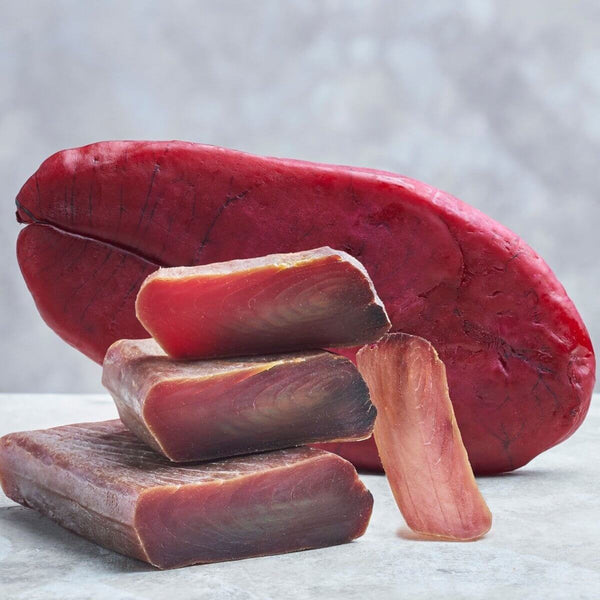
Cod brandade —that silky cream of shredded cod, potato, olive oil, and garlic— is a spectacular filling for empanadas. When you bite into it, the creamy texture contrasts with the crispy dough in an addictive way. It is the premium variant par excellence, and the one we sell the most at our stall. If you are interested in delving deeper into cod and its preparations, our tuna belly guide will open up a world of possibilities with quality fish.
Empanadas with pisto
Substitute the tuna with a well-reduced pisto manchego (zucchini, eggplant, red pepper, tomato, onion). The pisto should be almost dry so that it doesn't moisten the dough. It's an excellent vegetarian option that is just as good as the tuna version. You can add a little crumbled goat cheese for an extra creamy touch.
Garlic shrimp empanadas
Chop peeled shrimp and sauté them briefly with sliced garlic, chili pepper, and a drizzle of olive oil. Drain well (it's crucial that no liquid remains) and use as a filling. The result is a seafood empanada with an intense flavor that works very well as a starter for a more elaborate meal.
Spinach and cheese empanadas
Sauté fresh spinach with a clove of garlic, drain it thoroughly (squeeze out all the water with your hands) and mix it with cream cheese and a handful of toasted pine nuts. The filling is green, creamy, and has a touch of sophistication that is surprising within such a popular format.
Mojama empanadas
For the more adventurous: finely chop the tuna mojama, mix it with cream cheese, chopped sun-dried tomatoes, and a few drops of extra virgin olive oil. It's a gourmet, intense, and salty empanada, perfect to accompany with a glass of cold manzanilla.
Storage and Reheating
One of the great advantages of tuna empanadas is that they store and freeze magnificently. This makes them the perfect batch cooking: prepare a large batch and you'll have appetizers for weeks.
Freezing raw empanadas
The best method is to freeze them raw, before cooking. Place them on a baking sheet lined with parchment paper, ensuring they don't touch, and put them in the freezer for 2 hours. Once firm, transfer them to freezer bags, removing the air. They will keep perfectly for 2-3 months.
Cooking without thawing
This is the key: frozen empanadas are cooked directly from frozen. To fry, place them in oil at 170 degrees (slightly lower than for fresh ones) for 4-5 minutes, flipping them halfway through cooking. For the oven, place them on a tray at 190 degrees for 22-25 minutes. For the air fryer, at 175 degrees for 14-15 minutes. Thawing them before cooking is a mistake: the dough softens, absorbs moisture from the filling, and the result is a soggy empanada that falls apart.
Freezing already fried empanadas
If you have leftover fried empanadas, you can also freeze them. Let them cool completely, place them in a freezer bag, and freeze. To eat, reheat them directly from the freezer in the oven at 180 degrees for 12-15 minutes or in the air fryer at 170 degrees for 8-10 minutes. Do not reheat fried empanadas in the microwave: the result is a rubbery and moist dough that loses all its appeal.
Reheating day-old empanadas
If the empanadas are from the same day or the day before (stored in the fridge), the oven is your best ally. Preheat to 180 degrees, place the empanadas on a wire rack (not directly on the tray, so that air circulates underneath) and heat for 8-10 minutes. They will regain their crispy texture almost as if freshly made. The air fryer also works well: 160 degrees, 5-6 minutes.
🛒 Products mentioned in this article
⭐ 4.9/5 · Cold delivery 24-48h · Since 1990 at Mercat del Ninot
Conclusion
Making homemade tuna empanadas is one of those kitchen pleasures that makes the effort worthwhile. With simple ingredients —good canned tuna, a patient sofrito, well-worked dough— you get a result that is light years ahead of the industrial version. And with the three cooking methods we've explained, you can adapt them to any occasion: fried for Sunday appetizers, baked for a weekday snack, in the air fryer for a quick dinner.
The key, as in all good cooking, lies in the raw ingredients. Quality canned tuna, homemade fried tomato, and dough with extra virgin olive oil are the three pillars on which a memorable empanada is built. And if you don't have time one day but want that same flavor, our Bacalalo artisanal empanadas are made with exactly that philosophy: real ingredients, manual preparation, and over thirty years of know-how.
If you want to continue exploring recipes with tuna and other fish, we recommend our guide to tuna with onions: the traditional seafood recipe that never fails, another classic of seafood cuisine that shares the same spirit as empanadas: simplicity, good product, and spectacular results.
Conclusions
- Tuna empanadas: the quintessential Spanish tapa: The history of the tuna empanada actually begins with the Galician empanada.
- Ingredients for the perfect filling: This recipe is calculated for 20 tuna empanadas, a generous amount for 4-6 people as an appetizer or tapa.
- Homemade dough vs. store-bought dough: which to choose?: The honest answer: both options are valid and produce an excellent result.
- Step-by-step recipe: traditional tuna empanadas: This is the complete tuna empanada recipe, from the sofrito to the sealing.
- Fried, baked, or in an air fryer: three cooking methods: Tuna empanadas can be cooked in three different ways, each with its advantages.
Frequently Asked Questions
Can tuna empanadas be frozen?
Yes, and it's the best way to always have them on hand. Ideally, freeze them raw (assembled but uncooked): place them on a tray without touching, freeze them for 2 hours, then transfer them to a freezer bag. They keep for up to 3 months. When you want to eat them, cook them directly from the freezer without thawing, adding 1-2 minutes to the usual cooking time. They can also be frozen once fried, but when reheated, the texture won't be as crispy as when fried directly from raw frozen.
How long do empanadas fry for?
Fresh empanadas are fried in oil at 180 degrees for a total of 2-3 minutes, flipping them when the submerged side is golden (approximately 1-1.5 minutes per side). Frozen empanadas need a little longer: about 4-5 minutes at 170 degrees. The visual indicator is more reliable than the clock: they should be uniformly golden, with a shade between golden and light toasted. If they darken too quickly, lower the heat; if they take a long time to brown, the oil is not hot enough.
Can tuna empanadas be baked?
Yes, and it is an excellent alternative if you prefer a lighter version. Preheat the oven to 200 degrees, place the empanadas on a baking sheet with parchment paper, brush them with beaten egg to brown, and bake for 18-20 minutes. They will be golden brown on the outside and juicy on the inside, with about 60 fewer calories per unit than fried ones. The trick is to spray a little olive oil on them before putting them in the oven to improve the crispy texture.
What type of tuna is best for empanadas?
The best tuna for empanadas is light tuna in olive oil. Light tuna (Thunnus albacares, yellowfin) has a firm texture that flakes into defined pieces, not mush. Olive oil adds juiciness and flavor that vegetable oil or water do not offer. Quality Galician preserves are the benchmark: clean tuna, well confited, and without excessive salt. Avoid tuna in natural water for empanadas: it will be dry and you will need to compensate with more oil or tomato.
How to properly seal empanadas so they don't open?
There are five keys to a perfect seal: 1) Don't overfill—a heaping tablespoon is enough. 2) Leave 1 cm of free edge without filling. 3) Brush the edge with water or beaten egg before closing to create adhesion. 4) Press with your fingers first to expel all the inside air (trapped air expands with heat and bursts the dough). 5) Seal with the tines of a fork, pressing firmly every centimeter of the edge. If using homemade dough, the braided crimp (folding the edge over itself) is even more resistant.
How many calories does a tuna empanada have?
It depends on the cooking method. A standard-sized fried tuna empanada (with commercial dough) has approximately 170-190 kcal. The baked version drops to about 110-130 kcal, as it eliminates the calories from frying oil and breading. In an air fryer, the result is similar to baking: about 120-140 kcal. Most of the calories come from the dough and the oil from canned tuna, not the filling itself. If you are looking to reduce calories, the baked option with thin dough is the lightest without sacrificing flavor.
What ingredients are in tuna empanadas?
The classic empanada filling includes tuna, fried tomato, chopped hard-boiled egg, and piquillo peppers, but you can experiment with other ingredients like ground meat, shredded chicken, spinach with cheese, sautéed mushrooms, or even sweet fillings.
What are the ingredients for empanada dough?
450 g of common wheat flour (without leavening) (4 cups) 200 ml of water (approx. one cup) 50 g of butter or oil (1/4 cup) 1 egg. 5 g of salt (one teaspoon)
How to fry tuna empanadas?
Without thawing the product, remove 6 units from the package and fry in abundant hot oil (180ºC) for 4 minutes until the product is golden. Remove the product from the fryer, place it on a plate, and let it rest for 3 minutes before serving.
Discover more