![Desalar bacalao en casa: tiempos exactos [2026]](http://bacalalo.com/cdn/shop/articles/02cb7a170c6d1475c02e0534b22064a2.jpg?v=1780954293&width=480)
Quick Answer: To properly desalt cod, submerge it in cold water (4-8 °C, in the refrigerator) skin-side up and change the water every 8 hours. The total time depends on thickness: 12-24 hours for flakes, 24-36 hours for fillets, 36-48 hours for medium loins, and 48-72 hours for thick loins. Before cooking, taste a small piece from the thickest part. Salted cod contains between 18% and 22% salt by weight; proper desalting reduces it to 1-2%.
Salted cod is one of the great treasures of Mediterranean cuisine. It appears in pil-pil, vizcaína, esqueixada, Lenten fritters, or a simple baked cod with potatoes. But all that culinary potential depends on one crucial preliminary step: desalting it correctly. If you overdo it, it will be bland and watery. If you underdo it, it will be inedible.
At Bacalalo del Mercat del Ninot, since 1990, we have been selling salted cod from Iceland and Norway for over three decades. The question we are asked most often remains the same: how do I desalt cod at home without it being too bland or too salty? This guide answers that with verifiable data, not recipes copied from the internet. Exact timing chart, quick emergency method, debunked myths, and the seven mistakes that ruin the dish.
It's not marketing — there are verifiable factors. Since 1990 at Mercat del Ninot.
Contents
- Quick Answer (the 30-second version)
- Why You Need to Desalt Cod (the science)
- Materials and Pre-preparation
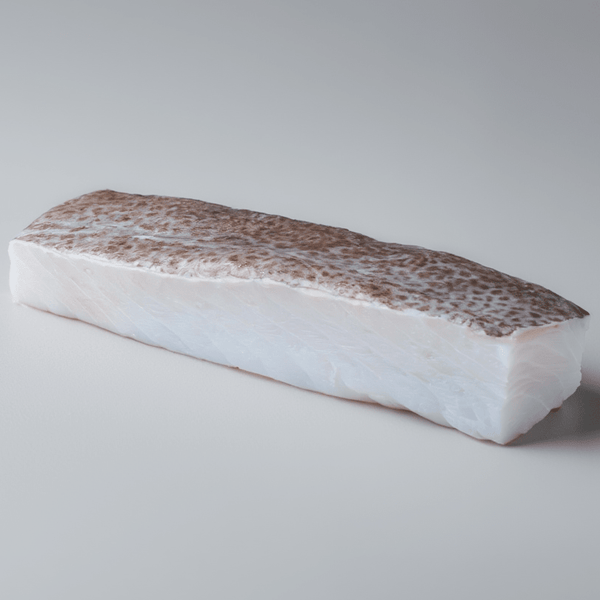
- Exact Timing Chart by Cut
- Traditional Method Step-by-Step (24-72 h)
- Quick Method When You Don't Have Time (4-6 h)
- The Milk Method: When to Use It and When Not To
- Skin Up or Down? The Data Says
- How to Tell if It's Ready
- Myths and Viral Tricks That DO NOT Work
- 7 Mistakes That Ruin Desalting
- Before Cooking: Drying and Salt Level Check
- Ideal Recipes by Cut
- Is It Better to Buy Already Desalted?
- Frequently Asked Questions
- Conclusion
Quick Answer (the 30-second version)
If you've come here looking for the essentials without reading the whole guide, here's what you need to know:
- Rinse the cod under the tap for 30-60 seconds to remove surface salt.
- Submerge in plenty of cold water (3-4 liters per kilo of cod) in the refrigerator, between 4 and 8 °C.
- Place skin-side up and, if you have one, on a rack at the bottom of the container.
- Change the water every 8 hours (every 1 hour if you're in a hurry).
- Total time: 12-24 hours for flakes, 24-36 hours for fillets, 36-48 hours for medium loins, 48-72 hours for thick loins.
- Taste before cooking: cut a small piece from the thickest part and check the salt level.
- Pat dry with paper towels before placing it in the pan, oven, or oil.
If you have time, follow the rest of the guide. Each step has its reason, and understanding the science behind it allows you to improvise when things don't go as planned.
Why You Need to Desalt Cod (the science)
Salted cod has undergone a curing process lasting between 3 months and over a year. During this time, salt penetrates the fish's muscle fibers and extracts most of the water. The result is a piece with a salt concentration between 18% and 22% of its weight (data published by the FAO manual on fish salting), a level that makes it completely inedible as is.
To choose between different cuts and origins, you can find cod in our catalog: 49 selections from Mercat del Ninot since 1990.
Desalting works on a physical principle called osmosis: when you submerge the cod in fresh water, the difference in salt concentration between the flesh (very salty) and the water (salt-free) causes the salt to migrate from the cod to the water, seeking to balance the two concentrations. At the same time, the cod absorbs clean water and regains some of the hydration it lost during curing.
The goal of desalting is to bring the piece to a residual salinity of 1-2%: present but balanced, enhancing the fish's flavor without dominating it. Above that, the dish is aggressively salty and the texture becomes rigid. Below that, the cod loses character and becomes bland and watery.

There's a critical fact that few people consider: the water in the container becomes saturated with salt. When it reaches osmotic equilibrium with the cod, the process stops completely. It doesn't matter how many more hours you leave it: if you don't change the water, not another gram of salt will be removed. That's why changing the water every 8 hours is non-negotiable, not decorative.
Materials and Pre-preparation
Before starting, prepare:
- Large container: the cod should be completely submerged with plenty of space. Minimum 3-4 liters of water per kilo of cod.
- Rack, colander, or strainer at the bottom of the container: the professional trick. It elevates the cod, and the salt falls by gravity to the bottom, without coming back into contact with the fish.
- Very cold tap water. In summer, if it's lukewarm, add a few ice cubes with each change to keep it below 8 °C.
- Refrigerator with space: desalting should always be done between 4 °C and 8 °C. Never at room temperature.
- Initial rinse under the tap: 30-60 seconds, gently rubbing with your fingers. This speeds up the process because it removes the most concentrated layer of salt crystals.
Professional tip: group pieces by similar thickness. If you mix flakes with thick loins, the flakes will be perfect in 12 hours while the loins will need twice as long. Use separate containers or remove the thinner pieces earlier.

Exact Timing Chart by Cut
This is the reference chart for desalting in the refrigerator, with water changes every 8 hours. It's what we use in the Mercat del Ninot fishmonger's after three decades working with cures from Iceland and Norway:
| Cod Cut | Thickness | Total Time | Water Changes | Quick Method |
|---|---|---|---|---|
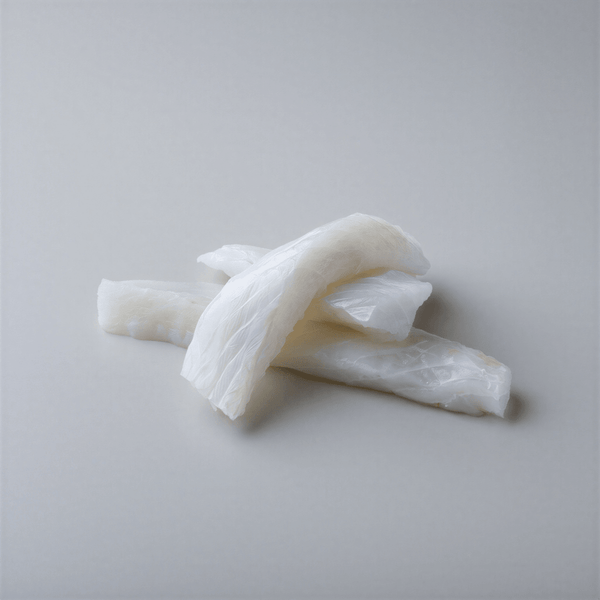
| Flakes and Shredded | <1 cm | 12-24 h | Every 6-8 h | 3-4 h |
| Cheeks (kokotxas) | 1-2 cm | 24-36 h | Every 8 h | 5-6 h |
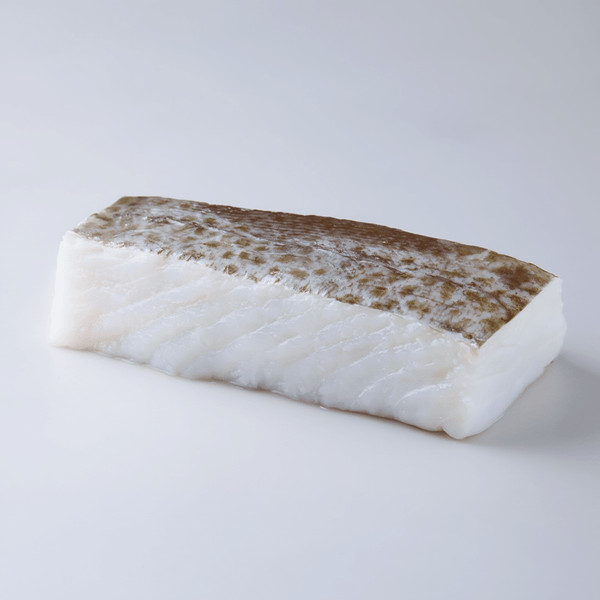
| Thin Fillets and Steaks | 1-2 cm | 24-36 h | Every 8 h | 5-6 h |
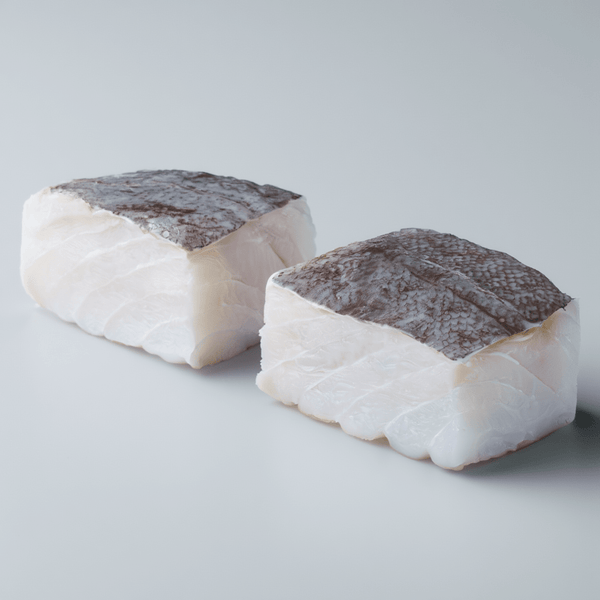
| Medium Loins | 2-3 cm | 36-48 h | Every 8 h | 8-10 h |
| Cod Tripe | Variable | 36-48 h | Every 8 h | Not recommended |
| Thick Loins / Whole Pieces | >3 cm | 48-72 h | Every 6-8 h | Not recommended |
| Dried Cod (stockfish) | Variable | 3-5 days | Every 12 h | Not possible |
Important: timings are approximate. Curing varies from one supplier to another. Cod cured for 8 months needs more time than cod cured for 4 months. The absolute rule is: always taste before cooking.
Do you need the exact detail by thickness and cut? Consult our cod desalting chart by thickness. And if you're starting with dried cod (stockfish), keep in mind that its rehydration is much slower: it needs several days of soaking, not hours.

Traditional Method Step-by-Step (24-72 h)
This is the standard method and the one that gives the best result in flavor and texture. If you plan to start one or two days in advance, do it this way:
- Initial wash under the tap for 30-60 seconds per piece, rubbing with your fingers.
- Place the pieces in the container skin-side up and, if you have one, on a rack.
- Cover with cold water until the pieces are generously submerged (3-4 L per kilo).
- Put in the refrigerator. Period. Not in a warm kitchen or on the countertop.
- First water change after 8 hours: discard the water, quickly rinse the pieces, and cover with fresh water.
- Continue changing every 8 hours until the total time according to the chart.
- Taste 2-3 hours before the estimated time: cut a small piece from the thickest part and check.
- When it's ready, drain, pat dry with paper towels, and use or store.
If you follow this protocol exactly and start with quality cod, the result will be indistinguishable from what a professional achieves.
Quick Method When You Don't Have Time (4-6 h)
You forgot to soak the cod and have guests in four hours. It's not ideal, but there's a solution. Three quick methods ordered from best to worst results:
1. Frequent Water Changes (4-6 h) — the most reliable
The key: the more often you change the water, the faster the cod desales, because fresh water maximizes the osmotic gradient.
- Rinse for 2-3 minutes under the tap, rubbing well.
- Cut into smaller pieces if the piece is large. More surface area = faster.
- Submerge in plenty of cold water in the refrigerator, skin-side up.
- Change the water every hour for 4-6 hours, rinsing between changes.
- Taste after 4 hours: if it's ready, remove it.
Works well for flakes, thin fillets, and cut medium loins. For whole thick loins, it's not enough: the surface will be fine but the inside will still be too salty.
2. Initial Warm Water (3-5 h) — emergency resource
First soak for 30 minutes in lukewarm water (30-40 °C, never more). Heat accelerates osmosis. Then transfer to cold water in the refrigerator with hourly changes.
Warning: if you exceed 40 °C or 30 minutes, the cod's proteins begin to coagulate. The texture becomes rubbery and irreversible. This is an emergency trick, not a regular method.
3. Blanching for Flakes (flakes only)
Bring water to a boil, remove from heat, and submerge the flakes for 2-3 minutes. Drain and transfer to ice water. The thermal shock removes surface salt very quickly.
Blanching does not replace complete desalting: the texture becomes slightly cooked. It is suitable for croquettes, fritters, or brandade (where the cod is shredded). Do not use it for pil-pil or preparations where the loin flake is key.
The Milk Method: When to Use It and When Not To
Soaking in milk is one of the most popular tricks, but it doesn't always make sense. Here's the truth without myths.
How it works
Milk proteins (especially caseins) partially bind to salt compounds and soften the residual flavor. The fat adds creaminess and a slight sweetness that counteracts the saltiness. Milk does not desalt faster than water: what it does is soften the final result.
When it is worthwhile
- Very intense curing: if it's still salty after 24 hours, replace the last water change with cold whole milk for 2-3 hours.
- Creamy recipes: brandade, croquettes, gratins. Adds an extra noticeable softness.
- Only in the last few hours: no professional desalts from the beginning in milk.
When it is not necessary
- Cod with standard curing and properly desalinated in water: the result is already perfect.
- Recipes with strong sauces (tomato, sofrito, pil-pil): the nuance is lost.
- Flakes and shredded: small pieces desalt so quickly that milk makes no difference.
How to use it properly: cold whole milk (not skimmed), never hot. Replace one or two of the last water changes. Afterwards, dry the cod with paper before cooking.
Skin up or down? The data says
One of the most searched questions on Google and the short answer is: skin up. The reason is physical, not aesthetic.
Cod skin is a partial barrier to the passage of salt and water. When you place the piece with the skin side down, the flesh side (without a barrier) is in contact with the water and desalinates quickly, but the half protected by the skin desalinates much slower. Result: an unevenly desalinated piece, bland on one side and salty on the other.
With the skin facing up, the flesh side remains in contact with the water at the bottom, where salt falls by gravity and moves away from the fish. The skin acts as a lid that protects the top from recycled water and the piece desalinates homogeneously.
This detail, along with the rack at the bottom of the container, is what separates a professional desalination from a mediocre homemade one.
How to tell if it's ready
Times are approximate. The definitive test is organoleptic.
Cooked piece test (most reliable)
Cut a small piece from the thickest part (the one that takes the longest to desalt). Submerge it in unsalted water and cook it for 15-20 seconds in the microwave or briefly blanch it. Taste it. It should have a mild and pleasant saltiness, like a well-seasoned dish. Excessively salty: more time. Bland: you've overdone it.
Texture test (complementary)
Press the flesh with your finger. Properly desalinated cod:
- Yields slightly when pressed (instead of being rigid).
- Separates into flakes when gently pulled. If it remains compact in a block, it still has too much salt inside.
- Homogeneous pearly white color (instead of the yellowish translucent appearance of salted cod).
If you've over-desalinated
The cod becomes soft, without structure, with a bland taste. Compensate with a little salt in the dish during cooking or with a richer broth. It's not ideal, but it saves the recipe.
Myths and viral tricks that DO NOT work
The internet is full of "definitive tricks" that actually spoil cod. These are the most popular and why we discard them at the fish market:
| Viral myth | Why it doesn't work |
|---|---|
| "Desalinate in hot water to go faster" | Above 50 °C proteins coagulate. Irreversible rubbery texture. The real trick is to change the water more often. |
| "Add raw potato to the water to absorb salt" | False. Potato does not significantly extract salt from cod; it only absorbs salt from the water, slowing down osmosis. |
| "Adding sugar to the water speeds up desalination" | No scientific basis. Dissolved sugar reduces the osmotic pressure of water and, if anything, slows down the process. |
| "Desalinate in the sun to make it faster" | The sun heats the water and multiplies the bacterial risk. Food safety recommendation: never above 8 °C (AESAN). |
| "A pinch of salt to the water to avoid overdoing it" | Reduces the osmotic gradient and slows down desalination. If you want to stop it, take it out of the water, don't add salt. |
| "Desalinate in milk from the beginning" | Milk does not desalt more, it only softens. Using it from the beginning is expensive, inefficient, and adds nothing vs. water. |
7 mistakes that ruin desalination
After three decades in the fish market, these are the mistakes we see every Lent:
1. Desalinating at room temperature
The most dangerous, especially in summer. Above 15-20 °C, cod soaking in water is a bacterial breeding ground. It can start to ferment in a few hours. Always in the fridge, no exceptions. If you run out of space, a portable cooler with ice works.
2. Not changing the water often enough
The water becomes saturated with salt and osmosis stops. It doesn't matter how many hours you let pass: if you don't change the water, not one more gram will be removed. Minimum every 8 hours with the traditional method, every hour with the fast method.
3. Using hot water to speed up
Above 50 °C, proteins coagulate. The texture becomes rubbery, dry, fibrous, and irreversible. The only exception is the first 30-minute soak of the express method and never above 40 °C.
4. Container too small
If the cod is not completely covered, the parts that stick out will desalinate unevenly. At least 3-4 liters of water per kilo, with plenty of space above.
5. Mixing thick cuts with thin ones in the same container
The flakes will be perfect in 12 hours, and the thick loin will still be salty inside after 12 hours. Either you remove the flakes (bland) or leave the loin (salty). Separate containers or remove the thin pieces earlier.
6. Not drying before cooking
Desalinated cod is soaked. If you put it in hot oil without drying, it releases all that water, lowers the temperature, and cooks in its own moisture instead of browning or confiting. Paper towel on both sides, always.
7. Adding salt to the desalination water
Some old recipes recommend it "to control the process." It is counterproductive: it reduces the gradient and the cod releases less salt. Desalination water should always be clean and salt-free.
Before cooking: drying and salt level
Dry thoroughly with absorbent paper. Especially critical for grilling, baking, frying, or confit: moist cod won't brown, it will cook in its own water. Paper towel on both sides, always.
Do not add salt directly to the cod before cooking. The residual salt from desalination is already there. Season the sauce, broth, or garnish, but taste first. Tip: taste a small piece from the center of the thickest piece just before cooking; if it needs a little more, add it to the final dish.
Ideal recipes according to the cut
Each cut of desalinated cod adapts better to certain preparations:
- Thick loins: pil-pil, baked with potatoes, Biscayan style, low-temperature confit. They need perfect desalination for 48-72 hours because the loin is the absolute star.
- Medium fillets: cod with tomato, in green sauce, stews with legumes, omelets. The desalinated cod from Bacalalo is already ready for these preparations.
- Flakes and shredded: croquettes, fritters, brandada, esqueixada. Shredded cod is perfect for these recipes.
- Cod cheeks: in green sauce, pil-pil, breaded. 24-36 hours carefully not to lose the gelatinous texture.
- Cod tripe: Basque and Galician stews, grilled. 36-48 hours, tolerates prolonged desalination well.
Better to buy it already desalinated?
Desalinating at home gives you total control and is part of the cod experience. But it's not always practical. If you don't have 24-72 hours in advance, fridge space, or the desire, buying professionally desalinated cod is a real alternative.
Bacalalo Desalinated Cod — since 1990 at Mercat del Ninot
Professional salt point at 1-2% residual, no risk of overdoing it or falling short. Cod from Iceland and Norway, selected sizes, vacuum-packed by weight. Refrigerated shipping throughout the Peninsula.

Advantages of already desalinated cod:
- Saves 24-72 hours of planning and water changes.
- Professional salt level: comes at its exact point, calibrated by a taster.
- Storage: 2-3 days in the fridge; up to 3 months frozen without appreciable loss.
If you want to customize the salt level (for example, leave it a little saltier for an intense stew), desalinating at home gives you more leeway. If you seek convenience and consistency, professional desalination wins.
Does desalinated cod have anisakis?
Direct answer: the risk of anisakis in salted cod is practically zero. Anisakis is a parasite that does not survive prolonged salting: the high concentration of salt (18-22%) for weeks or months eliminates it. That is why traditional salted cod is considered a safe product against this parasite, unlike fresh fish.
The subsequent desalination process does not reintroduce any risk: it only removes salt through osmosis with clean water. Even so, if you buy unsalted fresh cod or freeze it at home, apply the general recommendation of the AESAN: freeze at -20 °C for at least 5 days before consuming in lightly cooked preparations. For cured salted cod, this step is not necessary.
Frequently asked questions
How long does cod need to be desalinated for?
It depends on the thickness. Flakes and shredded (<1 cm): minimum 12 hours with two water changes, or 4 hours with hourly changes (fast method). Medium fillets and loins: minimum 24 hours with the traditional method, 6 hours with express. Thick loins (>3 cm): at least 48 hours for homogeneous desalination. These are minimum times; always confirm by tasting a small piece before cooking.
How to desalt cod in 30 minutes?
Realistically, 30 minutes is not enough to desalt cured salted cod. What you can do in that time is superficially desalt very fine flakes by blanching: boiling water removed from the heat, submerge the flakes for 2-3 minutes, drain and transfer to ice water. The result has light cooking and is only suitable for shredded preparations (croquettes, fritters, brandada). For loins or slices, the realistic minimum is 4-6 hours with hourly water changes.
Skin up or down when desalinating cod?
Always skin side up. The skin acts as a partial barrier to the passage of salt. If you place it skin side down, the flesh side desalinates quickly but the half covered by the skin remains salty. Result: uneven piece. With the skin side up, salt falls by gravity to the bottom of the container and the piece desalinates homogeneously. If you add a rack at the bottom, even better: the cod is elevated and the salt does not re-contact it.
Can I desalt cod at room temperature?
No. Above 15-20 °C, cod soaking in water is an ideal medium for bacterial proliferation. In a few hours it can ferment and become unsafe for consumption. The AESAN recommends keeping fish between 0 and 4 °C throughout the handling process. Always in the fridge, between 4 and 8 °C. In summer, if the water comes out lukewarm from the tap, add ice with each change.
What do I do if the cod is still salty after cooking?
Rescue options: serve with boiled potatoes (absorbs some of the salt); prepare a sauce with sautéed onion, tomato or cream that dilutes the saltiness; add more unsalted broth and reduce; boil the pieces for 3-5 minutes in plenty of unsalted water (you lose texture but reduce salinity). Next time, always taste before cooking.
Can unsalted cod be frozen?
Yes, it can, although it is not the most recommended. Salted cod already has a very long shelf life on its own (3-6 months in the fridge vacuum-packed). Freezing it without desalinating slightly reduces the texture quality after thawing. If you are going to freeze it, it is ideal to desalinate it first, dry it well with paper and individually wrap it in cling film + freezer bag. This way it will keep for 3 months without appreciable loss. To thaw, always in the fridge the night before.
Can cod be desalinated with milk?
Milk does not desalt on its own: what it does is soften the residual salty taste and provide creaminess. It is used as a complement to desalination in water, not as a substitute. The correct method: do the normal desalination in water and substitute the last change (the last 2-3 hours) with cold whole milk. It is especially useful for intense cures or creamy recipes like brandada. For standard desalination, water alone is sufficient and more economical.
How much water do I need to desalt cod?
Between 3 and 4 liters of cold water per kilo of cod. The piece must be completely submerged with plenty of space above it. A tight container will cause the water to become saturated with salt much faster, requiring more changes. A large container + abundant water = more efficient and uniform desalting.
Can I reuse the desalting water?
No. It is loaded with salt and impurities that the cod has released. It is not suitable as broth, does not provide useful flavor, and contains too much salt for watering plants. Pour it down the sink and use clean water with each change.
How long does desalted cod last in the fridge?
2-3 days well covered (plastic wrap or airtight container). If left in water, change the water daily. After 3 days, the texture begins to deteriorate. If you are not going to cook it within that period, freeze it on the same day you desalt it to maintain freshness.
Does shredded cod also need to be desalted?
It depends. Bacalalo's shredded cod comes already desalted and ready to cook. But if you buy salted flakes (small unsalted pieces), they do need desalting: 12-24 hours in the fridge with two or three changes, or 3-4 hours with changes every hour.
Does desalted cod contain anisakis?
The risk is practically zero. Anisakis does not survive prolonged salting: the high concentration of salt for weeks or months eliminates the parasite. Subsequent desalting only removes salt with clean water, without reintroducing risk. Cured salted cod is, therefore, a safe product against anisakis. The precaution of freezing at -20 °C for five days applies to fresh fish, not salted fish.
Can cod be desalted in boiling water?
Not for whole pieces: above 50 °C, proteins coagulate and the texture becomes rubbery and irreversible. The only exception is blanching very thin flakes (boiling water removed from heat, 2-3 minutes, then ice water) for shredded preparations such as croquettes or fritters. For fillets and steaks, the correct quick method is cold water in the fridge with changes every hour for 4-6 hours.
Conclusion
Properly desalting cod is as crucial as the quality of the cod itself. It's not complicated, but it requires three things: planning, patience, and respecting a few details that make all the difference.
The essential points:
- Always in the fridge (4-8 °C), never at room temperature.
- Skin side up, with a rack at the bottom if you have one.
- 3-4 liters of water per kilo.
- Change water every 8 hours (every hour for the quick method).
- Time according to thickness: 12-24 h for flakes, 24-36 h for fillets, 36-48 h for medium loins, 48-72 h for thick loins.
- Always taste before cooking.
- Dry thoroughly before pan-frying.
If you prefer to skip the process and start directly with the correct salt point, at Bacalalo you will find professionally desalted cod with the same quality we have offered since 1990 at Mercat del Ninot. It's not marketing — there are verifiable factors.
About the author: Lalo González Rodríguez. Pescadería Bacalalo, Mercat del Ninot, Barcelona. More than three decades working with salted cod from Iceland and Norway. Specialist in curing, sizes, and professional desalting point.