Summary: 80% of problems with cod dishes stem from a common source: incorrect desalting. Too much salt ruins the dish, too little and the cod becomes bland and soft-textured. The good news: with a reference chart and a few clear principles, getting it right is easy.
Mastering Desalting: The Technique That Separates Good Cod From Mediocre
80% of problems with cod dishes stem from a common source: incorrect desalting. Too much salt ruins the dish, too little and the cod becomes bland and soft-textured. The good news: with a reference chart and a few clear principles, getting it right is easy.
Desalting times primarily depend on three variables: the thickness of the piece, the water temperature, and the number of water changes. This guide provides exact times for each case.
Desalting Time Chart by Thickness and Cut
| Cut / Format | Approximate Thickness | Total Time | Water Changes |
|---|---|---|---|
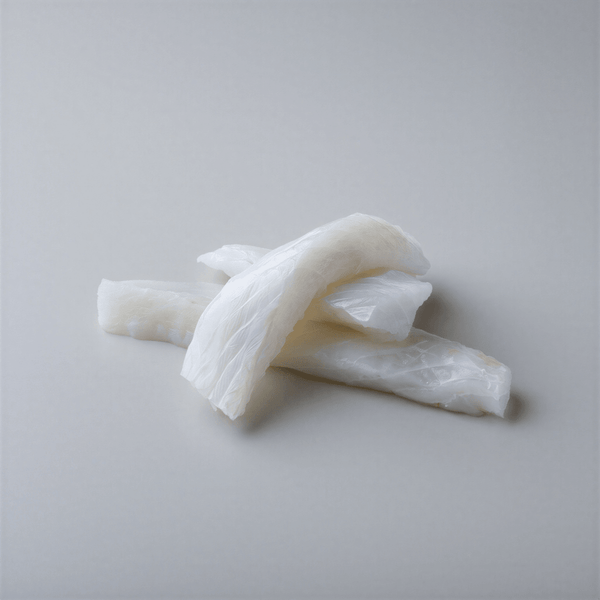
| Flakes / Shredded | < 1 cm | 12-16 hours | 2-3 times |
| Thin Flakes | 1-2 cm | 24 hours | 3 times |
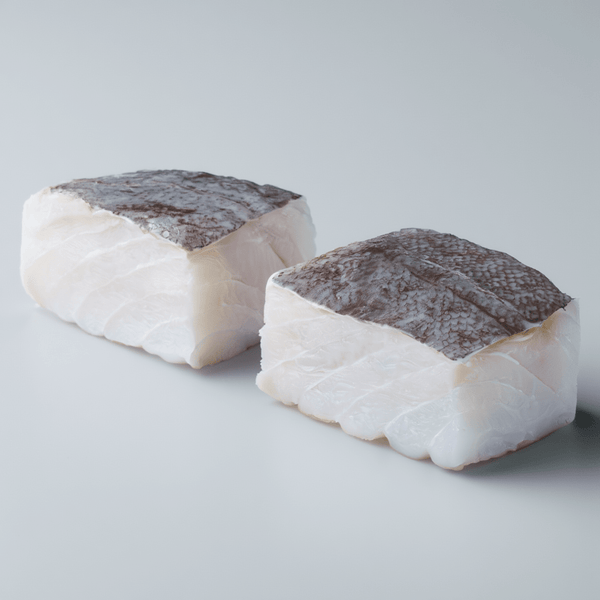
| Medium Chunks | 2-3 cm | 36 hours | 3-4 times |
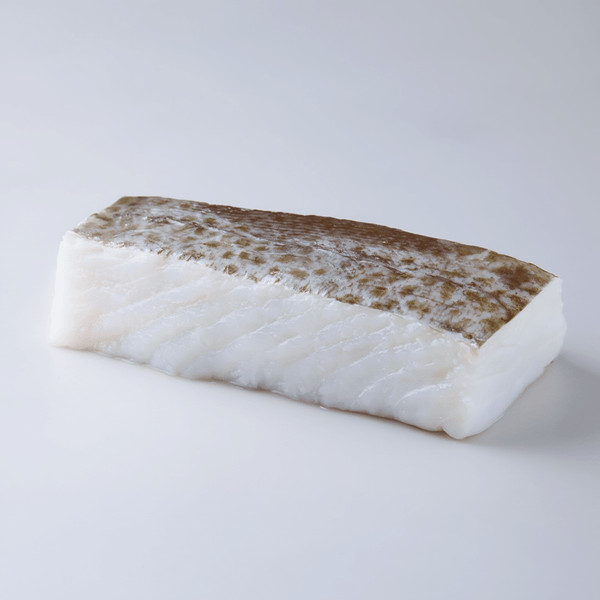
| Medium Loin | 3-4 cm | 48 hours | 4 times |
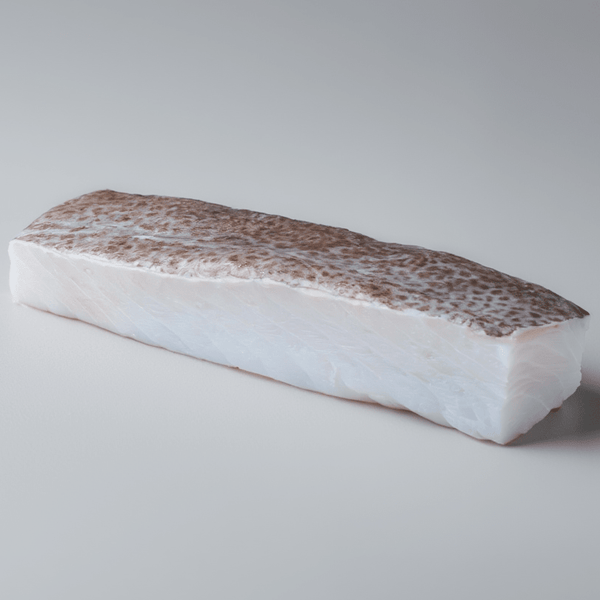
| Thick Loin / Penca | 4-5 cm | 60-72 hours | 4-5 times |
| Whole, Uncut Piece | > 5 cm | 72-96 hours | 5-6 times |
Important: these times are approximate for desalting in the refrigerator (2-5°C). At room temperature, the process is faster but also riskier due to bacterial proliferation.
The 3 Golden Rules of Desalting
1. Always in the refrigerator, never at room temperature
During desalting, cod is in a microbiological "risk zone." The refrigerator (2-5°C) slows bacterial growth while the salt progressively dissolves. At room temperature, the process is faster but bacterial proliferation is too — it's not worth the risk.
2. Plenty of water and regular changes
Use a large container with at least 3 times the volume of water relative to the cod piece. The water becomes saturated with salt progressively and stops extracting — that's why it needs to be changed. Each change renews the osmotic gradient.
Frequency of change: every 8-12 hours for thick pieces, every 6-8 hours for thin pieces.
3. Skin side up
Always place the cod with the skin side up (flesh side down). Salt concentrates in the flesh, and when submerged, diffusion is more efficient. The skin acts as a partial barrier that regulates the desalting speed.
Related Bacalalo Products


How to Tell if Desalting is Correct (Without Tasting)
You don't always want to cut a piece and taste it. These signs will guide you:
- Texture: the flesh changes from rigid and translucent to flexible and opaque. If you bend it slightly, it should yield without breaking.
- Color: from yellowish/translucent to uniformly opaque white.
- Touch: the surface changes from slippery-saline to slightly sticky (natural gelatin).
- Weight: a well-desalted piece weighs 15-20% more than when dry (it absorbs water).
The fork trick
Stick a fork into the thickest part of the piece. If it goes in with gentle resistance (not hard as a rock or soft as butter), the desalting is spot on. If it's very difficult, it needs more time. If it goes in without resistance, it's probably over-desalted.
Common Mistakes (and How to Correct Them)
I've over-desalted it — can it be fixed?
Yes. Remove the cod from the water and leave it in the refrigerator without water for 2-4 hours. Some of the internal salt will redistribute to the surface. You can also add a pinch of salt to the cooking water to compensate.
I under-desalted it — it's still salty
Re-submerge it in clean, cold water. Every 6-8 extra hours is equivalent to reducing one "point" of salt. Do not try to speed it up with hot water — it will destroy the texture.
I left the cod for more than 96 hours
If it has been in the refrigerator and the water has been changed regularly, it's probably fine but very desalted. Check that it doesn't smell bad. If the texture is normal, use it for dishes where you can control the salt (croquettes, brandade).
Emergency Rapid Desalting
Need desalted cod in less than 24 hours? These techniques speed up the process, though always with some loss of texture:
- Flakes under running water: place cod flakes under a stream of cold water for 2-3 hours. Works for croquettes and brandade.
- Slice thinly: slice the cod to 0.5-1 cm thick and desalt for 8-12 hours. It loses some texture but is edible.
- Milk: substituting part of the water with whole milk softens the salty taste and adds creaminess (Portuguese technique).
Never use: hot water, microwave, or sugar water. All these "solutions" destroy the cod's texture.
Conclusions
- Mastering Desalting: The Technique That Separates Good Cod From Mediocre: 80% of problems with cod dishes stem from a common source: incorrect desalting.
- Desalting Time Chart by Thickness and Cut: Important: these times are approximate for desalting in the refrigerator (2-5°C).
- The 3 Golden Rules of Desalting: Use a large container with at least 3 times the volume of water relative to the cod piece.
- How to Tell if Desalting is Correct (Without Tasting): Stick a fork into the thickest part of the piece.
- Common Mistakes (and How to Correct Them): Re-submerge it in clean, cold water.
- Emergency Rapid Desalting: Never use: hot water, microwave, or sugar water.
Frequently Asked Questions
Can I desalt cod directly from the freezer?
Yes, but add 12-24 extra hours to the total time. The ice melts slowly and acts as an initial barrier. Put it in the refrigerator and let it thaw and desalt simultaneously.
Does the type of water matter?
Tap water works perfectly. If your water has a lot of chlorine, let it sit for 30 minutes before submerging the cod. Don't use mineral water — it's an unnecessary expense.
Can I reuse desalting water?
No. Desalting water is saturated with salt and proteins. Discard it and use clean water with each change.
Can desalted cod be refrozen?
Yes, once desalted you can freeze it. Vacuum seal or put it in an airtight bag without air. It will last 2-3 months in the freezer. When thawed, it loses some firmness but is perfectly usable.
Save time with our already desalted and ready-to-cook cod.
How long should desalted cod be cooked?
Cooking: When the water is hot, add the cod with just enough water to cover it. Once the water starts to boil, cook for 6-7 minutes (depending on the serving size).
How long does cod need to be desalted?
To desalt shredded cod, 12 hours are needed for a generous amount. For very small pieces, you can desalt the cod for between 12 and 24 hours. Medium pieces should be left for 48 hours, and large cod pieces can take up to 72 hours.
How long does the cod desalting technique last?
For thick parts, like loins, desalting will take 3 days. For thinner parts, desalting will take about 36 hours, about a day and a half. In the case of cod flakes, 2 hours will be sufficient.
→ See our selection of desalted cod from Iceland
Discover more