


Table of Contents
- What is Pisto Manchego (and why it's not the same as a stir-fry)
- Pisto Manchego vs. Regular Pisto vs. Samfaina: Real Differences
- The Best Cod Cut for This Recipe
- Ingredients for Cod with Pisto Manchego
- How to Prepare Pisto Manchego Step-by-Step
- How to Cook Cod to Accompany the Pisto
- Variations: Baked, with Egg, Gratinéed
- Frequently Asked Questions
Cod with Pisto Manchego is one of those dishes that prove Spanish cuisine, when made with patience and good ingredients, needs no embellishment. It's a direct encounter between desalted cod—fleshy, with its gelatinous texture—and a pisto slowly confited until the vegetables almost melt into each other.
It's not a difficult dish. But it does require two things: respecting the cooking times of each vegetable and choosing good cod. A thick, well-desalted loin makes the difference between an acceptable dish and one that makes you want more. And that's exactly what we're going to achieve here.
In this comprehensive guide, we'll explain what makes Pisto Manchego special compared to other vegetable stir-fries, which cod cut to use, how to prepare each component separately, and how to bring it all together. We also cover the most popular variations—baked, gratinéed, with egg—and answer common questions.
What is Pisto Manchego (and why it's not the same as a stir-fry)
Pisto Manchego is a vegetable preparation originating from La Mancha (Ciudad Real, Toledo, Albacete, Cuenca) that stands out from any other stir-fry due to a fundamental principle: each vegetable is cooked separately before being added to the whole. This is not a whim. It's what allows each vegetable to maintain its texture and perfect cooking point.
In a conventional stir-fry, you throw everything into the pan more or less at the same time. The result is often a uniform mass where the pepper has disintegrated, the onion is raw inside, and the zucchini has released so much water that everything is boiled. Pisto Manchego avoids this because it respects that a pepper needs more time than a zucchini, and that tomato should be added at the end so it doesn't acidify the dish prematurely.
The traditional base of Pisto Manchego includes:
- Onion: slowly confited until translucent and sweet.
- Red and green bell peppers: cut into small dice, poached until tender but not disintegrated.
- Zucchini: added after the peppers because it needs less time.
- Ripe tomato: grated or crushed, incorporated at the end so it reduces and concentrates its flavor.
Extra virgin olive oil is a protagonist, not an extra. It is used generously because pisto is, in essence, a confit of vegetables in oil. The final result should be a smooth, shiny stew with identifiable but perfectly integrated vegetables.
When this pisto is combined with good cod—a thick, juicy loin with crispy skin—the contrast of textures and flavors is extraordinary. The natural sweetness of the confited vegetables balances the residual saltiness of the cod, and the fish's gelatin adds body to the dish.
Pisto Manchego vs. Regular Pisto vs. Samfaina: Real Differences
There is much confusion between these three preparations. They are similar, yes, but they are not the same. Here are the key differences:
| Characteristic | Pisto Manchego | "Regular" Pisto (generic) | Samfaina (Catalan) |
|---|---|---|---|
| Origin | Castilla-La Mancha | All of Spain (simplified version) | Catalonia and the Balearic Islands |
| Base Vegetables | Onion, red and green bell peppers, zucchini, tomato | Variable; often includes eggplant | Onion, eggplant, pepper, tomato, zucchini |
| Eggplant? | No (not traditional in La Mancha) | Frequently yes | Yes, essential ingredient |
| Method | Each vegetable is cooked separately and combined at the end | All together or in two batches | Each vegetable separately (similar to Manchego) |
| Final Texture | Smooth, identifiable vegetables | More homogeneous, sauce-like | Smooth, visible vegetables |
| Oil | Generous EVOO (confit) | Moderate | Generous EVOO |
| Classic Accompaniment | Fried egg, cod, bread | Egg, tuna, any protein | Cod, rabbit, chicken |
| Spices | Salt only (Manchego purism) | Salt, sometimes paprika or garlic | Salt, sometimes Provençal herbs |
The main difference between Pisto Manchego and Catalan samfaina is eggplant: it is not included in authentic Pisto Manchego, while it is an essential ingredient in samfaina. As for the method, both share the philosophy of cooking each vegetable separately, which distinguishes them from "generic pisto" where everything is added together.
For our cod with pisto, we will follow the orthodox Manchego recipe: no eggplant, with the vegetables confited individually. If you prefer the version with eggplant (closer to samfaina), simply add 1 diced eggplant, previously salted to remove bitterness, and sauté it separately before adding it to the mixture.
The Best Cod Cut for This Recipe
Not all cod cuts work equally well with pisto. The key here is that you need a piece thick enough to maintain its structure when cooked, and with skin to achieve that crispy contrast that elevates the dish.
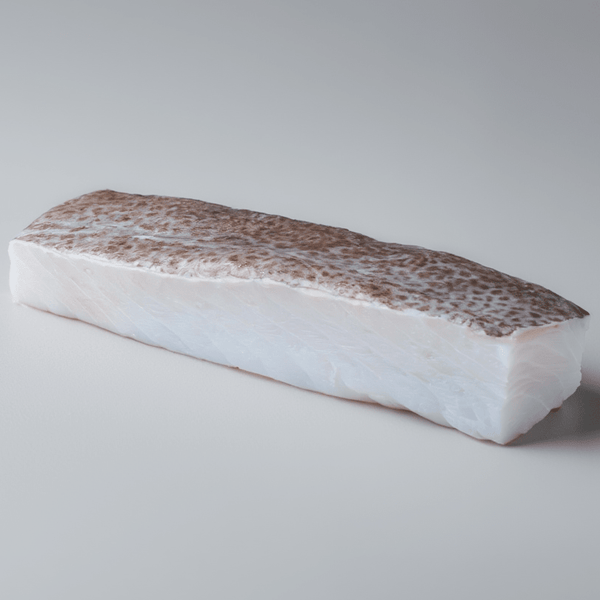
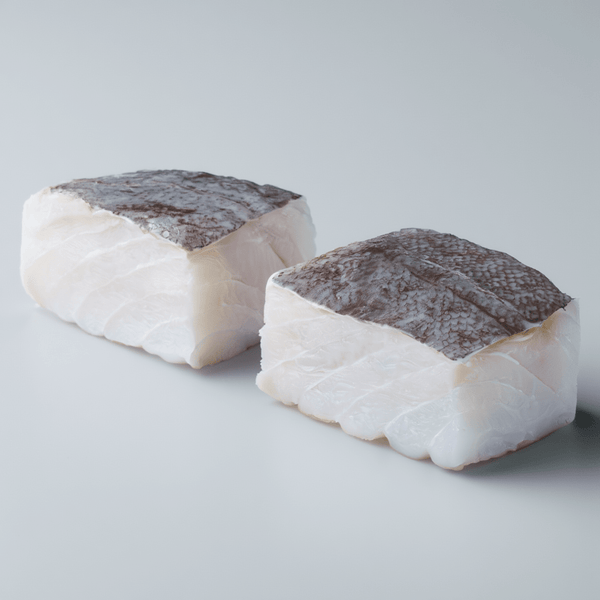
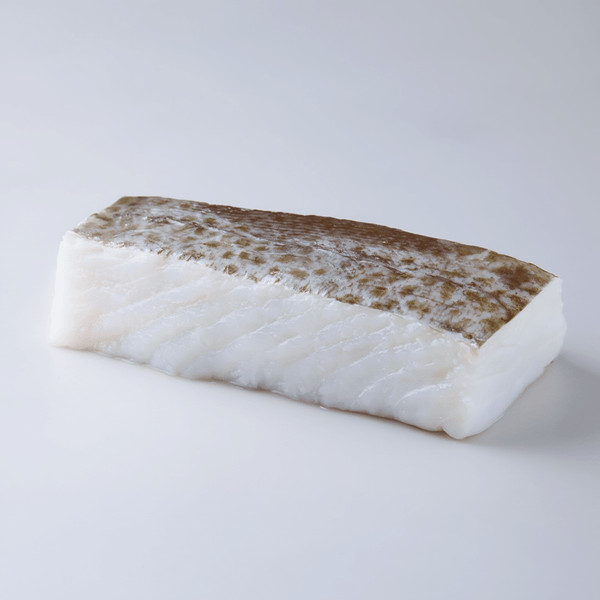
The loin is the ideal cut. It is the thickest and meatiest part of the cod, with large flakes and a perfect proportion of gelatin. When pan-fried or baked, it remains juicy inside and lightly browned outside. If it also has skin, you can achieve a crispy texture that contrasts perfectly with the smooth texture of the pisto.
Other cuts that work:
- Center loin: The thickest part of the loin. If you can choose, it's the best option.
- Steak: Transversal cut with bone. Works well baked, but the bone can be inconvenient if you prioritize ease of eating.
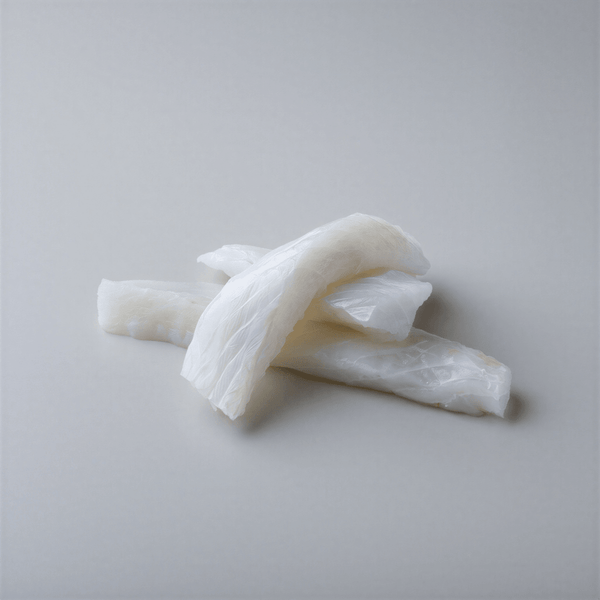
- Flakes or shredded: Only for "express" versions where you mix the cod directly with the pisto. It loses the charm of the contrasting textures.
What we do NOT recommend: tails (too thin, dry out quickly) or trimmings (irregular, uneven cooking).
If you want to know more about each cut and when to use each one, consult our guide to the 5 cod cuts.
Desalted Cod Loin — Ready to Cook
At Bacalalo, we have been working with cod since 1990. Our desalted cod loin arrives at your home ready to cook: perfectly desalted, preservative-free, with the texture and flavor of real cod. Ideal for this recipe.
- Desalted cod loin — The perfect cut for Pisto Manchego
- View all desalted cod collection
Ingredients for Cod with Pisto Manchego (4 servings)
For the Pisto Manchego
- 2 medium onions
- 2 Italian green bell peppers
- 2 red bell peppers
- 2 medium zucchinis
- 4 large ripe tomatoes (or 400 g of natural crushed tomatoes)
- Extra virgin olive oil — approx. 100 ml
- Salt
- 1 teaspoon of sugar (optional, only if the tomato is very acidic)
For the Cod
- 4 desalted cod loins, about 180-200 g each
- Extra virgin olive oil for the pan
- 1 clove of garlic (optional)
- Flour for light dredging (optional)
For Plating
- Fresh chopped parsley
- A drizzle of raw extra virgin olive oil
How to Prepare Pisto Manchego Step-by-Step
The key to Pisto Manchego is patience. Each vegetable has its time. Don't try to speed things up by increasing the heat: the vegetables should confit, not fry.
Step 1: Prepare the vegetables
Cut all vegetables into similar-sized dice (about 1-1.5 cm). This is important for even cooking and a clean visual result. Peel the tomatoes, remove seeds, and chop (or grate directly).
Step 2: Confit the onion (10-12 minutes)
In a large skillet or shallow pot, heat a good drizzle of olive oil (about 3-4 tablespoons) over medium-low heat. Add the diced onion and a pinch of salt. Cook, stirring occasionally, until completely translucent and sweet, without browning. This takes about 10 to 12 minutes.
Step 3: Poach the peppers (10-15 minutes)
Remove the onion and set aside. In the same pan, add a little more oil and poach the green and red peppers. Start with the green (which is harder) and add the red after 5 minutes. Cook over medium-low heat until tender but not disintegrated. Set aside with the onion.
Step 4: Cook the zucchini (7-8 minutes)
Again in the same pan with a little more oil, cook the diced zucchini. Zucchini releases water, so don't add too much oil. Cook over medium heat until tender and its water has evaporated. Set aside with the rest.
Step 5: Prepare the tomato (15-20 minutes)
This is the longest and most important step. In the pan (now with the oil from all previous cooks, which will be delicious), add the grated or crushed tomato. Cook over medium-low heat, stirring frequently, until the tomato has reduced by half and lost its raw acidity. You'll know it's ready when the oil separates from the tomato and it has a concentrated dark red color. If the tomato is very acidic, add a teaspoon of sugar.
Step 6: Combine everything (5 minutes)
Incorporate all the reserved vegetables into the tomato. Mix carefully, adjust salt, and cook everything together for 5 minutes over low heat so the flavors integrate. The pisto should be smooth, not dry. If it's too thick, add a couple of tablespoons of water.
Total pisto time: about 50-60 minutes. It may seem like a lot, but most of it is passive cooking. And the result is completely different from a quick 20-minute pisto.
Tip: Pisto tastes better the next day. Prepare it the evening before, store it in the fridge, and gently reheat before serving. The flavors integrate and mellow.
How to Cook Cod to Accompany the Pisto
While the pisto rests (or the next day), it's time to cook the cod. Here are two methods depending on your preferences:
Method 1: Pan-fried Cod (recommended)
This is our preferred method because it achieves the crispy skin that contrasts with the smooth pisto.
- Pat the cod loins dry with paper towels. This step is essential for crispy skin.
- Heat a non-stick pan over medium-high heat with a drizzle of olive oil.
- Place the loins skin-side down and cook for 4-5 minutes without moving. The skin should be golden and crispy.
- Flip and cook for 2-3 more minutes on the flesh side. The interior should remain juicy, slightly translucent in the center.
- If you want to add a clove of garlic, thinly slice it and add it to the pan with the cod to brown without burning.
For more details on this technique, consult our guide on how to pan-fry cod without it drying out or sticking.
Method 2: Baked Cod
If you prefer a more convenient and uniform method, preheat the oven to 200 °C. Place the loins on a baking sheet with a drizzle of oil, and bake for 12-15 minutes. The cod will be ready when it flakes easily with a fork but the center is still juicy.
How to Plate
- Serve a generous base of hot Pisto Manchego on each plate.
- Place the cod loin on top, skin-side up if pan-fried.
- Add a drizzle of raw extra virgin olive oil.
- Sprinkle with fresh chopped parsley.
- Serve immediately.
Cod with pisto needs no further accompaniment, but if you wish, a good loaf of bread for dipping into the pisto sauce is the perfect side.
If desalting cod causes you doubts, we have a specific guide: how to properly desalt cod at home.
Variations: Baked, with Egg, Gratinéed
The basic recipe allows for several variations worth knowing. All of them start from the same Pisto Manchego and simply change how the elements are combined.
Baked Cod with Pisto
Instead of cooking the cod and pisto separately, you can assemble everything in a baking dish. Spread the pisto as a base, place the cod loins on top, add a drizzle of oil, and bake at 190 °C for 15-18 minutes. The cod cooks in the steam generated by the pisto, resulting in an especially juicy fish. The downside is that you lose the crispy skin.
Cod with Pisto and Egg
This is the heartiest version and it is traditional in La Mancha to serve pisto with egg. You have two options:
- Fried egg: Place a fried egg on top of the cod and pisto. The runny yolk mixes with the pisto, creating a spectacular sauce.
- Poached egg: Make a well in the hot pisto (in the pan), crack an egg into it, cover, and cook until the whites are set but the yolk remains runny. Serve the cod alongside.
Gratinéed Cod with Pisto
For a more elegant finish (ideal if you have guests): assemble the pisto in individual clay ramekins, place the cod on top, sprinkle with a little grated Parmesan cheese or breadcrumbs with garlic and parsley, and gratinée under the oven grill for 3-4 minutes, watching carefully to prevent burning. The result is a golden crust that adds another layer of texture.
Shredded Cod with Pisto
If you prefer a more rustic version, flake the cod and mix it directly with the pisto in the last 5 minutes of cooking. It loses the contrast of textures but gains in flavor integration. This version works very well as a filling for empanadas, a base for a toast, or even as a filling for piquillo peppers.
To avoid common mistakes when cooking any of these versions, check our guide on common mistakes when cooking cod and how to prevent it from drying out or breaking apart.
Recipe: Cod with Pisto Manchego
Prep time: 20 minutes
Cook time: 60 minutes
Total time: 1 hour 20 minutes
Servings: 4 people
Category: Main course
Cuisine: Spanish, Manchegan
Ingredients
- 4 desalted cod fillets (180-200 g each)
- 2 medium onions, diced
- 2 Italian green peppers, diced
- 2 red peppers, diced
- 2 medium zucchini, diced
- 4 large ripe tomatoes, grated
- 100 ml extra virgin olive oil
- Salt to taste
- Fresh parsley for serving
- 1 clove garlic (optional)
Instructions
- Dice all vegetables uniformly into 1-1.5 cm pieces. Peel and grate the tomatoes.
- Confit the onion in olive oil over medium-low heat for 10-12 minutes until translucent. Set aside.
- In the same pan, poach the green and red peppers for 10-15 minutes over medium-low heat. Set aside.
- Cook the diced zucchini for 7-8 minutes until tender and its water has evaporated. Set aside.
- Using the accumulated oil in the pan, add the grated tomato and cook for 15-20 minutes over medium-low heat until reduced and the oil separates.
- Add all the reserved vegetables to the tomato. Mix, adjust salt to taste, and cook for 5 minutes over low heat.
- Pat the cod fillets dry with paper towels.
- Heat a pan with oil over medium-high heat. Place the fillets skin-side down and cook for 4-5 minutes.
- Flip and cook for another 2-3 minutes on the flesh side.
- Serve the pisto as a base, place the cod on top with the skin facing up, drizzle with raw oil, and sprinkle with chopped parsley.
Frequently Asked Questions about Cod with Manchego Pisto
Can I use frozen cod instead of desalted cod?
Yes, but the result won't be the same. Desalted cod (which comes from salted cod) has a firmer texture and deeper flavor than fresh or frozen cod. Salting and then desalting transform the fish protein, creating those characteristic flakes and gelatin that make the dish special. If you use frozen cod, thaw it in the refrigerator for 24 hours and dry it very well before cooking.
How long does Manchego pisto keep?
Pisto keeps perfectly in the refrigerator for 4-5 days in an airtight container. In fact, as we already mentioned, it tastes even better the next day. You can also freeze it for up to 3 months without losing quality. Cod, on the other hand, is best cooked just before serving and not re-frozen.
Can Manchego pisto be made without zucchini?
Yes. In fact, the most traditional Manchego pisto only contains onion, pepper, and tomato. Zucchini is a more modern addition that adds volume and smoothness. If you omit it, you will have a more concentrated and intense pisto, truer to the original village version.
What is the difference between Manchego pisto and ratatouille?
Although they share the idea of vegetables cooked in oil, they are distinct dishes. French ratatouille includes eggplant and Provençal herbs (thyme, rosemary, basil) and is traditionally presented with the vegetables sliced and layered. Manchego pisto is diced, does not contain eggplant or aromatic herbs, and is cooked as a rich stew where everything is integrated.
Can I add eggplant to Manchego pisto?
You can, but then you would technically be closer to a samfaina or a generic pisto. If you decide to add it, dice it, salt it, and let it sit for 20 minutes to release its bitterness, then dry it and fry it separately before incorporating it into the dish. Eggplant adds creaminess and an interesting smoky note.
What wine pairs best with cod and pisto?
A full-bodied white works very well: a Godello from Valdeorras, a barrel-fermented Verdejo, or a Viura from Rioja with aging. If you prefer red, opt for a young, light one, such as a Garnacha from La Mancha (consistent with the origin of the dish) served slightly chilled. Avoid reds with too much oak or powerful tannins, as cod is delicate.
How many calories does cod with Manchego pisto have?
A generous serving of cod with pisto (200g of loin + pisto) provides approximately 350-400 kcal. Most of the calories come from the olive oil in the pisto. It is a nutritionally very complete dish: high biological value protein from the cod, fiber and vitamins from the vegetables, and healthy fats from the olive oil.
🛒 Products mentioned in this article
⭐ 4.9/5 · 24-48h chilled delivery · Since 1990 at Mercat del Ninot
Conclusion: A Dish Worth Your Time
Cod with Manchego pisto is not complicated, but it does require something many modern recipes try to eliminate: time. Time to confit each vegetable separately. Time for the tomato to reduce and concentrate its sweetness. Time for the pisto to rest and for the flavors to meld.
That time is what turns a quick vegetable stir-fry into a true Manchego pisto. And when you combine it with a good cod loin — well desalted, cooked just until it flakes but remains juicy — the result is a dish that needs no embellishments or sophisticated techniques.
If you're interested in exploring more traditional cod recipes, we have a compilation of grandma's cod recipes that follow the same philosophy: quality ingredients, simple technique, and respect for cooking times.
And remember: the success of this dish starts with the cod itself. A good desalted loin, generously thick and well-treated, is the foundation upon which everything else rests.
Marc González Sáez — Third generation in the cod business. From Mercat del Ninot in Barcelona.