

Summary: Fried anchovies are fresh anchovy fillets (bocarte) coated in flour, egg, or beer batter and deep-fried in hot oil until a golden and crispy exterior encases a tender and juicy interior. They are one of the most popular tapas in Spanish cuisine, found in bars and taverns from San Sebastian to Malaga, and a perfect example of how well-executed frying can transform a simple ingredient into something extraordinary.

What are fried anchovies?
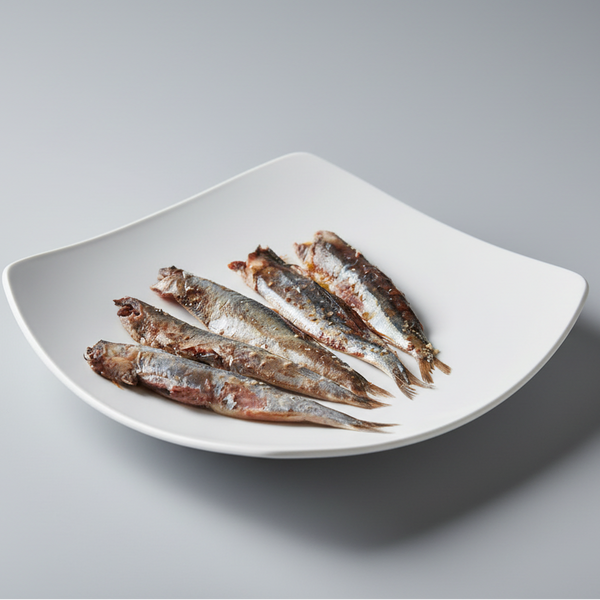
Fried anchovies are fresh anchovy fillets (bocarte) coated in flour, egg, or beer batter and deep-fried in hot oil until a golden and crispy exterior encases a tender and juicy interior. They are one of the most popular tapas in Spanish cuisine, found in bars and taverns from San Sebastian to Malaga, and a perfect example of how well-executed frying can transform a simple ingredient into something extraordinary.

Frying fish is an art with deep roots in Spain. It was the Phoenicians who introduced the technique of frying in olive oil to the Iberian Peninsula more than 2,500 years ago, and since then, fried fish has become a hallmark of Spanish gastronomy, especially in Andalusia, where "pescaítos fritos" (small fried fish) are an institution. Fried anchovies are the most accessible and gratifying expression of this tradition: a small, crispy, flavorful, and tremendously addictive bite.
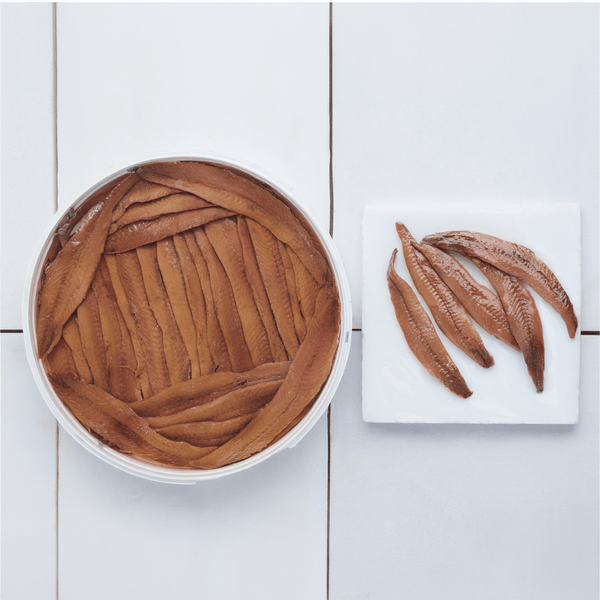
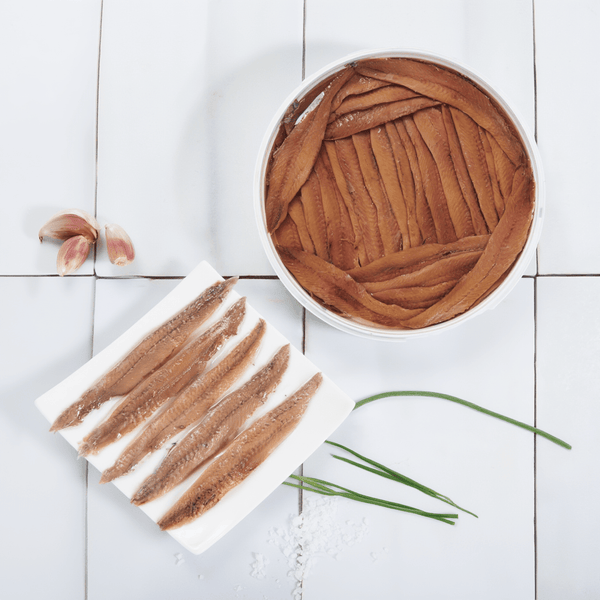
At Bacalalo, we work with top-quality anchovies and boquerones. Our selection of Cantabrian anchovies in preserves is exceptional, but for this recipe, we need fresh anchovies (bocarte), which is the raw material on which we will build our perfect coating. If you want to know more about the difference between the various presentations of this fish, our Cantabrian anchovy guide will give you all the information you need.
What distinguishes mediocre fried anchovies from exceptional ones is attention to three details: oil temperature, coating consistency, and frying time. Mastering these three factors is the difference between an oily, soft batter that hides overcooked fish, and a crispy, light, golden coating that protects and enhances a tender, juicy bocarte. In this guide, we will cover both methods — classic coating and beer tempura — with the level of detail that a seemingly simple but technically demanding dish deserves.
Anchovy vs. Boquerón: clarifying the confusion
Before starting with the recipe, it is worth clarifying a terminological confusion that generates much misunderstanding, even among experienced cooks:

- Bocarte / Boquerón: This is the fresh fish (Engraulis encrasicolus). It's what we buy at the fish market, silver and shiny. This is the ingredient we need for this recipe.
- Anchoa (Anchovy): Strictly speaking, this is bocarte cured in salt for months and then packed in olive oil. It's what we find in Cantabrian anchovy tins. This product is already cured and is not breaded or battered.
- Boquerón en vinagre (Vinegared anchovies): This is bocarte marinated in vinegar and seasoned with garlic, parsley, and oil. It's a completely different product that is also not breaded or battered. If you're interested in this preparation, check out our recipe for boquerones en vinagre.
In colloquial practice, in many areas of Spain, "anchoa" is used to refer to both the fresh fish and the cured product. When we say "anchoas rebozadas" (fried anchovies) in the context of this recipe, we are referring to fresh bocarte that has been battered and fried. Salt-cured anchovies (from a can) are not fried: they are eaten directly, on toast or in many cold preparations.
To delve deeper into the fascinating world of canned anchovies, our Santoña anchovy guide will reveal why the best anchovies in the world are made in a small Cantabrian town.
Ingredients for 4 servings
For the anchovies
- 500 g fresh bocarte (about 24-30 medium pieces), cleaned and deboned
- Mild olive oil or sunflower oil for frying (at least 1 liter)
- Salt
For the classic coating (Method 1)
- 150 g wheat flour
- 2 beaten eggs
- Salt
For the crispy beer tempura (Method 2)
- 150 g wheat flour
- 1 tablespoon cornstarch
- 200 ml very cold beer (lager type)
- 1 pinch of baking soda
- Salt
Preparation of fresh bocarte
If you buy whole bocarte, you will need to clean them: cut off the head, open the belly with your thumb, remove the entrails and the central bone, and open the bocarte in a butterfly shape (fanned out, joined at the tail). Rinse briefly under the tap and pat dry with paper. If you prefer to skip this step, ask the fishmonger to clean them and open them in a butterfly shape for you. Most will be happy to do so.

Related products from Bacalalo


Method 1: Classic coating with flour and egg
The classic Spanish coating — flour and egg — is the most traditional method. It produces a golden, somewhat thick coating that effectively protects the fish from the direct heat of the oil. It's grandma's coating, the one from the timeless tavern.

Step-by-step preparation
- Prepare the coating station: Place three containers in a line: one with flour seasoned with salt, another with beaten eggs with a pinch of salt, and a plate to place the coated bocartes before frying.
- Flour: Pass each butterfly-opened bocarte through the flour, ensuring both sides are covered. Gently shake off any excess flour. The flour layer should be thin and even.
- Dip in egg: Submerge the floured bocarte in the beaten egg, letting any excess drip off slightly. The egg adheres to the flour, creating the base of the coating.
- Heat the oil: In a wide pan or deep fryer, heat oil to 180 °C (350 °F). Check the temperature by immersing a small piece of bread: it should bubble immediately and brown in 30 seconds. If you don't have a thermometer, this bread test is reliable.
- Fry: Place the coated bocartes into the hot oil, without overcrowding (maximum 4-5 pieces per batch). Fry for 1.5-2 minutes until golden on both sides. Flip them once if necessary.
- Drain: Remove with a slotted spoon and place on absorbent paper. Lightly salt immediately after removing from the oil (salt adheres better when hot and moist).
Result: Golden coating, somewhat thick with a spongy egg texture. Crispy on the outside, tender bocarte on the inside.
Method 2: Crispy beer tempura
Beer tempura produces a lighter, crispier, and more elegant coating than the classic one. The carbon dioxide in the beer creates bubbles in the batter that, when fried, become small air pockets that provide an ultra-crispy texture. Baking soda enhances this effect. This is the method used by many modern restaurants and gastro-bars.

Step-by-step preparation
- Prepare the batter: In a bowl, mix the flour, cornstarch, baking soda, and salt. Pour in the very cold beer all at once and mix with a fork or whisk just until combined. Do not overmix: lumps are fine. A perfectly smooth batter produces a less crispy coating because too much gluten has developed. The batter should have the consistency of heavy cream.
- Keep the batter cold: Place the batter bowl over another bowl with ice. Cold batter produces a crispier coating because the temperature contrast with the hot oil generates a more intense thermal shock.
- Lightly flour: Before dipping into the batter, toss the bocartes in flour and shake off any excess. This dry flour layer allows the batter to adhere better to the fish.
- Dip in batter: Take each bocarte by the tail, submerge it in the beer batter, and let any excess drip for 2-3 seconds.
- Fry: Oil at 180-185 °C (350-365 °F). Place the bocartes in and fry for 1.5-2 minutes until golden and crispy. The beer batter will visibly bubble upon contact with the oil — this is normal and desirable.
- Drain and serve immediately: Beer tempura is crispier than classic coating but also loses its crispiness faster. Serve as soon as the excess oil has drained.
Result: Thin, ultra-crispy coating, almost transparent in some areas, with bubbles and an irregular texture that is visually very attractive. This is the coating that makes people ask, "How did you do that?"
Professional frying tips
Frying seems simple, but it has more science to it than it appears. These tips make the difference between homemade frying and professional-level frying:
- Oil temperature at 180 °C (350 °F): This is the most important detail in the entire recipe. Below 170 °C (340 °F), the coating absorbs oil and becomes greasy. Above 190 °C (375 °F), it browns too quickly on the outside, leaving the inside raw. Invest in a kitchen thermometer: it's the tool that will most improve your fried dishes.
- Do not overcrowd: Each piece you add lowers the oil temperature. If you add too many at once, the temperature drops below the optimal point, resulting in soft and oily fried food. A maximum of 4-5 bocartes per batch in a medium-sized pan.
- Allow temperature to recover between batches: Wait 1-2 minutes between batches for the oil to return to 180 °C (350 °F). Do not add the next batch immediately after removing the previous one.
- Drain on absorbent paper: Place freshly fried anchovies on a wire rack (ideal) or on absorbent kitchen paper. The rack is better because it prevents steam from recondensing on the bottom, keeping the coating crispy on both sides.
- Salt immediately: Salt adheres best to the coating when it is hot and slightly damp from condensation. If you wait too long, the salt will not stick well.
- Type of oil: Use mild olive oil (not extra virgin, which smokes at frying temperatures) or high-oleic sunflower oil. Extra virgin olive oil is too aromatic and has a low smoke point for prolonged frying. High-oleic sunflower oil is the most neutral and stable option.
- Do not reuse oil excessively: Oil degrades with each use (oxidation, burnt residue). Filter after each use and discard after 3-4 fries. Degraded oil produces rancid flavors and is less healthy.
Variations and alternative coatings
Panko-coated Japanese style
Panko is Japanese breadcrumbs with an irregular flake texture, much crispier than conventional breadcrumbs. Pass the bocartes through flour, egg, and panko (in that order) and fry at 175 °C (345 °F) for 2 minutes. The result is extremely crispy, with a very attractive "curly" texture. Panko absorbs less oil than regular breadcrumbs.
Authentic Japanese tempura
Classic Japanese tempura uses ice-cold sparkling water instead of beer, pastry flour (low gluten content), and one egg. The batter is minimally mixed (with chopsticks, not a whisk), leaving visible lumps. It is fried at 170-175 °C (340-345 °F). The result is an even lighter and more delicate coating than beer tempura, almost ethereal. It requires practice, but the result is sublime.
Marinated and fried anchovies
Marinate the clean bocartes for 2-4 hours in a mixture of wine vinegar, minced garlic, sweet paprika, oregano, and salt. Drain, lightly flour, and fry. The marinade provides an intense and aromatic flavor that completely transforms the bocarte. This is the most popular version in Andalusia and is known as "boquerones en adobo" or "bienmesabe."
Stuffed and fried anchovies
Place a thin slice of Serrano ham or a salt-cured anchovy between two bocarte fillets (forming a "sandwich"), coat in flour and egg, and fry. The contrast between the fresh fish and the cured ham or salt-cured anchovy is spectacular. It's a top-tier tapa that impresses any diner.
Frying without coating (Andalusian style)
The purest and most minimalist version: simply flour the bocartes (without egg, without batter) and fry at 190 °C (375 °F) for 1-1.5 minutes. The flour forms a very thin, crispy layer that is barely perceptible, allowing the bocarte to be the complete star. This is the technique of professional Andalusian fryers, where the quality of the raw material and oil control are everything.
Accompaniments and Sauces
Sauces to accompany
- Lemon: the most classic and universal accompaniment. A squeeze of fresh lemon over the battered anchovies adds acidity that cuts through the fat of the frying and enhances the fish's flavor. Essential.
- Alioli: emulsified garlic, olive oil, and salt. The creaminess of alioli contrasts with the crispiness of the batter. Classic alioli without egg is more potent; with egg (garlic mayonnaise) it is milder and more accessible.
- Tartar sauce: mayonnaise with chopped gherkins, capers, spring onion, and parsley. Perfect for beer tempura: the acidity of the capers and gherkins complements the lightness of the batter.
- Romesco sauce: the Catalan sauce made with ñoras (dried bell peppers), almonds, tomato, garlic, and vinegar. Potent and full of character, ideal for larger anchovies with a thick batter.
- Soy sauce with ginger: for the tempura or panko version. Mix soy, a touch of mirin, grated ginger, and spring onion. It adds an umami dimension that works surprisingly well with anchovies.
How to serve
Battered anchovies are a quintessential tapa: served fresh, on brown paper or in a rustic ceramic dish, with lemon wedges on the side and the chosen sauce in a small bowl. They are eaten with the fingers — there is no more honest or satisfying way to enjoy them.
For a casual dinner with friends, serve battered anchovies with:
- Green salad dressed with lemon vinaigrette
- Rustic bread for dipping in the sauces
- Fried Padrón peppers
- Homemade potato wedges
- A very cold beer or a Fino sherry
For more ideas on how to enjoy preserved fish, discover our selection of anchovies and marinated anchovies and gourmet preserves at Bacalalo.
Discover our premium selection
Carefully selected seafood products since 1990 at Mercat del Ninot, Barcelona. Refrigerated shipping in 24-48h.
Conclusions
- What are battered anchovies?: Battered anchovies are fresh anchovy fillets (bocarte) coated in flour, egg, or beer batter and fried in hot oil until a golden, crispy exterior is achieved, enveloping a tender and juicy interior.
- Ingredients for 4 people: If you buy whole anchovies, you will need to clean them: cut off the head, open the belly with your thumb, remove the entrails and the central bone, and open the anchovy in a butterfly shape (fanned out, joined at the tail).
- Method 1: classic flour and egg batter: The classic Spanish batter—flour and egg—is the most traditional method.
- Method 2: crispy beer tempura: Beer tempura produces a lighter, crispier, and more elegant batter than the classic.
- Professional frying tips: Frying seems simple but has more science to it than it appears.
Frequently Asked Questions
Can I use canned anchovies for this recipe?
No, canned anchovies are already salt-cured and packed in oil. They have a completely different texture and flavor from fresh anchovies. For battering, you need fresh anchovies (the silvery fish you buy at the fishmonger's). Canned anchovies are eaten directly, on bread, in salads, or in a multitude of cold preparations.
What temperature should the oil be?
180 °C (350 °F) is the ideal temperature for most battered foods. You can verify it with a kitchen thermometer, or by doing the bread test: put a small piece of bread into the oil; if it bubbles immediately and browns in 30 seconds, the oil is ready. If the bread burns in seconds, it's too hot; if it barely bubbles, it's too cold.
Which is better: classic batter or beer tempura?
It depends on what you're looking for. The classic batter (flour + egg) is heartier, with more thickness and a spongy texture. Beer tempura is lighter, crispier, and more elegant. For a traditional bar tapa, choose classic. To impress at a dinner, tempura. Both are excellent.
How long do anchovies fry for?
1.5-2 minutes in total. Anchovies are small and thin, so they cook quickly. The visual indicator is the color: uniformly golden on both sides. If they get too dark, they are overcooked. It's better to remove them a little earlier than you think because the residual heat from the batter finishes cooking during draining.
Can they be prepared in advance and reheated?
It is not recommended. Battered anchovies lose their crispness quickly (15-20 minutes) and reheating them in the oven or microwave does not restore the original texture. The secret to good battered anchovies is to serve them immediately. If you're cooking for many, fry in batches and serve each batch directly from the oil to the table.
What is the difference between fried boquerones and battered anchovies?
They are essentially the same: fresh anchovies fried. The difference lies in regional nomenclature (boquerón in Andalusia, anchoa in the north, bocarte in Cantabria) and the type of batter. "Boquerones fritos" usually refers to the Andalusian version with just flour. "Anchoas rebozadas" implies a more elaborate batter with egg or a mix.
Can I use frozen anchovies?
Yes, frozen anchovies work well if defrosted correctly: in the refrigerator for 8-12 hours, never at room temperature or in the microwave. Drain and dry them very well with paper towels before battering. The extra moisture from defrosting is the enemy of crispy batter.
What oil is best for frying anchovies?
Mild olive oil (0.4°) or high-oleic sunflower oil. Extra virgin olive oil is too aromatic and has a lower smoke point. High-oleic sunflower oil is stable, neutral, and economical for frying. Never use coconut or palm oil. The amount needed should be enough for the anchovies to float freely: at least 2-3 cm (about 1 inch) deep.
Can they be made in an air fryer?
It can be done, but the result is not comparable. An air fryer does not produce the same Maillard reaction as frying in abundant oil, and the batter tends to be dry and pale instead of golden and crispy. If you use it, spray oil over the battered anchovies before air frying (180 °C / 350 °F, 8-10 minutes, flipping halfway). It's a lighter option but not real deep-frying.
How to make anchovies taste better?
To enjoy whole fillets without overdoing it on salt, try placing some anchovies on an open sandwich with tomato slices, basil, and a garlic aioli sauce, or combine them with Manchego cheese and roasted red pepper for classic Spanish pintxos.
Can battered anchovies be frozen?
Yes, you can freeze them to extend their shelf life, but keep in mind that the texture may change slightly after thawing.
What is the best way to cook anchovies?
Add oil to a large skillet until it covers 1.25 cm (0.5 inches) and heat to 175 °C (350 °F). Dredge the anchovies in the flour mixture, add them to the oil, and cook for 2 to 3 minutes. Flip them and cook for 2 more minutes, until golden on both sides. Cook the anchovies in batches, being careful not to overcrowd the pan.
Discover premium Cantabrian anchovies and marinated anchovies in preserve at Bacalalo.
Products you might be interested in