

Before answering: the question "can pregnant women eat anchovies" does not have a single answer. It depends on the type of anchovy: canned anchovies in oil, cooked fresh anchovies, anchovies in vinegar, and smoked anchovies present completely different risks during gestation. This guide analyzes each case with the real risks (anisakis, listeria, sodium), the stance of AESAN and FDA, and safe quantities.
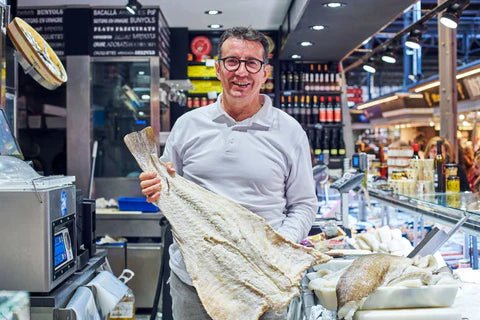
If you are looking for quality gourmet Bacalalo cod, we ship it refrigerated all over Spain within 24-48h.
| Type of anchovy | Safe in pregnancy | Main risk | Condition |
|---|---|---|---|
| Canned in oil (tin/jar) | Yes, in moderation | High sodium | Max. 4-6 fillets/serving |
| Anchovies in vinegar (boquerones) | Only if previously frozen | Anisakis (vinegar does NOT eliminate it) | Requires prior freezing -20C/48h |
| Cooked fresh anchovies | Yes (cooked to >70C internal) | Anisakis | Complete cooking mandatory |
| Cold-smoked anchovies | Not recommended | Listeria | Only if cooked with heat beforehand |
| From bars (without freezing control) | Avoid | No protocol guarantee | Impossible to verify |
Always consult your doctor or gynecologist. This guide is for informational purposes only and does not substitute medical advice.

Types of Anchovies and Pregnancy: Category Analysis
Canned anchovies (in tins, in olive oil, like Santoña type) can be eaten during pregnancy. They have undergone a salting process for months that eliminates pathogens, and the airtight packaging makes them safe. Anchovies in vinegar (boquerones), on the other hand, are more delicate: they are only safe if they have been previously frozen at -20 °C for 48 hours and kept properly refrigerated.

The key is to understand that "anchovies" is a broad term that encompasses very different products in terms of processing and, therefore, in terms of risks during pregnancy.
Canned Anchovies: Safe?
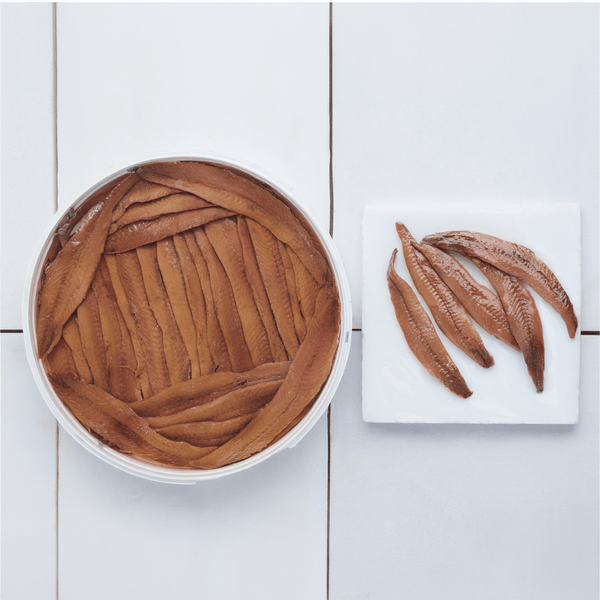
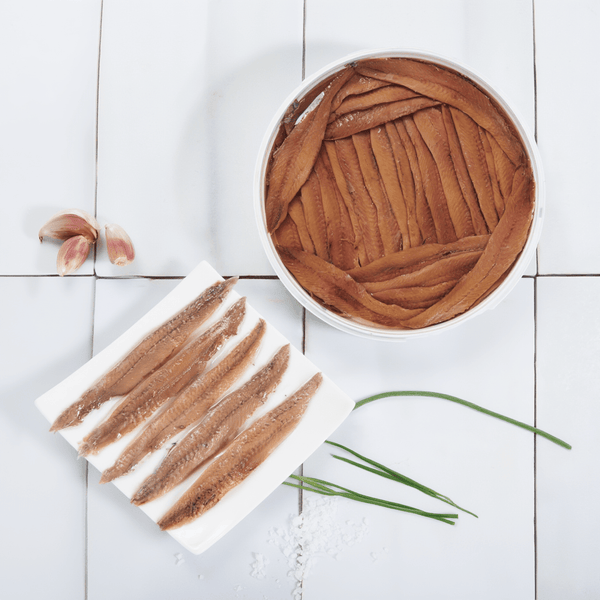
Canned or jarred anchovies (Cantabrian anchovies in oil, Santoña type) have undergone a curing process in salt for 6-18 months. This prolonged salting process eliminates bacterial activity and destroys anisakis larvae. In addition, airtight packaging in oil and vacuum sealing create an anaerobic environment where common pathogens cannot survive.
Health authorities (AESAN, NHS, FDA) consider canned cured and packaged fish safe for consumption during pregnancy. They are not on the list of foods to avoid, unlike cold-smoked salmon or sushi.
An important point: canned anchovies are very high in sodium (3,000+ mg/100 g). During pregnancy, fluid retention is common and excess salt can worsen it. The point is not to avoid them, but to consume them in moderation: 4-6 fillets as an appetizer are sufficient and provide omega-3 and protein without excessive salt intake.
Anchovies in Vinegar (Boquerones): Safe?
Anchovies in vinegar (boquerones) are raw fish marinated in acid. They are not cooked. This poses two main risks during pregnancy:

- Anisakis: vinegar does NOT kill anisakis larvae. Only previous freezing (-20 °C, 48h) eliminates them. If the anchovies have been correctly frozen before marinating, the risk of anisakis is eliminated.
- Listeria: vinegar reduces pH and hinders listeria growth, but does not completely eliminate it. The risk of listeria in anchovies in vinegar is low but not zero, especially if stored for several days.
The general recommendation for pregnant women is to avoid anchovies in vinegar from bars (where you cannot control if they were frozen or how long they have been made) and, if you prepare them at home, strictly follow the prior freezing protocol and consume them within 24-48 hours.
Related Bacalalo Products


Risks: Listeria, Anisakis, Mercury
Listeria
Listeria monocytogenes can be present in ready-to-eat refrigerated foods. Canned anchovies (salt-cured, airtight packaging) have virtually zero risk. Anchovies in vinegar have a low but not eliminated risk. See our guide on listeria and pregnancy for more details.
Anisakis
This parasite is present in most fish. It is eliminated by freezing (-20 °C, 48h) or cooking (>60 °C). Canned anchovies do not pose a risk (salt eliminates them during months of curing). Anchovies in vinegar do require mandatory prior freezing.
Mercury
Anchovies/boquerones are small, short-lived fish, so they accumulate very little mercury. They are in the lowest risk category according to AESAN, along with sardines, small mackerel, and cod. They can be consumed without limit of portions due to mercury. This is an advantage over large fish such as swordfish or bluefin tuna.
Type by Type: Which are Safe and Which are Not
- Canned/jarred anchovies (in oil): SAFE. Cured in salt for months, airtight packaging.
- Salted anchovies (not canned in oil): SAFE. Cured in salt, hostile environment for pathogens.
- Anchovies in vinegar (homemade, previously frozen): SAFE with caution. Consume within 24-48h.
- Anchovies in vinegar (from bars, no guarantee of freezing): ️ AVOID. You cannot control the process.
- Cooked fresh anchovies (fried, baked): SAFE. Cooking eliminates all risk.
- Raw fresh anchovies (sashimi, carpaccio): AVOID. High risk without freezing or cooking.
Benefits of Oily Fish in Pregnancy
Anchovies and boquerones are small oily fish, one of the most recommended types of fish during pregnancy. Their benefits include:

- Omega-3 (EPA/DHA): essential for fetal brain and visual development.
- Complete protein: essential amino acids for fetal growth.
- Vitamin B12: essential for red blood cell formation and the nervous system.
- Calcium: small anchovies eaten whole provide calcium from the bones.
- Low in mercury: small fish accumulate little mercury, unlike large predators.
The recommendation during pregnancy is to consume 2-3 servings of fish per week, varying between species. Canned anchovies, consumed in moderation (due to sodium), are an excellent way to obtain these nutrients.
It is important not to confuse caution with the elimination of fish. Many pregnant women, out of fear, drastically reduce their fish consumption, depriving themselves of one of the best foods for the baby's development. The key is not to eat less fish, but to choose the right fish prepared safely. Canned anchovies are one of the most convenient and safest ways to include oily fish in the diet during pregnancy: they do not require cooking, are easily stored, provide omega-3 and high-quality protein, and the food risk is practically non-existent.
Myths and Realities about Anchovies and Pregnancy
There are many myths surrounding fish consumption during pregnancy. Let's debunk the most common ones related to anchovies:

- Myth: "Canned fish is not safe during pregnancy." Reality: Canned fish is one of the safest foods. The prolonged curing process (anchovies) or sterilization (canned tuna, sardines) eliminates pathogens. They are completely safe.
- Myth: "Vinegar kills anisakis." Reality: NO. Only freezing at -20 °C for 48 hours or cooking at over 60 °C eliminates anisakis. Vinegar does not kill it.
- Myth: "Anchovies have a lot of mercury." Reality: Anchovies are small fish with very low mercury content. They are in the safest category according to AESAN. There is no consumption restriction due to mercury.
- Myth: "Canned fish loses omega-3s." Reality: Omega-3 fatty acids remain practically intact in canned goods. A can of anchovies provides an excellent dose of EPA and DHA.
- Myth: "If you eat anchovies, the baby will be allergic to fish." Reality: There is no scientific evidence for this. In fact, several studies suggest that fish consumption during pregnancy may reduce the risk of food allergies in the baby.
Correct information is the best tool for safe eating during pregnancy. Don't let myths deprive you of one of the most beneficial foods for you and your baby.
Safe Alternatives
If you prefer to exercise maximum caution during pregnancy:
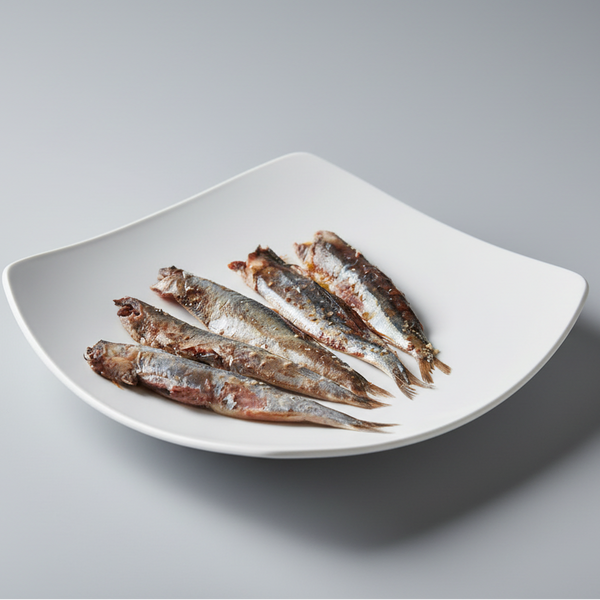
- Fried anchovies (boquerones): cooking eliminates all risks. And they are delicious.
- Canned sardines: same nutritional profile (omega-3, B12, calcium), safe packaging.
- Canned anchovies in cooking: use anchovies in cooked dishes (pasta, pizza, sauces). Heat eliminates any residual risk.
- Baked cod: low in mercury, high in protein, completely safe when cooked.
Practical Rules
- Canned anchovies: yes, in moderation (4-6 fillets). Watch out for sodium.
- Homemade anchovies in vinegar: only if frozen 48h before. Consume within 24-48h.
- Anchovies in vinegar from bars: best to avoid. You cannot control the process.
- Fried anchovies (boquerones): always safe. No restrictions.
- When in doubt, cook: any cooked preparation (>60 °C) is safe.
These recommendations are based on the precautionary principle during pregnancy. For the general population (non-pregnant), canned anchovies and properly prepared anchovies in vinegar are completely safe foods.
Context: Canned Fish in Pregnancy
Canned fish is, in general, one of the safest foods during pregnancy. The canning process involves high-temperature sterilization (115-120 °C) which destroys all pathogens, including listeria, anisakids, and any other bacteria. Canned sardines, canned tuna, canned mussels and, of course, anchovies in oil, are foods you can include in your pregnancy diet without worry.
The biggest benefit of including canned fish during pregnancy is the contribution of omega-3, vitamin B12, calcium, and proteins in a convenient and safe way. Canned goods do not require cooking, are easily stored, and are available in any supermarket. They are a particularly practical source of marine nutrients when first-trimester nausea makes cooking difficult.
The only precaution with canned fish during pregnancy is mercury in some species. Avoid or limit canned bluefin tuna and swordfish. Anchovies, sardines, small mackerel, and cod are fish with low mercury content and can be consumed freely (2-3 servings per week).
Another aspect to consider is sodium. Many canned fish products are high in salt (anchovies especially, with 3,000+ mg/100 g). During pregnancy, fluid retention is common and excess salt can worsen it. The point is not to avoid canned goods, but not to consume them in excess: a moderate portion of anchovies (4-6 fillets) provides valuable nutrients without a worrying excess of sodium if the rest of the diet is balanced.
In summary: canned fish are allies during pregnancy, not enemies. Canned anchovies are safe and nutritious. Pickled anchovies (boquerones en vinagre) require more caution. And for any doubts, your gynecologist or midwife can give you personalized recommendations.
Conclusions
- Quick answer: Canned anchovies (canned, in olive oil, Santoña style) can be eaten during pregnancy.
- Canned anchovies: safe?: Anchovies in cans or glass jars (Cantabrian anchovies in oil, Santoña style) have undergone a salt-curing process for 6-18 months.
- Pickled anchovies (boquerones en vinagre): safe?: Pickled anchovies are raw fish marinated in acid.
- Risks: listeria, anisakids, mercury: Listeria monocytogenes can be present in ready-to-eat refrigerated foods.
- Type by type: which ones are and which ones aren't: Anchovies and pickled anchovies are small oily fish, one of the most recommended types of fish during pregnancy.
Frequently Asked Questions
Can I eat canned anchovies while pregnant?
Yes. Canned or jarred anchovies (salt-cured, in oil) are safe during pregnancy. Moderate the amount due to high sodium content. 4-6 fillets as an appetizer is a good measure. Conclusions Quick answer: Canned anchovies (canned, in olive oil, Santoña style) can be eaten during pregnancy.
Can I eat pickled anchovies (boquerones en vinagre) while pregnant?
With caution. Only if they have been previously frozen for 48h at -20 °C and are freshly prepared (24-48h). Avoid those from bars or restaurants where you cannot verify the process. The general recommendation for pregnant women is to avoid pickled anchovies from bars (where you cannot control if they were frozen or how long they have been made) and, if you prepare them at home, strictly follow the prior freezing protocol and consume them within 24-48 hours.
Do anchovies contain mercury?
Very little. Anchovies are small, short-lived fish and accumulate minimal mercury. They are in the lowest risk category according to AESAN. They can be eaten without mercury restriction during pregnancy. Canned anchovies (salt-cured, hermetically sealed) have virtually no risk.
How many anchovies can I eat per day during pregnancy?
There is no strict limit for food safety. The limiting factor is sodium: 4-6 fillets provide about 400-600 mg of sodium, which is reasonable. Don't eat the whole can daily. Conclusions Quick answer: Canned anchovies (canned, in olive oil, Santoña style) can be eaten during pregnancy.
And during breastfeeding?
No restrictions. Anchovies (canned or pickled) are safe during breastfeeding. The omega-3 from anchovies passes into breast milk and benefits the baby.
Disclaimer: This guide is for informational purposes only and does not replace medical advice. Always consult your gynecologist or midwife.