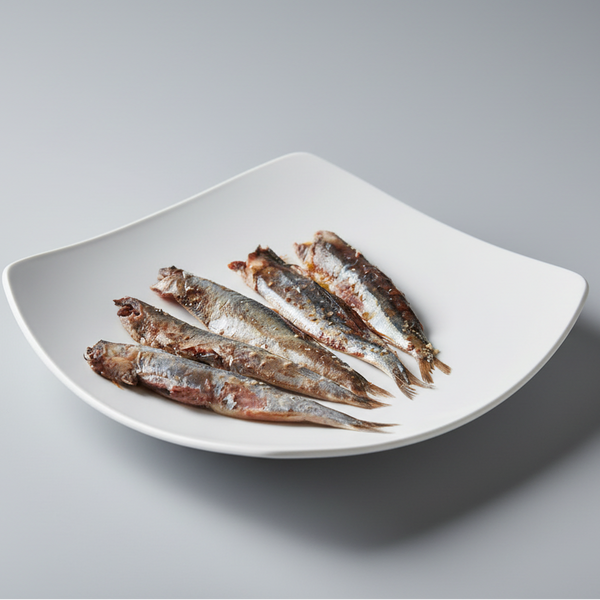
Anchovies in a casserole are one of those humble, seafood stews that prove you don't need an expensive ingredient to eat like royalty. Here, we're not talking about salted anchovies or anchovies in oil that come pre-cured in a can; we're talking about fresh fish, the anchovy (which is exactly the same species, Engraulis encrasicolus), stewed whole in an earthenware pot with a good sofrito, a splash of white wine, and, if you like, a handful of clams. A light, quick, and inexpensive spoon dish that, with just fifteen minutes of actual cooking, leaves you with a broth perfect for endless bread dipping.
At Mercat del Ninot, we've been watching seasonal fresh fish being cooked since 1990, and stewed anchovies are a springtime favorite, especially when the Cantabrian fishing season is at its peak. In this guide, I'll explain which fish to ask for, how to prepare the sofrito, the key trick to prevent the anchovies from falling apart in the casserole, and three variations so you never get bored: in green sauce, with tomato, and with clams.
Which fish to use: fresh anchovies (not salted)
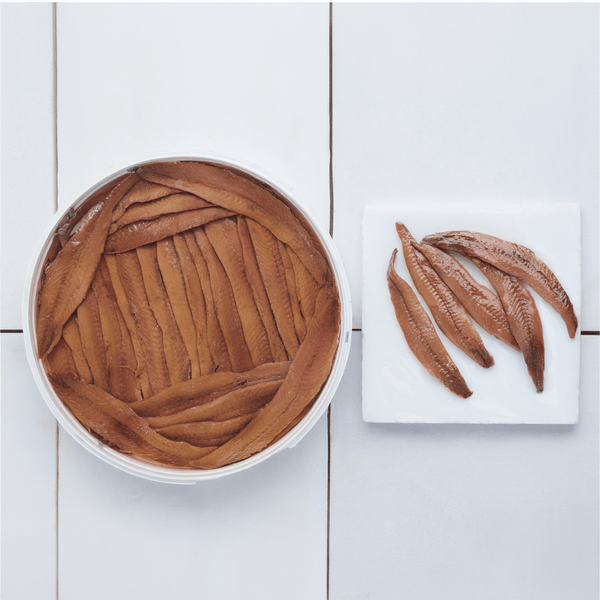
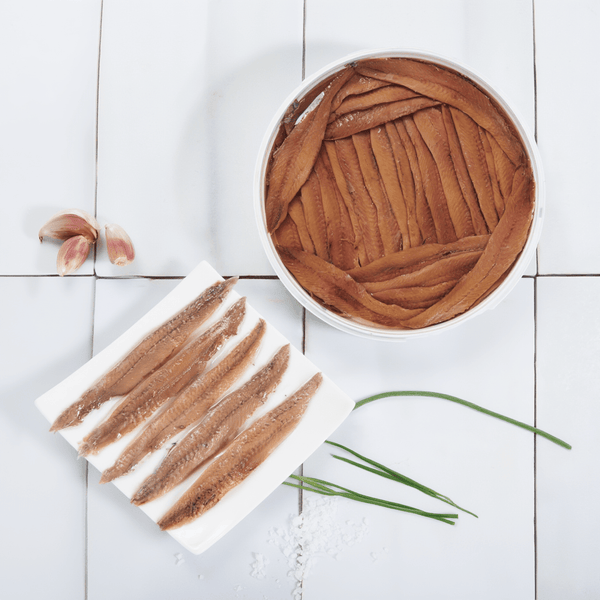
Let's start by clarifying the most common confusion. Anchovy and boquerón are the same fish. The only difference is how they are prepared: when cured in salt for months, we call it "anchoa" (the one in oil, the appetizer); when eaten fresh or in vinegar, we call it "boquerón." For this recipe, you need fresh fish, so at the fishmonger, ask for "boquerones" or "anchoa fresca" depending on the region. If you're interested in understanding this difference thoroughly, I explain it in depth in the guide to anchovy vs boquerón: differences, taste, and price.
How to choose fresh fish at the fishmonger:
- Bright, bulging eyes, never sunken or cloudy.
- Silver, firm skin, with bluish reflections on the back; if it's dull or sticky, discard it.
- Clean sea smell, not ammonia.
- Medium size (about 10-12 cm): too small it falls apart, too large it has more bones.
Ask the fishmonger to clean them for you to save time: head removed, gutted, and, if you prefer, butterflied and deboned. For this casserole, I prefer to leave them whole and clean but with the bone, because stewed with the bone, they release more gelatin and the broth is more flavorful. Plan for about 200-250 g of cleaned fish per person.
Ingredients for 4 people
- 800 g fresh anchovies or boquerones, cleaned
- 1 medium onion
- 3 cloves of garlic
- 1 small Italian green pepper
- 1 tablespoon sweet paprika (or a mix of sweet and spicy)
- 1 tablespoon flour
- 150 ml dry white wine (a Verdejo or Txakoli works perfectly)
- 200 ml fish stock or water
- 1 bay leaf
- A good handful of fresh chopped parsley
- Extra virgin olive oil
- Salt
With these basic ingredients, you can make the classic version. Below, you'll see how to derive the three variations (green sauce, tomato, and clams) by changing only two or three things.
The sofrito: the base of the entire stew
A good dish of anchovies in a casserole begins and ends with the sofrito. Don't rush: this is the step where the flavor is built.
Finely chop the onion, green pepper, and garlic. In an earthenware pot or deep skillet, heat a good amount of olive oil over medium-low heat and first add the onion with a pinch of salt. Let it soften slowly, stirring occasionally, for about 8-10 minutes: the salt helps it sweat and not burn. When it's translucent, add the pepper, and two minutes later, the chopped garlic. The garlic goes in last because it burns quickly and will bitter the entire stew.
When the vegetables are soft and golden, lower the heat to minimum and add the tablespoon of flour; stir for a minute to remove the raw taste (this will thicken the sauce). Immediately after, off the heat or with the pot very warm, add the paprika and stir quickly for just a few seconds: paprika burns in a flash, and if it burns, it gives an uncorrectable bitterness. That's why it always goes in with low heat and is quickly moistened.
Step-by-step preparation
- Finish the sofrito as explained: sautéed onion, pepper, and garlic, flour toasted for one minute, and paprika integrated over minimum heat.
- Deglaze with wine. Increase the heat, add the white wine, and let it simmer for 2-3 minutes to evaporate the alcohol and leave only the aroma. You'll see how the sauce begins to thicken.
- Add the stock and bay leaf. Incorporate the fish stock (or water), the bay leaf, and half of the parsley. Bring to a gentle boil and let it cook for 5 minutes so the sauce gains flavor and reduces slightly. Taste and adjust salt now, before adding the fish.
- Add the anchovies. Arrange the fish in the casserole in a single layer, without overcrowding, spread over the sauce. Reduce the heat to low.
- Short cooking time. Cover and cook for only 4-6 minutes, depending on thickness. Fresh anchovies cook very quickly; overcooking is the most common mistake. They will be ready when the flesh turns opaque and easily separates from the bone.
- Do not stir with a spoon. To mix, gently rock the casserole with your wrist (what they call "dancing" the casserole in the Basque Country). This thickens the sauce without breaking the fish.
- Rest. Turn off the heat, sprinkle the remaining fresh parsley, and let it rest, covered, for 2-3 minutes before serving. Serve in the same casserole, with bread for dipping.
The key trick: preventing the anchovies from falling apart
Fresh anchovies are delicate and oily fish, and they break easily. These are the points that make the difference between a stew with whole, gleaming fish and a mush:
- Brief cooking over low heat. The fish is added almost at the end and cooked for just a few minutes. The sauce should already be made when the fish goes in.
- Do not stir with utensils. Move the casserole, never put a spoon among the fish.
- A single layer. If you pile up the anchovies, the ones at the bottom will get crushed, and the ones on top will break when handled. A wide casserole is better.
- Dry them beforehand. Drain and dry the fish with paper towels before adding it; excess water lowers the temperature and encourages it to crumble.
- Leave them with bones if you can. Whole fish holds up much better to cooking than an open fillet, which is more fragile.
Recipe variations
Anchovies in green sauce
The finest and most Basque-rooted version. Here, paprika and tomato are omitted: the spotlight is on garlic, parsley, and Txakoli. Sauté chopped garlic in plenty of oil until it doesn't brown, add a teaspoon of flour, deglaze with white wine and stock, and thicken the sauce by moving the casserole until it emulsifies and turns a pale green from the parsley. Add the fish and finish with lots of fresh parsley. This is the same technique we use for kokotxas in green sauce, so if you master one, you master the other.
Anchovies with tomato
More indulgent and Mediterranean. After sautéing the onion and garlic, add a good amount of natural crushed tomatoes (about 400 g), a pinch of sugar to correct acidity, and let it reduce over low heat until the raw taste is gone, about 15 minutes. Then add the fish and cook it just as briefly. This version goes very well with a chili pepper or some piparras for a spicy touch.
Anchovies with clams
My favorite for a slightly more special meal. Start with the classic recipe or the green sauce version, and just before adding the fish, add a handful of clams previously purged in salted water. Cover and wait for them to open (2-3 minutes); at that moment, add the anchovies and finish cooking. The clams release their iodized juice and turn the broth into something memorable. Remember to purge the clams well in cold salted water an hour beforehand to release the sand.
Wine pairing
It's a blue fish dish with a light sauce, so it calls for fresh, acidic white wines. A Txakoli is the go-to pairing, especially for the green sauce and clam version: its effervescence and acidity cut through the fattiness of the blue fish. An Albariño, a young Verdejo, or, if you're making the tomato version, even a dry rosé, also work wonderfully. If you're interested, I go into more detail by style in the guide to anchovy and wine pairing.
Storage
Like any fresh fish stew, anchovies in a casserole are best eaten freshly made, but they keep well for a couple of days:
- Refrigerator: store the stew in an airtight container for up to 2 days. Reheat over very low heat or in the microwave at medium power, just enough to warm through, without letting it boil again, so the fish doesn't dry out.
- Freezer: it's not ideal because the texture of blue fish suffers upon thawing, but if you have a lot left over, you can freeze it for up to 1 month. Always thaw in the refrigerator, never at room temperature.
- Raw fish: if you buy the fish and don't cook it the same day, store it cleaned, covered, and on ice in the coldest part of the refrigerator, and use it within a maximum of 24 hours.
If you want to preserve already cured anchovies (the salted or oil-packed ones), that's another story: I explain it in how to store open anchovies.
Looking for premium Cantabrian products for your pantry? Check out our selection of Cantabrian anchovies. And if you like battered blue fish, also try fried and battered anchovies for a crispy appetizer.
Frequently asked questions
Are anchovies in a casserole made with salted or fresh anchovies?
With fresh fish, i.e., boquerones or fresh anchovies. Salted or oil-packed anchovies are already cured and are used cold (appetizers, toasts), not for stewing in a casserole.
Is anchovy the same as boquerón?
Yes, it's the same fish (Engraulis encrasicolus). We call it "anchoa" when cured in salt and "boquerón" when eaten fresh or in vinegar. For this recipe, ask for fresh boquerones at the fishmonger.
How long do anchovies cook in the casserole?
Very little: between 4 and 6 minutes over low heat once the sauce is made. Fresh anchovies cook quickly, and overcooking is what causes them to fall apart.
How do I prevent anchovies from breaking?
Short, gentle cooking, a single layer of fish, do not stir with a spoon (rock the casserole back and forth), and dry the fish well before adding it. Leaving the bones in also helps them hold up.
Can I make them boneless?
Yes, butterflied and without the central bone, but they will be more fragile. Reduce the cooking time even further (3-4 minutes) and handle them carefully.
What do you serve with this dish?
Mainly with bread for dipping the sauce. As a side dish, boiled potatoes or white rice go well if you want to make it a one-plate meal.