There are pintxos that are born in a display case in San Sebastián and others that go viral on social media. The one with Cantabrian anchovy on bread with a touch of condensed milk belongs to both worlds: it has the logic of the sweet-salty contrast of haute cuisine and, at the same time, the viral potential of an idea that seems provocative until you try it. Then you understand why more and more bars are putting it on their menu.
At Mercat del Ninot, we have been selling quality anchovies since 1990, and this pintxo interests us for a specific reason: it doesn't hide the product, it frames it. The condensed milk doesn't mask the anchovy; it highlights it. Here's how to make it well, what caliber to use, and the mistakes that ruin it.
What is this pintxo and why does the sweet-salty combination work?
The pintxo is simple to describe: a small slice or toast of bread, a thin layer or a few drops of condensed milk, and on top, one or two fillets of Cantabrian anchovy in oil. That's it. The appeal isn't in its complexity but in the tension between two extremes of flavor: the intense saltiness and umami of the anchovy against the milky, dense sweetness of the condensed milk.
This tension works for a reason that cuisine has been exploiting for centuries. The sweet-salty contrast activates more taste receptors at once, extends the perception of flavor in the mouth, and creates that "I want another one" effect that defines a good appetizer. It's the same logic as melon with ham, foie gras with quince, or chocolate with Maldon salt. Anchovy with condensed milk is the modern bar version of that principle.
There's also a technical component. Cured Cantabrian anchovy concentrates saltiness, glutamate, and inosinate (the two main contributors to umami). Condensed milk provides sweetness but also milk fat and a creamy texture that envelops and moderates the salt, just as butter does in the classic toast, but with a sweet twist that amplifies the contrast. The result in the mouth is: first the creamy sweetness, then the salty and umami kick of the anchovy, and a long finish where the two coexist. When the product is good, it's addictive.
What anchovy to use: caliber 00 or 0
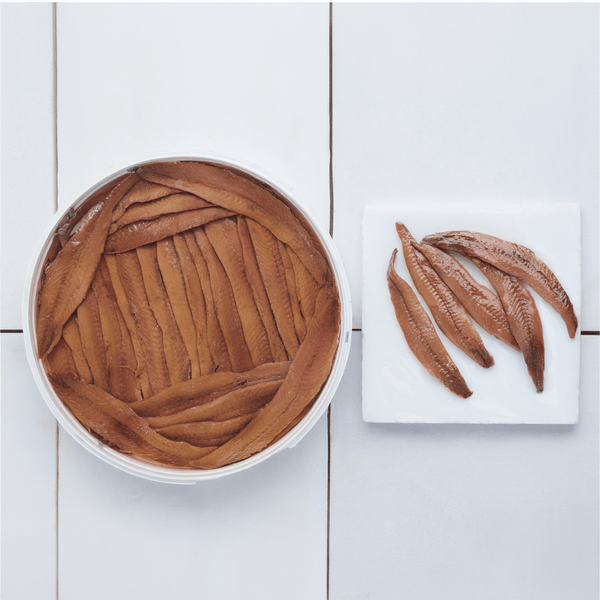
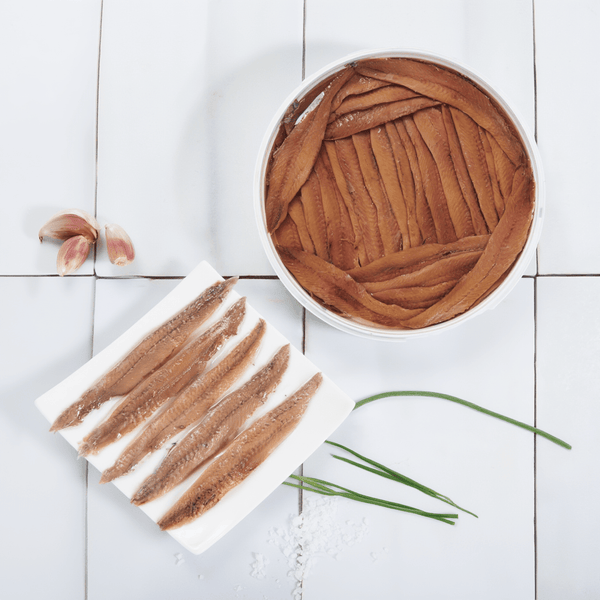
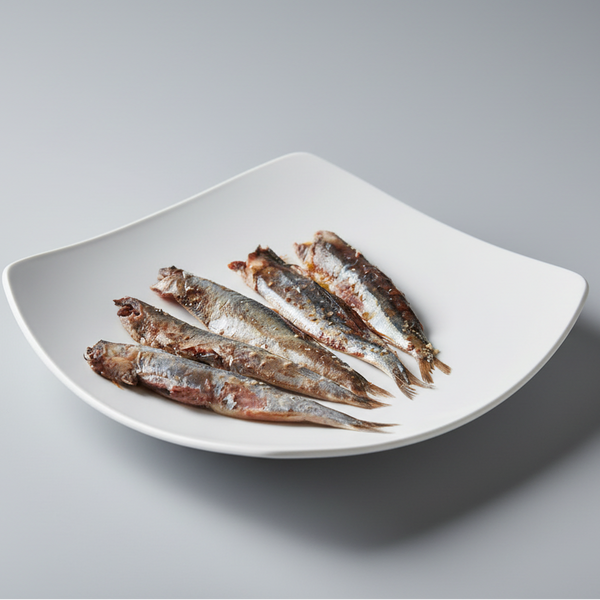
In a three-ingredient pintxo, the anchovy is the absolute star, and there's nowhere to hide a mediocre product. This immediately rules out any anchovy in sunflower oil, of uncertain origin, or from short industrial salting. If the anchovy isn't good, the condensed milk only highlights its mediocrity.
For this pintxo, we recommend caliber 00 or caliber 0, both of Cantabrian anchovy:
- Caliber 00 (Selection): the largest, meatiest fillet with the most visual presence. It's the best option when the pintxo is the center of a platter or you want each bite to have substance. A single 00 fillet on a small toast is already enough.
- Caliber 0: a slightly thinner fillet but equally high quality. It works perfectly and allows you to place two crossed fillets per pintxo without crowding them. It is the most balanced option in terms of quality-presence for serving many units.
Whatever the caliber, look for an anchovy with well-distributed fat, uniform mahogany color, and preserved in extra virgin olive oil. You can see the options in our Cantabrian anchovy collection, where the caliber is verified piece by piece.
Ingredients (for 6 pintxos)
- 6 Cantabrian anchovy fillets caliber 00, or 12 fillets caliber 0 (two per pintxo).
- 6 small slices of bread: sourdough bread, toasted bread like picos, or a good thinly sliced baguette. 1-1.5 cm thick.
- Condensed milk: 2-3 tablespoons total. A very thin layer per pintxo; it is a dominant ingredient.
- Extra virgin olive oil (optional): a few drops from the anchovy's own preservation oil.
- Optional finishes: Maldon sea salt flakes, chopped chives, lime zest, or a few drops of Sherry vinegar.
Step-by-step assembly
- Bring the anchovy to room temperature. Take the fillets out of the fridge 20-30 minutes before. Cold anchovy has solidified fat, which hardens the fillet and mutes the flavor. At room temperature, it regains its shine, texture, and full aroma.
- Prepare the bread. Lightly toast the slices if you want a crispy contrast, or use them as is if you prefer the bread not to compete. The bread should be firm: if it's too spongy, it will absorb the condensed milk and become mushy.
- Add the condensed milk. Spread a very thin layer with the back of a spoon, or make a small zigzag line. Less is more: the goal is a subtle sweet touch in the background, not a dessert. If you add too much, the pintxo becomes cloyingly sweet and loses its balance.
- Place the anchovy. One 00 fillet lengthwise, or two 0 fillets crossed diagonally. If they are deformed from the jar, gently stretch them between your fingers to make them straight and elegant.
- Finish and serve. A few drops of anchovy oil, a flake of Maldon salt, or a little chive, and to the table. Serve it immediately after assembly: after a few minutes, the bread softens and loses its appeal.
Variations: with cream cheese, with piparra, on toast
The basic pintxo is perfect as is, but it allows for three variations that elevate it or adapt it to different tastes.
With cream cheese: substitute (or combine with very little) the condensed milk with a base of cream cheese such as mascarpone or a whipped fresh cheese. The cheese adds creaminess and a more subtle, less sugary milky sweetness. It is the "safest" version for those who are wary of obvious sweetness. A minimal drizzle of condensed milk over the cheese gives the best of both worlds.
With piparra: add a piparra (mild pickled Basque chili pepper) cut into thin slices or whole, skewering the pintxo. The acidity and slight spicy note of the piparra cut through the sweetness of the condensed milk and refresh the whole. It is, in essence, a gilda reinterpreted in a sweet-salty key, and it works wonderfully.
On large toast: turn the pintxo into a toast to share. Use a large slice of sourdough bread, a base of condensed milk or cream cheese, three or four anchovy fillets arranged in parallel, and a finish of lime zest or chives. Ideal as an informal appetizer for a dinner.
Tips for making it perfect
- Dispense condensed milk with a mental eyedropper. The number one mistake is using too much. It should be a sweet whisper, not the dominant flavor.
- Anchovy at room temperature, always. This is the difference between a shiny, flavorful fillet and a dull, tough one.
- Balance the size. The anchovy fillet should fit the bread base: neither a tiny fillet on a huge slice, nor vice versa.
- A touch of acidity saves the day. If it's a bit too sweet, a few drops of Sherry vinegar, lime, or a piparra will instantly rebalance it.
- Assemble it at the moment of serving. Have everything prepared separately and assemble just before serving so the bread doesn't get soggy.
Pairing
This pintxo combines intense saltiness, sweetness, and fat, so it calls for drinks with acidity and freshness that cleanse the palate between bites. The natural pairing is Basque txakoli: its sharp acidity and slight fizziness cut through the sweetness of the condensed milk and highlight the anchovy. A brut nature cava or a dry champagne do a similar job, with the bubbles cleaning the milky fat with each sip.
Among still white wines, a Rías Baixas albariño or a fresh verdejo work well due to their minerality and acidity. If you prefer vermouth, choose a dry, low-sugar one so as not to add sweetness on top of sweetness. Avoid red wines with marked tannins: they clash with the anchovy and the dairy.
Frequently asked questions
Does anchovy really go well with condensed milk?
Yes, and better than it sounds. It's a classic sweet-salty contrast, the same principle as melon with ham or foie gras with quince. Condensed milk provides sweetness and creaminess that moderate the saltiness of the anchovy, while the anchovy breaks through the sweetness with its salty and umami kick. The secret is to use very little condensed milk and quality anchovy.
What anchovy caliber is best for this pintxo?
Caliber 00 (Selection) gives the greatest visual presence and fleshiness, ideal when the pintxo is the star. Caliber 0 also works very well and allows for two crossed fillets per bite. Both are high-quality Cantabrian anchovies; always avoid anchovies in sunflower oil or of dubious origin, because in such a simple pintxo, mediocrity is immediately noticeable.
Can I use honey instead of condensed milk?
You can, but the result changes. Honey provides sweetness but not the milky creaminess of condensed milk, so the contrast is sharper and less enveloping. If you use it, put it in a very thin drizzle. Condensed milk is still the option that best balances sweetness, fat, and texture for this specific pintxo.
Can it be prepared in advance?
It's not advisable to assemble it in advance, because the bread softens with the condensed milk and the anchovy loses freshness. What you can do is have the toasted bread, tempered anchovy, and condensed milk ready separately, and assemble the pintxos in a couple of minutes just before serving.
How many pintxos per person?
As an appetizer, one or two per person is correct: it's an intense and satisfying bite. If you serve it on a platter with other pintxos and preserves, calculate one per diner and let those who want more have seconds.
Ready to assemble your pintxos? Everything depends on the main ingredient. Check out our selection of Cantabrian anchovies, and if you want to give it a twist with piparra, head over to the gildas and appetizers section at Bacalalo.com. And if you want more ideas, you'll find all our anchovy recipes on the blog.