Summary: Bacalhau à lagareiro is one of Portugal's most beloved dishes: a thick loin of desalted cod, roasted and then bathed in abundant extra virgin olive oil with garlic, accompanied by "a murro" potatoes (mashed with a fist). It's a traditional olive press recipe, simple in ingredients but glorious in flavor. Here, we explain which cut of cod to use, how to prepare "a murro" potatoes, and a step-by-step guide to ensure it's juicy on the inside and golden on the outside.

What is bacalhau à lagareiro
Bacalhau à lagareiro is one of the most popular cod preparations in Portuguese cuisine. Its essence lies in its simplicity: a thick loin of desalted cod is roasted in the oven and, once cooked, it is generously bathed in hot extra virgin olive oil infused with garlic. It is served with "a murro" potatoes—small roasted potatoes that are then lightly crushed—which soak up the golden oil.
Unlike other more elaborate Portuguese recipes, such as bacalhau à brás (shredded with egg and straw potatoes) or bacalhau à Gomes de Sá, lagareiro is a whole-piece recipe: the absolute star is the cod loin, its flaky texture, and the flavor of good oil. This is why the quality of the two main ingredients—cod and EVOO—makes all the difference.
In Spain, we know versions of oven-baked cod with oil, but lagareiro has its own identity: the amount of oil is deliberately abundant, and garlic is a key player. It is not a "light" dish: it is a dish for celebration, for a Portuguese Sunday table.
Origin: the olive press, the oil, and Portuguese tradition
The name "à lagareiro" refers to the lagar, the mill where olives were traditionally pressed to obtain olive oil. The lagareiro is the person who works at the lagar. The preparation is historically associated with the olive-growing regions of inland Portugal—regions such as Trás-os-Montes and Beira—where olive oil was abundant and of high quality.
The logic of the dish is clear: in a home with freshly pressed oil, it was natural to cook by bathing food in that oil. Hence, the "à lagareiro" style is applied not only to cod but also to octopus (polvo à lagareiro) and, in some areas, to other meats and fish. What defines the style is that final bath of olive oil with garlic, not a specific ingredient.
Cod, for its part, has been the "faithful friend" of Portuguese cuisine for centuries. Although not fished in Portuguese waters, salted and dried cod became a staple food thanks to its preservation. There are hundreds of Portuguese cod recipes, and lagareiro is one of those that best demonstrates that, with excellent raw ingredients, there's no need to overcomplicate things.
The right loin for a good lagareiro
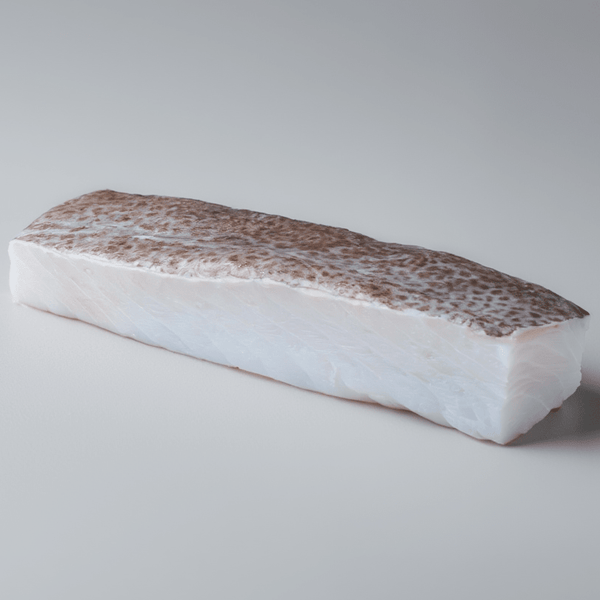
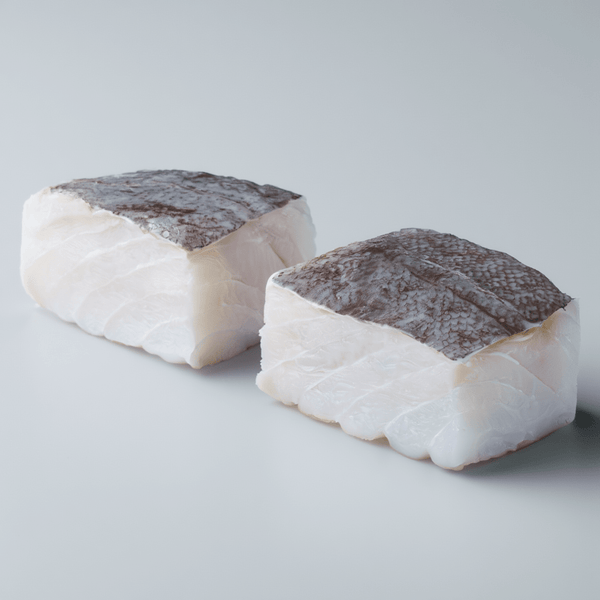
Thick, desalted cod loins, with skin, that can withstand the oven without drying out.
See desalted codWhich desalted cod cut to use
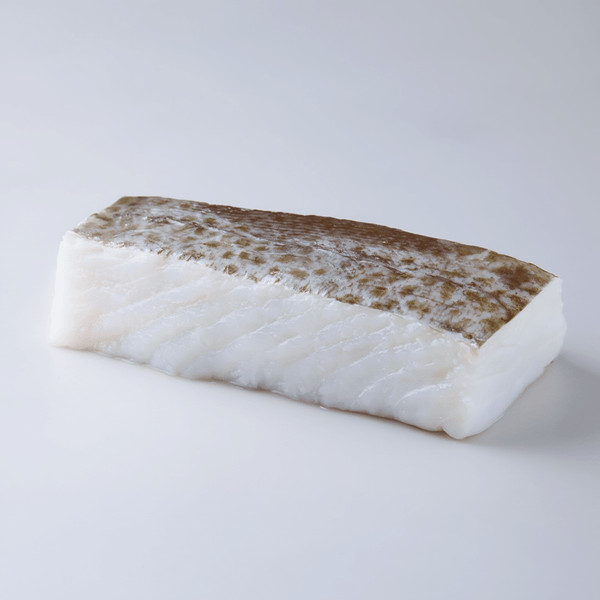
Lagareiro calls for a thick loin from the upper part of the cod (the "lombo"), about 3-4 cm high. This is the meatiest part and best retains its juiciness in the oven. Avoid thin cuts or tails: they dry out easily and fall apart when mashing the potatoes and moving the dish.
- With skin: The skin protects the flesh from direct heat and provides gelatin, which helps the cod stay succulent. Serve the loin skin-side down.
- Uniform thickness: Choose loins of consistent height so they cook evenly. A good lagareiro loin should look tall and compact.
- Well desalted: The salt level is everything. If it's too salty, the oil and potatoes won't correct it. Consult our guide on how to desalt cod to get the timing right according to thickness.
If you buy pre-desalted cod, make sure it's thick, whole loins. You can see options in our collection of desalted cod.
"A murro" potatoes: the side dish that defines the plate
Batatas a murro are the classic and inseparable accompaniment to lagareiro. The name says it all: murro means "punch" in Portuguese. They are small, thin-skinned potatoes, roasted whole (with skin) and then smashed by striking them with a fist or the base of a glass, until they open up without falling apart completely.
This gesture has a culinary reason: by opening up, the potato exposes its interior and absorbs the olive oil with garlic that is poured over it at the end. The result is a potato that is creamy inside, with a slightly crispy skin, and soaked in flavor.
How to make them:
- Wash small potatoes (like new potatoes or small Monalisa variety) and, without peeling, rub them with coarse salt.
- Roast them whole in the oven until tender when pierced (40-50 minutes at 200 °C, depending on size). They can also be boiled beforehand to shorten the baking time.
- Once soft, give them a sharp tap to smash them without breaking them into pieces.
- Drizzle them with the garlic oil from the cod just before serving.
Ingredients for 4 people
| Ingredient | Quantity |
|---|---|
| Thick desalted cod loins with skin | 4 pieces (~800-900 g) |
| Extra virgin olive oil | 250-300 ml |
| Small "a murro" potatoes | 800 g |
| Garlic cloves | 6-8 cloves |
| Onion (optional, in rings) | 1 unit |
| Bay leaves | 2 units |
| Coarse salt | For the potatoes |
| Fresh parsley, chopped | For finishing |
Step-by-step preparation
Step 1 — Roast the "a murro" potatoes. Wash the small potatoes without peeling them, rub them with coarse salt, and place them on a baking tray. Roast them at 200 °C (390 °F) for 40-50 minutes until tender when pierced. (To speed things up, you can boil them for 15 minutes before baking.) Set them aside.
Step 2 — Prepare the cod. Thoroughly pat dry the desalted cod loins with kitchen paper. Place them in an ovenproof dish with the skin side down. Drizzle with a couple of tablespoons of olive oil and, if you like, scatter some onion rings and a bay leaf underneath.
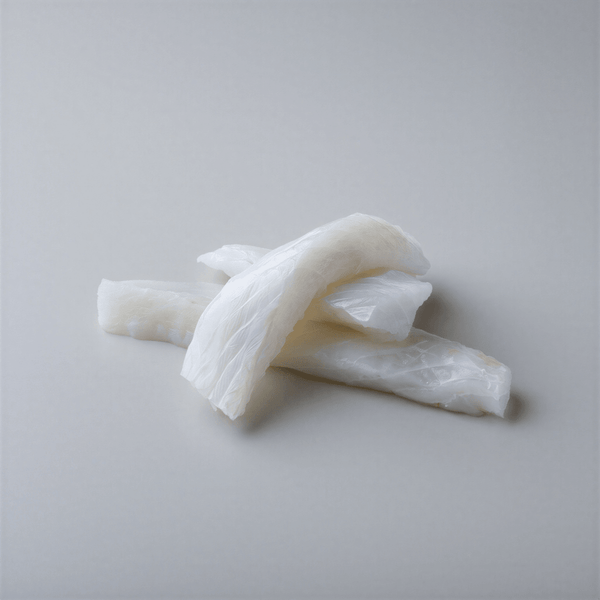
Step 3 — Roast the cod. Bake at 190-200 °C (375-390 °F) for 15-20 minutes, depending on the thickness of the loin. The cod is ready when the flakes separate easily but the flesh remains juicy and pearly. Do not overcook: dry cod is the number one mistake with this dish.
Step 4 — Confit the oil with garlic. Meanwhile, slice the garlic. In a saucepan, heat 250-300 ml of olive oil over low heat with the sliced garlic and bay leaf, ensuring the garlic doesn't burn (it should just barely brown and perfume the oil). This is the heart of lagareiro: an aromatic, not fried, oil.
Step 5 — Smash the potatoes. Give each roasted potato a sharp tap to open it "a murro," without breaking it completely. Arrange them around the cod in the dish.
Step 6 — Bathe and serve. Pour the hot oil with garlic generously over the cod and potatoes. Sprinkle with chopped parsley and serve immediately, while the oil is still hot. Each diner dips bread and potato into this golden oil.

Tips for juicy cod
- Choose thick loin. This is the best guarantee of juiciness. A tall loin can withstand the oven without drying out; a thin one cannot.
- Control the cooking time. 15-20 minutes is usually enough. As soon as the flakes separate, remove it. The cod continues to cook with residual heat and the hot oil we pour over it.
- Skin side down. Protects the flesh from direct heat from the dish and provides gelatin that keeps the loin succulent.
- Don't burn the garlic. Burned garlic makes the entire oil bitter. Confit it over low heat until it barely browns.
- Quality and ample oil. Here, EVOO is not a detail: it's half the dish. Use good extra virgin olive oil; its flavor will be present in every bite.
- Desalt well. Salty cod ruins the balance. If you're unsure about the timing, check our desalting guide.
If you're looking for an even more succulent texture, you can draw inspiration from the technique of cod confited in olive oil at a low temperature: instead of roasting at 190 °C, some confit the loin in the oil itself at a gentle temperature and then raise the oven temperature only to finish. And if you want to compare oven approaches, you might be interested in our general recipe for juicy oven-baked cod.
Wine pairing: Vinho Verde and other options
The natural pairing for bacalhau à lagareiro is Vinho Verde, the young, slightly effervescent white wine from northwestern Portugal. Its fresh acidity and lightness cleanse the palate from the richness of the olive oil, making it an almost perfect match.
- Vinho Verde branco: the classic choice. Fresh, citrusy, with a subtle fizz.
- Albariño / Alvarinho: across the border, in Galicia and the Portuguese Minho, it offers more body while maintaining freshness.
- Douro white: if you prefer a white with a bit more structure to accompany the garlic.
- Light red served chilled: in Portugal, it's not uncommon to pair cod with a young, fresh red; it works well with roasted loin.
And, of course, plenty of bread to dip in the garlic oil. It's an indispensable part of the ritual.
If you enjoy Portuguese cod cuisine, compare this dish with our recipe for Portuguese oven-baked cod: they share country and oven, but lagareiro stands out for its garlic oil bath and "a murro" potatoes.
Nutritional values per serving (approximate)
| Nutrient | Per serving |
|---|---|
| Calories | ~520 kcal |
| Proteins | 38 g |
| Fats | 34 g |
| Carbohydrates | 28 g |
Approximate values; vary depending on the amount of oil incorporated when serving.
Premium desalted cod for your lagareiro
Thick loins with skin, perfectly desalted. The raw ingredient this dish deserves.
Buy desalted codFrequently asked questions
What does "à lagareiro" mean?
It refers to the lagar, the mill where olives were pressed to make olive oil, and the lagareiro, the person who works there. The style is characterized by bathing the dish in abundant olive oil with garlic. It is also applied to octopus (polvo à lagareiro).
What are "a murro" potatoes?
They are small potatoes roasted with their skin on, which are then smashed with a punch ("murro" means punch). When opened, they absorb the olive oil with garlic. They become creamy inside and slightly crispy outside.
What is the best cod cut for lagareiro?
The thick loin (lombo) from the upper part of the cod, 3-4 cm high and with skin. It is the meatiest part and best retains its juiciness in the oven. Avoid thin cuts and tails, which dry out easily.
How long does the cod take to roast?
Between 15 and 20 minutes at 190-200 °C (375-390 °F), depending on the thickness of the loin. It's ready when the flakes separate easily but the flesh remains juicy. The most common mistake is to overcook it, making it dry.
How is it different from bacalhau à brás or à Gomes de Sá?
Bacalhau à brás features shredded cod with egg and straw potatoes; à Gomes de Sá, in flakes with potatoes, onions, and hard-boiled egg. Lagareiro uses a whole piece: roasted loin drizzled with olive oil, garlic, and "punched" potatoes. It is the simplest and focuses on the quality of the cod loin.
Which wine pairs best?
Vinho verde branco is the traditional pairing: its freshness and slight effervescence counteract the oiliness of the olive oil. An Albariño/Alvarinho or a white Douro wine with a bit more body also work well.
Do you need to desalt the cod beforehand?
Yes, unless you buy already desalted cod. The salt level is key: a too-salty loin ruins the balance of the dish. Follow the desalting times according to the thickness of the loin.
María José Sáez Pastor
Recipes from Mercat del Ninot, Barcelona. Product-focused cuisine with cod and selected seafood directly from the producer. Since 1990. Not marketing — there are verifiable factors.