Anchovies a la bilbaína are one of those Basque recipes that seem simple until you try them: fresh anchovies or boquerones, crispy fried in hot oil and instantly topped with a sizzling sauté of garlic, guindilla pepper, and a good splash of vinegar. That vinegar is the signature of "a la bilbaína" and what separates it from any other garlic fish dish: it cuts through the oiliness of the frying, perfumes the kitchen, and leaves a sweet and sour taste that is addictive. It's a classic bar tapa in Bilbao, but it can be made at home in ten minutes.
At Mercat del Ninot, we have been working with fresh seasonal fish since 1990, and anchovies or boquerones are among the spring favorites, when the Cantabrian fishing season is at its best. In this guide, I will explain what "a la bilbaína" means exactly, what fish to ask for, how to fry it so it's crispy and doesn't fall apart, how to prepare the sauté at the right moment, how it differs from the classic "al ajillo," and what to pair it with.
What "a la bilbaína" is: the sauté of garlic, guindilla, and vinegar
"A la bilbaína" is a Basque way of finishing fish (or vegetables) with a hot sauté of sliced garlic and guindilla pepper, to which a splash of vinegar is added just before pouring it over the food. The trick lies in the exact moment: the vinegar falls onto the scorching oil, part of the alcohol and acid evaporates, and only the aroma and a sweet and sour note that balances the fat remain. It's the same principle as the famous besugo a la bilbaína or kokotxas a la bilbaína, applied here to a small and inexpensive fish.
Three elements define the dish:
- Garlic in thin slices, golden but not burnt (which would make it bitter).
- Dried guindilla pepper (cayenne) or fresh guindilla, for a subtle spicy undertone.
- Wine or cider vinegar, the touch that gives the recipe its name and character.
If you want to see how this same technique is applied to another Cantabrian product, I explain it in the recipe for bacalao a la bilbaína (club ranero), where the sauté accompanies a chorizo pepper sofrito.
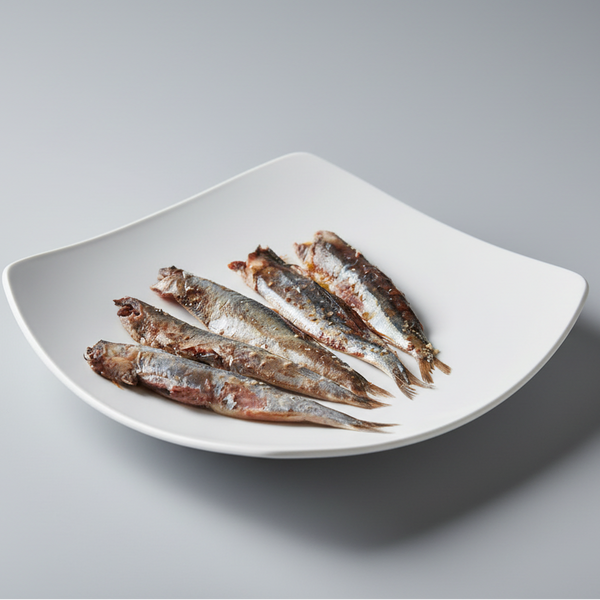
What fish to use: fresh anchovy or boquerón (not the salted one)
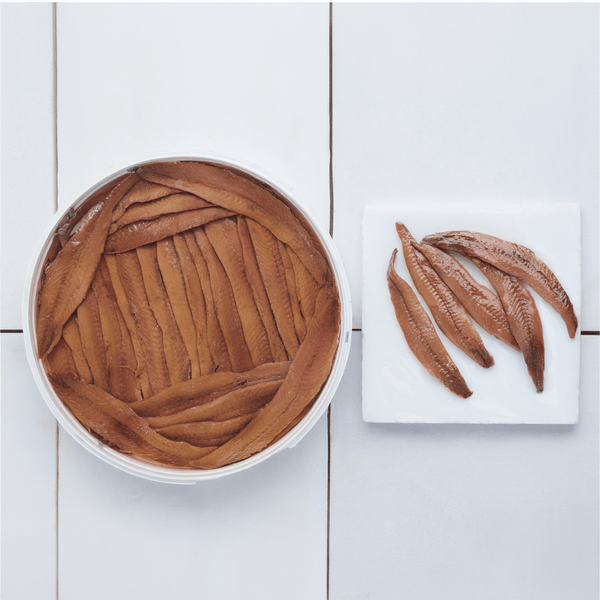
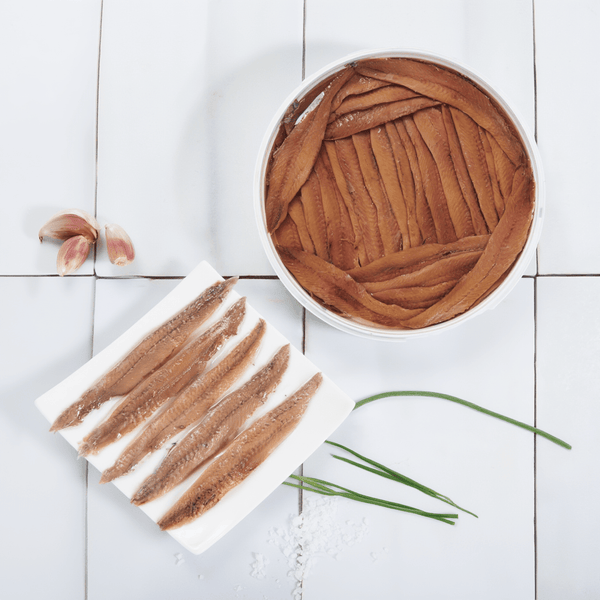
Let's clarify the most common confusion: anchovy and boquerón are the same fish (Engraulis encrasicolus). The difference is only in how it is prepared: when cured in salt for months, we call it "anchoa" (the one in oil, the aperitif one); when eaten fresh, fried, or in vinegar, we call it "boquerón." For this recipe, you need fresh fish, so at the fish market, ask for "boquerones" or "fresh anchovy" depending on the region. Salted or oil-packed anchovies are already cured and are not suitable for frying. If you want to understand this difference well, I elaborate on it in the guide to anchovy vs. boquerón: differences, flavor, and price.
How to choose fresh fish:
- Bright and bulging eyes, never sunken or milky.
- Silver and firm skin, with bluish reflections on the back.
- Clean sea smell, never ammonia.
- Medium size (10-12 cm): it fries whole without falling apart.
Ask them to clean it for you: headless and gutted. For "a la bilbaína," I prefer to leave them whole with the bone, because when fried, they are juicier and hold up better to the sauté without breaking. Calculate about 200-250 g of cleaned fish per person.
Ingredients for 4 people
- 800 g fresh anchovies or boquerones, cleaned
- Wheat flour for dredging (a good handful)
- 6 cloves of garlic
- 2 dried guindilla peppers (cayenne) or 1 fresh guindilla
- 3 tablespoons white wine or cider vinegar
- Fresh parsley, chopped
- Extra virgin olive oil (plenty for frying plus the sauté)
- Salt
With this base, you can make the classic version. The distribution of the oil is important: one for frying the fish and another clean, separate one for the sauté; this way, you can better control the browning of the garlic.
How to fry the fish so it's crispy
Frying is half the battle. If the fish is soft or oily, the sauté won't save it. Follow these steps:
- Dry the boquerones very well with kitchen paper: water makes the oil splatter and softens the coating.
- Salt them lightly and flour them just before frying, shaking off the excess. Only flour, no egg: we want a thin, crispy layer, not a thick batter.
- Oil at 180 °C, abundant and very hot. If you drop a small piece of bread, it should brown in about 20 seconds.
- Fry in small batches, without overcrowding, for 2-3 minutes until golden. If you put too many in at once, the temperature will drop, and they will boil instead of frying.
- Drain them on paper and arrange them on the serving platter, in a single layer.
If you're interested in mastering frying boquerones in other versions (battered, Andalusian style, panko), you can find the details in the recipe for crispy fried and battered anchovies.
The a la bilbaína sauté step by step
Here is the soul of the dish. The sauté is made at the last minute, with the fish already fried and plated, because it must be poured hot and sizzling:
- Slice the garlic thin and chop the guindilla.
- In a small pan with clean oil (4-5 tablespoons), sauté the garlic over medium heat along with the guindilla until the garlic turns a light golden color. Do not burn it: as soon as it smells and begins to brown, remove it from the heat.
- Off the heat and carefully (it splatters), add the vinegar. You will hear a loud sizzle and a fragrant steam will rise; that's exactly what you're looking for.
- Return the pan to the heat for a second for it to emulsify, stir, and pour the sizzling sauté over the fried boquerones.
- Sprinkle with chopped parsley and serve immediately, without letting it rest, so the fish remains crispy under the sauté.
The contrast between the crispy, hot fish and the acidity of the vinegar is key: do not prepare it in advance or reheat it, as it will lose all its charm.
Difference between "a la bilbaína" and "al ajillo"
This is the question I get asked the most, because both contain garlic and guindilla and at first glance look similar. The difference is clear:
- Al ajillo: fish or seafood is cooked (or finished) with a sauté of garlic and guindilla in oil, without vinegar. The flavor is rich, oily, and aromatic, dominated by garlic.
- A la bilbaína: that same sauté of garlic and guindilla is finished with a splash of vinegar just before serving. That acid changes everything: it lightens the oiliness, adds a sweet and sour note, and gives it its Basque character.
In other words: bilbaína is an ajillo with vinegar. If you remove the vinegar, you have anchovies al ajillo; if you add it, you have anchovies a la bilbaína. That's why it's important not to overdo it: three tablespoons for 800 g of boquerones are enough to taste it without making it too vinegary.
Tips for perfect results
- Very dry fish before flouring: this is the number one trick against oiliness and splatters.
- Two oils: one for frying (which gets dirty) and another clean one for the sauté, so the garlic browns cleanly and doesn't become bitter.
- Garlic golden, not burnt: burnt garlic makes the whole dish bitter. Remove it as soon as it takes on color.
- Vinegar off the heat: add it with the pan removed to control the sizzling and avoid burning yourself.
- Serve immediately: bilbaína doesn't wait; the crispiness doesn't last long under the sauté.
- Adjust the spiciness with the amount of guindilla; in Bilbao, it's usually a subtle background spice, not aggressive.
Pairing: what to accompany anchovies a la bilbaína with
It's an oily, fried, and slightly acidic dish, so it calls for fresh, acidic drinks that cleanse the palate:
- Txakoli: the quintessential Basque pairing, with its acidity and natural fizz, it cuts through the frying wonderfully.
- Albariño or Verdejo: fresh and aromatic white wines, perfect with fried oily fish.
- Natural cider: its acidity directly dialogues with the vinegar in the sauté.
- Ice-cold beer: the classic bar option, simple and foolproof.
As a tapa, they are excellent on a pintxos table alongside traditional gildas and good bread. Always serve them freshly made, on the same platter, with the sauté on top and some lemon wedges on the side in case anyone wants an extra touch of acidity.
If you like Cantabrian products and want to move from fresh to cured anchovies, take a look at our Cantabrian anchovies: the same fish, a whole different world of flavor.
Frequently Asked Questions
What does "a la bilbaína" mean?
It's a Basque way of finishing fish with a hot sauté of sliced garlic and guindilla pepper, to which a splash of vinegar is added just before pouring it over. That vinegar is what defines "a la bilbaína" compared to other garlic preparations.
Are anchovies a la bilbaína made with salted or fresh anchovies?
With fresh fish: boquerón or fresh anchovy. Salted or oil-packed anchovies are already cured and are eaten cold, not fried or cooked.
What is the difference between anchovies a la bilbaína and al ajillo?
Both include a sauté of garlic and guindilla. The difference is the vinegar: a la bilbaína is finished with a splash of vinegar, and al ajillo is not. In practice, bilbaína is an ajillo with vinegar.
What vinegar is used?
White wine or cider vinegar, mild and aromatic. Avoid very strong or balsamic vinegars, which would mask the taste of the fish. Three tablespoons for 800g of boquerones is sufficient.
How do I prevent them from falling apart when frying?
Dry them very well, flour them just before frying, shaking off the excess, use very hot oil (180 °C), and fry them in small batches without overcrowding. Leaving them whole with the bone also helps them hold up.
Can they be made in an air fryer?
The fish can be browned in an air fryer (floured and with a little oil spray, 8-10 minutes at 200 °C), but the sauté of garlic, guindilla, and vinegar is always made separately in a pan and poured over just before serving.
Can I prepare them in advance?
It is not recommended. Bilbaína is served immediately so that the fish remains crispy under the sauté. If you let it rest or reheat it, the coating softens and loses all its appeal.