

Quick Summary: cooked Galician octopus is a premium product suitable for traditional recipes (a feira, stewed, empanada) and modern ones (ceviche, carpaccio, grilled). Here are 8 tested recipes with real timings — from 10 minutes (garlic octopus) to 75 minutes (empanada). All use cooked octopus (not fresh), as it is far superior to raw octopus for home cooking. Difficulty: 6 easy, 2 medium. Classic pairing: chilled Albariño.
The 8 recipes in this article
- 1. Classic Pulpo a feira (Galician Octopus)
- 2. Grilled Octopus with Smoked Paprika Aioli
- 3. Octopus Ceviche with Lime and Cilantro
- 4. Octopus Salad with Potato and Sherry Vinaigrette
- 5. Octopus Carpaccio with Lemon and Paprika
- 6. Stewed Octopus with Potatoes (Asturian Style)
- 7. Galician Octopus Empanada
- 8. Garlic Octopus (quick 15 min version)
- Common Mistakes that Ruin the Recipe
- Pairings and Accompaniments
- Frequently Asked Questions
Why we start with Galician octopus (and not fresh)
Cooked Galician octopus from the fish market is the professional product: in the Rías Baixas, it is cooked at controlled temperature with the exact ritual of "frightening" (3 quick immersions before cooking), for 35 to 45 minutes depending on weight. Replicating this process in a home kitchen is possible but requires experience and good pre-frozen octopus.
Therefore, for the 8 recipes in this article, we always start with cooked Galician octopus. This is the trick taverns use: buy the product already cooked and dedicate recipe time to the soffrito, vinaigrette, or grilling — not debating whether the octopus is done.
The octopus for these recipes
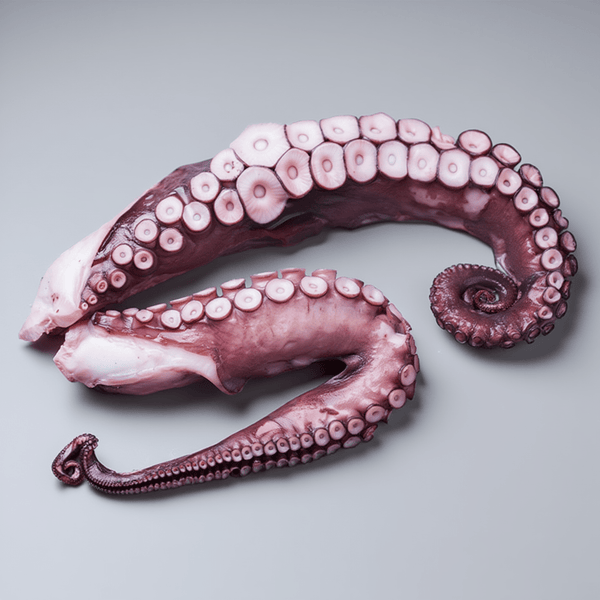
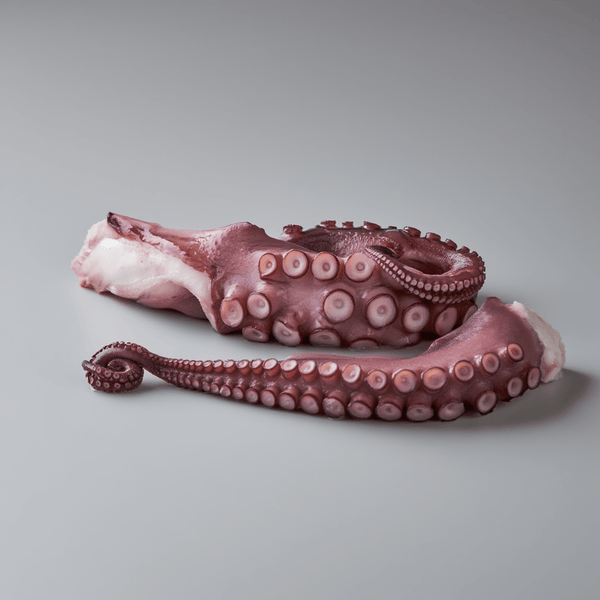
Selected cooked Galician octopus from the Rías Baixas. Ready to cut and use. Large leg (~500g): 4-6 appetizer servings.
View cooked Galician octopus →It's not marketing — recipes tested at Mercat del Ninot since 1990. Every recipe on this page has been cooked at home or at the stall before being published. With the same products we sell. If a recipe doesn't work, it doesn't make it to the blog.
Traditional Galician Recipes
The first 3 are the historic recipes: a feira (the mother of all), stewed with potatoes (northern Galicia and Asturias), and empanada (the classic "takeaway" format). These are what grandmothers used to cook — no strange pairings or Instagram plating.
1. Classic Pulpo a feira (Galician Octopus)
The flagship recipe. If there's one octopus recipe you should know how to make, it's this one. Served on a wooden plate (traditionally), with coarse salt, extra virgin olive oil, and paprika. Nothing more.
Ingredients
- 1 cooked octopus 800g (or 2 legs 250g each)
- Coarse salt to taste (approx. 1 teaspoon)
- Sweet paprika from La Vera (½ teaspoon)
- Spicy paprika from La Vera (¼ teaspoon)
- Extra virgin olive oil (3-4 tablespoons)
- Cooked Galician potato (optional, 2 units)
Steps
- Bring to room temperature. If using pre-cooked octopus (recommended), take it out of the fridge 15 minutes beforehand so it's not cold. If using frozen, thaw 24 hours beforehand in the fridge.
- Cut. Using kitchen scissors, cut the octopus into coins 5-7 mm thick. Start with the thickest part of the leg.
- Heat. In a pan or pot, heat for 30 seconds over low heat to warm the octopus (do not fry — just warm slightly).
- Plate. Arrange the coins on a warm wooden or ceramic plate. If adding cooked potato, it goes underneath, sliced thickly.
- Season. Sprinkle with coarse salt, sweet paprika, and a touch of spicy paprika. Drizzle with extra virgin olive oil.
- Serve. Immediately, with a wooden toothpick. Pair with chilled Albariño or Ribeiro wine.
6. Stewed Octopus with Potatoes (Asturian Style)
Not all octopus is eaten lukewarm. In Asturias and northern Galicia, stewed octopus with potatoes is a Sunday dish. Comforting, rich, and spoon-worthy.
Ingredients
- 500g cooked Galician octopus, cut into pieces
- 800g stewing potatoes
- 2 onions
- 1 red pepper
- 1 green pepper
- 2 ripe tomatoes (or 200g crushed)
- 3 cloves garlic
- 1 tablespoon sweet paprika
- 1 bay leaf
- 1 glass white wine
- Fish broth to taste
- Oil, salt, pepper
Steps
- Sofrito. In a large pot, sauté chopped onion, garlic, and peppers in oil over medium heat (10 minutes).
- Tomato. Add crushed tomatoes and reduce for 5 minutes. Salt and pepper.
- Paprika and wine. Turn off the heat, add paprika, and stir. Turn the heat back on, add white wine, and let the alcohol evaporate (3 min).
- Potatoes. Add the potatoes cut into irregular pieces (torn, not cut — so they release starch). Add bay leaf. Cover with fish broth.
- Cook. Cook for 20 minutes over medium heat, stirring occasionally.
- Octopus. Add the octopus during the last 10 minutes. It just needs to warm up and absorb flavor — it's already cooked.
- Rest. Turn off the heat, let it rest for 10 minutes before serving.
7. Galician Octopus Empanada
The Galician octopus empanada is a Sunday, fair, or picnic food. Thin, golden crust, juicy filling. Better the next day.
Ingredients
- 2 sheets of Galician empanada dough (or homemade)
- 500g cooked Galician octopus, cut into small pieces
- 3 large onions
- 1 red pepper
- 1 green pepper
- 2 cloves garlic
- 1 tablespoon sweet paprika
- ½ teaspoon spicy paprika
- 100ml olive oil
- 1 egg (for brushing)
- Salt
Steps
- Long sofrito. Sauté the chopped onions, peppers, and garlic in oil over very low heat for 25-30 minutes. This is the secret: almost caramelized onion.
- Paprika. Turn off the heat, add the paprikas (be careful not to burn them). Stir.
- Mix octopus. Add the octopus in small pieces to the sofrito. Salt to taste. Let it cool.
- Prepare dough. Spread one sheet on a baking tray lined with parchment paper. Stretch the edges 1cm upwards.
- Fill. Pour the cold filling (important — not hot), spread evenly without reaching the edge.
- Close. Cover with the other sheet, seal the edges by pressing with a fork or making a cord. Make 2-3 cuts in the center for ventilation.
- Bake. Brush with beaten egg. Preheat oven to 200°C, bake for 30-35 minutes until golden.
- Rest. Remove from the oven and let rest for 15 minutes before cutting. Better the next day.
Modern Versions (Same Product, Different Approach)
The following 5 are more recent adaptations: grilled, ceviche, warm salad, carpaccio, and garlic style. They work because Galician octopus is a neutral enough product to fit both Spanish cuisine and Peruvian or modern Mediterranean fusion.
2. Grilled Octopus with Smoked Paprika Aioli
The "grill house" version of octopus. You'll need a grill, barbecue, or, failing that, a very hot pan. Crispy on the outside, juicy on the inside.
Ingredients
- 2-3 large cooked Galician octopus legs (~600g)
- Extra virgin olive oil
- Flaky sea salt
- Smoked paprika
- 1 egg (for aioli)
- 1 clove garlic
- 200ml sunflower oil (for aioli)
- 1 teaspoon lemon juice
Steps
- Prepare aioli. Beat egg with garlic and lemon. Slowly add oil in a thin stream until emulsified. Season with salt and pepper, and add ¼ teaspoon smoked paprika. Refrigerate.
- Dry octopus. Thoroughly dry the legs with paper towels. Otherwise, they won't form a crust.
- Brush. Brush with olive oil. Sprinkle flaky salt on top.
- Grill. 2 minutes per side over high heat. Only sear — do not cook further, the octopus is already cooked.
- Rest. Transfer to a plate and let rest for 2 minutes.
- Serve. Cut into 3cm diagonal pieces. Serve with aioli on the side and a pinch of sprinkled paprika.
3. Octopus Ceviche with Lime and Cilantro
A cross between Peruvian tradition and cooked Galician octopus. A fresh dish, ideal for summer and long appetizers. Marinated for 15 minutes — no more, no less.
Ingredients
- 500g cooked Galician octopus, cut into pieces
- 4 limes (juice)
- 1 red onion, thinly sliced (julienned)
- 1 ají amarillo or ½ chili (seeded)
- Fresh cilantro, chopped
- Salt and pepper
- 1 tablespoon olive oil
- Cooked Peruvian corn or cancha (optional)
Steps
- Cut octopus. Cut the octopus into 1-1.5cm pieces. If the legs are large, cut on the bias for more marinating surface.
- Marinate onion. Place the red onion in ice water for 5 minutes. Drain. This removes the aggressive pungency.
- Prepare tiger's milk (leche de tigre). In a bowl, mix lime juice, finely chopped ají, salt, pepper, and oil.
- Mix. Add the octopus and onion to the bowl. Mix gently.
- Rest. Let marinate for 15 minutes in the fridge (no longer — citrus will toughen the texture).
- Plate. Serve cold with fresh chopped cilantro and optional Peruvian corn. Toasted bread for "mopping up" the tiger's milk.
4. Octopus Salad with Potato and Sherry Vinaigrette
The recipe you order in every tavern but never quite make at home. The key: room-temperature octopus, warm potato, and a pungent vinaigrette.
Ingredients
- 500g cooked Galician octopus, sliced into coins
- 600g Galician potatoes
- 2 roasted red peppers (or jarred)
- 1 spring onion, chopped
- 4 tablespoons extra virgin olive oil
- 1 tablespoon Sherry vinegar
- 1 teaspoon Dijon mustard
- Salt and pepper
- Chopped parsley
Steps
- Cook potatoes. Wash the potatoes with their skins on. Boil them in salted water for 20-25 minutes until a knife inserts easily. Peel hot, cut into 2cm cubes.
- Prepare vinaigrette. Emulsify the oil, vinegar, mustard, salt, and pepper. Set aside.
- Cut octopus. Cut the octopus into 5mm coins.
- Peppers. Cut the roasted peppers into thin strips.
- Mix warm. In a dish, mix the hot potato, room-temperature octopus, peppers, and spring onion.
- Dress. Pour the vinaigrette over the salad. Mix gently. Sprinkle with parsley.
- Serve. Warm or lukewarm (never straight from the fridge).
5. Octopus Carpaccio with Lemon and Paprika
A restaurant-style dish with 5 ingredients and 10 minutes. You'll need well-thick cooked octopus (1 whole leg) and a good knife.
Ingredients
- 2 large cooked octopus legs (~500g)
- 4 tablespoons quality extra virgin olive oil
- 1 lemon (zest and juice)
- Sweet paprika from La Vera
- Flaky sea salt
- Freshly ground black pepper
- Mixed greens or chopped chives
Steps
- Chill the octopus. Place the octopus legs in the freezer for 30 minutes. This makes it easier to cut thinly without breaking the texture.
- Slice. With a very sharp knife or a slicer, cut very thin slices (1-2mm). Arrange on a cold plate.
- Season. Drizzle with extra virgin olive oil and a few drops of lemon juice.
- Garnish. Flake salt, freshly ground pepper, paprika sprinkled on top.
- Finish. Fine lemon zest and microgreens or chopped chives. Serve immediately.
8. Garlic Octopus (Quick 15 min version)
If you have cooked octopus and 15 minutes, you have a bar appetizer. You only need garlic, chili, and good oil.
Ingredients
- 500g Galician cooked octopus in rounds
- 5 cloves garlic, sliced
- 1 cayenne or fresh chili
- 6 tablespoons extra virgin olive oil
- 1 teaspoon sweet paprika
- Fresh chopped parsley
- Salt and pepper
- Toasted bread for serving
Steps
- Brown garlic. In an earthenware casserole (better) or a skillet, brown the sliced garlic with the cayenne over medium-low heat. Be careful: burnt garlic will be bitter.
- Add octopus. Turn the heat up to medium-high. Add the octopus rounds. Sauté for 2-3 minutes.
- Paprika. Turn off the heat. Add paprika and stir off the heat.
- Reactivate. Return to low heat for 1 minute, stirring. If it's dry, add a splash more oil.
- Finish. Salt and pepper to taste. Sprinkle with fresh chopped parsley.
- Serve. In the same casserole, with toasted bread on the side and the oil from the bottom for dipping.
Octopus for one or two?
If you're only cooking for 2 people, the individual 250g leg is the best option. No waste, freezable if there are leftovers.
See 250g leg →Common mistakes that ruin the recipe
- Overcooking already cooked octopus: Cooked octopus only needs to warm up for 2-3 minutes. More time dries it out and makes it rubbery. This is the #1 mistake at home.
- Burning the paprika: Paprika burns on high heat in 5 seconds. Always off the heat or at a very low temperature. If it burns, it makes the entire recipe bitter.
- Not freezing the leg for thin slicing: For thin carpaccio or ceviche, 30 minutes in the freezer allows for clean cuts. Without this, it will be uneven.
- Cutting with a knife instead of scissors: Octopus breaks apart with a knife. Kitchen scissors on a cutting board are the traditional utensil.
- Serving cold from the fridge: Galician octopus is best at room temperature. Take it out 15 minutes before serving, except for ceviche or carpaccio.
- Confusing Galician octopus with others: There is octopus from Morocco, Mauritania, the Pacific. All are edible, but the texture of Galician octopus is clearly superior. The label should indicate the origin.
Pairings and accompaniments
| Recipe | Suggested wine | Bread/accompaniment |
|---|---|---|
| Pulpo a feira | Cold Albariño Rías Baixas | Cooked potato base |
| Grilled | White Godello | Grilled vegetables |
| Ceviche | Pilsner beer / Sauvignon Blanc | Maíz cancha, plantain |
| Salad with potato | Tempranillo rosé | Rustic toasted bread |
| Carpaccio | Cava brut nature | Thin crispy bread |
| Stewed with potatoes | Young Mencía red wine | Bread for dipping |
| Empanada | Light aged red wine | Green salad |
| Garlic octopus | Albariño / Manzanilla | Toasted bread |
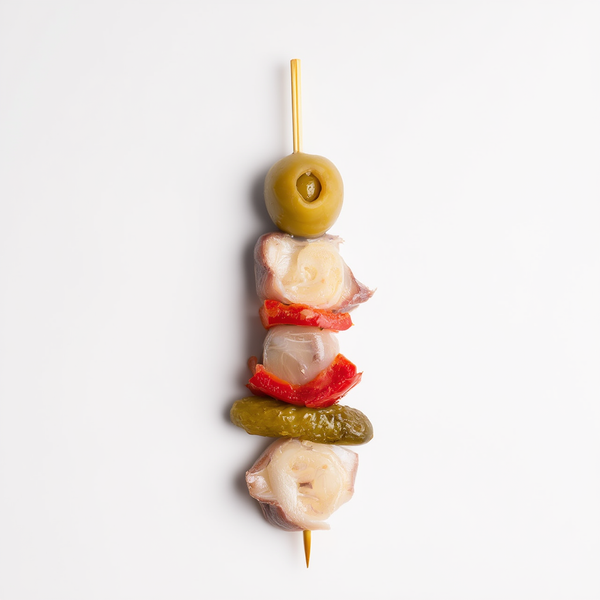
For more vermouth/aperitif desserts, Galician octopus gildas are a perfect shortcut — octopus + chili + olive on a skewer — the same concept in one bite.
What product to buy for each recipe
- For 4-6 people with main recipe: large 500g leg
- For 2 people: individual 250g leg
- For express appetizer without cooking: Galician octopus gildas
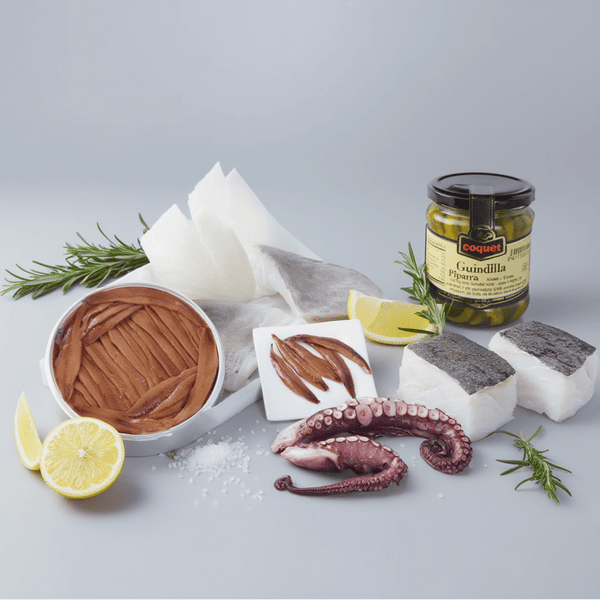
- For gifting / basket: "Octopus & Cod" Assortment
- For accompaniment: Albariño Gran Fabián
In summary
Cooked Galician octopus is the most versatile ingredient in traditional Spanish seafood recipes: 8 different recipes (4 traditional, 4 modern), preparation times between 15 and 75 minutes, and a single base product. The key is to respect three rules: do not overcook it, cut it with scissors, and respect the paprika (always off the heat).
If you want to explore more recipes or see the entire selection of octopus and seafood products, visit our Galician octopus collection or related blog recipes.
Frequently asked questions
Is cooked or fresh Galician octopus better?
For home, cooked Galician octopus is far superior. The controlled-temperature cooking process done at the fish market (tempering, "frightening" in boiling water several times, cooked for 35-45 minutes) is difficult to replicate in a home kitchen. Buying chilled or frozen cooked Galician octopus guarantees texture. If you cook it at home, freeze it for 24-48 hours beforehand to break down fibers.
How long does a whole octopus take to cook?
An octopus weighing 1-1.5 kg needs 30-40 minutes in boiling water (from when it starts boiling again after adding the octopus). 2 kg → 45-55 min. The "frightening" technique (introducing and removing it 3 times before cooking) helps prevent the skin from breaking. Pierce with a toothpick: if it goes in without resistance, it's ready.
What is the difference between Galician octopus and common octopus?
Galician octopus (Octopus vulgaris) caught in the cold waters of the Rías Baixas has denser and firmer fibers, larger suction cups, and pinker skin. Octopus from other origins (Morocco, Mauritania) may be the same species, but temperature and diet change the texture. That's why "Galician octopus" has origin certification and a premium price.
Can cooked octopus be frozen?
It's not ideal, but it can be done. Cooked octopus loses some texture when refrozen (it can become more rubbery). If you freeze it, do so in small portions with a little of the cooking liquid to retain moisture. Always thaw in the refrigerator for 24 hours, never at room temperature.
Why is octopus sometimes tough?
Three common causes: insufficient cooking (less than 30 min for 1kg+ octopus), not having frozen it previously to break down fibers, or subjecting it to very high temperatures after cooking (burnt grill, microwave). If you buy it already cooked, avoid overcooking it for more than 2-3 minutes.
What wine pairs best with octopus?
The classic pairing is Albariño (Rías Baixas) due to its acidity and citrus notes that cut through the richness of the octopus. Ribeiro also works well. If the octopus has abundant paprika (a feira, ajillo), a Godello or a dry Tempranillo rosé are excellent alternatives. For ceviche, a cold pilsner beer.
How much cooked octopus per person?
As an appetizer or starter, 100-130g per person. As a main course, 200-250g. If it's a salad with potatoes or other ingredients, 80-100g per person is sufficient. A 1kg cooked octopus provides 6-8 appetizer servings or 4 main courses.
Can cooked octopus be eaten without heating?
Yes. Chilled cooked octopus can be eaten cold directly — for carpaccios, ceviches, cold salads. It offers real convenience for express appetizers. Just be sure to respect the cold chain and consume before the indicated expiration date.
Related readings
- Pulpo a feira: step-by-step recipe
- How to cook tender octopus
- Octopus ceviche in detail
- Galician octopus salad with vinaigrette
The best octopus recipes, step by step
From the classic pulpo á feira to more modern versions, here are our octopus recipes to nail it at home:
Traditional Galician
- Pulpo a feira: original Galician recipe step by step
- Pulpo a la Gallega: Original Recipe with Pulpeira Tricks [2026]
- Galician Octopus (á Feira): Recipe and How to Cook
- Baked Cooked Octopus with Potatoes: The Galician Bar Recipe