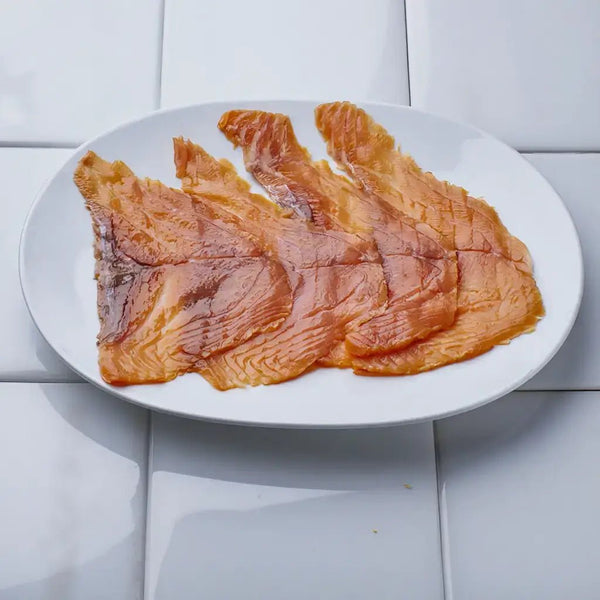
Quick Summary: Mojama is dry-salted and air-dried loin of bluefin tuna (Thunnus thynnus) or yellowfin tuna for 15-25 days. It has a dark garnet-brown color, firm texture, and concentrated umami flavor. The lomo central (central loin) is the most prized cut (€60-90/kg). It is eaten in thin slices with EVOO, toasted almonds, and picos (breadsticks). It is called "jamón del mar" (ham of the sea) because its curing process is similar to Iberian ham. Origin: Cádiz (Barbate, Conil), Murcia, and Almería. A 2,500-year-old Phoenician tradition.
Mojama is, possibly, the Spanish seafood product with the most history. The Phoenicians made it on the coast of Cádiz 2,500 years ago using techniques almost identical to today's. The Romans exported it throughout the Mediterranean. Today, it remains one of the finest tapas that can be served at a table, yet many people confuse it with cecina (cured beef) or cured ham. It is neither: it is salted and dried tuna, the authentic "ham of the sea."

What is mojama: history and origin
The word "mojama" comes from the Arabic "musama" which means "dry." This etymology reveals its ancestral origin on the Andalusian coast, where the Phoenicians and then the Arabs made it to preserve tuna from the almadrabas (tuna traps) throughout the year.
Geographically, there are three main production centers in Spain:
- Cádiz (Barbate, Conil, Zahara): the historical cradle, with the bluefin tuna almadraba in the Strait of Gibraltar.
- Murcia (San Pedro del Pinatar, Águilas): a tradition of salted fish since Roman times.
- Almería (Carboneras, Garrucha): more recent production but technically excellent.
The product has a Protected Geographical Indication (PGI) in Isla Cristina (Huelva) since 2024, which protects the designation of origin for that specific area.
How it's made: the salting process
The traditional production process follows five stages:
- Tuna selection. Bluefin or yellowfin tuna loin is used. The most prized pieces come from the central loin (the dorsal area of the fish, free of tendons).
- Cleaning and cutting. Skin, bones, and tendons are removed. The loin is cut into longitudinal pieces weighing 200 g to 2 kg.
- Dry salting. It is completely covered with sea salt in piles or boxes for 24-48 hours. The salt extracts water and contributes to the product's character.
- Washing and air drying. The surface salt is rinsed off, and it is hung outdoors (coastal areas with gentle land breezes) for 15-25 days. The sea air and controlled sun complete the curing.
- Final selection and packaging. Pieces are classified by category (central loin, lateral, belly) and vacuum-packed or preserved in oil.
A well-cured mojama loses 35-45% of its original weight. Industrial producers accelerate the process to 5-8 days, and it shows: softer texture, less concentrated flavor, lighter color.
Types: central loin, lateral, belly
| Category | Origin | Characteristics | Price €/kg |
|---|---|---|---|
| Central loin | Dorsal area of the loin | The most prized, tendon-free, uniform color | 75-95 € |
| Lateral | Lateral area of the loin | Good quality, some fine tendons, similar flavor | 60-78 € |
| Belly | Ventral area of the loin | Fatter, intense flavor, more visible fibers | 55-72 € |
| Sangacho | Area near the backbone | Darker, stronger flavor, fibrous | 45-60 € |
Whole Gourmet Extra Central Loin Mojama Tuna — 1800 g
Artisanal central loin from the Mediterranean. For thin slicing with a sharp knife.
View whole mojamaBluefin vs yellowfin tuna
Mojama can be made from two main species:
- Bluefin tuna (Thunnus thynnus): from the almadraba in Cádiz. Fattier meat, darker color, more intense flavor. Higher price. Limited production due to quotas.
- Yellowfin tuna (Thunnus albacares): leaner meat, lighter color, milder flavor. Greater availability and more affordable price.
Bluefin tuna produces high-end mojama for gifts or tasting; yellowfin tuna produces standard quality mojama for regular consumption. Both can be excellent if the curing is well done.
Price €/kg in 2026
| Species + cut | Price 200 g | Price €/kg |
|---|---|---|
| Industrial mojama (supermarket) | 8-12 € | 40-60 € |
| Artisanal yellowfin mojama | 14-18 € | 70-90 € |
| Bluefin tuna mojama from Cádiz | 22-32 € | 110-160 € |
| Gran Reserva mojama (premium) | 35-50 € | 175-250 € |
8 recipes with mojama
1. Classic mojama with EVOO and almonds (Cádiz tapa)
Very thin slices of mojama (1 mm) on a plate, drizzle with quality extra virgin olive oil, toasted Marcona almonds around. Serve with picos (breadsticks). Enjoy with vermouth or cold Fino sherry.
2. Tomato, mojama, and oregano salad
Sliced ripe vine tomatoes, thin slices of mojama on top, dried oregano, EVOO, flaked salt. A summery Andalusian dish in the pure "ajo blanco" style. 5 minutes.
3. Spaghetti with grated mojama and tomato
Al dente pasta, tomato sauce with confit garlic, grate mojama over the top when serving (like Parmesan). The concentrated umami elevates the pasta without adding salt.
4. Mojama carpaccio with figs and mustard
Very thin mojama slices, fresh figs quartered, drops of Dijon mustard, EVOO, tender shoots. A weekend starter.
5. Cold melon and mojama cream
Cold melon cream (melon gazpacho) in a glass, thin julienned mojama on top, fresh mint. Refreshing in summer, sweet and savory contrast.
6. Fried egg with mojama
Poached or fried egg in EVOO, thin slices of mojama on top at the end, sweet paprika, parsley. A simple dish for lunch.
7. Mojama and arugula pizza
Thin crust, tomato, fior di latte mozzarella, bake, remove and add mojama slices + arugula at the end (should not be baked). Drizzle with EVOO.
8. Vermouth with a salted seafood platter
Platter with mojama, Cantabrian anchovies, Gordal olives, Marcona almonds, cured cheese, and picos. Red or white vermouth, very cold. The perfect Mediterranean aperitif.

How to cut it correctly
Cutting accounts for 50% of the mojama experience. Recommendations:
- Use a long, sharp, very thin knife (a ham or salmon knife works well).
- Take the piece out of the fridge 30-60 min beforehand so it can reach 16-18 °C.
- Cut against the grain, not with it.
- Slice very thinly, almost translucent (1 mm or less). The thinner, the more it is appreciated.
- Drizzle with EVOO immediately to soften and preserve.
If you buy it pre-sliced and vacuum-packed, take it out of the packaging 5-10 minutes before serving to allow condensation to dissipate.
Storage: how long it lasts
- Whole vacuum-packed piece: 6-9 months in the refrigerator (2-4 °C).
- Opened whole piece: wrap in waxed paper or cling film, store in the fridge for 1-2 months.
- Sliced and vacuum-packed: 2-3 months unopened, 3-5 days once opened.
- In olive oil (jar): 4-6 months unopened, 1-2 months opened and refrigerated.
Mojama should not be frozen — crystallization breaks the fibers, and upon thawing, it loses texture.
Wines to pair with it
- Dry Fino Sherry: the classic pairing, "one cuts the other."
- Manzanilla en rama from Sanlúcar: fresher, ideal in summer.
- Dry white or red vermouth: traditional Andalusian aperitif.
- Albariño / Godello: Atlantic whites that can handle the intensity.
- Young Mediterranean red: yes, but without strong tannins. Young Garnacha or Tempranillo aged briefly in oak.
Avoid: very tannic aged reds (clash), sweet wines, sparkling rosés.
Conclusion
Mojama is one of the noblest and most underutilized products in the Mediterranean pantry. It costs less than good Iberian ham, lasts months in the fridge, and a 200g piece is enough to serve appetizers to 6 people. The important thing: choose central loin, slice it very thinly, drizzle it with good EVOO, and serve with Marcona almonds and a cold Fino sherry. If you do that, you've made the most authentic Andalusian tapa possible.
Try our tuna mojama
Central loin, traditional curing, no added preservatives.
View salted fish collectionFrequently asked questions
What exactly is mojama?
It is tuna loin (bluefin or yellowfin) dry-salted and air-dried for 15-25 days. A product with Phoenician (Cádiz) and Mediterranean tradition. It is not smoked, in oil, or cooked — purely salted and air-dried.
Why is it called "ham of the sea"?
Because its process (salting + prolonged drying) is similar to Iberian ham, and it is also served in very thin slices as a tapa or appetizer with EVOO. But it is tuna, not pork.
How much does good mojama cost?
Artisanal yellowfin tuna central loin mojama: €75-95/kg. Bluefin tuna mojama from Cádiz: €110-160/kg. Industrial (softer and less cured): €40-60/kg.
How long does it last once opened?
A whole piece wrapped in paper and refrigerated: 1-2 months. Sliced, vacuum-packed and opened: 3-5 days. As it is very salty (salt: 2,500-3,500 mg/100 g), it lasts much longer than other seafood products.
How is it cut?
With a long, sharp knife, into very thin slices (1 mm or less), against the grain. Bring the piece to room temperature 30-60 minutes beforehand. Drizzle with EVOO immediately.
Can it be used in hot cooking?
Yes, grated or chopped at the end of the dish over pasta, warm salads, risottos. It adds umami like Parmesan but with a marine flavor. Do not cook it directly — only add at the end.
How many calories does it have?
280-320 kcal/100 g. Very high in protein (50-60 g/100 g, almost double that of fresh tuna) and low in carbohydrates. Sodium is high (2,500-3,500 mg/100 g), consume in moderation if you have hypertension.
Mojama or bottarga: which to choose?
Mojama: sliced tuna loin, for tapas. Bottarga: whole cured tuna or mullet roe, to grate like Parmesan. Similar products but with different uses. More details in our article on roe vs mojama.
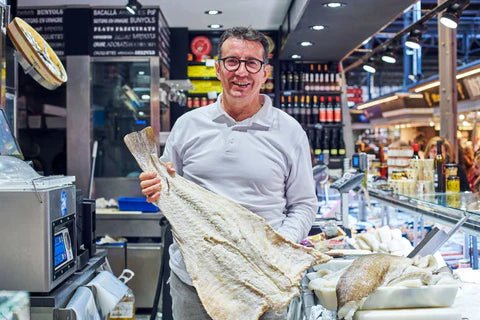
Author: Lalo González Rodríguez. 35 years working with seafood products at Mercat del Ninot in Barcelona since 1990. Specialist in Mediterranean cured fish.