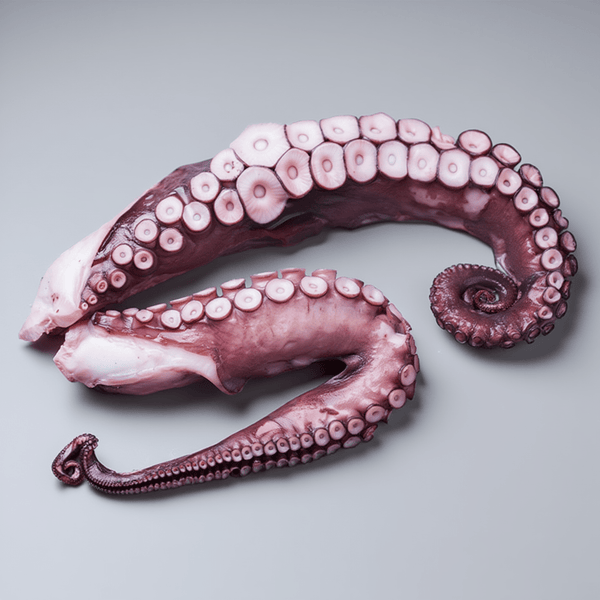
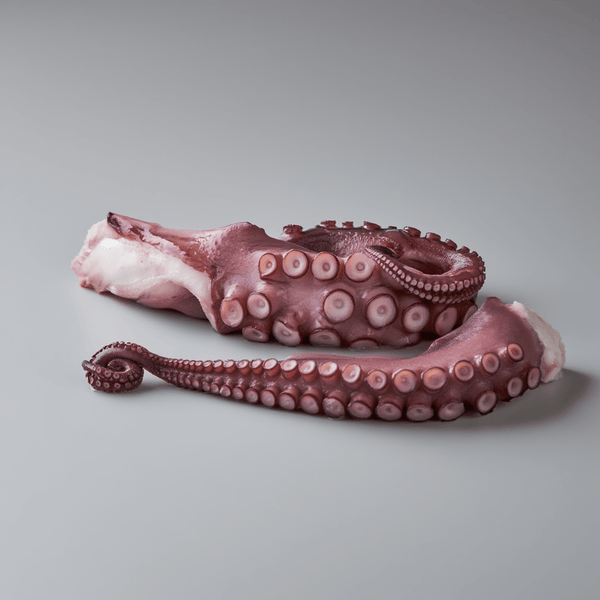
Summary: Pulpo a feira ("octopus a feira") is prepared by cooking the octopus in unsalted water, cutting it with scissors into thick slices, and serving it on a wooden plate with generous extra virgin olive oil, coarse salt, and pimentón de la Vera (sweet and spicy). Nothing more is needed. Correct cooking is key: 40-45 minutes for a 2 kg octopus, checking with a toothpick until tender. It is "scared" three times before cooking.
What is pulpo a feira?
Pulpo a feira is the most representative dish of Galicia. "A feira" means "from the fair" — it became popular at Galician fairs and pilgrimages where pulpeiras (women specializing in cooking octopus) prepared it in large copper pots over a wood fire.
It is a dish of radical simplicity: cooked octopus, cut with scissors, served on a wooden plate, with oil, salt, and paprika. Nothing more. The genius lies in the cooking technique and the quality of the product. With good Galician octopus and correct cooking, it needs nothing else.
Pulpo a feira is served as a tapa or a larger portion, always on "pratos de madeira" (round wooden plates) that absorb the oil and octopus juice. It is exclusively accompanied by bread and red wine — preferably a Mencía del Bierzo or a Ribeira Sacra.
Ingredients for 4 people
- 1 octopus, 1.5-2 kg (fresh or frozen)
- Extra virgin olive oil (generous, don't skimp)
- Coarse salt (preferably Galician sea salt)
- Sweet paprika from La Vera
- Spicy paprika from La Vera (optional but recommended)
- 1 bay leaf (optional)
- 1 onion cut in half (optional, for the water)
Step-by-step
Step 1: Freeze or buy frozen. If the octopus is fresh, freeze it for at least 48 hours. Freezing breaks down muscle fibers and tenderizes it. If you buy it frozen, this step is already done. Defrost in the refrigerator 24-36 hours before cooking.
Step 2: Prepare the water. Fill a large pot with plenty of water. DO NOT add salt — unsalted water keeps the octopus skin attached to the meat. Optionally, add a bay leaf and half an onion.
Step 3: "Scare" the octopus. When the water is boiling vigorously, grasp the octopus by the head and submerge it in the boiling water for 3-4 seconds. Remove it. Repeat 3 times. This contracts the skin and prevents it from peeling off during cooking.
Step 4: Cooking. After the third scare, submerge it completely. Reduce the heat to medium to maintain a gentle (not violent) boil. Cook according to weight:
Cooking times by weight
| Octopus weight | Time from boiling |
|---|---|
| 1 kg | 30-35 minutes |
| 1.5 kg | 35-40 minutes |
| 2 kg | 40-45 minutes |
| 2.5-3 kg | 45-55 minutes |
Cooking test: Pierce the thickest part of a tentacle with a toothpick. If it goes in and out without resistance, it's ready. If it offers resistance, give it 5 more minutes.
Step 5: Rest in its broth. Turn off the heat and leave the octopus in the hot water for 15-20 minutes. This allows the cooking to settle and the juices to redistribute. This is the secret of the pulpeiras.
Step 6: Cut with scissors. Remove the octopus and cut it with kitchen scissors into 1-1.5 cm thick slices. Always use scissors, never a knife — scissors make a clean cut without crushing.
Step 7: Plate. Arrange the slices on a wooden plate (or a regular plate). Drizzle generously with extra virgin olive oil — the oil is a fundamental part of the dish. Sprinkle with coarse salt and paprika: first the sweet, then a pinch of spicy. Serve immediately.
"Scaring" the octopus: why does it work?
The "scare" ("asustar" or "giving three dips") has a scientific explanation: when you briefly submerge the octopus in boiling water, the outer layer of proteins coagulates and the skin contracts over the meat. When you remove it, the temperature contrast fixes that contraction.
If you don't "scare" the octopus, the skin will peel off during the long cooking process, resulting in a peeled, unsightly octopus with an irregular texture. Three "scares" of 3-4 seconds each are sufficient.
Pulpeiras' tricks
- Always freeze: A fresh octopus that hasn't been frozen will be tough no matter how long you cook it. Freezing is essential to tenderize it.
- No salt in the water: Salt hardens the skin and makes it peel off. The octopus is salted only when serving with coarse salt.
- Gentle boil: Boiling violently breaks the tentacles. Constant but calm bubbling.
- Rest in the broth: 15-20 minutes with the heat off. Do not remove it immediately.
- Scissors, not a knife: Scissors cut cleanly. A knife crushes and tears.
- Generous oil: Don't be stingy with the oil — it's an essential part of the dish. Dry octopus without oil is not pulpo a feira.
Nutritional information (per serving)
| Nutrient | Per serving (without oil) |
|---|---|
| Calories | 165 kcal |
| Proteins | 30 g |
| Fats | 2 g |
More octopus recipes: grilled octopus and seafood salad.
Conclusion
Pulpo a feira is a dish that demonstrates that great cuisine can be radical in its simplicity. Octopus, oil, salt, paprika. Four ingredients. But technique matters: freezing, "scaring" three times, cooking in a gentle boil, resting in its broth, cutting with scissors. Each step has a reason, and skipping any of them will be noticeable.
Do it right once, and it will become your go-to dish when you want to impress without overcomplicating things.
Frequently asked questions
Is it necessary to freeze the octopus?
Yes, it's essential. Freezing breaks down muscle fibers and tenderizes it. A fresh octopus that hasn't been frozen will remain rubbery no matter how long you cook it. A minimum of 48 hours in the freezer is recommended.
Can it be cooked in a pressure cooker?
Yes, reduce the cooking time by half: 15-20 minutes for a 2 kg octopus at medium pressure. The result is acceptable, although purists prefer a traditional pot for more control.
Can it be prepared in advance?
Yes. Cook it, let it cool in its broth, and store it whole in the refrigerator. When ready to serve, cut it, warm it slightly in the microwave (30 seconds) or in its own broth, and plate with oil and paprika.
Which paprika should I use?
Pimentón de la Vera (Cáceres). Use sweet as a base and a touch of spicy on top. Never use Hungarian or generic paprika — the smoky flavor of La Vera is fundamental for the authentic taste.
Does frozen supermarket octopus work?
Yes, it works correctly. Make sure it's a whole octopus (not loose tentacles, which are often from a different species). Defrost in the refrigerator for 24-36 hours.
Why on a wooden plate?
Galician tradition: the wooden plate ("prato de madeira") absorbs excess water from the octopus and keeps the oil and paprika in contact with the meat. It is also aesthetically iconic. If you don't have one, a regular plate will suffice.
María José Sáez Pastor
Over 35 years selecting and preparing seafood products at Mercat del Ninot in Barcelona. She knows every recipe because she has cooked them all — and improves them with professional expertise.