Summary: Grilled octopus is prepared in two phases: first, the octopus is cooked until tender (as for pulpo a feira), and then it is grilled or seared over very high heat for 2-3 minutes to caramelize the surface. The result is a spectacular contrast of textures: a crispy and smoky exterior, and a tender and juicy interior. 20 minutes of active preparation for 4 people (plus the octopus's initial cooking time).
The two-phase technique
Grilled octopus is not cooked directly on the grill raw — it would be rubbery and impossible to chew. The correct technique is a two-phase process used by all top restaurants:
- Phase 1 — Cooking: The octopus is boiled in water as for pulpo a feira (45 minutes for 2 kg), until completely tender.
- Phase 2 — Grilling: The already tender octopus is grilled or seared at a very high temperature for just 2-3 minutes. This is only to create the crispy crust and smoky flavor.
This double cooking produces the best possible octopus: the tenderness of slow cooking with the flavor and texture of grilling. It is the technique that has made restaurants like Güeyu Mar (Asturias) or Casa Marcelo (Santiago) famous.
Ingredients for 4 people
- 1 octopus, 1.5-2 kg, already cooked and tender (see cooking recipe)
- Extra virgin olive oil
- Maldon salt or flake salt
- Smoked paprika from La Vera (optional)
- 1 lemon
- Black pepper
Step-by-step
Step 1: Cooked and dry octopus. The octopus should already be cooked and tender. Dry it thoroughly with paper towels — moisture prevents caramelization on the grill. If you cooked it the night before and stored it in the fridge, dry it when you take it out.
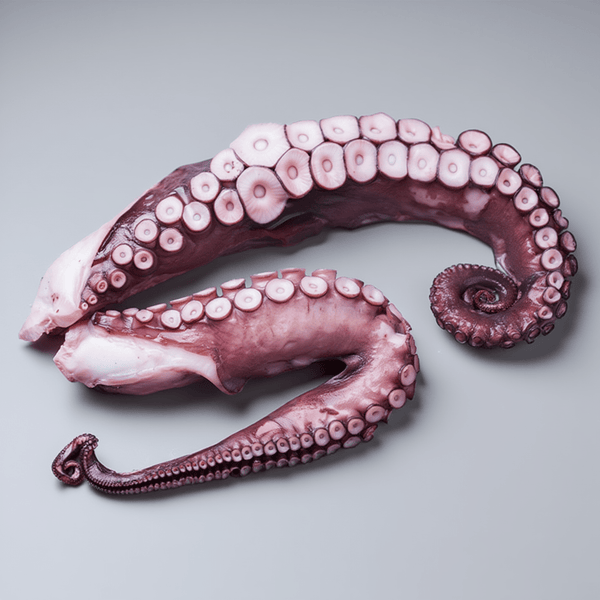
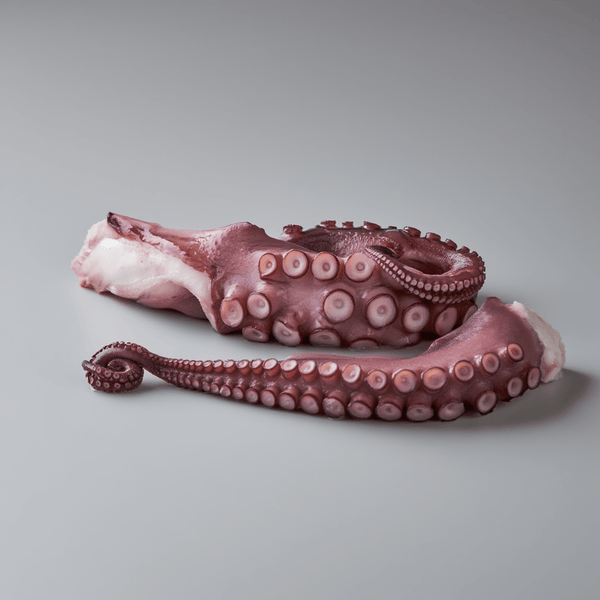
Step 2: Cut the tentacles. Separate the tentacles from the head. If the tentacles are very thick, cut them in half lengthwise to increase their contact surface with the grill.
Step 3: Oil. Brush the tentacles with olive oil using a brush or your hands. Season lightly with salt and pepper.
Step 4: Grill or griddle (2-3 min). Place the tentacles directly over hot coals or on a griddle over maximum heat. Cook 1-2 minutes per side — just until you see grill marks and the surface lightly crisps. DO NOT OVERCOOK — the octopus is already cooked, you only want texture and smoky flavor.
Step 5: Plate. Cut into thick slices with scissors. Serve with a generous drizzle of olive oil, Maldon salt, a touch of smoked paprika, and half a lemon.
Grill vs. griddle: which is better?
| Method | Advantages | Disadvantages |
|---|---|---|
| Charcoal grill | Real smoky flavor, authentic grill marks | Requires a barbecue, less control |
| Iron griddle | More control, can be done in the kitchen | No real smoky flavor |
| Cast iron skillet | Accessible, good caramelization | No marks, no smoke |
| Kitchen torch | Precision, controlled caramelization | Less intense flavor |
A charcoal grill yields the best result, but a cast iron griddle over maximum heat produces excellent octopus without needing to light the barbecue.
Tips and tricks
- Dry, dry, dry: Moisture is the enemy of browning. Dry with paper towels and let air dry for 5 minutes before grilling.
- Oil in moderation: A thin brush, do not soak. Too much oil creates flames on the grill and a burnt taste.
- Only 2-3 minutes: The octopus is already cooked. If you leave it longer, the surface hardens and loses its internal tenderness.
- The head too: The octopus head, cut into medallions and grilled, has incredible flavor and texture. Don't waste it.
- Smoke with rosemary: Throw a fresh rosemary sprig onto the coals just as you place the octopus. The aromatic smoke will infuse the octopus.
Accompaniments
- Smoked mashed potatoes: A restaurant classic with grilled octopus. Creamy, with a hint of toasted butter.
- Patatas panaderas (sliced baked potatoes): Thinly sliced, baked with olive oil. They absorb the octopus's juices.
- Arugula salad: Arugula leaves with grated Parmesan and a lemon vinaigrette. Freshness contrasting with intensity.
- Hummus: Creamy hummus contrasts perfectly with crispy octopus. A modern and effective combination.
- Pimientos de Padrón: Grilled alongside the octopus on the same grill. The perfect Galician accompaniment.
Nutritional information (per serving)
| Nutrient | Per serving |
|---|---|
| Calories | 200 kcal |
| Protein | 30 g |
| Fat | 8 g |
More octopus recipes: pulpo a feira and seafood salpicón.
Conclusion
Grilled octopus is the evolution of pulpo a feira: the same tender base, but with more sensory impact. The double cooking — slow first, intense grilling second — produces a contrast of textures that is addictive. You only need a well-cooked octopus, a strong heat source, and 3 minutes of attention. The result rivals any restaurant.
Frequently asked questions
Can I grill octopus directly without boiling it?
Not recommended. Raw octopus grilled becomes rubbery and tough. It needs prior cooking to soften the fibers. Grilling only provides texture and smoky flavor to an already tender octopus.
Can I use pre-cooked octopus from the supermarket?
Yes. Vacuum-packed pre-cooked octopus works perfectly. Dry it well and grill it. It's the quickest option, and the result is very good.
What type of charcoal should I use?
Oak or quebracho lump charcoal. Avoid briquettes with chemical additives — their flavor can transfer to the octopus. If using wood, oak or holm oak are the best.
How much octopus per person?
350-400g of raw octopus per person (yields half when cooked). A 2kg octopus is plenty for 4 people as a serving.
Can it be done on an electric griddle?
Yes, if the griddle reaches a sufficient temperature. Grill griddles that reach 250-300 °C work. Those that don't exceed 200 °C won't achieve the necessary caramelization.
Can I cook it and grill it the next day?
Yes, that's ideal. Cook the octopus, cool it, and store it whole in the fridge. The next day, cut it, dry it, and grill it. Separating the two phases makes organization easier.
María José Sáez Pastor
Over 35 years selecting and preparing seafood products at Mercat del Ninot in Barcelona. She knows every recipe because she has cooked them all — and improves them with professional judgment.