Octopus Ceviche: Fresh Recipe with Galician Octopus and Lime
Octopus ceviche is one of the most refreshing and elegant dishes you can prepare with very little effort when starting with good quality ingredients. The ceviche technique, that "cooking" in citric acid that transforms the texture and flavor of seafood without heat, works especially well with octopus: the acidity of the lime slightly softens the meat, intensifies its marine flavor, and creates a vibrant dish that unites Latin American tradition with the best Galician raw material.
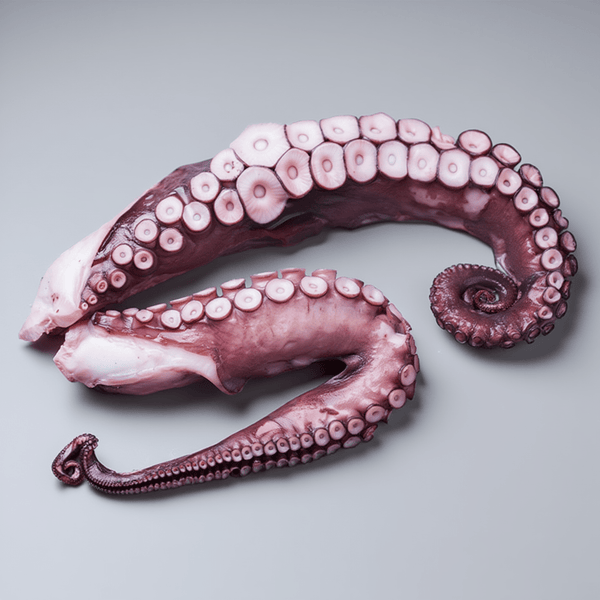
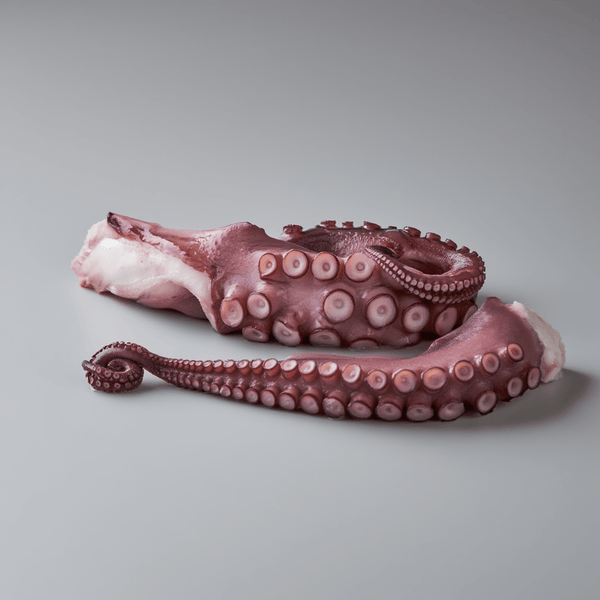
This recipe uses cooked large Galician octopus leg, which eliminates the most laborious and technical step of traditional preparation (cooking the octopus for hours until tender) and focuses on what truly defines a good ceviche: the balance of the leche de tigre and the freshness of the accompaniments.
Why Galician octopus is ideal for ceviche
Updated March 2026. Every day at Mercat del Ninot we see what works and what doesn't. This is our real experience.

Not all octopuses work equally well in a ceviche. Galician octopus (Octopus vulgaris from the coasts of Galicia) has specific characteristics that make it superior for this preparation:
- Firm texture: Galician octopus has dense flesh that holds up to the acidity of the lime without falling apart. A lower quality or poorly cooked octopus becomes gelatinous or falls apart in the ceviche before reaching the table.
- Intense but clean marine flavor: The flavor of Galician octopus is distinctly marine but without the muddy note or excess iodine that some octopuses from warmer waters have. This cleanliness allows the ceviche to have a defined marine flavor without being overwhelming.
- Already cooked: Starting with cooked octopus eliminates hours of work and ensures consistent texture. A quality precooked octopus like the large Galician leg has been cooked to its exact point: firm to the bite, tender on the inside.
Leche de tigre: the heart of ceviche
Leche de tigre (tiger's milk) is the citric-spicy liquid that "cures" fish or seafood in Peruvian ceviche. It is simultaneously a marinade, a condiment, and, in many Peruvian restaurants, a drink served in a small glass as an appetizer before the ceviche. Its name comes from the milky color it acquires when lime juice emulsifies with the seafood juice and the creamy aji in the leche de tigre.
For octopus ceviche, the leche de tigre is slightly adapted compared to that for white fish: octopus has a more intense flavor and a firmer texture, so the leche de tigre can be more structured and allow for more components.
Ingredients for the leche de tigre for octopus ceviche
- 100 ml freshly squeezed lime juice (about 5-6 limes)
- 50 ml lemon juice
- 1 tablespoon grated fresh ginger
- 1 fresh aji amarillo or 1 teaspoon aji amarillo paste (or ground dried cayenne as a substitute)
- 1 small garlic clove
- Half a red onion, roughly chopped
- 1 tablespoon fresh cilantro (including stems: they have more flavor than the leaves)
- Salt to taste
- 2-3 ice cubes (to prepare just before serving)
Preparation of the leche de tigre
In a blender or with an immersion blender, combine the lime juice, lemon juice, ginger, aji (deseeded and without white ribs to control spiciness), garlic, and cilantro stems. Blend for 30 seconds. Add the ice cubes and blend for another 10 seconds: the ice keeps the temperature low and prevents the acidity from heating up and losing freshness. Strain with a fine sieve to obtain a clean liquid. Taste and adjust for salt, acidity (more lime if needed), and spiciness. The leche de tigre should be distinctly acidic, with a present but not dominant spiciness.
Store in the refrigerator until ready to use. The leche de tigre can be prepared up to 4 hours in advance; after that, the garlic and ginger will intensify and may become overpowering.
Octopus ceviche ingredients: what you need
For 4 people as a starter or 2 as a main course:
- 1 large cooked Galician octopus leg, sliced 1 cm thick
- The leche de tigre prepared according to the previous recipe
- 1 large red onion, very thinly sliced (julienned)
- 1 fresh aji amarillo or 1 red chili pepper, thinly sliced (seeds removed)
- 1 cooked sweet corn on the cob or 1 can of corn
- 1 medium sweet potato, cooked and diced (or camote, as it's called in Peru)
- Fresh cilantro, leaves only
- Maldon salt for finishing
- Extra virgin olive oil, 1 tablespoon
Step-by-step preparation of octopus ceviche
Step 1: prepare the octopus
If the cooked Galician octopus is refrigerated, remove the leg and slice it into approximately 1 cm thick rounds. For ceviche, the slices should not be too thin (they will fall apart in the acid) nor too thick (the acid will not penetrate well). 1 cm is the optimal thickness. If you prefer irregular pieces instead of rounds, that also works: some traditional Peruvian ceviches use larger pieces of octopus, resulting in a more rustic but equally flavorful dish.

Tip: if the octopus has been in the refrigerator, let it come to room temperature slightly by taking it out 10-15 minutes before preparing the ceviche. Very cold octopus does not absorb the leche de tigre well, and the flavor will be flat.
Step 2: marinate the onion
The julienned red onion is an essential ingredient in Peruvian ceviche, but raw and unmarinated, it is too intense and excessively pungent. The trick is to wash it: place the julienned onion in a colander, sprinkle coarse salt over it, wait 5 minutes, and rinse under cold water. This process extracts the pungent liquid from the onion and leaves a milder, sweeter flavor with the crispy texture intact. Drain well and set aside.
Step 3: assemble the ceviche
In a large, cold bowl (you can chill it in the freezer for 5 minutes beforehand), place the octopus slices. Pour the leche de tigre over the octopus until covered. The octopus is already cooked, so it does not need "cooking" time in the acid like raw fish: 5-10 minutes in the liquid are enough for the octopus to absorb the flavors of the leche de tigre without altering its texture.
Step 4: add the accompaniments
Add the marinated onion, aji amarillo strips, and cilantro leaves. Mix gently to avoid breaking the octopus slices. Taste and adjust for salt.
Step 5: assemble and serve
Serve the ceviche on cold plates or in bowls. Arrange the corn and cooked sweet potato on one side of the plate as contrasting elements of temperature and texture. Pour a little more leche de tigre around if the plate allows. Finish with fresh cilantro leaves, a few Maldon salt flakes, and a drizzle of extra virgin olive oil. Serve immediately: ceviche does not wait.
Why ceviche includes sweet potato and corn
In Peru, ceviche is always accompanied by camote (sweet potato) and choclo (tender corn). These are not decorative elements: they fulfill specific functions in the experience of the dish.
Sweet potato contrasts with the aggressive acidity of the leche de tigre and calms the palate between bites of ceviche. Its natural sweetness and warm temperature create a thermal and flavor contrast that makes the whole more interesting. Tender corn provides a crunchy texture and a vegetable sweetness different from that of sweet potato, which is more starchy and persistent. Together, sweet potato and corn create the complete ceviche experience: it is not just an acidic dish but a balance of acid, sweet, crunchy, and tender that makes it satisfying in all dimensions.
Variations of octopus ceviche
Octopus ceviche with smoked salmon
Mix diced smoked salmon loin with the octopus slices in a ratio of approximately 1:2 (1 part salmon, 2 parts octopus). Smoked salmon does not need time in the leche de tigre: its profile is already intense enough, and the acidity would cure it excessively. Mix it in at the last moment before serving. The salmon-octopus-leche de tigre combination is a fusion that works surprisingly well: the smokiness of the salmon creates an extra dimension of flavor in the ceviche.
Octopus ceviche with salmon roe
Finish the octopus ceviche with a teaspoon of Tanit Keta Premium salmon roe on top of each portion. The orange pearls bursting in the mouth in the middle of the ceviche are a textural experience that takes the dish to another level. The salty flavor of the roe perfectly complements the acidity of the leche de tigre and the marine flavor of the octopus.
Octopus tiradito
Tiradito is the Peruvian version of carpaccio applied to ceviche. Instead of diced or sliced, the octopus is thinly sliced (2-3 mm) and arranged on the plate like a flower. The leche de tigre is poured over it at the last moment, just before serving. There are no sweet potato or corn accompaniments: tiradito is more minimalist and focuses exclusively on the product and the sauce. For tiradito, the octopus must be very well cooked and slightly cold to be able to slice with precision.
Octopus ceviche with coconut milk
Substitute 50 ml of leche de tigre with unsweetened coconut milk. The result is a creamier ceviche, with a soft tropical touch that mellows the acidity. It works especially well with aji amarillo, which has a natural affinity with coconut in Pacific cuisine. This version is more accessible for palates that find classic ceviche too acidic.
Octopus ceviche as a main course
Octopus ceviche is usually a starter, but it can be a light and satisfying main course. To turn it into a main course:
- Double the amount of octopus (one large leg is enough for 2 people as a generous main course)
- Increase the accompaniments: more sweet potato, corn, and add diced avocado as a filling element
- Serve with patacones (fried green plantain toasts) or corn tortillas
- Complete with a quinoa salad with cilantro if you want a more substantial dish without losing the fresh profile of the ceviche
What to pair with octopus ceviche
Ceviche has a very acidic and spicy flavor profile, which limits pairing options but those that work, work very well:
- Very cold blonde beer: The most classic pairing for Peruvian ceviche. Cold beer cleans the palate, and its bitterness balances the acidity. A Heineken or Estrella type lager works perfectly.
- Pisco sour: The Peruvian national pairing. The acidity of pisco sour (pisco, lime, egg white, ice) doubles the acidic experience of ceviche in the glass, creating a pairing consistency that Peruvians know well.
- Txakoli: The Spanish wine that works best with ceviche due to its high acidity, natural bubbles, and mineral and salty profile.
- Sparkling water with lemon: The non-alcoholic option that cleans the palate between bites without competing with the flavors of the dish.
🛒 Products used in this recipe
⭐ 4.9/5 · 24-48h cold shipping · Since 1990 at Mercat del Ninot
Frequently asked questions about octopus ceviche
Can ceviche be made with raw octopus?
Technically yes, but it is not recommended. Raw octopus is very tough, and the acidity of the lime takes a long time to penetrate and soften the meat (several hours, with the risk of bacterial contamination). Starting with cooked Galician octopus is safer, faster, and the final result is superior because the cooking has already achieved the optimal texture that no amount of acid can replicate.
How long can octopus ceviche marinate in leche de tigre?
Since the octopus is already cooked, it does not need chemical cooking time. 5-10 minutes are sufficient for it to absorb the flavors of the leche de tigre. If left longer, the texture of the octopus becomes slightly more acidic on the surface without improving the flavor. Octopus ceviche, once assembled, should be consumed within 30 minutes.
What is aji amarillo and where can I find it?
Aji amarillo is a Peruvian chili pepper that is orange-yellow in color with a moderate spiciness and an unmistakable fruity flavor. In Spain, it can be found in Latin American stores (especially in areas with a large Peruvian community, such as Madrid and Barcelona) and on Amazon in paste form in a jar. If you can't find it, deseeded red chili pepper or a pinch of sweet cayenne are acceptable substitutes, although the fruity flavor of aji amarillo is not perfectly replicated with any European substitute.
Can octopus ceviche be prepared in advance?
The leche de tigre and sliced octopus can be prepared separately up to 12 hours in advance (stored separately in the refrigerator). The final assembly, mixing all ingredients, is done just before serving. A ceviche assembled more than 1-2 hours in advance will have lost its freshness, and the texture of the octopus will begin to deteriorate.
Is octopus ceviche safe for pregnant women?
The cooked Galician octopus used in this recipe is safe as it has undergone heat treatment. The leche de tigre and additional raw ingredients (onion, cilantro) also pose no risk. In general, raw fish ceviche is not recommended for pregnant women, but this version with cooked octopus does not have that restriction.
Galician octopus: an exceptional product for ceviche
Choosing the right octopus is the most important step in this recipe. The cooked large Galician octopus leg available at Bacalalo meets all the requirements you need: certified Galician origin, cooked to its optimal texture point, without additives or preservatives. It is the same product we use at Mercat del Ninot and the one you will receive at home to prepare this ceviche.
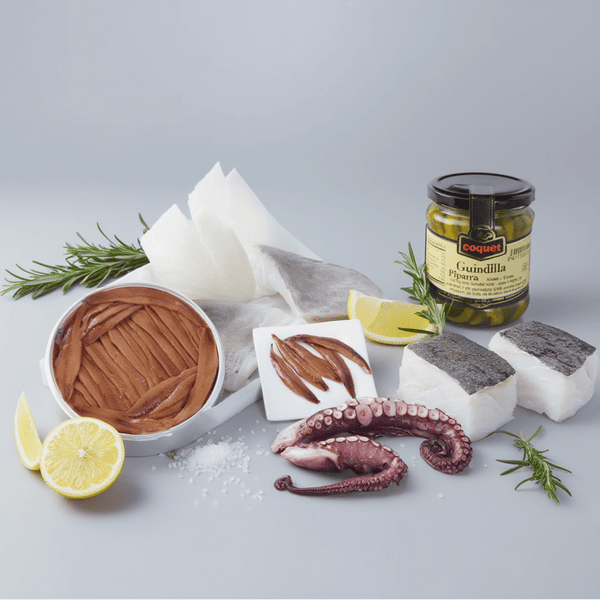
Also explore our gourmet preserves collection to find more seafood products with which to expand your repertoire of ceviches and tiraditos. The Galician and Cantabrian seas have much more to offer than what reaches supermarket shelves.