Summary: Cooking with caviar has non-negotiable rules: never apply direct heat, always use it at the end, and choose the right type for the dish. With these three principles, the 8 preparations in this guide are within reach of any home cook with a reasonable budget. Here you won't find decorative recipes; you'll find verified techniques that top chefs use because they work, explained with enough precision to replicate them correctly.
Content
- The 3 basic rules for cooking with caviar
- Which type of caviar to use depending on the dish
- 1. Low-temperature egg with Osetra
- 2. Pasta with beurre noisette and Beluga
- 3. Oyster with Sevruga and Champagne jelly
- 4. Classic blinis with sour cream and caviar
- 5. Steamed potato with creme fraiche and Osetra
- 6. Tuna tartare with caviar and sesame oil
- 7. Brioche toast with butter and Beluga
- 8. Cold Vichyssoise with Sevruga
- Realistic budget for cooking with caviar at home
- Frequently asked questions about caviar in recipes
The 3 basic rules for cooking with caviar
Updated March 2026. After decades of working with seafood, we've learned that quality makes all the difference.
Before discussing recipes, there are three principles that determine whether caviar in a dish works or is a waste of money. These are not rituals of classical gastronomy; they are technical restrictions with a verifiable physical and chemical explanation.
Rule 1: Never heat caviar directly. The proteins and fats in sturgeon roe coagulate and degrade at temperatures above 35-40 degrees Celsius (95-104 degrees Fahrenheit). Heat destroys the texture—the roe becomes pasty, losing its surface tension—and irreversibly alters the aromatic profile. Caviar that has been directly heated does not taste like caviar; it tastes like cooked fish with salt. Always add it at the end, over the plated dish, just before serving.
Rule 2: Caviar stars, it doesn't decorate. There's a difference between using caviar as an ingredient and using it as a decorative garnish. As a garnish—three grains on a dish with 40 elements—caviar adds nothing perceptible, and the expense is purely symbolic. As a leading ingredient in minimal but sufficient quantities (5-15g per serving), it transforms the dish in a way no other ingredient can replicate. In the recipes in this guide, caviar is always the star.
Rule 3: The dish's environment should be neutral or complementary. Caviar does not work well with very aggressive flavors—strong vinegar, dominant spices, intense cheeses—because these flavors overpower its aromatic profile. The best caviar dishes share the same common structure: a neutral or mild flavor base (butter, cream, potato, egg, plain pasta) that acts as a canvas where caviar can express its complexity without competition.
Which type of caviar to use depending on the dish
Not all types of caviar work equally well in all dishes. Choosing the correct type makes the difference between a successful preparation and one where the caviar is subdued.
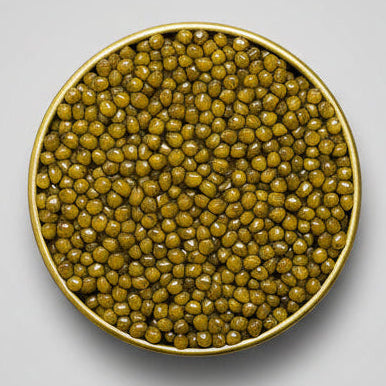
Osetra is the most versatile culinary caviar: its complex flavor profile—nutty notes, mineral, long aftertaste—better withstands contact with lukewarm ingredients and fat, and adds layers of flavor that enrich egg, butter, pasta, and cream-based dishes. Iranian Imperial Osetra Caviar at 75 EUR is the starting point for most of the recipes in this guide.
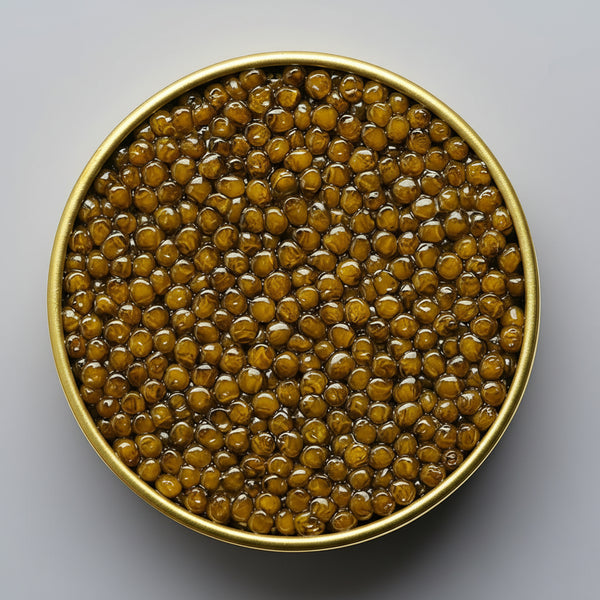
Beluga is the most culinarily delicate caviar: its creamy and smooth profile requires environments with very little aromatic "noise" to shine. It works best in the simplest preparations—butter-toast, classic blinis, over cold oysters—where its subtlety doesn't have to compete. Iranian Imperial Beluga Caviar at 90 EUR justifies its use in presentations where the product is literally the dish.
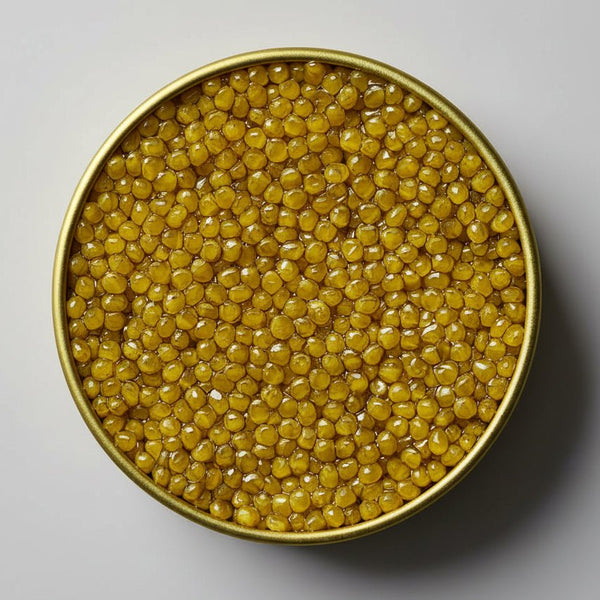
Sevruga is the most intense caviar and the most suitable when the dish already has its own character—a vichyssoise with a defined flavor, a tartare with sesame, an iodized oyster—and the caviar needs to provide additional intensity without being overshadowed. Caspian Sevruga Caviar at 100 EUR is the benchmark for these preparations.
1. Low-temperature egg with Osetra
The emblematic dish of new Spanish cuisine in its purest version. It has been served in Michelin-starred restaurants throughout Spain since the nineties because the combination works with irrefutable logic: the fat of the egg yolk and the fat of the caviar mutually enhance each other, and the saltiness of the caviar provides the structure that the yolk alone lacks.
Ingredients for 2 people:
- 2 free-range eggs (size L, very fresh)
- 15-20g of Iranian Imperial Osetra
- Fine sea salt
- High-quality extra virgin olive oil
Method: Cook the eggs at 63 degrees Celsius (145 degrees Fahrenheit) for 45 minutes in a controlled bain-marie (or sous-vide if you have the equipment). The yolk should be fluid yet set—when you break the egg, it flows but doesn't spread out. Place the egg in a small warm bowl, break the membrane with a spoon, add three drops of extra virgin olive oil and a tiny pinch of sea salt. Over the exposed yolk, place a generous spoonful of Osetra (8-10g) with a wooden or ceramic spoon. Serve immediately.
Why it works: The egg at 63 degrees Celsius has the ideal temperature so that the caviar does not receive excessive heat upon contact—the yolk is at 63 degrees but loses temperature quickly in the bowl, and the cold caviar balances the whole. The combination of egg lecithin, caviar fat, and oil forms a natural emulsion in the mouth that prolongs the Osetra's aftertaste for almost a minute.
2. Pasta with beurre noisette and Beluga
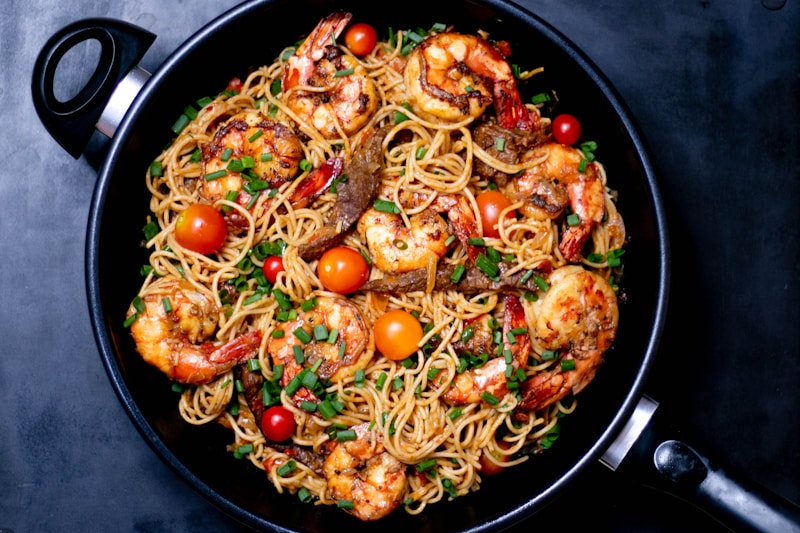
One of the most elegant preparations possible with minimal technique. Beurre noisette—butter toasted until the milk solids brown and develop a hazelnut aroma—is the perfect frame for Beluga because it connects with the product's natural creaminess.
Ingredients for 2 people:
- 200g fresh tagliolini or linguine (egg-free, made from durum wheat semolina)
- 60g quality butter (minimum 82% fat)
- 20-25g Iranian Imperial Beluga
- Sea salt
- Very fine white pepper (optional, just a trace)
Method: Cook the pasta in abundant salted water. Meanwhile, melt the butter in a large skillet over medium heat until the milk solids brown and develop a nutty aroma (noisette)—between 3 and 5 minutes. Remove from heat immediately when the color is golden amber. Drain the pasta very al dente (1 minute less than indicated cooking time), incorporate it into the skillet with the rested butter, now off the heat. Mix well. Plate and, just before serving, place the Beluga on the warm-hot pasta—never in the pan over the heat.
Why it works: Beurre noisette has the same toasted hazelnut note as the underlying flavor of Beluga. The residual oil from the pasta protects the caviar from excessive thermal shock. The pasta acts as a neutral vehicle that carries the ensemble to the palate without competing.
3. Oyster with Sevruga and Champagne jelly
The most technical preparation in this guide, but with a result that justifies the time investment. The champagne jelly acts as a solid vehicle that transports the caviar and wine notes in a unique and precise bite.
Ingredients for 6 oysters (appetizer for 2):
- 6 oysters of size 2 or 3 (Gillardeau, Fine de Claire or equivalent)
- 150ml brut champagne (Blanc de Blancs preferably)
- 2g sheet gelatin (or 1g agar-agar if you prefer a vegan version)
- 12-15g Caspian Sevruga
- Salt and white pepper
Method: Open the oysters and reserve their water. Heat the champagne to 60 degrees Celsius (140 degrees Fahrenheit), dissolve the hydrated gelatin. Add the strained oyster water. Pour a teaspoon into each shell over the oyster, refrigerate for 20-30 minutes until the jelly sets firm but with a slightly trembling texture. Before serving, place 2-3g of Sevruga on the jelly with a wooden spoon. Serve immediately on crushed ice.
Why it works: The oyster, champagne, and Sevruga share an iodized, marine profile. The jelly creates a temperature and texture experience that contrasts with the cold caviar. Sevruga—the most intense of the three classics—holds up to the oyster's own character without being overshadowed.
4. Classic blinis with sour cream and caviar
The traditional accompaniment to caviar in Russian and Iranian cuisine. Properly made blinis—from buckwheat, with controlled thickness—are the most honest vehicle for caviar and the one that best preserves its characteristics by not adding competing flavors.
Ingredients for 12-15 small blinis:
- 100g buckwheat flour
- 100g white wheat flour (to soften)
- 200ml lukewarm milk
- 1 egg
- 5g fresh yeast (or 2g dry yeast)
- Pinch of salt
- Butter for cooking
- Sour cream or crème fraîche
- 30-40g caviar (Osetra or Beluga depending on budget)
Method: Dissolve the yeast in lukewarm milk, incorporate the mixed flours, egg, and salt. Let the covered dough rest for 30-45 minutes at room temperature. The dough should be thick but pourable. In a small skillet over medium heat with butter, pour spoonfuls of blini batter 4-5 cm in diameter, 1 cm thick. Cook for 2 minutes per side until golden and fluffy. Serve warm—not hot—with a small spoonful of sour cream and caviar on top.
Why it works: Buckwheat has a slightly bitter and earthy flavor profile that contrasts with the salinity of caviar in a complementary, non-competitive way. Sour cream adds fat and a mild acidity that balances the overall dish.
5. Steamed potato with creme fraiche and Osetra
The dish that proves caviar doesn't need elaborate technique to shine. The potato-caviar combination is one of the most documented in the history of classical gastronomy and has a chemical logic: the potato's starch and the caviar's fat create a natural emulsion in the mouth that significantly prolongs the aftertaste.
Ingredients for 2 people:
- 4-6 small potatoes (Ratte variety or similar, firm flesh)
- 80g crème fraîche or thick sour cream
- 20-25g Iranian Imperial Osetra
- Flaked sea salt (Maldon or equivalent)
- Fresh chives, finely chopped (optional)
Method: Wash the unpeeled potatoes and steam them until a skewer easily goes through (15-20 minutes depending on size). Cut each potato in half, lightly mash the inside without reducing it to a puree. Add a spoonful of crème fraîche inside each half. A pinch of flaked salt. Place the Osetra on top of the cream. Serve immediately.
Why it works: Unpeeled potatoes have their own minerals and earthy flavor that contrast with Osetra's marine taste. Crème fraîche acts as a buffer of fat and acidity that allows the caviar to flourish without being too intense in the first bite.
6. Tuna tartare with caviar and sesame oil
The influence of Asian cuisine on European haute cuisine produced some combinations that defy classical logic and work. Sesame with caviar is one of them—the toasted note of sesame oil connects with Osetra's nutty note in a surprising way.
Ingredients for 2 people:
- 200g premium bluefin tuna (loin without sinews, fresh or quality defrosted)
- 10g Iranian Imperial Osetra
- 1 teaspoon toasted sesame oil (no more)
- 1 teaspoon mild soy sauce (gluten-free Tamari type)
- Finely grated fresh ginger (a very small trace)
- Peeled cucumber in very fine brunoise
- Ripe avocado
Method: Cut the tuna into 5mm cubes with a very sharp, cold knife. Mix with sesame oil, soy sauce, and ginger. Plate in a cooking ring on a base of layered cucumber and avocado. Remove the ring. Place the Osetra on top of the tartare just before serving.
Why it works: Bluefin tuna has an umami-iodized profile that caviar enhances. Sesame oil connects with Osetra's nutty note. Soy sauce adds enough saltiness so that the dish needs no more—the caviar already provides its own salt. The cold temperature of all elements preserves the caviar's characteristics.
7. Brioche toast with butter and Beluga
The simplest preparation in this guide and, arguably, the one that best showcases the quality of Beluga in its purest state. Minimalism here is not laziness—it's the right decision when the main product deserves all the spotlight.
Ingredients for 6 toasts (appetizer for 2):
- 6 thin slices of brioche (8-10mm thick)
- 40g quality butter at room temperature (minimum 82% fat)
- 20-25g Iranian Imperial Beluga Caviar
- Fleur de sel (a minimal trace)
Method: Toast the brioche slices until golden on both sides but still tender inside—avoid them becoming so crispy that they break when bitten. Spread a thin layer of room-temperature butter on the top side of each warm toast. Let the butter melt slightly into the bread. Once the toast has cooled to body temperature (approximately 35-38 degrees Celsius / 95-100 degrees Fahrenheit), place the Beluga with a mother-of-pearl or wooden spoon. Serve immediately.
Why it works: Brioche has an airy crumb with a gently sweet and buttery flavor that mimics Beluga's own structure. The butter melts and creates a fatty surface that "receives" the caviar without thermal shock. Fleur de sel on the butter adds texture without redundantly adding to the caviar's saltiness.
8. Cold Vichyssoise with Sevruga
Vichyssoise—a cold leek and potato soup—is one of the French cuisine classics that best adapts to caviar. The cold soup already has the ideal serving temperature for caviar, eliminating the risk of thermal shock, and its enveloping texture encapsulates the Sevruga in every spoonful.
Ingredients for 4 people:
- 3 large leeks (white part only)
- 3 medium potatoes, peeled
- 800ml quality chicken or vegetable broth
- 200ml cooking cream
- 60g butter
- Salt, white pepper
- 20-24g Caspian Sevruga (5-6g per serving)
- Chives for garnish (optional)
Method: Sauté the sliced leeks in butter over low heat for 15 minutes—they should not brown. Add the diced potatoes and broth. Cook for 20 minutes. Blend until smooth, then pass through a fine-mesh sieve. Incorporate the cream, adjust salt and white pepper to taste. Chill completely in the refrigerator for at least 2 hours. Serve the very cold vichyssoise in pre-chilled bowls, place the Sevruga in the center, and serve immediately.
Why it works: Sevruga, with its intense and iodized character, contrasts with the creamy smoothness of the vichyssoise. The temperatures are identical—the cold soup does not "cook" or degrade the caviar. The leek has notes that dialogue with Sevruga's marine profile. The result is a dish with a complex flavor structure that appears difficult but is achieved with basic technique.
Realistic budget for cooking with caviar at home
The eight recipes in this guide use between 10g and 25g of caviar per dish, with an additional caviar cost — over the base dish cost — of between 25 EUR and 75 EUR for two people. That's not everyday cooking: it's special occasion cooking on a controlled budget.
The correct economic logic for caviar at home is not "how much does it cost" but "what is it compared to". A dinner with two servings of dishes with verified quality caviar costs between 50 and 100 EUR in total ingredients — comparable to or less than the price of a dinner at a mid-to-high-level restaurant where caviar is not even on the menu. The experience it creates, when executed correctly, is of a superior level.
The smartest purchase format for cooking with caviar is 30-50g: enough for two dishes for two people with the recipes in this guide, without wasting product leftover in an open tin.
For cooking with caviar: Iranian Imperial Ossetra is the most versatile. Its intense flavor profile withstands contact with warm ingredients and adds layers that Beluga cannot provide in complex preparations.
View Imperial Ossetra Caviar (75 EUR)
Premium Seafood — Bacalalo
Since 1990, selecting the best from the sea at Mercat del Ninot, Barcelona. Refrigerated shipping 24-48h.
View Caspian caviar →🛒 Products used in this recipe
⭐ 4.9/5 · 24-48h chilled shipping · Since 1990 at Mercat del Ninot
Frequently asked questions about caviar in recipes
Can I heat caviar directly?
No. Above 35-40 degrees, the proteins and fats in caviar degrade irreversibly. Caviar is always added at the end, on the plated dish, never in the pan or over heat. If the dish is too hot when plated, let it cool down before adding the caviar.
What is the cheapest caviar to cook with without losing quality?
For culinary use where caviar is integrated into a dish with other ingredients, Iranian Imperial Ossetra at 75 EUR is the best balance between quality and flavor impact. Caspian Sevruga at 100 EUR is the best option for dishes where maximum intensity is desired. Avoid buying lower-grade caviar to "cheapen" the recipe: if the caviar is not of sufficient quality, the final result will not justify the cost.
How often can I use caviar in home cooking?
Caviar in home cooking functions as a special occasion ingredient: once or twice a month at most, for dinners where the investment is justified by the context. It makes no sense to use it as a regular weekday ingredient — neither economically nor from an experience standpoint, because the rarity of the product contributes to its impact.
Can caviar be mixed with lemon?
Lemon masks the aromatic profile of caviar with its intense acidity. In raw fish dishes where lemon is traditional (tartare, ceviche), if you add caviar, you should reduce the lemon to a minimal trace or remove it from the base dish. The recipes in this guide that include acidic elements (oyster, vichyssoise) are calibrated so that the ingredient's own acidity complements the caviar without overpowering it.
How much caviar per serving is enough in recipes?
In dishes where caviar is the absolute protagonist (egg, toast, blini), between 8 and 12g per person. In dishes where caviar is an important ingredient along with others (pasta, tartare, vichyssoise), between 5 and 8g per person. Using less than 5g per person in a dish does not provide the true experience of the product — it's decoration, not cooking with caviar.
Discover our premium selection
Carefully selected seafood since 1990 at Mercat del Ninot, Barcelona. Refrigerated shipping 24-48h.