Summary: Salted cod is much more than an ingredient in Catalan cuisine — it is a silent witness to centuries of history, trade, and survival. From the Vikings who dried it in the fjords to the 19th-century bacallaners who sold it in Barcelona's markets, cod has traveled a fascinating path to become a pillar of Mediterranean gastronomy. At Bacalalo, from Mercat del Ninot, we have been a living part of this tradition since 1990.
Cod, inseparable from human history
Few foods have had such a profound and silent impact on human history as cod. This cold-water fish, swimming in the icy currents of the North Atlantic — from Iceland to Newfoundland, from Norway to the coasts of New England — has for centuries been much more than a culinary ingredient. It has been a currency, a military ration, a driver of oceanic explorations, and ultimately, the food that allowed Europe to expand beyond its borders.
The history of cod is, in many ways, the history of global trade. Before the spice routes or the triangular sugar trade existed, there was already a trade network articulated around a single product: salted cod. A humble fish that, thanks to its almost limitless preservation capacity, became the perfect food for an era without refrigeration.
And nowhere in the Mediterranean is this history lived with such intensity as in Catalonia, where cod was not only adopted as a staple ingredient but also generated its own gastronomic culture, a unique profession — the bacallaner — and a relationship with the product that endures to this day in markets like the Mercat del Ninot in Barcelona.
Vikings and Basques: the origins of salted cod
The relationship between humans and cod dates back to the Nordic peoples. The Vikings, those relentless navigators who sailed the northern seas between the 8th and 11th centuries, were the first to discover that cod could be preserved for months if dried outdoors on wooden structures they built along their coasts. The dry cold of the Scandinavian winter did the job: the wind and sub-zero temperatures dehydrated the fish until it became a rigid, lightweight board they could carry on their long expeditions.
This dried cod — the Nordic stockfish — was the silent fuel for Viking expansion. Without it, voyages to Iceland, Greenland, and the coasts of North America would have been impossible. They did not have salt in abundance, so they dried the fish naturally, and that was enough to make it last for months without spoiling.
But it was the Basque fishermen who transformed cod into the product we know today. The Basques fished in the waters of Iceland and Newfoundland since the Middle Ages — according to many historians, before Columbus crossed the Atlantic. Unlike the Vikings, the Basques had something that changed the game: salt. The salt pans on the Cantabrian coast and in southern France provided them with abundant salt, and with it, they developed the technique of salting cod.
Salted cod was superior to dried cod in several ways: it kept even in warm climates, better withstood sea transport, and when desalinated, it regained a tender and juicy texture that stockfish never achieved. The Basques made salted cod their star product, and for centuries they jealously guarded the secret of their fishing grounds in the North Atlantic.
In the 19th century, the docks of Bilbao became the nerve center of the cod trade on the Iberian Peninsula. From there it was distributed throughout Spain and Portugal, in a logistics network that supplied markets, convents, barracks, and homes alike. Bilbao was to cod what Amsterdam was to herring: the port where ships loaded with salted fish converged and where prices governing the market were set.
How cod conquered the Mediterranean
The Mediterranean, cradle of fishing civilizations, had its own prestige fish since antiquity: red tuna, sardine, red mullet, sea bream. Romans went wild for garum, that fermented fish offal sauce that was the universal condiment of their cuisine. Greeks revered tuna and depicted it on their coins.
However, when salted cod arrived in the Mediterranean at the hands of Basque and Portuguese traders, it quickly displaced many of these fish in popular consumption. The reason was simple and compelling: no other fish combined preservation, versatility, and flavor so well.
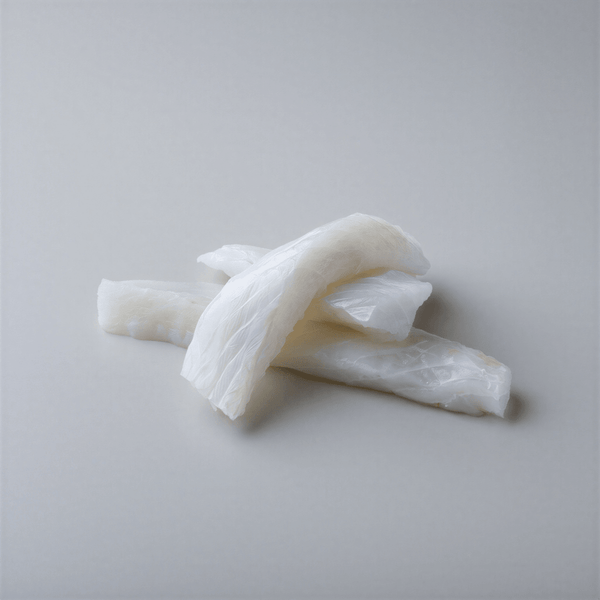
Cod, once desalinated and rehydrated, transforms. It loses the hardness of the salting and becomes a tender and soft fish, with a unique gelatinous texture that flakes into silky layers. It absorbs the flavors of the ingredients it is cooked with — olive oil, garlic, tomato, pepper — without losing its identity. It is a fish that combines well with practically everything, from the simplest sauces to the most elaborate preparations.
This versatility explains why each Mediterranean region developed its own culinary tradition around cod: Portuguese bacalhau à Brás, Italian baccalà alla vicentina, Provençal brandada, Catalan esqueixada and bacalao a la llauna. The same ingredient, hundreds of recipes, and all excellent.
Cod, wars, and empires: a fish that changed history
Having cod meant being able to feed armies, resist sieges, and sustain expeditions that lasted for months. In an era when fresh meat was a luxury reserved for nobility and clergy, salted cod was incomparably cheaper than meat for feeding soldiers and travelers. A barrel of salted cod could remain edible for an entire year without any refrigeration.
This logistical advantage made cod a strategic resource of the first magnitude. The great European powers did not only fight for territories and trade routes — they fought for cod fishing grounds. Control of the Newfoundland fisheries was one of the recurrent causes of conflict between England, France, Spain, and Portugal during the 16th to 18th centuries.
The cod wars are not a metaphor. They were real conflicts, with armed fleets and international treaties that delimited fishing zones with the same precision with which land borders were drawn. Even in the 20th century, Iceland and the United Kingdom clashed in the so-called Cod Wars (1958-1976), a series of disputes over fishing rights that almost caused a diplomatic rupture between two allied NATO nations.
But the geopolitical impact of cod goes far beyond fishing wars. Many historians argue that cod was one of the drivers of European expansion into America. The fishing grounds of Newfoundland, discovered by Basque and Breton fishermen before the great official expeditions, were one of the first economic reasons for Europe to look westward. Cod preceded gold and spices as an incentive to cross the Atlantic.
The Catalan cod route: from the Baltic to Barcelona
If cod reached the entire Iberian Peninsula through Basque ports, its definitive popularization in Catalonia followed a different and fascinating route. It was the Catalan ships trading with the Baltic that consolidated cod as a mass-market product in Catalan lands.
The route worked like this: Catalan ships loaded barrels of wine and Caribbean brandy — high-value products that sold well in northern European ports — in the ports of Barcelona, Tarragona, and other points on the Mediterranean coast. Once the merchandise was unloaded in the Baltic and Scandinavian ports, the ships' holds were empty. And the perfect ballast for the return journey was, precisely, salted cod.
Catalan captains filled their holds with barrels of cod bought at wholesale prices in Nordic ports and brought it back to Barcelona, where it was sold in markets at affordable prices for the population. It was a perfect business: money was made in both directions of the journey, and cod also served as natural ballast that stabilized the ships during the return trip.
This trade route, active since the 18th century and especially intense during the 19th, was what flooded Catalonia with salted cod. It was not a cultural imposition or a gastronomic fad: it was the logical result of a trade route that brought cod to Barcelona in large quantities and at competitive prices. The market did the rest.
Cod and the working class: food of industrialization
The 19th century transformed Catalonia. Industrialization turned Barcelona and its metropolitan area into the economic engine of Spain, attracting thousands of workers from the Catalan countryside and other regions. The textile factories of the Llobregat and Ter, the workshops of the Raval, the shipyards of Barceloneta — all needed labor, and that labor needed to eat.
Salted cod became one of the fundamental foods of the Catalan working class during industrialization. Along with herring, sardines, potatoes, cabbage, bacon, and bread, cod was part of the basic diet of working families. It was a humble but nutritious food, rich in protein, that kept without refrigeration and yielded a lot: one kilo of dried cod was equivalent to almost three kilos of fish once rehydrated.
19th-century working-class kitchens developed ingenious recipes to make the most of cod. Esqueixada — raw shredded cod with tomato, onion, and olives — didn't even require heat. Cod with mongetes (beans) was a hearty dish that filled the stomach. Cod fritters used every last crumb. These were recipes born out of necessity, but over time they rose to the category of gastronomic classics.
This democratization of cod is one of the keys to understanding why Catalonia has such a special relationship with this product. It was never an elite food — it was the fish of the people, the one that fed generations of workers, the one eaten during Lent because the Church forbade meat, but also the rest of the year because it was what was available. And precisely for this reason, it is held with an affection and respect that transcends the purely culinary.
The bacallaner: an exclusively Catalan profession
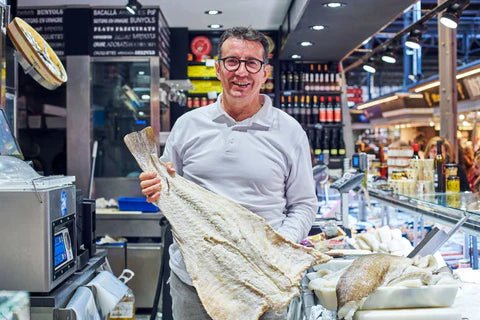
From all this history emerges a unique figure in the world: the bacallaner. The bacallaner is the professional specialized in the sale of salted cod — and it is a profession that does not exist anywhere else in the world. Not in Portugal, with its veneration for bacalhau and its supposed 365 recipes. Not in Italy, with its long tradition of baccalà. Not in the Nordic countries, where it is fished. Only in Catalonia does the figure of the bacallaner exist as a distinct and recognized trade.
The bacallaner was born in the context of 19th-century Catalan industrial society. When cod consumption became widespread in Barcelona and the Catalan factory towns, the demand was such that a professional was needed who dedicated themselves exclusively to this product. It was not just any fishmonger — it was someone who understood the varieties of cod, who knew how to distinguish Icelandic cod from Norwegian or Newfoundland cod, who mastered the desalination times according to the thickness and cut of each piece, and who could advise the client on what type of cod they needed for each recipe.
The bacallaner selected the pieces at the source, received them in the markets, cut them according to the client's needs, and passed on knowledge that went from generation to generation. It was a trade of extreme specialization, comparable to that of the xarcuter (charcutier) or the formatger (cheesemonger), but focused on a single product.
In Barcelona's markets, cod stalls had their own identity. They were distinguished by the unmistakable smell of salting, by the open and dried pieces hanging on hooks, by the piles of crumbs and trimmings arranged on trays. The bacallaner knew their customers by name, knew what they bought each week, and kept the best pieces for them. It was a commercial relationship based on trust and mutual knowledge, typical of Catalan market culture.
This profession, which might seem anachronistic in the age of supermarkets, is still alive. And it is still alive precisely because salted cod is a product that requires expert knowledge: a thick loin from Iceland is not the same as fine crumbs, nor is a two-centimeter piece desalinated in the same way as a four-centimeter one. The bacallaner is the guarantor that this knowledge is not lost.
Bacalalo and Mercat del Ninot: a living tradition since 1990
In the heart of Barcelona, in the Mercat del Ninot in the Eixample district, the bacallaner tradition has been alive for over three decades. Bacalalo has been selling the highest quality cod in this historic market since 1990, keeping alive a trade and a culture that date back centuries.
When you enter Bacalalo, you connect with all that history we have covered. The Icelandic cod you see on the counter has made the same journey that Catalan ships made two hundred years ago: from the cold waters of the North Atlantic to the Mediterranean, undergoing a salting process that the Basques perfected in the Middle Ages. The product is the same; only the ships and routes have changed.
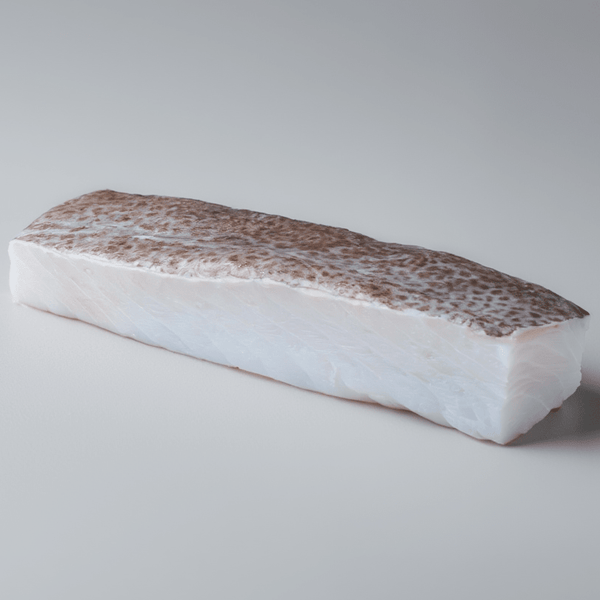
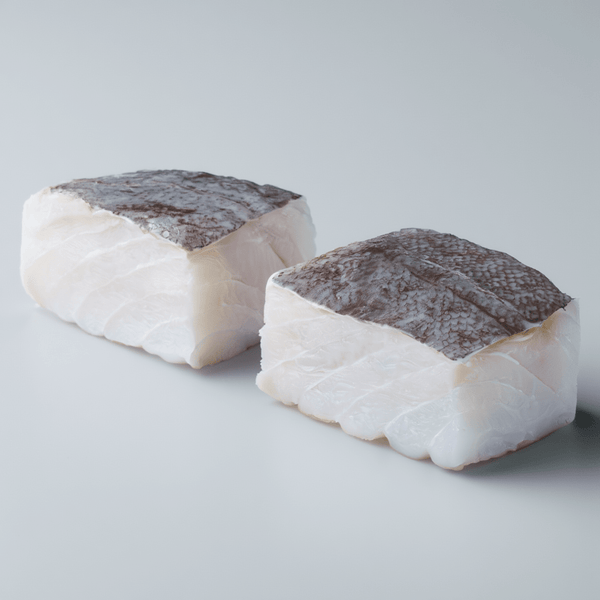
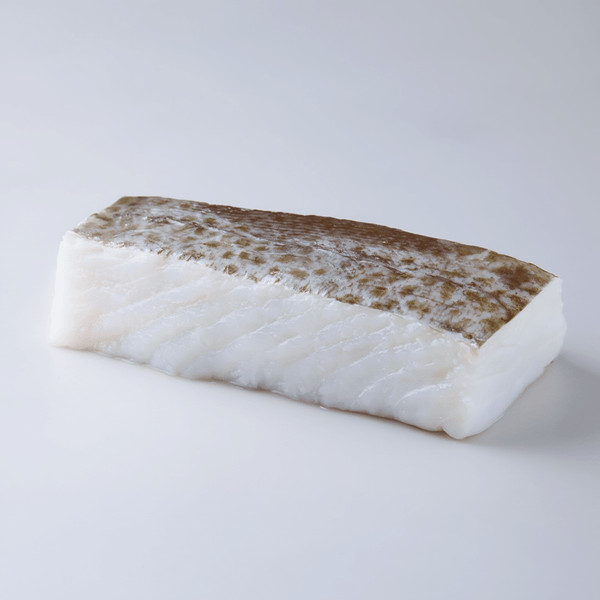
What has not changed is the bacallaner's philosophy: product knowledge, rigorous selection, and personalized attention. At Bacalalo, we select each piece of cod for its origin, thickness, saltiness, and texture. We know that cod for esqueixada needs a different firmness than for a stew, and that desalted cod ready to cook is the perfect solution for those who want to enjoy the product without waiting the 48 hours of traditional desalting.
Today, with our online store, this Mercat del Ninot tradition reaches all of Spain. You no longer have to live in Barcelona to access cod selected by a bacallaner with decades of experience. Every order we prepare carries not only a top-quality product but also all the history, knowledge, and passion of a profession that only exists here.
Because that is what we are: the heirs of a tradition that began with the Vikings drying fish in the fjords, that the Basques perfected with salt, that Catalan ships brought to the Mediterranean, and that the bacallaners of Barcelona's markets turned into a unique trade in the world. From the North Sea to your table, the history of cod is also our history.
Premium Seafood Products — Bacalalo
Since 1990, selecting the best of the sea at Mercat del Ninot, Barcelona. Refrigerated shipping 24-48h.
View desalted cod →🛒 Products mentioned in this article
⭐ 4.9/5 · Cold shipping 24-48h · Since 1990 at Mercat del Ninot
Frequently asked questions
Why is salted cod so important in Catalan cuisine?
Catalonia developed a special relationship with cod thanks to the trade routes of Catalan ships that went to the Baltic. They exported wine and spirits and returned with their holds full of salted cod. Furthermore, during the industrialization of the 19th century, cod was a key food source for feeding the working class, which deeply integrated it into Catalan culinary culture.
What is the difference between Viking dried cod and salted cod?
The Vikings dried cod outdoors without salt (stockfish), taking advantage of the Nordic cold and wind. Basque fishermen introduced salting, which allowed cod to be preserved even in warm climates. Salted cod has a tenderer texture once rehydrated and is better preserved during sea transport, making it ideal for Mediterranean trade.
What is a bacallaner and why does it only exist in Catalonia?
A bacallaner is a professional specialized exclusively in the sale of salted cod. This profession was born in 19th-century Catalan industrial society, when the demand for cod was so high that specialists dedicated to the product were needed. Neither Portugal, nor Italy, nor the Nordic countries developed this professional figure — it is exclusive to Catalonia.
How did cod reach Barcelona in the 19th century?
Catalan ships followed a trade route to the Baltic: they exported wine and Caribbean brandy to northern European ports, and on the return journey, they filled their holds with salted cod bought at wholesale prices. This bidirectional trade ensured that cod reached Barcelona in large quantities and at affordable prices.
Is it true that cod was a cause of wars between nations?
Yes. The control of cod fishing grounds, especially in Newfoundland, was a recurring cause of conflicts between England, France, Spain, and Portugal between the 16th and 18th centuries. Even in the 20th century, Iceland and the United Kingdom clashed in the so-called Cod Wars (1958-1976) over fishing rights in Icelandic waters.
Why was cod cheaper than meat?
Salted cod could be preserved for months without refrigeration, it didn't require pastures or stables, it was caught in massive quantities, and its dry weight was much lower than that of meat, making transport cheaper. Feeding an army or factory workers with cod cost a fraction of what it would have cost with fresh meat.
Since when has Bacalalo been selling at Mercat del Ninot?
Bacalalo has been selling premium quality cod at Mercat del Ninot in Barcelona since 1990. More than three decades maintaining the tradition of the Catalan bacallaner, with expert selection of Icelandic cod and personalized attention both at the market and in the online store.