

Summary: The gilda is the quintessential Basque pintxo: a perfect balance of salty (anchovy), acidic (piparra pepper), and bitter (olive) in a single bite. We'll show you the classic recipe step-by-step and 6 creative variations that elevate this icon of Basque cuisine to another level.
Table of Contents
- What is a Gilda and why is it the most famous pintxo
- Classic Gilda recipe step-by-step
- How to choose the perfect ingredients
- Variation 1: Vinegar-marinated anchovy Gilda
- Variation 2: Smoked salmon Gilda
- Variation 3: Deconstructed Gilda
- Variation 4: Premium Cantabrian Gilda
- Variation 5: Mediterranean Gilda
- Variation 6: Surf and Turf Gilda
- Pairing and presentation
- Frequently asked questions
What is a Gilda and why is it the most famous pintxo
The Gilda was born in Bar Casa Vallés in San Sebastián in 1946. The story goes that its creator, a regular customer, threaded an olive, a piparra pepper, and an anchovy onto a toothpick, and upon tasting the bite, he said it was "spicy, salty, and a bit green," like Rita Hayworth in the film Gilda that premiered that year. The name stuck, and the pintxo became a legend.
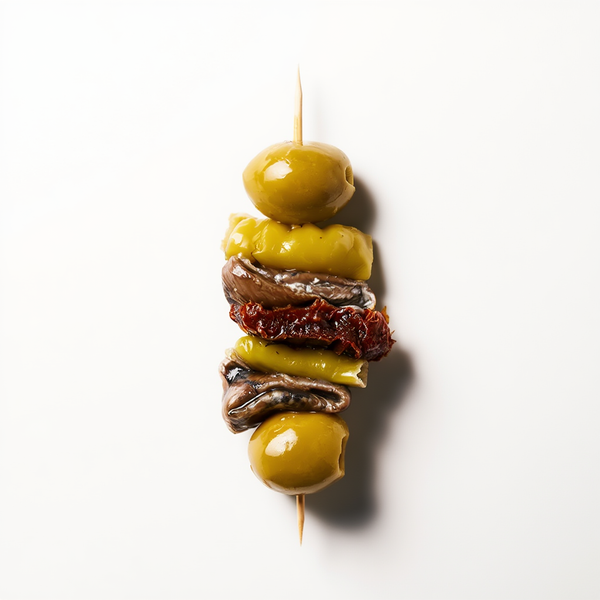
What makes the Gilda special is not its complexity, but its balance. Three ingredients that are strong individually but together create a perfect harmony: the anchovy provides salty and umami intensity, the Ibarra piparra pepper introduces acidity and a mild spice, and the Manzanilla olive rounds it out with its fatty bitterness. All in one bite, no plate, no cutlery, no ceremony.
In the Basque Country, the Gilda is almost a ritual. It's eaten standing at the bar, with a cold txakoli or a beer. It's the first pintxo ordered and the one that sets the tone for the evening. At Bacalalo, we've been working with the best Cantabrian anchovies since 1990 at the Mercat del Ninot in Barcelona, and we know that anchovy quality is what separates a memorable Gilda from an ordinary one.
Classic Gilda recipe step-by-step
The classic Gilda doesn't allow for improvisation in ingredients, but it does demand attention to detail. Each component must be at the correct temperature and threaded in the proper order.
Ingredients (for 6 Gildas)
- 6 fillets of high-quality Cantabrian anchovy in olive oil
- 12 Ibarra piparra peppers in vinegar (2 per Gilda)
- 6 seedless Manzanilla olives, plump and firm
- 6 long wooden toothpicks or short skewers
- Extra virgin olive oil (optional, for drizzling at the end)
Preparation
- Prepare the piparra peppers: Drain them well of vinegar. If they are very long, cut them to a similar size as the anchovy (about 5-6 cm). Reserve the vinegar: you can add a few drops to the finished Gilda at the end.
- Prepare the anchovies: Carefully remove them from the oil to avoid breaking them. Place them on absorbent paper for a moment to remove excess oil. You want them juicy, not soaked.
- Thread in the correct order: The classic order is piparra pepper-anchovy-olive-piparra pepper. First, pierce the bottom tip of a piparra pepper, then fold the anchovy fillet into an S-shape or zigzag and thread it on, then the olive (through the center where the pit was), and finally the second piparra pepper. The key is for the anchovy to partially wrap around the other ingredients.
- Adjust and compact: The Gilda should be firm. It should not be loose or fall off the toothpick. Gently push the ingredients towards the center so they are snug.
- Drizzle (optional): A very thin stream of extra virgin olive oil and, if you wish, 2-3 drops of the piparra pepper vinegar.
- Serve immediately: The Gilda doesn't wait. It's prepared and eaten. At room temperature, never cold from the fridge.
Total time: 10 minutes. Difficulty: Easy, but demanding in product quality.
How to choose the perfect ingredients
The Gilda has only three ingredients. There's no sauce to mask, no cooking to transform. Each component shows itself as it is, so quality is everything.
The anchovy
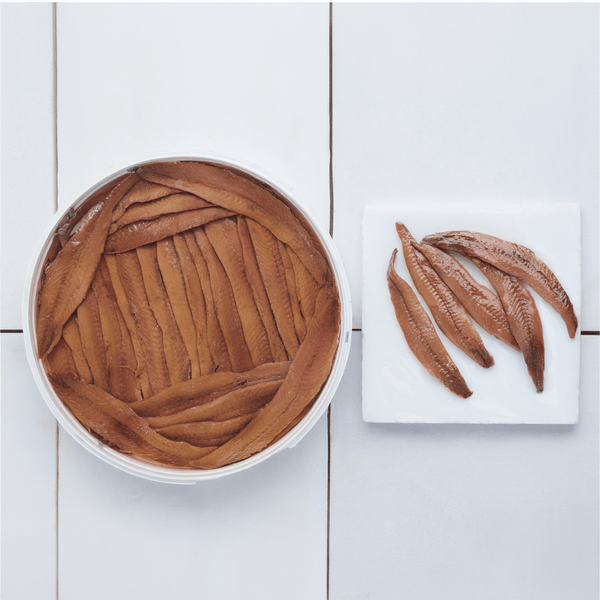
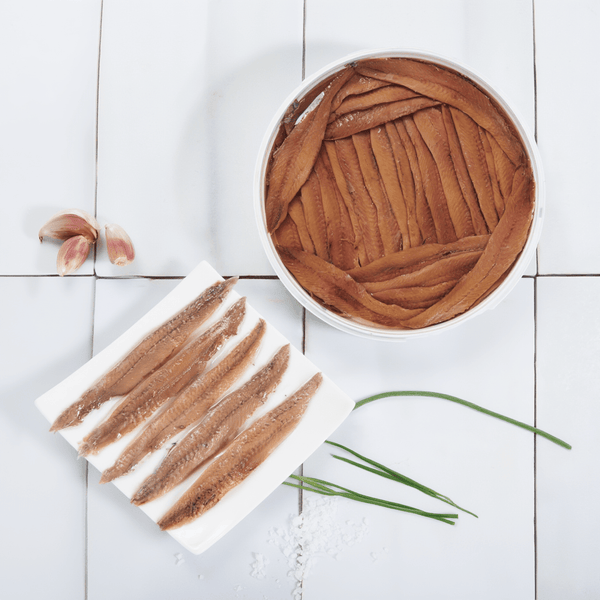
It's the soul of the Gilda. You need a Cantabrian anchovy in olive oil, cured in salt for a minimum of 6 months, with a uniform pinkish-red color, firm texture that melts in the mouth, and a powerful yet not aggressive flavor. Anchovies from artisan Cantabrian brands like those we work with at Bacalalo make a radical difference compared to industrial small-can anchovies.
Avoid anchovies that are brown, excessively soft, have a metallic taste, or smell rancid. A good anchovy smells of clean sea and noble curing.
The piparra pepper
The Ibarra piparra pepper (also called piparras) is the only authentic option. These are green pickled peppers in vinegar, with a very mild —almost nonexistent— spice and an elegant acidity. Do not confuse them with spicy peppers like cayenne or habanero: those would destroy the balance of the pintxo. Good Ibarra piparra peppers are fleshy, crispy, and have a clean taste of green pepper and vinegar.
The olive
Seedless Manzanilla. Large, firm, with that mild bitterness and juicy fleshiness. Some versions use Gordal olives, which are larger but less bitter. Both work, but Manzanilla is the orthodoxy. The important thing is that the olive is not stuffed with anything (neither pepper nor anchovy paste) and that it is at room temperature.
Variation 1: Vinegar-marinated anchovy Gilda
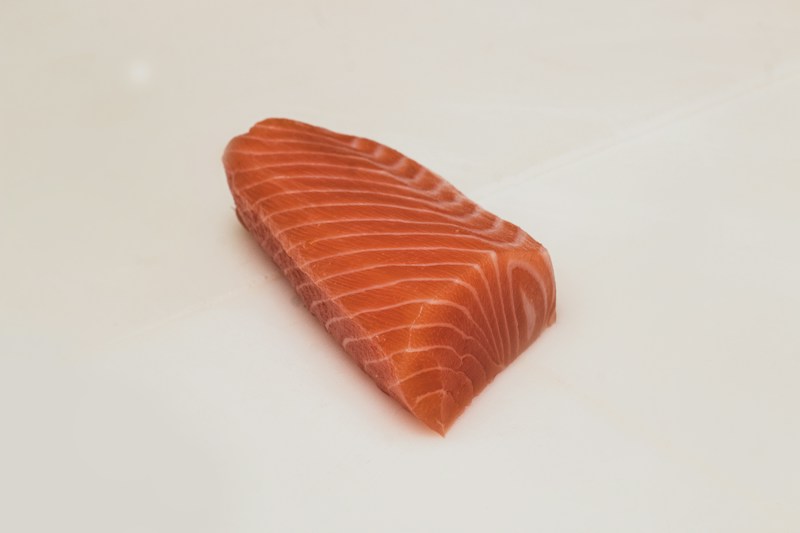
A milder and more acidic version that replaces salted anchovy with vinegar-marinated anchovies (boquerones). The result is a fresher Gilda, perfect for summer.
- Ingredients: Well-drained vinegar-marinated anchovies, Ibarra piparra peppers, Manzanilla olives, thinly sliced garlic (optional).
- Assembly: Identical to the classic, but replacing the anchovy with 2 folded boquerón fillets. If you add a thin slice of garlic between the boquerones, you gain complexity.
- Character: More acidic, less salty, with a more Mediterranean touch. Pairs especially well with cold beer or Fino sherry.
The vinegar-marinated anchovy has more volume than the salted anchovy, so the Gilda is more generous. Ideal as a summer appetizer with a very cold white wine.
Variation 2: Smoked salmon Gilda
A Gilda that plays with smokiness instead of salt. Sophisticated and different, with a surprising flavor profile.
- Ingredients: Wide strips of smoked salmon, Ibarra piparra peppers, Gordal olives, capers (1 per Gilda), a touch of lemon zest.
- Assembly: Roll the salmon strip into a tight cylinder. Thread piparra pepper-salmon-caper-olive-piparra pepper. Grate a touch of lemon zest on top when serving.
- Character: Smoky, fatty, with the acidity of the caper replacing some of the piparra pepper's function. The Gordal olive adds more sweetness than the Manzanilla, balancing the smokiness.
This variation works very well as a celebratory pintxo, with cava or champagne.
Variation 3: Deconstructed Gilda
It's not a pintxo but a dish. It's the Gilda taken to the realm of plating, maintaining all the flavors but changing the form.
- Ingredients: 3 fillets of Cantabrian anchovy per serving, 4-5 Ibarra piparra peppers, 6 Manzanilla olives sliced, extra virgin olive oil, piparra pepper vinegar, toasted crystal bread.
- Assembly: On a flat plate, arrange the olive slices to form a base. Place the anchovies on top in a fan shape. Cut the piparra peppers into thin julienne strips and distribute them over. Drizzle with olive oil and a few drops of vinegar. Serve with toasted crystal bread to assemble each bite.
- Character: The same flavors, but with the texture of toasted bread and the possibility of dosing each ingredient to your liking. It's an elegant way to present the Gilda at a dinner party.
Variation 4: Premium Cantabrian Gilda
The version of the Gilda that elevates the level of each ingredient. For when you really want to impress.
- Ingredients: Gran Reserva Cantabrian anchovy (minimum 12 months curing), extra fine Ibarra piparra peppers, Manzanilla olives marinated with herbs (thyme and rosemary), early harvest Picual EVOO.
- Assembly: The same as the classic Gilda, but with one detail: before threading, lightly brush the anchovy with the Picual EVOO. Picual oil has a bitterness and spiciness that intensify the character of the Gilda without distorting the original balance.
- Character: More intense, with greater depth of flavor and a longer finish in the mouth. Gran Reserva anchovies have a complexity that standard-cured ones don't achieve: more umami, more nuances, more persistence.
If you're going to make this version, invest in the best anchovies you can find. In our Gildas section you'll find pre-assembled options and individual ingredients for you to prepare them yourself.
Variation 5: Mediterranean Gilda
A Gilda that travels from the Basque Country to the Mediterranean, incorporating flavors from the Catalan and Levantine coasts.
- Ingredients: Cantabrian anchovy, sun-dried tomato in oil (cut into strips), Aragon black olive (pitted), caper, fresh basil.
- Assembly: Piparra pepper replaced by the sun-dried tomato strip, which provides sweet acidity. Thread sun-dried tomato-anchovy-caper-black olive. Place a small basil leaf between the anchovy and the olive.
- Character: Sweeter and more aromatic than the classic. The sun-dried tomato provides concentration and the sweet-sour note that the original piparra pepper provides. The Aragon black olive has a milder, fruitier flavor. It's a summer Gilda, ideal with rosé or vermouth.
Variation 6: Surf and Turf Gilda
The fusion between the anchovy pintxo and the meaty flavors of inland Basque Country. Hearty and addictive.
- Ingredients: Cantabrian anchovy, txistorra or cured chorizo in thin slices, Ibarra piparra pepper, smoked Idiazábal cheese (a small cube), Manzanilla olive.
- Assembly: Thread piparra pepper-folded anchovy with the txistorra slice inside-Idiazábal cube-olive. The cheese goes between the anchovy and the olive.
- Character: Powerful, with the cured fat of the txistorra amplifying the umami of the anchovy and the smoked Idiazábal adding a layer of complexity. Not for every day, but spectacular with a young red wine from Rioja Alavesa.
This variation works especially well if you quickly grill the txistorra before threading it, to release some of its fat and intensify the flavor.
Pairing and presentation
The Gilda has its natural ecosystem of drinks. These are the combinations that work best:
- Txakoli: The canonical pairing. The acidity and light effervescence of the txakoli cleanse the palate between each Gilda. Serve it very cold (6-8 °C) and pour it from a height as tradition dictates.
- Lager beer: Cold, clean, uncomplicated. The carbonation cuts through the fat of the anchovy and olive.
- Fino or Manzanilla sherry: A more sophisticated pairing that works extraordinarily well. The salinity of the Fino complements the anchovy instead of competing with it.
- Vermouth: Red, with ice and an orange slice. The bitter-sweetness of the vermouth creates a delicious contrast with the acidity of the piparra pepper.
- Natural cider: The Asturian option that also fits perfectly due to its acidity and lightness.
For presentation, the most important thing is that the Gildas are freshly made. You can mount them on a wooden board, stick them into a rustic loaf of bread cut in half, or present them on a plate with a little of the anchovy oil and a few drops of the piparra pepper vinegar as dressing. What you should never do is prepare them hours in advance and store them in the fridge: a cold Gilda is a sad Gilda.
Prepare Gildas with the best Cantabrian anchovies
At Bacalalo, we work with artisan anchovies cured slowly, perfect for memorable Gildas. Since 1990 in the Mercat del Ninot, Barcelona.
Premium Seafood Products — Bacalalo
Since 1990, selecting the best from the sea at Mercat del Ninot, Barcelona. Refrigerated shipping 24-48h.
See Gildas and appetizers →🛒 Products mentioned in this article
⭐ 4.9/5 · Cold shipping 24-48h · Since 1990 at Mercat del Ninot
Frequently asked questions about gilda
What is the origin of the gilda?
The gilda was invented in 1946 at Bar Casa Vallés in San Sebastián. Its name pays homage to the movie Gilda starring Rita Hayworth, released that same year. The customer who created it said that the pintxo was "green, salty, and a little spicy," like Hayworth's character. Since then, it has become the most emblematic pintxo of Basque cuisine and is served in almost all pintxo bars in the Basque Country.
Can gilda be made with canned anchovies from the supermarket?
Technically yes, but the result is not comparable. Industrial small canned anchovies are usually saltier, with less nuanced flavor and a less firm texture. The gilda has only three ingredients, so the quality of each one makes a huge difference. Using Cantabrian anchovies with artisan curing completely changes the experience. The extra investment is worth it for a pintxo that is pure essence of ingredients.
Can I prepare the gildas in advance?
You can assemble them up to 1-2 hours before serving, keeping them covered at room temperature (not in the fridge). Beyond that time, the guindilla loses its crispness and the anchovy dries out. Ideally, prepare them just before eating. If you need to prepare ahead, have the ingredients ready and drained, and skewer them at the last minute.
What is the difference between Ibarra peppers and piparras?
They are the same. "Guindillas de Ibarra" is the most common commercial name, and "piparras" is the Basque name. Both refer to the green pickled pepper in vinegar, very mildly spicy, grown in the Basque Country. You can find both names interchangeably on the label. The important thing is that they are Basque pickled peppers, not spicy peppers from another origin.
How many gildas are estimated per person?
As an appetizer, 2-3 gildas per person are sufficient. If the gildas are part of a varied pintxo table, 1-2 per person is enough. If it's the only pintxo (for example, as an accompaniment to a vermouth), you can estimate 3-4 per person. Keep in mind that gilda is an intense and salty bite; it's not a dish to eat in large quantities.
Is there a vegetarian gilda?
Yes, although purists would not recognize it as a gilda. The vegetarian version replaces the anchovy with a strip of roasted piquillo pepper, which provides sweetness and creaminess. The assembly is the same: guindilla-pepper-olive-guindilla. Another option is to use sun-dried tomato in oil instead of anchovy. The result is a tasty and balanced pintxo, although with a very different flavor profile from the original.
What wine pairs best with gildas?
Txakoli is the classic and most recommended pairing: its high acidity and light carbonation cleanse the palate between bites. As alternatives, a fino or manzanilla sherry works exceptionally well due to its natural salinity, and a young albariño or verdejo provide freshness without competing with the pintxo's flavors. Avoid full-bodied reds or sweet wines, which clash with the acidity of the guindilla.
Products you might be interested in
Discover more