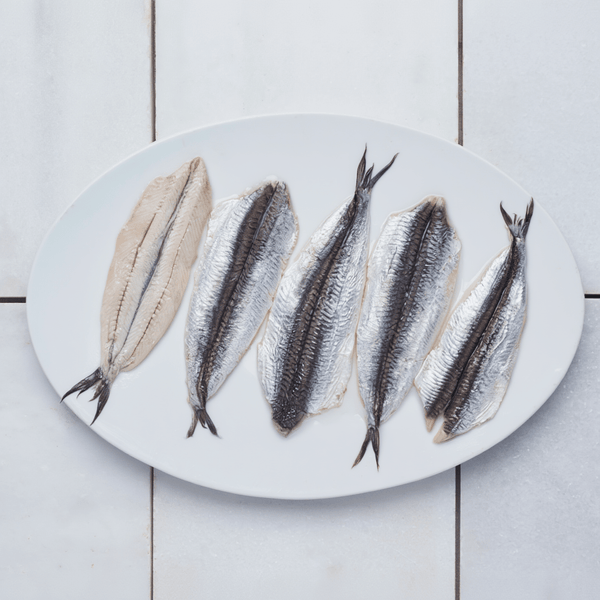
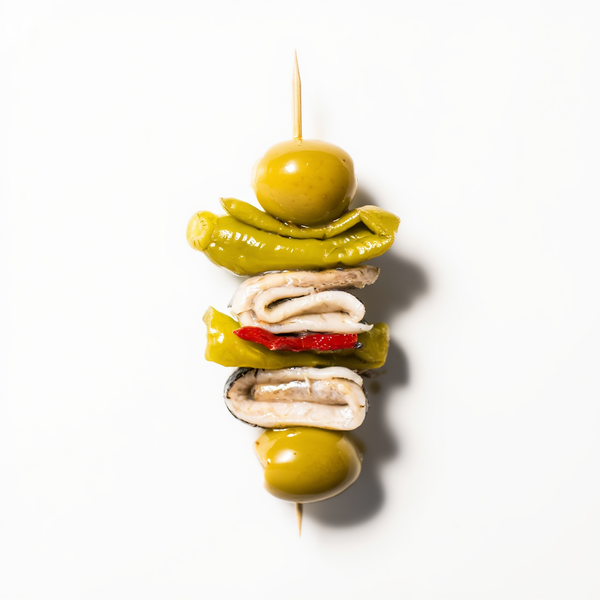
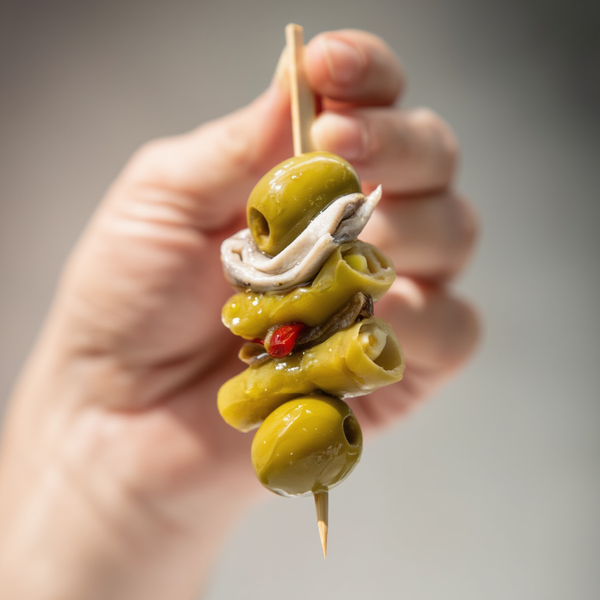
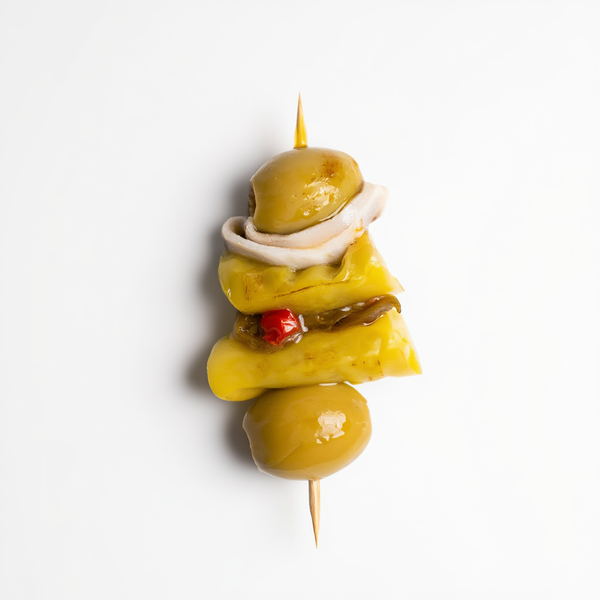
Summary: Vinegar-marinated anchovies —also called boquerones en vinagre or seitons— are one of the most emblematic tapas of Spanish cuisine. This recipe, inspired by Karlos Arguiñano's style, guides you step-by-step from cleaning fresh anchovies to the final dressing. We include tricks to get white, firm, and juicy anchovies, the exact vinegar times, the classic garlic and parsley dressing, and all the food safety precautions you need to know.
At Bacalalo, we have been selecting every piece of cod at Mercat del Ninot since 1990.
Contents
- Vinegar-Marinated Anchovies: A Tradition Made Universal by Arguiñano
- Ingredients for Perfect Vinegar-Marinated Anchovies
- Step 1: How to Clean Anchovies Properly
- Step 2: Pre-Freezing — Safety Against Anisakis
- Step 3: The Vinegar — Time, Type, and Proportion
- Step 4: Arguiñano-Style Dressing
- The Trick to Making Anchovies White and Firm
- Storage and Shelf Life of Vinegar-Marinated Anchovies
- Common Mistakes When Making Vinegar-Marinated Anchovies
- Frequently Asked Questions
Vinegar-marinated anchovies go bad for two reasons: weak vinegar and rushing. Arguiñano makes it clear: at least 12 hours in salt, 4 in vinegar, no less. If you cut corners, the fish won't cure properly inside.
Here's the exact step-by-step recipe: grams of salt per kilo of anchovies, vinegar-water-oil ratio (the one that actually kills anisakis and doesn't destroy the flavor), ideal size (medium anchovy, not large), and the correct order — cleaning, preventive freezing for 5 days at -20 °C, salting, vinegaring, draining, oiling. Also: when to add garlic and parsley so they flavor without oxidizing.
Before the step-by-step, a detail about freezing: mandatory by law since 2012 and non-negotiable if you're going to eat them raw.
Vinegar-Marinated Anchovies: A Tradition Made Universal by Arguiñano
If there's one chef who has put vinegar-marinated anchovies on the map for millions of Spanish households, it's Karlos Arguiñano. With his direct style, his humor, and his homemade tricks, Arguiñano has shown time and again that this tapa doesn't need sophisticated techniques or expensive ingredients — just fresh product, quality vinegar, patience, and a good dressing.
The recipe we share here is inspired by Arguiñano's style: simple, honest, without unnecessary complications but with all the details that make the difference between decent anchovies and memorable anchovies. Arguiñano himself always insists on the same thing: "with a good product, there's no need to invent anything."
At Bacalalo, since 1990 in Barcelona's Mercat del Ninot, we share that philosophy. We work with the best seafood products — from Cantabrian anchovies to Icelandic cod — because we know that the quality of the raw material is everything.
Vinegar-marinated anchovies and Cantabrian anchovies, although they come from the same fish (Engraulis encrasicolus), are two completely different preparations. Boquerones are marinated in vinegar and served fresh, white, and acidic. Anchovies are cured in salt for months and preserved in oil, with a dark color and a deep umami flavor. Both are extraordinary, but this guide focuses on the former.
Ingredients for Perfect Vinegar-Marinated Anchovies
This recipe yields a generous tapa portion for 4 people or an appetizer dish for 2.
For the marinade:
- 500 g fresh anchovies (ask the fishmonger for same-day catch)
- 300 ml white wine vinegar (minimum 6% acidity)
- Coarse salt (not fine, not iodized)
For the Arguiñano-style dressing:
- 4-5 tablespoons extra virgin olive oil (Arbequina or mild Picual)
- 3 cloves garlic, thinly sliced
- A good bunch of fresh parsley, coarsely chopped
- Salt (optional, to taste)
About the vinegar: Arguiñano recommends white wine vinegar with at least 6 degrees of acidity. Avoid mild vinegars like Modena, apple, or rice — they don't have enough potency to properly "cook" the anchovy. Sherry vinegar also works, but gives a darker color and flavor.
Step 1: How to Clean Anchovies Properly
Cleaning is the most time-consuming step and the one that most determines the final result. Poorly cleaned anchovies will have remnants of viscera, bones, or skin that ruin the texture and flavor.
Step-by-step process:
- Remove the head: Hold the anchovy's body with one hand and with the other, pull off the head with a downward motion. The guts should come out with the head. If not, remove them with your finger.
- Open the anchovy: With your thumb, open the anchovy along its belly like a book. Follow the central bone with your finger, separating the two fillets.
- Remove the central bone: Carefully detach the bone from the tail towards the head. It should come out whole if the anchovy is fresh.
- Trim: Remove the tail and any remaining fins or loose skin from the edges.
- Wash: Rinse each double fillet (butterfly style) under a gentle stream of cold water. Do not let them soak — they absorb water and lose texture.
- Dry: Place the fillets on kitchen paper and gently pat to remove excess moisture.
Arguiñano's trick: "If the anchovy is truly fresh, the bone comes out easily with your fingers. If you have to pull, the anchovy is not from today." It's an infallible indicator of freshness.
Yield: From 500 g of whole anchovies, you will get approximately 300-350 g of clean fillets. It's normal to lose 30-40% in heads, bones, and viscera.
Step 2: Pre-Freezing — Safety Against Anisakis
This step is mandatory and non-negotiable. Anisakis is a parasite present in fresh fish that can cause severe allergic reactions and intestinal infections. Vinegar alone does not eliminate it.
Safety Protocol (according to AESAN and European regulations):
- Freeze the clean anchovies at -20 °C for a minimum of 48 hours (5 days if your freezer is 3 stars or less, as it may not reach stable -20 °C).
- Place the fillets in a single layer on a plate or tray covered with cling film. Do not pile them up — they will stick together and break when defrosted.
- Label with the freezing date to keep track.
To defrost:
- Transfer the fillets from the freezer to the refrigerator the night before (8-12 hours).
- Never defrost at room temperature or with hot water.
- Once defrosted, pat them dry with kitchen paper before applying the vinegar.
Arguiñano always reminds us of this step in his recipes: "Freezing is not optional, it's common sense. It wasn't done before because anisakis wasn't known, but now that we know, there's no excuse."
Step 3: The Vinegar — Time, Type, and Proportion
The vinegar is what "cooks" the anchovy. The acetic acid denatures the fish proteins, which change from translucent and soft to white, firm, and opaque. It's the same chemical process as heat, but cold.
Procedure:
- Place the defrosted and dried fillets in a glass or ceramic container (never metal, which reacts with the acid).
- Sprinkle a thin layer of coarse salt over the fillets. The salt helps extract residual moisture and firm up the texture.
- Completely cover the fillets with white wine vinegar. All fillets must be submerged — if any peek out, they will oxidize and turn grayish.
- Cover the container with cling film and refrigerate.
Marinating times:
- Absolute minimum: 6 hours. With less time, the center of the fillet may remain raw (translucent).
- Optimal time (Arguiñano style): 8-12 hours. The fillets become completely white, firm but juicy.
- Recommended maximum: 24 hours. Beyond this time, the anchovies start to "overcook": the texture becomes soft and mealy, and the flavor becomes excessively acidic.
How to tell if they're ready: Take a fillet and cut it in half. If the center is completely white and opaque, they are ready. If there is still a translucent line in the center, they need more time.
Can the vinegar be reused? No. After marinating the anchovies, the vinegar has absorbed water, proteins, and fats from the fish. Its acidity is no longer the same and it would not be suitable for a second batch. Always discard it.
Step 4: Arguiñano-Style Dressing
This is the moment of truth: the dressing that transforms marinated fillets into the tapa we all know and love. Arguiñano's style is clean and direct: garlic, parsley, and olive oil. Nothing more. No onion, no pepper, no frills.
Procedure:
- Drain the anchovies: Remove them from the vinegar and place them on kitchen paper. Gently pat to remove excess vinegar. Do not rinse them with water — they would lose the acidic touch that defines them.
- Arrange on a platter: Place the fillets on a flat platter, arranging them in neat layers with the skin (silver side) facing up. Presentation matters.
- Dress: Sprinkle the thinly sliced garlic over them. Generously distribute the chopped parsley. Drizzle with a good amount of EVOO — enough to soak the fillets without completely covering them.
- Rest: Leave the dressed anchovies in the refrigerator for at least 30 minutes before serving. During this time, the garlic perfumes the oil and the flavors integrate.
Arguiñano on garlic: "Garlic must be thinly sliced, not chopped. If you chop it, it releases too much juice and can be bitter. Sliced, it provides just the right aroma." It's a small detail that makes a real difference.
Arguiñano on parsley: "Always fresh parsley, never dry. Dry parsley adds nothing, it's like adding green sawdust. And don't chop it too finely — a coarser chop looks better and has more flavor."
About the oil: Use an EVOO with a mild to medium flavor (Arbequina or Hojiblanca). An intense Picual oil can compete with the vinegar and garlic. The oil here has a double function: to dress and to protect the anchovy from oxidation.
Love anchovies?
If you enjoy preparing vinegar-marinated anchovies, you'll love our Cantabrian anchovies: the same fish, but artisanally cured for months in salt and olive oil. A completely different and complementary flavor. At Bacalalo, since 1990 in Mercat del Ninot, we work with the best canneries in Cantabria.
The Trick to Making Anchovies White and Firm
It's the most repeated question: what's the trick to making vinegar-marinated anchovies white and firm instead of gray and soft? There isn't one single secret, but rather a sum of details that good cooks —Arguiñano included— always apply:
- Dry thoroughly before vinegaring. Residual water dilutes the acid and leaves the fillet translucent. Kitchen paper and gentle pats: the fillet must enter the vinegar practically dry.
- Salt before vinegar. A thin layer of coarse salt over the fillets for 20-30 minutes extracts moisture and "firms" the flesh. This step makes the biggest difference between firm and soft anchovies.
- Truly strong vinegar. Minimum 6% acidity. Weak vinegar does not properly coagulate the proteins, and the fillet remains dull and rubbery. White wine vinegar is what gives that characteristic opaque white color.
- Submerge completely. Any fillet that protrudes from the vinegar oxidizes and turns gray. Cover completely and, if necessary, place a small plate on top to keep them from floating.
- Constant cold. Always marinate in the refrigerator, never at room temperature: the cold maintains a firm texture and prevents the flesh from softening.
- Not too little, not too much time. Below 6 hours, the center remains raw (translucent line); above 24 hours, the acid "overcooks" the fillet and makes it mealy. The white and firm point is reached in 8-12 hours.
With these six details, the result is consistent: white, opaque, and firm-bodied anchovies that hold their shape when speared without falling apart. It's exactly the point you're looking for in a good tapa.
Storage and Shelf Life of Vinegar-Marinated Anchovies
Once dressed, vinegar-marinated anchovies are a fresh product and should be treated as such:
- In the refrigerator: They last between 3 and 5 days in an airtight container, covered with olive oil. After the third day, the texture begins to soften and the vinegar flavor intensifies.
- Serving temperature: Take them out of the refrigerator 10-15 minutes before serving. If too cold, the flavor is muted. At prolonged room temperature, they deteriorate quickly.
- Can they be frozen once made? It is not recommended. Freezing breaks the already marinated structure of the fillet, and upon defrosting, they become soft and watery.
Signs that they are no longer good: Strong ammonia smell, slimy or mushy texture, yellowish color. If in doubt, discard them. You don't play around with raw fish.
Common Mistakes When Making Vinegar-Marinated Anchovies (and How to Avoid Them)
After years of seeing recipes and trying anchovies in bars and homes, these are the most common mistakes:
- Not freezing before marinating: The most dangerous mistake. Vinegar does not kill anisakis. Pre-freezing is legally mandatory in hospitality and should be at home.
- Too weak vinegar: Vinegars with less than 6% acidity do not completely "cook" the anchovy. Always use standard white wine vinegar.
- Insufficient time in vinegar: 2-3 hours is not enough for normal-sized fillets. If you cut a fillet and see a translucent line in the center, it needs more time.
- Excessive time in vinegar: More than 24 hours produces soft, mealy, and excessively acidic anchovies. 8-12 hours is the optimal point.
- Not drying the fillets before vinegaring: Residual water dilutes the vinegar and slows down the marinating process. Always dry with kitchen paper.
- Using metal containers: Vinegar reacts with metal (especially aluminum) and produces unpleasant metallic flavors. Always use glass or ceramic.
- Chopping the garlic instead of slicing it: Chopped garlic releases more allicin and can give an excessively bitter and spicy flavor. Thinly sliced is key.
- Serving too cold: Straight from the refrigerator, anchovies are "dormant" — their flavor seems flat. Take them out 10-15 minutes before serving.
Premium Seafood Products — Bacalalo
Since 1990, selecting the best from the sea at Mercat del Ninot, Barcelona. Refrigerated shipping in 24-48h.
View anchovy fillets →Frequently asked questions about anchovy fillets in vinegar
Can I make anchovy fillets in vinegar with frozen anchovies from the supermarket?
Yes, and it's actually safer because they will have already undergone the freezing process that eliminates the risk of anisakis. Defrost them in the refrigerator overnight, pat them dry thoroughly, and proceed with the vinegar as usual. The texture will be slightly less firm than with fresh anchovies, but the result is very good.
How long exactly should anchovy fillets be left in vinegar?
The optimal time, as recommended by Arguiñano, is between 8 and 12 hours. The absolute minimum is 6 hours for the fillet to be completely "cooked" by the acid (white and opaque in the center). Never exceed 24 hours or the texture will deteriorate. The definitive test is to cut a fillet in half: if there is no translucent line, they are ready.
Is it mandatory to freeze anchovies before putting them in vinegar?
Yes. Spanish (RD 1420/2006) and European regulations require freezing fish that will be consumed raw or marinated. Anisakis is not killed by vinegar, only by freezing (-20 °C for a minimum of 48 hours) or by cooking at over 60 °C. Not freezing is a real health risk.
What is the difference between anchovy fillets in vinegar and anchovies?
Both come from the same fish (Engraulis encrasicolus), but the preparation is completely different. Anchovy fillets in vinegar are marinated in acetic acid and served fresh, white, and with a tart flavor. Cantabrian anchovies are cured in salt for 6-18 months and preserved in olive oil, with a dark color and intense umami flavor. They are two distinct products from the same ingredient.
Can apple cider vinegar be used for anchovy fillets?
It is not recommended. Apple cider vinegar usually has lower acidity (4-5%) than white wine vinegar (6-7%) and its fruity flavor does not combine well with fish. The same applies to rice vinegar or balsamic vinegar from Modena. White wine vinegar is the standard for a reason: it has the correct acidity and a clean flavor that does not interfere.
Do anchovy fillets in vinegar cause weight gain?
Anchovy fillets in vinegar are a light and nutritious food. 100g of marinated anchovies provide approximately 130-150 kcal, 20g of protein, 5-6g of fat (mostly omega-3), and virtually zero carbohydrates. The olive oil dressing adds calories, but these are healthy fats. As a tapa, a serving of 80-100g is very balanced.
Can I add onion to the anchovy dressing?
You can, but the pure Arguiñano style is just garlic, parsley, and EVOO. Onion (cut into thin rings or julienne) is a valid variation often seen in southern Spain. If you add it, use sweet onion or spring onion, never strong onion. Another common variation is to add a little chili or chopped cayenne pepper for a spicy kick.
Products you might be interested in
Discover more
Discover our premium selection
Carefully selected seafood products since 1990 at Mercat del Ninot, Barcelona. Refrigerated shipping in 24-48h.